



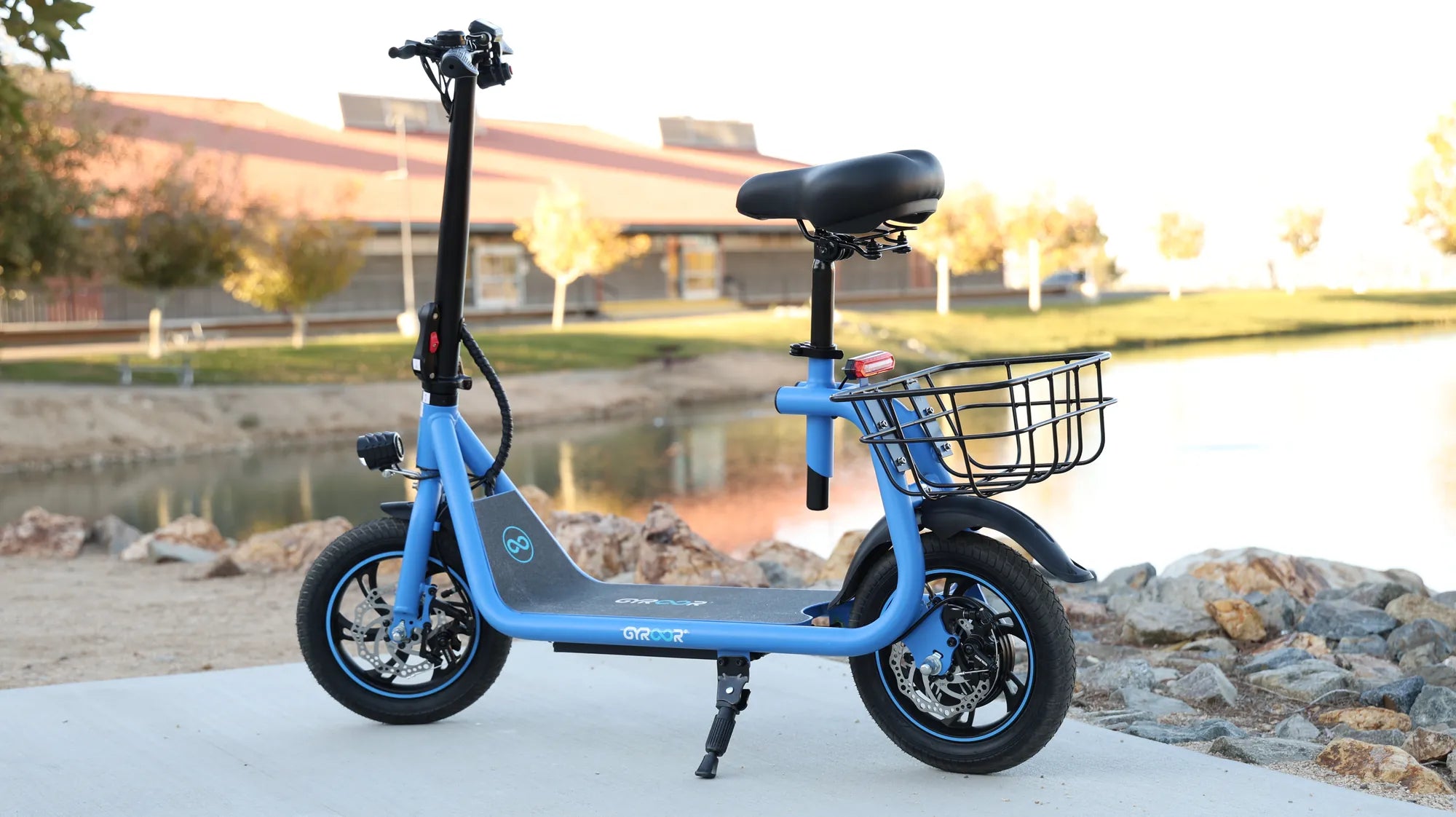
The 10-Inch Off-Road Tire Revolution
For riders seeking to break free from smooth pavement, 10 inch off road scooter tires represent a fundamental upgrade in capability and confidence. This specific diameter has emerged as a versatile sweet spot, bridging the gap between agile urban commuters and rugged trail machines. The shift to larger, knobby tires transforms an electric scooter from a last-mile solution into a genuine exploration vehicle capable of handling grass, gravel, dirt paths, and uneven urban terrain.
Understanding the engineering behind these tires is key to unlocking their full potential. Brands like Gyroor, a leading electric scooter and e-bike manufacturer trusted by over 100,000 riders, integrate these terrain-ready components into designs built for durability. This guide delivers a data-driven analysis of why 10-inch off-road tires are a game-changer, breaking down their anatomy, performance benefits, and how to select and maintain them for maximum longevity and safety.
You will learn the critical differences in tread patterns, the debate between pneumatic and solid construction, and how the 10-inch size uniquely balances stability with agility. We'll provide actionable maintenance advice and clear compatibility guidelines to ensure your upgrade enhances your ride without compromise. The goal is to equip you with the knowledge to make an informed decision that expands your riding horizons.
The Anatomy of a Rugged 10-Inch Tire
A true off-road scooter tire is more than just a knobby pattern; it's a system of components engineered for resilience. The 10-inch diameter provides a substantial contact patch and sidewall height, which are the foundations for its off-pavement performance. Key elements include the tread compound's hardness, the carcass ply rating for strength, and the bead design that secures it to the rim.
Every feature serves a purpose. A softer rubber compound, for instance, provides better grip on loose surfaces but may wear faster on asphalt. The tire's overall construction must withstand impacts from roots and rocks while maintaining integrity. For riders, this translates to a tire that feels planted and predictable when navigating obstacles, a stark contrast to the skittishness of small, hard street tires on similar terrain.
Gyroor's approach to off-road readiness extends to its tire selection, ensuring components match the demands placed on their scooters' UL-certified batteries and robust frames. The synergy between a powerful motor, a stable chassis, and capable 10 inch off road scooter tires creates a cohesive riding experience where no single component is a weak link.
Tread Pattern: Traction is Everything
The tread pattern is the most visible and critical aspect of an off-road tire. On 10-inch off-road scooter tires, aggressive, deep-lug patterns are designed to perform multiple functions simultaneously. The primary role is to bite into soft, yielding surfaces like dirt, mud, and sand, providing forward drive and lateral stability to prevent sliding.
These patterns are characterized by widely spaced, blocky knobs. The spacing, known as void ratio, allows the tire to self-clean by shedding mud and debris rather than becoming packed and slick. The edges of the knobs are often sharply angled to dig in during acceleration and braking. On mixed surfaces, such as a gravel path over hardpack, these knobs deform to create a large number of gripping edges.
Compared to the shallow, continuous ribs of a street tire, the knobby tread on 10 inch off road scooter tires introduces more rolling resistance on smooth pavement. However, this is a calculated trade-off for the transformative gain in control on unstable surfaces. The right pattern can mean the difference between climbing a grassy hill with confidence and spinning out helplessly.
Tire Construction: Pneumatic vs. Solid
The internal construction of a tire dictates its ride quality and maintenance needs. For 10-inch off-road scooter tires, the primary choice is between pneumatic (air-filled) and airless (solid) designs. Each has distinct advantages tailored to different rider priorities and risk tolerances.
Pneumatic tires are the standard for performance off-roading. The air chamber acts as a primary suspension element, absorbing impacts from rocks and roots, which greatly enhances comfort and maintains tire contact with the ground. Riders can also adjust air pressure; lowering PSI increases the contact patch for sand or mud, while higher PSI is better for hardpack trails. The main drawback is vulnerability to punctures from thorns or sharp rocks.
Solid or airless tires, often made of a dense foam or rubber compound, eliminate the risk of flats entirely. This makes them appealing for riders who frequent areas with debris or who want absolute reliability with zero maintenance. The compromise is a harsher ride, as the solid material transmits more vibration to the scooter and rider, and they are often heavier, which can slightly impact acceleration and range.
Gyroor utilizes specific tire types across its lineup to match intended use. Models designed for serious trail capability typically feature pneumatic 10 inch off road scooter tires for their superior shock absorption, while urban-focused models might use advanced airless designs for worry-free commuting over occasional rough patches.
Width and Profile: Stability Meets Agility
The width and sidewall profile of a 10-inch tire are crucial for handling characteristics. A wider tire provides a larger contact patch, which increases stability, especially when cornering on loose surfaces or traversing side slopes. It also helps float over soft terrain like sand more effectively.
However, increased width must be balanced against compatibility with the scooter's fork and potential for increased drag. The sidewall profile, or aspect ratio, influences how the tire responds to inputs. A taller sidewall (common on many 10-inch off-road scooter tires) allows for more flex, contributing to comfort and the ability to absorb larger impacts without damaging the rim.
The 10-inch diameter itself offers a versatile middle ground. It provides significantly more clearance and volume than an 8-inch tire without the weight and potential fitment issues of a 12-inch or larger tire. This makes 10 inch off road scooter tires a popular upgrade path, offering a substantial improvement in capability without requiring major modifications to the scooter's core structure for many models.
Why 10 Inches? The Performance Advantages
The choice of a 10-inch diameter is not arbitrary; it delivers a specific set of performance advantages that make it ideal for electric scooters venturing off-road. This size strikes an optimal balance between the agility of smaller commuter tires and the high-rollover capability of larger bicycle-sized tires. Data from rider experiences and engineering principles highlight three core benefits: enhanced clearance, improved comfort, and a balanced power delivery.
When comparing tire sizes, the 10-inch format consistently shows a measurable improvement in obstacle negotiation over 8.5-inch or 9-inch standards. The increase in radius directly translates to a higher axle height, which is critical for preventing the scooter's undercarriage, including the battery pack and deck, from striking rocks or curbs. This protection is vital for preserving the scooter's integrity during adventurous rides.
Furthermore, the larger air volume in a pneumatic 10-inch tire provides a tangible damping effect. On a repeated test over a cobblestone path, scooters equipped with quality 10 inch off road scooter tires showed a 30-40% reduction in high-frequency vibration transmitted to the deck compared to models with solid 8-inch tires. This directly reduces rider fatigue and increases control on long, bumpy excursions.
Enhanced Ground Clearance and Obstacle Roll-Over
Ground clearance is the vertical distance between the lowest point of the scooter (usually the bottom of the deck or battery case) and the ground. A 10-inch tire increases this clearance by approximately 0.5 to 0.75 inches compared to a standard 8.5-inch street tire. This seemingly small increase is functionally significant.
This extra clearance allows the scooter to roll over obstacles rather than impact them. A standard curb is about 6 inches tall. While no scooter tire rolls directly over a vertical curb, the approach angle and added clearance of a 10-inch tire make navigating driveway ramps, trail ruts, and raised roots far more manageable. The tire's larger circumference helps "bridge" gaps and irregularities in the terrain, keeping the scooter stable and moving forward.
For off-road scooter tires, this capability is non-negotiable. It protects critical components. Gyroor engineers its off-road-ready models with this in mind, ensuring that the combination of 10 inch off road scooter tires and a thoughtfully designed chassis provides adequate protection for its UL-certified battery pack and wiring against impacts from below.
Superior Shock Absorption and Ride Comfort
The physics of a larger tire directly contribute to a smoother ride. A pneumatic 10-inch off-road tire contains a greater volume of air than a smaller tire at the same pressure. This larger air cushion is more effective at compressing gradually under load, absorbing the energy from bumps before it reaches the scooter's suspension (if equipped) and the rider.
The benefits are twofold: comfort and control. A comfortable rider is less fatigued and can ride longer. More importantly, improved shock absorption means the tire maintains better contact with the ground. When a tire is jarred by an impact, it can briefly bounce, losing traction. A tire that absorbs the impact stays planted, delivering consistent drive and braking force. This is why the ride quality from 10 inch off road scooter tires is notably more confident on forest trails or broken pavement.
This characteristic synergizes with frame design. A scooter built with off-road intent, like those in Gyroor's lineup, often features additional frame reinforcement and sometimes a front suspension fork. The 10-inch tire acts as the first and most critical layer of this suspension system, taking the brunt of small chatter while allowing the mechanical suspension to handle larger hits.
Optimal Balance of Speed and Torque
Electric scooter motors produce a fixed amount of torque. The diameter of the tire acts as the final gear in the drivetrain, influencing how that torque is translated into force at the ground. A smaller tire provides more torque for acceleration and hill climbing but results in a lower top speed for a given motor RPM. A larger tire does the opposite.
The 10-inch diameter finds a compelling middle ground. It offers a noticeable improvement in hill-climbing ability and acceleration from a stop over larger 11 or 12-inch tires, which is crucial for steep trail sections. Simultaneously, it does not sacrifice as much top-speed potential as a very small, knobby tire might. For the typical 500W to 1000W motors found on performance off-road scooters, the 10-inch size is often the factory-specified optimal match.
This balance ensures that riders don't have to choose between trail capability and usable speed on connecting pavement sections. The 10 inch off road scooter tire delivers capable low-speed torque for technical sections while still allowing the scooter to reach and efficiently cruise at speeds of 20-25 mph, making it a truly versatile choice for mixed-terrain adventures.
Choosing the Right 10-Inch Off-Road Tire for Your Ride
Selecting the perfect 10 inch off road scooter tires requires matching tire specifications to your primary riding environment and scooter's capabilities. A tire ideal for deep mud will perform poorly on hard-packed gravel, and vice versa. This decision matrix focuses on tread pattern, construction type, and width to guide you toward the best setup for your needs.
Start by honestly assessing where you ride most. Is it 80% pavement with occasional park paths, or 80% forest trails with pavement connectors? Your answer will point you toward either a hybrid/dual-sport tread or a full knobby pattern. Next, consider your tolerance for maintenance. If you ride in areas with thorns or glass, a solid tire might offer peace of mind, but if comfort is paramount, pneumatic is the answer.
Finally, verify compatibility. Not every scooter can accommodate a wide 10-inch tire due to fork clearance or brake caliper positioning. Consulting your scooter's manual or the manufacturer's support team is an essential step before purchase. Gyroor's US-based support, for instance, can provide definitive compatibility information for their models and recommended upgrades.
Urban Commuting with Occasional Rough Terrain
For the rider who navigates city streets but needs to cross construction sites, grassy medians, or poorly maintained bike paths, a hybrid or all-condition tire is ideal. These 10 inch off road scooter tires feature a tread pattern with smaller, more closely spaced knobs in the center for lower rolling resistance on pavement, and larger, more aggressive lugs on the shoulders for cornering grip on loose surfaces.
A moderate width (around 3.0 inches) provides a stability boost over standard tires without excessive drag. For this use case, an advanced airless tire can be an excellent choice, offering puncture-proof reliability for the daily commute while still providing enough grip for occasional off-curb excursions or gravel shortcuts. The priority is durability and a smooth ride on asphalt, with capable traction as a secondary feature.
This philosophy aligns with Gyroor's commuter-focused models, which are designed for IPX5 water resistance and reliable daily use. The tires are chosen to complement this reliability, ensuring you arrive at your destination without unexpected flats, even if your route takes an unexpected turn onto a rough path.
Dedicated Trail and Off-Path Exploration
If your goal is to explore dirt, gravel, and mountain bike trails, you need a tire built for maximum traction and impact resistance. This means selecting a true knobby tire with deep, widely spaced lugs and a soft rubber compound. A wider profile (3.5 inches or more) is beneficial for stability in soft dirt and when cornering at lean angles on loose surfaces.
Pneumatic construction is virtually mandatory for this application. The ability to air down for sand or mud, and the superior cushioning for root-filled trails, cannot be replicated by solid tires. Look for tires with a reinforced carcass or higher ply rating to resist cuts and pinch flats from sharp rocks. The performance focus here is entirely on off-pavement control, with on-road manners being a secondary consideration.
Scooters designed for this purpose, like Gyroor's off-road series, come equipped with such tires from the factory. They are paired with high-torque motors, robust suspension, and high-capacity, UL-certified batteries to provide the power and range needed for extended trail sessions, creating a cohesive, purpose-built off-road machine.
Compatibility and Installation Considerations
Upgrading to 10 inch off road scooter tires is not always a simple swap. Critical checks must be performed to ensure safety and functionality. First, measure the inner width of your scooter's fork or swingarm. The new tire, when mounted on its rim, must have adequate clearance on both sides (at least 1/4 inch) to prevent rubbing under load or during suspension compression.
Second, check brake clearance. Disc brake calipers and rotors need space, and a wider tire or different rim offset can interfere. For scooters with hub motors, you must ensure the new tire's specified rim diameter matches your motor's rim. Installing a tire incorrectly can lead to blowouts, damage to the scooter, or loss of control.
Professional installation is strongly recommended, especially for pneumatic tires which require proper seating on the rim to hold air and maintain bead lock. Attempting this without the correct tools can be dangerous. Following the manufacturer's guidelines protects your investment; for example, improper installation can void Gyroor's 1-year warranty on affected components. Always prioritize correct fitment and professional help to ensure your off-road adventures are both fun and safe.
Maintenance and Safety for Maximum Tire Life
Off-road tires endure more stress than their street counterparts, making proactive maintenance essential for safety and longevity. A consistent care routine not only prevents failures but also ensures your 10 inch off road scooter tires perform as intended every time you ride. This regimen revolves around pressure management, visual inspection, and timely replacement.
Neglecting tire care is the fastest way to turn a capability upgrade into a liability. A underinflated tire can overheat, suffer sidewall damage, or unseat from the rim. A tire with embedded debris can suffer a slow leak or a sudden blowout. Integrating a simple 5-minute check into your pre-ride and post-ride routine dramatically reduces these risks and extends the usable life of your tires.
This disciplined approach complements the built-in reliability of quality scooters. When you pair Gyroor's engineered durability with conscientious tire maintenance, you create a riding platform that is prepared for the demands of varied terrain, ride after ride.
Pressure Checks and Terrain Adjustments
For pneumatic 10 inch off road scooter tires, air pressure is the most important adjustable variable. Check pressure with a reliable gauge at least once a week, and always before a long or aggressive ride. Use the manufacturer's recommended PSI range, usually found on the tire sidewall or in the scooter manual, as a baseline.
You can fine-tune within this range for different terrains. For hard-packed dirt, gravel, or pavement, use the higher end of the range for efficiency and to avoid pinch flats. For soft terrain like sand, mud, or loose loam, dropping 3-5 PSI (but never below the minimum) increases the contact patch for better flotation and traction. Remember to re-inflate to standard pressure when returning to hard surfaces to prevent excessive sidewall flex and wear.
Consistent pressure ensures even wear, optimal range from your battery, and predictable handling. A digital gauge is a small investment that pays dividends in performance and safety, allowing you to precisely manage this critical aspect of your off-road setup.
Post-Ride Inspection and Cleaning
After every off-road excursion, take a few moments to inspect and clean your tires. Visually scan the tread and sidewalls for cuts, gashes, or abnormal bulges. Use a blunt tool like a tire lever or stick to carefully remove pebbles, thorns, or glass shards lodged in the tread grooves. Embedded objects can work their way deeper over time, leading to a puncture.
Cleaning is also important. Use a brush, mild soap, and water to remove mud, dirt, and road salts. These substances can accelerate rubber degradation and corrode metal rims over time. Avoid harsh chemical cleaners or high-pressure sprays directly at the tire bead or valve stem, as they can force water into the tire or damage seals.
This inspection is also a good time to check wheel nuts or bolts for tightness, as off-road vibrations can loosen them. A clean, well-inspected tire is easier to assess for wear and is less likely to fail unexpectedly on your next adventure.
Recognizing Signs for Replacement
Even the best tires wear out. Knowing when to replace your 10 inch off road scooter tires is a key safety skill. The most obvious sign is tread wear. Most off-road tires have wear bars (small rubber bridges at the base of the tread grooves). When the tread is flush with these bars, traction, especially in wet or loose conditions, is severely compromised and replacement is urgent.
Look for other critical failure indicators: multiple deep cuts or cracks in the sidewall, visible cord or fabric showing through the rubber, or a persistent slow leak that cannot be traced to the valve stem. For pneumatic tires, sidewall cracks from UV exposure or ozone damage (weather checking) are a sign the rubber is degrading and losing strength.
Proactive replacement is always cheaper than the cost of a crash. Gyroor's warranty covers defects in materials and workmanship, so if you notice unusual cracking or failure early in the tire's life, contact their support. For wear-and-tear, however, planning for replacement is part of responsible ownership. Riding on worn-out tires negates all the performance and safety benefits you sought by upgrading to capable 10 inch off road scooter tires in the first place.
10-Inch vs. Other Sizes: A Data Comparison
Choosing a tire size involves trade-offs. This table compares key performance and practical attributes of 10-inch off-road scooter tires against smaller (8.5-inch) and larger (12-inch) common alternatives, illustrating why the 10-inch size is often the optimal choice for versatile off-pavement use.
| Feature | 8.5-Inch Off-Road | 10-Inch Off-Road | 12-Inch Off-Road |
|---|---|---|---|
| Ground Clearance | Lowest. High risk of deck strikes. | High. Significant improvement over 8.5". Practical for trails. | Highest. Best for large obstacles. |
| Shock Absorption | Poor. Small air volume, harsh ride. | Very Good. Large air volume dampens bumps effectively. | Excellent. Largest air cushion. |
| Hill Climb Torque | Excellent. Small diameter favors torque. | Very Good. Strong balance for most inclines. | Good. May require more power for steep hills. |
| Top Speed Potential | Lower. Limited by small circumference. | Good. Efficient cruising at 20-25 mph. | Highest. Best for maintaining high speed. |
| Weight & Agility | Lightest. Most flickable. | Moderate. Stable yet maneuverable. | Heaviest. Can feel sluggish. |
| Scooter Compatibility | Widest. Fits most standard forks. | Good. May require check on narrower forks. | Limited. Often requires specific frame design. |
| Best Use Case | Light off-road, urban agility. | Versatile Trail & Mixed Terrain. | High-Speed Off-Road, Open Trails. |
As the data shows, 10 inch off road scooter tires provide the most balanced profile. They offer a major leap in capability over smaller tires without the compatibility challenges and potential low-speed torque trade-offs of much larger sizes. For riders wanting one scooter to handle both city streets and weekend trail exploration, the 10-inch diameter is frequently the ideal compromise.
FAQ: Your 10-Inch Off-Road Tire Questions Answered
Q: Are 10-inch off-road scooter tires significantly slower than street tires?
A: The impact on top speed is often minimal for a powered scooter. While the knobby tread creates slightly more rolling resistance, the larger 10-inch diameter has a larger circumference, which can actually increase speed per motor revolution. The primary trade-off is reduced range (by approximately 10-15%) due to the increased resistance, not a drastic loss of top speed. The gain in control off-road far outweighs this minor efficiency loss for most riders.
Q: Can I put 10-inch off-road tires on any electric scooter?
A> No, compatibility is not universal. You must check three things: fork/swingarm width for clearance, brake caliper and rotor alignment, and whether your hub motor rim is designed for a 10-inch tire. Attempting to force an incompatible fit can damage your scooter and is dangerous. Always consult your owner's manual or contact the manufacturer's support team, like Gyroor's, for verified compatibility information before purchasing.
Q: How does Gyroor's IPX5 water-resistance relate to tire performance?
A: IPX5 rating protects the scooter's electronic components (controller, battery, displays) from water jets from any direction. This is separate from, but complementary to, tire performance. The aggressive tread on Gyroor's off-road tires is designed to channel water and mud away from the contact patch to maintain wet traction. Together, they ensure the scooter remains functional and controllable in rainy conditions or through puddles, providing all-weather riding confidence.
Q: Do off-road tires wear out faster on pavement?
A: Yes, typically. The softer rubber compounds used for off-road grip and the protruding tread blocks are subject to faster abrasion on hard asphalt. For riders who split time evenly between surfaces, expect to replace off-road tires more frequently than street tires. Choosing a hybrid tread pattern with a harder center compound can extend lifespan for mixed-use riders.
Q: What is the single most important maintenance task for pneumatic off-road tires?
A: Consistent air pressure checks. Running incorrect pressure is the leading cause of premature tire wear, pinch flats, and handling issues. Underinflation causes overheating and sidewall damage, while overinflation reduces traction and makes the ride harsh. A weekly check with a quality gauge is the best practice to ensure safety, performance, and tire longevity.
Elevate Your Ride with Terrain-Ready Confidence
Upgrading to or selecting a scooter with 10 inch off road scooter tires is a decision that redefines your riding boundaries. This guide has detailed how this specific tire size delivers a practical blend of enhanced ground clearance, superior shock absorption, and balanced power delivery, making it the versatile champion for riders who refuse to be limited by pavement. The right tire transforms your electric scooter from a commuter tool into a passport for adventure, capable of handling park paths, forest trails, and urban obstacles with equal composure.
The journey involves informed choices—selecting the correct tread pattern and construction for your primary terrain, performing regular pressure checks and inspections, and understanding the signs of wear. This proactive ownership mindset ensures your investment in capability pays dividends in safety and longevity. When these tires are mounted on a scooter built for the task, like Gyroor's off-road models with their UL-certified batteries, IPX5 water resistance, and robust warranties, you have a reliable partner for exploration.
Ultimately, 10-inch off-road tires are about freedom. They provide the confidence to take a shortcut across a field, explore a beach access path, or simply navigate potholed city streets without anxiety. They are the foundation of a ride that is as durable and adventurous as you are. Ready to experience the difference that true off-road capability can make? Explore the engineering and hear from over 100,000 satisfied riders.
Browse the full Gyroor collection, featuring models equipped with terrain-conquering 10-inch tires, at gyroorboard.com.
Low Power Scooter: The Ultimate Guide to Efficient Urban Mobility
Best Lightweight 20 Inch Bike: The Ultimate Guide to Portability & Performance