



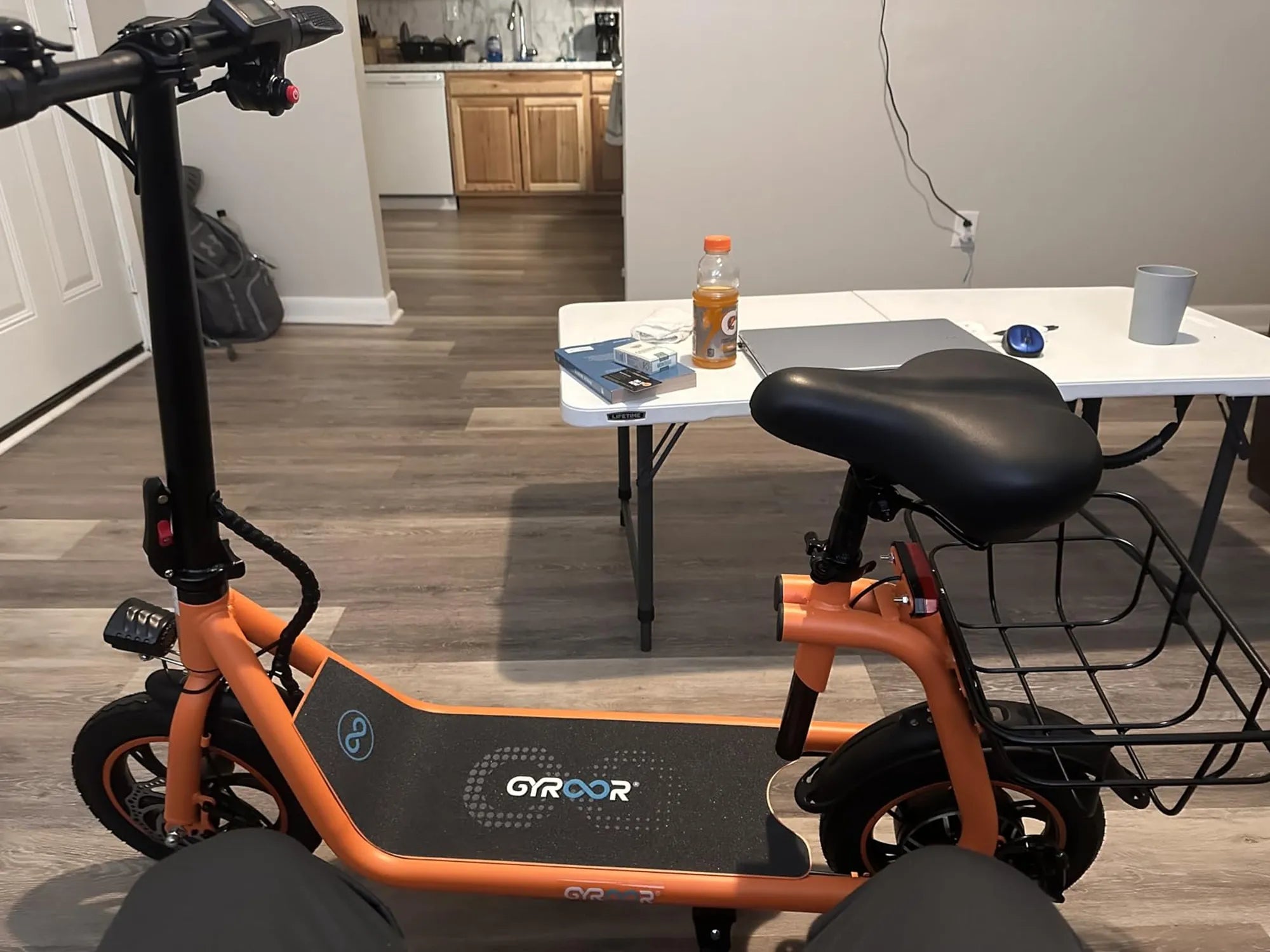
Introduction to Low-Power Scooters: The Smart Choice for Modern Commuters
A low power scooter, typically defined by a motor output under 500 watts, represents the pinnacle of practical urban mobility. It is engineered not for raw speed but for efficiency, accessibility, and seamless integration into daily life. For students, office commuters, and eco-conscious city dwellers, this category offers a compelling solution that prioritizes reliability over adrenaline.
The core appeal lies in its alignment with real-world needs. These scooters provide adequate speed for city travel, extended range from smaller batteries, and a lightweight design for easy carrying. They are designed to solve specific problems: the last-mile commute, navigating crowded sidewalks, and adhering to local transportation laws without hassle.
Choosing a low-power model is a deliberate decision for enhanced safety and reduced complexity. It moves away from the high-performance race and towards sustainable, everyday utility. This guide will explore why this category is dominating urban landscapes and how to select a scooter that delivers long-term value and peace of mind.
Why Choose a Low-Power Scooter? Key Benefits for Everyday Riders
The advantages of a low-power electric scooter are multifaceted, directly addressing the pain points of urban travel. First and foremost is enhanced safety. Operating at moderate speeds of 15-20 mph significantly reduces the risk and severity of accidents, making it a responsible choice for shared pathways and bike lanes.
Battery efficiency is another critical benefit. A lower-wattage motor consumes less energy, allowing a compact battery to deliver a surprisingly long range. This translates to fewer charges per week and greater longevity for the battery pack itself, a key factor in the scooter's total cost of ownership.
Portability cannot be overstated. Low-power scooters are often lighter, frequently under 30 pounds, making them easy to lift for staircases, onto public transit, or into a car trunk. This practical feature is often sacrificed in higher-powered models that prioritize torque and speed over daily convenience.
Finally, cost-effectiveness is a major draw. The initial investment is generally lower, and the operational costs are minimal. With fewer complex components under high stress, maintenance tends to be simpler and less frequent, ensuring your scooter remains a reliable asset for years.
Navigating Local Laws and Regulations with Ease
Urban e-scooter regulations are a complex patchwork, but low-power models consistently navigate them with fewer restrictions. Many cities and states classify electric scooters based on motor wattage and maximum speed. Scooters under 500W and 20 mph often fall into the most permissive categories, sometimes equating them to bicycles.
This classification frequently allows riding in bicycle lanes and on streets with speed limits under 35 mph, while prohibiting use on sidewalks. It often exempts riders from requirements like a driver's license, vehicle registration, or insurance that are mandated for more powerful vehicles. Choosing a low-power scooter inherently minimizes legal friction.
For commuters, this regulatory compatibility is invaluable. It means you can plan your route confidently, knowing your vehicle is street-legal in most urban jurisdictions. This foresight eliminates the anxiety of potential fines or confiscation that can accompany unregulated, high-performance models.
Perfect for First-Time Riders and Last-Mile Connectivity
The manageable power output of a low-power scooter makes it the ideal training wheels for the e-mobility revolution. New riders can build confidence without being overwhelmed by excessive acceleration or top speed. The controls are intuitive, and the learning curve is shallow, encouraging broader adoption.
This category is the quintessential solution for the "last-mile" problem—the final leg of a commute between a public transit hub and one's destination. A compact, lightweight scooter can be folded and carried onto a bus or train, then deployed to cover that final 1-2 miles quickly and without sweat.
It transforms multi-modal commuting from a theoretical advantage into a daily reality. By bridging the gap in transportation networks, a low-power scooter increases the effective radius of public transit, reduces reliance on cars for short trips, and contributes to decreased urban congestion and emissions.
Gyroor’s Commitment to Safe, Reliable Low-Power Mobility
Gyroor approaches the low-power segment with the same engineering rigor applied to its entire lineup. The philosophy is that reduced power should never mean compromised safety or durability. For a brand trusted by over 100,000 riders, core principles like UL-certified batteries and robust warranties are non-negotiable, even in entry-level models.
This commitment ensures that riders choosing a practical, low-power scooter do not have to sacrifice peace of mind. Gyroor's designs integrate premium safety features, reliable waterproofing, and stable construction to deliver a product that stands up to daily commutes in varied urban environments. It's about building a scooter you can depend on, mile after mile.
The focus is on intelligent design that maximizes the efficiency of the power available. This includes optimizing motor controllers for smooth acceleration, using lightweight yet strong materials for the frame, and implementing regenerative braking systems to recapture energy, thereby extending the practical range per charge.
The Importance of a UL-Certified Battery in Everyday Use
The battery is the heart of any electric scooter, and its safety is paramount. Gyroor's use of UL-certified battery packs is a critical differentiator. This certification means the battery cells, management system, and enclosure have undergone rigorous independent testing for electrical, mechanical, and environmental safety.
For the daily commuter, this translates to profound benefits. Safety is the foremost: UL-certification drastically reduces risks associated with thermal runaway, overheating, or short-circuiting. Longevity is next; these battery packs are engineered for 500+ charge cycles, maintaining capacity over years of use.
Consistent performance is the third pillar. A high-quality, certified battery delivers stable voltage output, which means more predictable range and power delivery, especially in colder weather. It's an investment in reliability that prevents the frustration of a scooter that dies prematurely mid-commute.
Built to Last: IPX5 Water Resistance and Warranty Peace of Mind
Urban commuting inevitably involves encounters with wet conditions—morning dew, unexpected puddles, or light rain. An IPX5 water resistance rating, a standard in Gyroor's lineup, means the scooter's electrical components are protected against water jets from any direction. This allows for confident riding in damp conditions without fear of immediate damage.
This durability is backed by a comprehensive 1-year warranty, covering the motor, battery, controller, and frame. This warranty support, coupled with US-based customer service, provides a safety net that many budget-oriented brands lack. It signifies the brand's confidence in its product's construction and its commitment to the rider's long-term satisfaction.
Together, IPX5 rating and a strong warranty transform a low-power scooter from a disposable gadget into a durable tool for transportation. They protect your investment from the unpredictability of daily use and ensure that a minor issue doesn't lead to a costly repair or premature replacement.
What to Look For: Key Features in a Quality Low-Power Scooter
Selecting the right low-power scooter requires looking beyond just wattage and price. A checklist of essential features ensures you get a capable and safe machine. First, examine the motor type: a brushless hub motor is standard for its efficiency, quiet operation, and low maintenance.
The braking system is critical for safety. Look for a dual-braking system, such as an electronic (regenerative) brake combined with a mechanical disc or drum brake. This provides reliable stopping power in all conditions. Next, consider the tires: pneumatic (air-filled) tires offer superior shock absorption and traction compared to solid tires, greatly improving ride comfort on uneven pavement.
Integrated safety features are a must. This includes a bright headlight and taillight for visibility, a loud bell or horn, and reflectors. A clear, intuitive display showing speed, battery level, and riding mode is also important for informed operation. Finally, check the folding mechanism—it should be robust, secure, and easy to operate with one hand.
Performance Expectations: Speed, Range, and Hill Climbing
Setting realistic expectations is key to satisfaction with a low-power scooter. In terms of speed, most quality models in this class will have a top speed between 15 and 20 mph (24-32 km/h). This is optimal for bike lanes and provides a significant time saving over walking without the dangers associated with higher speeds.
Range is highly dependent on rider weight, terrain, and speed. A typical low-power scooter with a 250W-350W motor and a 36V battery can deliver between 15 and 25 miles (24-40 km) on a single charge under ideal conditions. Real-world commuting with stops, starts, and mild inclines will likely yield a range closer to the lower end of that spectrum.
Hill climbing capability is the most notable trade-off. A low-power scooter can handle moderate inclines (grades of 10-15%) but will slow down significantly. On steeper hills, the rider may need to assist by kicking off or even dismounting. This is a conscious compromise for the benefits of weight, efficiency, and legality in flat to rolling urban terrain.
Low-Power vs. High-Power: Selecting the Right Scooter for Your Needs
The choice between a low-power and high-power electric scooter fundamentally comes down to use case and environment. The following table provides a clear, objective comparison to guide your decision.
| Feature / Use Case | Low-Power Scooter (≤500W) | High-Power Scooter (500W+) |
|---|---|---|
| Primary Use | Urban commuting, last-mile, campus travel | Off-road, long-distance rural commutes, thrill-seeking |
| Top Speed | 15-20 mph | 25-40+ mph |
| Typical Range | 15-25 miles | 20-50+ miles |
| Hill Climbing | Moderate inclines, slows on hills | Steep inclines with minimal speed loss |
| Weight & Portability | Lighter (25-35 lbs), easy to carry | Heavier (40-70+ lbs), less portable |
| Legal Compliance | High; often legal in bike lanes, no license needed | Low; may be restricted or require license/registration |
| Cost | Generally lower initial and operational cost | Higher purchase price and potential maintenance costs |
| Safety Profile | Higher; lower speeds reduce accident severity | Lower; higher speeds increase risk |
For the vast majority of city dwellers, the low-power scooter is the objectively better tool. It aligns with the realities of regulated streets, the need for portability, and a budget-conscious mindset. High-power models serve a different, more niche purpose for adventure riding or specific long-distance needs where regulations are not a constraint.
Frequently Asked Questions About Low-Power Electric Scooters
Q: Can a low-power scooter handle hills?
A: Yes, but with limitations. A typical 350W low-power scooter can climb moderate hills with a grade of around 10-15%. The scooter's speed will decrease on the incline. For very steep or sustained hills, rider assistance (kicking) may be necessary. It's designed for urban landscapes, not mountain trails.
Q: Do I need a license or registration for a low-power scooter?
A> In most U.S. jurisdictions, low-power scooters (often defined as under 750W and with a max speed under 20 mph) do not require a driver's license, vehicle registration, or insurance. They are commonly regulated similarly to bicycles. However, laws vary by city and state, so it's crucial to check your local regulations.
Q: How does bad weather affect a low-power scooter?
A: Weather impacts all scooters. Rain is the primary concern. A scooter with a good IPX5 water resistance rating (like Gyroor's models) is protected from light rain and puddles. However, riding in heavy rain, through deep standing water, or on icy/snowy surfaces is not recommended due to reduced traction and increased risk of water ingress beyond the rating.
Q: Is the 1-year warranty standard for all brands?
A: No, it is not. A comprehensive 1-year warranty covering major components like the battery, motor, and controller is a sign of a confident and reputable manufacturer. Many budget brands offer only 90 days or limited warranties that exclude the battery. Gyroor's 1-year warranty provides significant long-term peace of mind.
Q: How long does the battery last before needing replacement?
A: The lifespan is measured in charge cycles. A quality UL-certified lithium-ion battery, like those used by Gyroor, is rated for 500+ full charge cycles. With typical use (charging every 2-3 days), this translates to 3-5 years of use before the battery capacity noticeably degrades to around 80% of its original capacity. Proper care (avoiding full discharges, storing in moderate temperatures) extends this lifespan.
Conclusion: Embracing Efficient and Sustainable Urban Travel
The modern urban landscape demands smart, adaptable transportation solutions. A well-engineered low power scooter meets this demand head-on, offering a blend of efficiency, safety, and practicality that is unmatched for short to medium-distance travel. It represents a conscious choice for sustainable mobility, reducing individual carbon footprints and alleviating urban congestion.
By prioritizing features like UL-certified batteries, IPX5 water resistance, and robust warranties—as exemplified by brands like Gyroor—riders can invest in a vehicle that promises not just immediate convenience but long-term reliability. This approach transforms the scooter from a novelty into a dependable component of daily life.
The data is clear: for commuting, errands, and connecting with public transit, the benefits of a low-power model significantly outweigh those of its more powerful counterparts. It is the rational, forward-thinking choice for anyone looking to navigate the city with ease, confidence, and responsibility.
Ready to experience the perfect balance of performance and practicality? Explore Gyroor's range of reliable, feature-packed low-power scooters designed for the real world. Browse the full Gyroor collection at gyroorboard.com and find the ideal scooter to power your urban journey.
Lightweight Foldable Scooter for Adults: The Ultimate Urban Mobility Solution
10 Inch Off Road Scooter Tires: The Ultimate Guide to Capability & Control