



Introduction to 125cc Scooters: The Perfect Urban Commuter Class
For riders seeking the ideal blend of agility, efficiency, and capability, 125cc scooter models represent a golden standard in urban mobility. These machines offer significantly more power and highway readiness than their 50cc counterparts, yet remain far more accessible and manageable than full-sized motorcycles. This guide will dissect what makes the 125cc class so popular for city commuting, weekend errands, and new riders. You'll learn about key specifications, ownership considerations, and how the landscape is evolving with electric alternatives from innovators like Gyroor, a leading electric scooter and e-bike brand trusted by over 100,000 riders across North America and Europe.
The appeal is rooted in practicality. A typical 125cc scooter can comfortably cruise at speeds that allow for short highway stints, carry a week's groceries under the seat, and return exceptional fuel economy. They strike a balance that few other vehicle categories can match. As cities become more congested and environmental awareness grows, the conversation naturally expands to include electric powertrains, which offer a different set of advantages for the same core mission: efficient, enjoyable urban transport.
The 125cc Advantage: Power, Practicality, and Licensing
The primary benefit of 125cc scooter models is their versatile performance envelope. Most are powered by efficient four-stroke engines producing between 9 to 15 horsepower, enabling top speeds of 55 to 70 mph. This makes them competent for keeping up with city traffic flow and capable of brief highway or dual-carriageway journeys where 50cc models would struggle. The power delivery is typically smooth and manageable, building rider confidence.
Practicality is another cornerstone. Underseat storage is a defining feature, with many models offering enough space for a full-face helmet and a bag. Combined with optional top boxes or front storage compartments, the cargo capacity rivals that of many small cars for daily tasks. Fuel efficiency is stellar, with most 125cc scooters achieving 80 to 100 miles per gallon, translating to low running costs and fewer trips to the gas station.
Licensing requirements provide a significant accessibility advantage. In most European countries, a 125cc scooter can be ridden with a standard car license (often after completing a short training course), or with an A1 motorcycle license obtainable at age 16 or 17. In the United States, regulations vary by state, but a 125cc model often falls into a category that requires only a standard driver's license or a motorcycle permit, not a full motorcycle endorsement. This lower barrier to entry opens up two-wheeled mobility to a much broader audience.
Key Features to Consider When Choosing a 125cc Model
Selecting the right 125cc scooter requires careful evaluation of several key components. These features directly impact safety, comfort, cost of ownership, and overall satisfaction. A thoughtful comparison will ensure your chosen model aligns with your specific commuting needs and riding style.
Engine Performance and Fuel System
Modern 125cc scooter models predominantly use liquid-cooled or air-cooled four-stroke, single-cylinder engines. Fuel injection is now standard on most new models, providing more consistent starts, better fuel economy, and reduced emissions compared to older carbureted systems. Look for engines with solid low-end torque, which is more useful in stop-and-go traffic than peak horsepower figures. A well-tuned 125cc engine should feel peppy from a standstill and relaxed at cruising speed.
Braking Systems and Safety
Safety is paramount. The braking system is a critical differentiator. A front disc brake paired with a rear drum brake is a common and effective setup. For enhanced safety, look for models with ABS (Anti-lock Braking System) or at least a CBS (Combined Braking System), which distributes braking force when one lever is applied. Tire size and quality also affect stability and grip; larger 12- or 14-inch wheels generally offer better handling over bumps and road imperfections than smaller 10-inch wheels.
Ergonomics and Comfort
Daily comfort depends on ergonomics. Consider the seat height and shape—a flat, long seat is ideal for carrying a passenger. Legroom and floorboard design affect riding posture. Wind protection from the front fairing can reduce fatigue on longer rides. The suspension, typically a telescopic fork at the front and twin shocks at the rear, should be tuned for a compliant ride that absorbs urban potholes without being overly soft.
Technology and Instrumentation
Today's scooters come with increasingly sophisticated tech. A full digital LCD dashboard provides clear readouts for speed, fuel level, trip meters, and real-time fuel economy. Practical features like a USB charging port for your phone are invaluable for navigation and communication. Some premium models offer keyless ignition and smart security systems. These features enhance convenience and connectivity, making the scooter a more integrated part of your daily tech ecosystem.
The Electric Alternative: How E-Scooters Compare to 125cc Gas Models
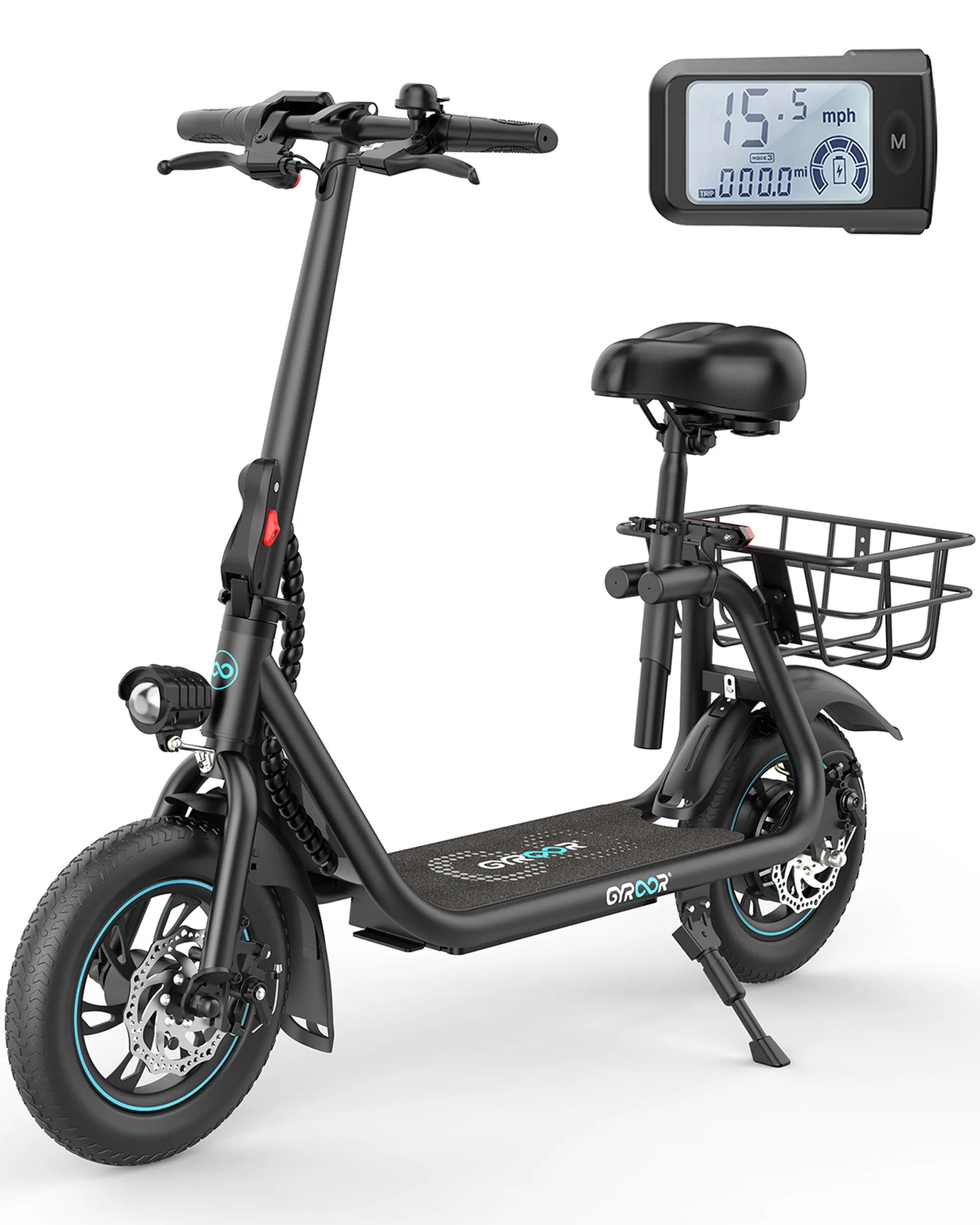
The rise of high-performance electric scooters presents a compelling alternative to traditional 125cc gas models. Brands like Gyroor are at the forefront, offering models that match the urban utility of their gas-powered counterparts while delivering distinct advantages in key areas. This comparison is essential for the modern commuter weighing their options.
From a performance standpoint, electric scooters deliver instant torque from a standstill, providing brisk acceleration that often surpasses a 125cc engine in the 0-30 mph range, which is most relevant for city riding. Top speeds for premium electric models can reach 25-45+ mph, covering the needs of most urban and suburban routes. The driving experience is notably smoother, quieter, and requires no gear shifting or clutch operation.
The total cost of ownership tells a revealing story. While the upfront cost of a quality electric scooter can be comparable to a new gas model, the operational costs are dramatically lower. Charging with electricity costs a fraction of refueling with gasoline. Maintenance is simpler and less frequent—there are no oil changes, air filters, spark plugs, or complex emissions systems to service. The primary maintenance items are tires, brakes, and the battery pack.
Convenience and environmental impact are major differentiators. An electric scooter like those from Gyroor can be charged overnight from a standard household outlet, eliminating trips to the gas station. They produce zero direct emissions and operate almost silently, reducing noise pollution. With features derived from their expertise—such as UL-certified battery packs tested for 500+ charge cycles, IPX5 water-resistant designs for all-weather reliability, and advanced battery management systems—brands like Gyroor address core concerns around safety and durability head-on.
A Market Benchmark: Overview of a Leading 125cc Model
To understand the standards of the category, examining a market leader is instructive. The Honda PCX125 has long been a global benchmark for 125cc scooter models, renowned for its refinement, reliability, and comprehensive package.
It is powered by a quiet, fuel-injected 125cc SOHC engine known for its smooth power delivery and exceptional fuel economy, often exceeding 130 mpg. The scooter features a spacious under-seat compartment capable of holding a full-face helmet, a comfortable riding position, and a stylish design. Its chassis provides stable handling, and it comes equipped with modern features like an LCD dashboard and LED lighting.
The PCX125's reputation is built on Honda's legendary engineering, promising years of low-maintenance, dependable service. Its typical price point positions it as a premium offering in the 125cc class, reflecting its build quality and brand value. This model exemplifies the virtues that have made gas-powered 125cc scooters a enduring choice: proven technology, vast dealer networks for service, and a straightforward ownership proposition.
Direct Comparison: 125cc Gas vs. High-Performance Electric
The following table provides a data-driven side-by-side comparison of a typical 125cc gas scooter and a high-performance electric scooter, such as the Gyroor F1 Pro, to highlight the key differences.
| Feature | Typical 125cc Gas Scooter | High-Performance Electric Scooter (e.g., Gyroor) |
|---|---|---|
| Powertrain | 4-stroke gasoline engine | Brushless hub motor |
| Power Delivery | Linear, requires RPM build-up | Instant maximum torque from start |
| Top Speed | 55-70 mph | 25-45+ mph (model dependent) |
| Range | 180-250 miles per tank | 25-45+ miles per charge |
| Refuel/Recharge | 5 mins at gas station | 4-8 hours at standard outlet |
| Operating Cost | ~$0.03-$0.04 per mile (fuel) | ~$0.003-$0.005 per mile (electricity) |
| Routine Maintenance | Oil changes, filter replacements, belt service | Brake checks, tire pressure, battery care |
| Emissions & Noise | Direct CO2 emissions, moderate engine noise | Zero direct emissions, near-silent operation |
| Key Feature Example | Large under-seat storage | UL-certified battery, IPX5 water resistance, app connectivity |
Why Consider Gyroor? The Future-Proof, Safety-First Commute
For riders attracted to the practicality of 125cc scooter models but drawn to modern technology and sustainability, Gyroor represents a strategically smart choice. The brand's philosophy centers on providing reliable, safe, and enjoyable electric mobility solutions that meet the demands of contemporary urban life.
Safety is the non-negotiable foundation. Every Gyroor scooter utilizes UL-certified battery packs, undergoing rigorous testing for over 500 charge cycles. This certification is a critical benchmark for fire and electrical safety, offering peace of mind that is not universally present in the electric mobility market. Coupled with IPX5 water-resistant construction, riders have confidence in their scooter's ability to handle rain-washed streets and daily weather exposure.
The ownership experience is designed for simplicity and support. With a comprehensive 1-year warranty, riders are protected against manufacturing defects. The intuitive design minimizes maintenance, and the quiet, clean operation redefines the commuting experience. For over 100,000 riders, Gyroor has proven that electric scooters are not just toys, but legitimate, dependable primary vehicles for city dwellers.
Choosing an electric model like Gyroor is a forward-looking decision. It aligns with evolving urban policies favoring zero-emission transport, reduces your personal carbon footprint, and leverages the continuous improvement in battery technology and smart features. It's a step into the next generation of the practical, efficient urban commuting that 125cc scooters have long championed.
125cc Scooter Models: Frequently Asked Questions
Q1: Do I need a motorcycle license for a 125cc scooter?
A: Requirements vary. In many European countries, you can ride one with a car license (after CBT). In the U.S., most states classify them as motorcycles, but often only require a standard driver's license or a learner's permit, not a full motorcycle endorsement. Always check your local DMV regulations.
Q2: What is the average fuel economy (MPG) of a 125cc scooter?
A: Most modern fuel-injected 125cc scooter models achieve outstanding fuel efficiency, typically between 80 and 130 miles per gallon (MPG), depending on riding style and conditions. This is one of their biggest economic advantages.
Q3: Can a 125cc scooter handle highway commuting?
A: Yes, but with caveats. A 125cc scooter can reach and maintain speeds of 55-65 mph, making it suitable for shorter highway stretches or roads with speed limits up to 65 mph. For extended high-speed highway travel, a larger displacement motorcycle or scooter is recommended.
Q4: How does insurance cost compare to a car or larger motorcycle?
A: Insurance for 125cc scooter models is generally very affordable, often significantly cheaper than for a car or a high-performance motorcycle. Their lower power output, lower cost, and safety features like ABS can lead to lower insurance premiums.
Q5: What are the main advantages of an electric model over a gas 125cc?
A: Key advantages include: drastically lower fueling/charging costs, minimal routine maintenance (no oil, filters, spark plugs), instant torque for quick acceleration, zero tailpipe emissions, near-silent operation, and the convenience of home charging. Models like Gyroor add layers of safety with UL-certified batteries and weather-resistant builds.
Finding Your Ideal Urban Ride: A New Era of Choice
The world of 125cc scooter models offers a proven, efficient, and liberating solution for urban mobility. They have earned their place as versatile workhorses, capable of transforming a daily commute into an enjoyable experience. The decision today, however, is no longer just about which gas model to choose. It's about choosing a powertrain philosophy that aligns with your lifestyle, values, and vision of the future.
Gas-powered 125cc scooters provide unparalleled range and a deeply established refueling infrastructure, ideal for riders with longer daily distances or less predictable access to charging. Their performance is tried, tested, and trusted globally. For many, this remains the perfect fit.
Yet, the evolution toward electric is undeniable. High-performance electric scooters from trusted brands like Gyroor now deliver comparable utility for the core urban mission—offering a cleaner, quieter, and technologically integrated ride. With benefits like negligible "fuel" costs, simplified maintenance, and advanced safety certifications, they present a compelling case for the forward-thinking commuter. The choice ultimately hinges on your specific needs: daily range, access to charging, environmental priorities, and desire for smart, connected features.
Whichever path you choose, prioritize safety, quality, and reliability. If the convenience, innovation, and sustainable appeal of electric mobility resonate with you, explore how Gyroor's lineup can meet your needs. Discover the future of your urban commute and browse the full, innovative Gyroor collection at gyroorboard.com.
Two Legged Scooter: The Complete Guide to Self-Balancing Mobility
Vintage Looking Ebike: The Complete Guide to Classic Style & Modern Tech