



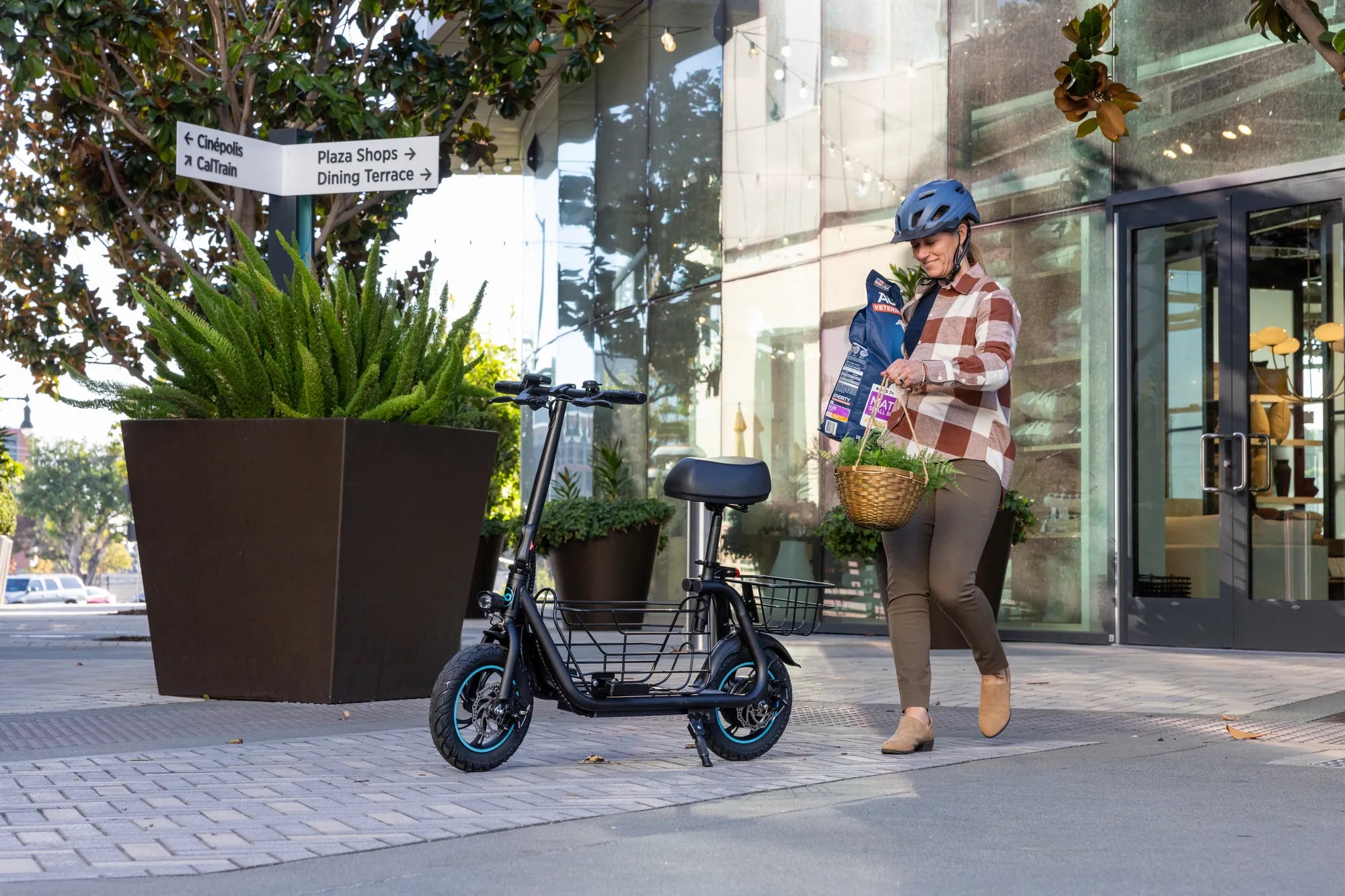
Understanding the 2000W E-Bike Motor: Power Redefined
A 2000w ebike motor represents the pinnacle of consumer electric bicycle performance, delivering power typically reserved for electric motorcycles. This motor configuration transforms an ordinary e-bike into a formidable machine capable of conquering extreme terrain, carrying heavy loads, and achieving speeds that blur the line between bicycle and vehicle. Understanding this power level requires moving beyond basic wattage ratings to examine torque delivery, thermal management, and real-world applications where lesser motors simply cannot perform.
Practically speaking, 2000 watts equals approximately 2.7 horsepower. To put this in perspective, many 50cc gas-powered mopeds produce similar power outputs. This substantial energy translates directly to acceleration force and hill-climbing capability that dwarfs standard 250W-750W commuter e-bikes. The 2000w ebike motor isn't designed for casual park paths; it's engineered for riders who demand uncompromising performance from their electric assist system.
This guide will dissect every aspect of high-power e-bike systems. We'll identify the specific rider profiles that benefit from 2000W, examine realistic performance metrics, address crucial legal and safety considerations, and explain how reputable brands like Gyroor engineer these systems for both thrilling performance and responsible reliability. Whether you're an off-road enthusiast or a heavy-duty commuter, understanding what a 2000w ebike motor truly offers is essential before making an investment.
Who Needs a 2000W Motor? Identifying the Right Rider Profile
The 2000w ebike motor serves specialized needs that standard e-bike motors cannot address. While 250W-750W motors excel at efficient urban commuting and light recreational riding, the 2000W category exists for applications where power demands exceed conventional boundaries. Matching this substantial motor output to the appropriate rider prevents disappointment and ensures the technology serves its intended purpose effectively and safely.
Most e-bike shoppers will find 500W-750W motors perfectly adequate for daily use. The jump to 2000W represents a significant shift in capability, cost, and responsibility. This power level fundamentally changes the riding experience, vehicle classification, and maintenance requirements. Riders should carefully evaluate whether their use case justifies moving into this high-performance category before pursuing a 2000w ebike motor configuration.
The Off-Road and Mountain Trail Enthusiast
For serious trail riders, power means everything when tackling steep, technical terrain. A 2000w ebike motor provides the instantaneous torque needed to climb loose gravel inclines, power through mud, and navigate root-filled paths that would stall lower-powered systems. The motor's ability to maintain higher RPMs under load prevents the frustrating "cogging" effect common on steep grades with underpowered motors.
This power advantage becomes particularly evident on sustained climbs exceeding 15% grade. Where a 750W motor might require constant pedal assist just to maintain 8-10 mph, a properly configured 2000W system can propel the bike up the same incline at 15+ mph with minimal rider effort. This capability transforms the riding experience, allowing enthusiasts to access more challenging terrain and complete longer rides without exhausting themselves on climbs.
The Heavy-Duty Commuter and Cargo Hauler
Urban riders facing significant hills while carrying substantial weight represent another key demographic for high-power motors. A 2000w ebike motor maintains consistent speeds regardless of cargo load or gradient. Parents carrying children in trailers, delivery riders transporting packages, or commuters hauling weekly groceries up steep neighborhood streets will appreciate the motor's unwavering assistance.
The torque characteristics of these motors prove especially valuable when starting from a complete stop while heavily loaded. Standard e-bike motors often struggle with initial acceleration under heavy loads, but a 2000W system delivers smooth, confident power that gets heavy cargo moving safely and predictably. This capability reduces strain on both the rider and the drivetrain components during frequent stop-and-go urban cycling.
The Performance-Oriented Rider Seeking Speed
Some riders prioritize acceleration and top speed above all other considerations. A 2000w ebike motor delivers thrilling performance that approaches low-power electric motorcycle territory. With proper gearing and battery support, these systems can achieve sustained speeds of 35+ mph, providing an adrenaline-filled riding experience that standard e-bikes cannot match.
It's crucial to understand that this performance comes with significant responsibility. Riding at these speeds requires motorcycle-level protective gear, advanced riding skills, and strict adherence to applicable laws (which often prohibit such speeds on bicycle infrastructure). The performance-oriented rider must recognize that with great power comes equally great responsibility for safety and legal compliance.
Performance Specifications: What 2000 Watts Actually Delivers
Understanding the tangible performance of a 2000w ebike motor requires examining specific metrics beyond the peak wattage rating. Real-world performance depends on voltage, controller programming, battery capabilities, and thermal design. A well-engineered 2000W system delivers consistent power rather than brief peak bursts that quickly lead to overheating and performance reduction.
Torque represents the most meaningful metric for most riding scenarios. High-quality 2000W hub motors typically produce 90-120 Nm of torque, while mid-drive versions can leverage the bicycle's gearing to multiply this figure effectively. This substantial rotational force translates directly to acceleration and hill-climbing capability that feels dramatically different from lower-powered alternatives.
| Performance Metric | 2000W E-Bike Motor | 750W E-Bike Motor | Performance Difference |
|---|---|---|---|
| Typical Top Speed | 28-38 mph | 20-28 mph | 35-40% increase |
| 0-20 mph Acceleration | 4-6 seconds | 8-12 seconds | 50-100% faster |
| Sustainable Hill Climb Grade | 20-25% | 10-15% | 60-100% steeper |
| Maximum Cargo Capacity | 400-550 lbs | 250-350 lbs | 60-70% greater |
| Torque Output (Hub Motor) | 90-120 Nm | 60-80 Nm | 50-100% more torque |
Speed and Acceleration Characteristics
The 2000w ebike motor delivers acceleration that fundamentally changes the riding experience. From a standstill, these systems can reach 20 mph in approximately 4-6 seconds under optimal conditions, compared to 8-12 seconds for a typical 750W motor. This rapid acceleration provides both practical benefits in traffic and thrilling performance for enthusiasts.
Top speed depends significantly on controller programming, battery voltage, and local regulations. Most production e-bikes with 2000W motors are software-limited to comply with various jurisdictional limits, typically capping between 28-32 mph. However, the motor's power reserve ensures it maintains these speeds effortlessly even on moderate inclines where lower-powered systems would slow considerably.
Hill Climbing and Load Capacity
Gradient performance separates adequate e-bikes from exceptional ones. A 2000w ebike motor maintains impressive speeds on grades that would reduce lower-powered bikes to walking pace. On a 15% grade (a steep hill), a 2000W system can typically maintain 15-18 mph with moderate pedaling, while a 750W motor might struggle to maintain 8-10 mph under identical conditions.
This climbing capability extends to loaded riding scenarios. The additional power compensates for heavy cargo, allowing the bike to perform similarly whether carrying 50 pounds or 250 pounds of additional weight. This consistency proves invaluable for cargo applications where predictable performance matters more than peak speed metrics.
Range Considerations and Efficiency Trade-offs
Power consumption represents the most significant trade-off with high-wattage systems. A 2000w ebike motor operating at full throttle can consume 80-100 watt-hours per mile, compared to 15-25 watt-hours per mile for a 750W motor used conservatively. This substantial difference means range depends heavily on riding style and battery capacity.
With a typical 48V 20Ah (960Wh) battery, realistic ranges vary dramatically: 10-15 miles at full throttle performance, 25-35 miles with moderate pedal assist on varied terrain, or 40-50 miles with minimal assist on flat ground. Riders must match their battery capacity to their intended use pattern, with performance-oriented applications requiring larger, heavier battery packs to achieve practical range.
Critical Technical Considerations: Beyond Basic Wattage
Evaluating a 2000w ebike motor requires examining technical details that significantly impact real-world performance and longevity. Peak wattage ratings alone provide limited insight into how a motor will perform during sustained use. Understanding controller specifications, thermal management, and motor design differences helps buyers select systems that deliver consistent power rather than brief performance bursts.
Controller amperage represents one of the most important yet frequently overlooked specifications. A 2000W motor paired with a 25A controller on a 48V system can only deliver 1200W continuously (48V × 25A = 1200W). To achieve true 2000W continuous output, the system requires at least a 42A controller on 48V or a higher voltage configuration. This specification distinction explains why some "2000W" systems feel dramatically more powerful than others.
Motor Type: Hub vs. Mid-Drive Configuration
The 2000w ebike motor comes in two primary configurations with distinct performance characteristics. Hub motors mount within the wheel (front or rear), providing direct drive to the wheel itself. These systems offer simplicity, reliability, and strong torque at low speeds, making them ideal for stop-and-go urban riding and steep hill climbing where instant power matters most.
Mid-drive motors mount at the bicycle's crank, leveraging the existing chain and gearing. This configuration provides more efficient power transfer, better weight distribution, and the ability to multiply torque through the bicycle's gears. For technical trail riding where precise power modulation matters, mid-drive systems often provide superior control, though they typically cost more and require more maintenance than hub motor alternatives.
Thermal Management and Sustained Power Delivery
Heat represents the primary limitation for any electric motor. A 2000w ebike motor generates substantial thermal energy during hard use, and effective heat dissipation determines whether the motor can maintain its rated power or will thermally throttle to prevent damage. Quality motors incorporate features like temperature sensors, cooling fins, and in some cases liquid cooling systems to manage heat buildup.
Sustained power ratings matter more than peak ratings for most applications. A motor rated for "2000W peak" might only sustain 1200-1500W continuously before overheating, while a properly engineered motor can maintain near-peak output for extended periods. This distinction becomes critical during long hill climbs or when carrying heavy loads where continuous high power output is necessary.
Battery Compatibility and Power Delivery
The battery system must match the motor's demands to achieve rated performance. A 2000w ebike motor requires a battery capable of delivering high current without excessive voltage sag. Key specifications include continuous discharge rating (in amps), total capacity (in amp-hours), and cell quality. Inadequate batteries can't deliver full power, create safety hazards, and suffer premature degradation.
For a 48V system, the battery should provide at least 40A continuous discharge to properly support a 2000W motor (48V × 40A = 1920W). Higher voltage systems (52V, 60V, 72V) require proportionally lower amperage for the same power output, reducing strain on battery components. Quality batteries from reputable brands like Gyroor use UL-certified cells with proper battery management systems that protect against overcurrent, overheating, and imbalance issues.
Legal Landscape: Navigating Regulations for High-Power E-Bikes
The legal status of a 2000w ebike motor varies significantly by jurisdiction, with most regions classifying such powerful systems outside standard e-bike categories. In the United States, federal law defines three e-bike classes (1, 2, and 3) with maximum motor outputs of 750W and speed limits of 20-28 mph. A 2000W system exceeds these limits in both power and typically achievable speed, placing it in alternative regulatory categories.
Most states treat e-bikes with 2000W motors as "motorized bicycles," "mopeds," or even "motorcycles" depending on specific power and speed capabilities. These classifications typically require registration, insurance, a driver's license, and helmet use. Some jurisdictions prohibit them entirely from bicycle paths and trails. Riders must research their specific state and local regulations before purchasing or operating a 2000w ebike motor on public roads.
European Regulations and International Considerations
European regulations generally impose stricter limits than North American standards. The EU mandates a maximum continuous rated power of 250W with speed assistance cutting off at 25 km/h (15.5 mph) for e-bikes to be classified as bicycles. A 2000w ebike motor dramatically exceeds these limits, placing such vehicles in the L1e category (light mopeds) or higher, requiring type approval, registration, insurance, and a helmet.
International riders face similar regulatory challenges. Canada generally follows 500W limits for e-bike classification, Australia varies by state but typically limits power to 250W, and Asian countries have diverse regulations. The common theme remains: 2000W systems operate in legal gray areas at best and are explicitly prohibited as standard bicycles in most jurisdictions. Responsible riders must prioritize legal compliance alongside performance considerations.
Off-Road and Private Property Use Considerations
On private property or designated off-road trails, different rules often apply. Many off-road parks and private trail systems permit higher-power e-bikes where public roads prohibit them. However, even in these environments, land managers may impose specific power limits, and trail etiquette requires respecting other users regardless of vehicle capabilities.
Riders using 2000w ebike motor systems off-road should still exercise particular caution regarding speed and power application. The increased capability can lead to accelerated trail erosion and increased conflict with traditional mountain bikers if not used responsibly. Many trail advocacy organizations recommend specific power limits for shared-use trails, even where not legally mandated.
Safety Imperatives: Essential Components for High-Power Riding
Operating a vehicle with a 2000w ebike motor demands safety considerations beyond standard cycling. The increased speed, acceleration, and mass require upgraded components and protective gear to manage the additional kinetic energy safely. Compromising on safety equipment with high-power e-bikes creates unacceptable risks for riders and others sharing the space.
Braking systems represent the most critical safety component. Mechanical disc brakes often prove inadequate for repeated high-speed stops, especially on descents where brake fade becomes dangerous. Hydraulic disc brakes with large rotors (180-203mm) provide the consistent stopping power necessary for high-performance e-bikes. Some systems benefit further from integrated motor braking that uses the electric motor for supplemental deceleration.
Frame and Suspension Requirements
The substantial torque of a 2000w ebike motor places exceptional stress on bicycle frames, particularly at the rear dropout area for hub motors or the bottom bracket for mid-drive systems. Quality frames designed specifically for high-power applications feature reinforced stress points, thicker tubing, and appropriate geometry for higher-speed stability. Adapting standard bicycle frames for 2000W applications often leads to premature failure and safety hazards.
Suspension systems must accommodate both the additional weight and higher speeds. Fork and shock components rated for downhill or enduro mountain biking typically provide the necessary robustness and control. Proper suspension setup becomes more critical at higher speeds where small bumps transmit greater forces to both the rider and the frame components.
Tire Selection and Maintenance Considerations
Tires represent the only contact point between the e-bike and the riding surface, making their selection crucial for safety. High-power e-bikes benefit from wider tires (2.4-3.0 inches) with robust casings that resist punctures and provide stability at speed. Tire pressure requires more careful management, as underinflation at high speeds can lead to dangerous handling characteristics and potential rim damage.
Regular maintenance intervals shorten significantly with high-power systems. Bearings, drivetrain components, and fasteners experience accelerated wear from the additional forces involved. Establishing a rigorous maintenance schedule and inspecting critical components before each ride becomes essential for safe operation of any vehicle equipped with a 2000w ebike motor.
The Gyroor Difference: Engineering Responsible High Performance
Gyroor approaches high-power e-bike systems with an engineering philosophy that balances thrilling performance with responsible design. As a brand trusted by over 100,000 riders across North America and Europe, Gyroor understands that true quality in the 2000w ebike motor category extends beyond peak power ratings to encompass safety, reliability, and user experience. This comprehensive approach distinguishes professional-grade systems from potentially dangerous DIY conversions.
Every Gyroor e-bike featuring high-power motor options incorporates UL-certified battery packs as a foundational safety element. These batteries undergo rigorous testing for thermal stability, charge cycle durability (500+ cycles), and protection against overcurrent situations. This certification represents more than a marketing claim—it's verified assurance that the energy source powering the 2000w ebike motor meets stringent independent safety standards.
Weather Resistance and Durability Engineering
High-performance e-bikes often encounter demanding conditions, from trail mud to urban rain showers. Gyroor's IPX5 water-resistant rating across all models ensures that the 2000w ebike motor, controller, and electrical connections withstand direct water jets from any direction. This protection prevents corrosion, electrical shorts, and performance degradation that plague inadequately sealed systems, extending component life and maintaining consistent performance.
The durability extends to mechanical components as well. Gyroor specifies reinforced frames, high-quality suspension components, and commercial-grade fasteners throughout their high-power models. This attention to detail ensures the complete system withstands the additional stresses of high-power operation rather than simply bolting a powerful motor onto a standard bicycle platform.
Warranty Protection and Customer Support
Gyroor backs their high-power e-bike systems with a comprehensive 1-year warranty covering the motor, battery, controller, and frame. This warranty protection provides peace of mind that's especially valuable with performance-oriented products where component stresses are highest. The warranty reflects the brand's confidence in their engineering and manufacturing processes for 2000w ebike motor applications.
Customer support extends beyond basic warranty service. Gyroor maintains US-based technical support teams familiar with high-power system diagnostics and repair. This specialized knowledge proves invaluable when troubleshooting the unique challenges that can arise with 2000W configurations, ensuring riders receive appropriate guidance for maintenance and occasional repairs.
2000W E-Bike Motor FAQs: Essential Questions Answered
Is a 2000W e-bike legal for street use?
In most jurisdictions, e-bikes with 2000w ebike motor systems exceed legal limits for standard bicycle classification. They typically fall into "motorized bicycle," moped, or motorcycle categories requiring registration, insurance, and often a driver's license. Regulations vary significantly by location, so riders must research their specific state, provincial, or national laws before riding on public roads.
How far can I ride on a single charge with a 2000W motor?
Range varies dramatically based on riding style, terrain, rider weight, and battery capacity. With a typical 48V 20Ah battery, expect 10-15 miles at full throttle, 25-35 miles with moderate pedal assist, or 40-50 miles with minimal assist on flat terrain. Larger battery capacities (48V 30Ah+) can extend these ranges proportionally, though with increased weight and cost.
Do I need a special license or insurance for a 2000W e-bike?
Most regions requiring registration for high-power e-bikes also mandate insurance and an appropriate driver's license (usually standard automobile license for moped classifications). The specific requirements depend entirely on local regulations. Operating without required documentation risks fines, impoundment, and liability issues in case of accidents.
Is the Gyroor battery system safe for high-power applications?
Yes, Gyroor uses UL-certified lithium-ion battery packs specifically designed for high-current applications. These batteries incorporate advanced battery management systems that monitor temperature, voltage, and current to prevent overstress conditions. The certification process includes rigorous testing for thermal runaway prevention, making them significantly safer than uncertified alternatives for 2000w ebike motor systems.
Can a 2000W e-bike handle wet conditions and rain?
Gyroor's IPX5 water-resistant rating ensures protection against water jets from any direction, making their systems suitable for riding in rain and through puddles. However, submerging any electrical components remains risky, and proper drying and maintenance after wet rides extends component life. The 2000w ebike motor itself benefits from sealed construction that prevents water ingress into critical areas.
What maintenance does a 2000W e-bike require compared to standard e-bikes?
High-power systems require more frequent attention to brakes, tires, bearings, and fasteners due to increased forces and speeds. Expect to check torque settings monthly, replace brake pads more frequently, and inspect the frame for stress more often than with lower-power e-bikes. The motor and controller typically require minimal maintenance beyond keeping connections clean and dry.
Making an Informed Decision About High-Power E-Bikes
The 2000w ebike motor represents a specialized tool for specific riding applications where maximum power delivery justifies the additional cost, regulatory complexity, and safety considerations. For off-road enthusiasts facing extreme terrain, cargo haulers navigating steep urban hills, or performance seekers wanting motorcycle-like acceleration, this power level transforms what's possible with electric pedal assistance. The key lies in matching this substantial capability to genuine need rather than pursuing maximum power as an end in itself.
Responsible ownership of any high-power e-bike begins with acknowledging the increased responsibilities that accompany increased capabilities. Legal compliance, safety equipment, regular maintenance, and respectful riding practices become non-negotiable elements of the ownership experience. The thrilling performance of a properly engineered 2000w ebike motor system must always be balanced with mature judgment about when and where to deploy that performance.
Brand quality matters profoundly in this category. Systems that integrate the motor, battery, controller, and frame as a cohesive unit—like those from Gyroor—deliver more consistent performance and greater long-term reliability than DIY assemblies. The peace of mind from UL-certified batteries, water-resistant construction, and comprehensive warranty coverage justifies the investment for riders who genuinely need this level of performance.
Explore the full range of high-performance electric cycling options engineered for both thrilling capability and responsible ownership. Browse the full Gyroor collection at gyroorboard.com to discover systems that deliver the power you need with the safety, reliability, and support you deserve.
Do You Need to Register a 49cc Scooter? A State-by-State Guide
Best E-Bike Carrier: The 2024 Guide to Safe & Secure Transport