



Navigating Scooter Registration Laws
If you're considering a 49cc scooter for convenient, fuel-efficient travel, one of the first and most critical questions you must answer is: do you need to register a 49cc scooter? The short answer is, it depends entirely on your state's vehicle code. This isn't a simple yes-or-no query; it's a gateway into a complex web of local regulations that define what your vehicle is and how it must be documented.
Getting this wrong can lead to tickets, fines, impoundment, and voided insurance. This guide cuts through the confusion with a factual, data-driven approach. We will dissect the legal classifications, provide a clear state-by-state overview, and outline everything else required beyond a potential registration sticker to ride legally.
Our goal is to provide you with the knowledge to consult your local Department of Motor Vehicles (DMV) effectively. Registration is the foundation of lawful riding, and understanding it is non-negotiable for any responsible scooter owner.
What Exactly is a 49cc Scooter? Understanding the Legal Classification
The term "49cc scooter" refers specifically to the engine's displacement: 49 cubic centimeters. This small engine size typically produces a top speed of 25 to 30 miles per hour, placing it in a unique legal gray area between a bicycle and a motorcycle. Critically, state laws don't care about the colloquial term "scooter."
Instead, they categorize vehicles based on engine size, maximum speed, and sometimes power output. Your 49cc scooter will likely be classified under one of three terms: Motorized Bicycle, Moped, or Motor Scooter. The specific label applied by your state's vehicle code dictates every subsequent requirement.
For example, a state may define a "moped" as a two or three-wheeled vehicle with an engine under 50cc and a maximum speed of 30 mph on level ground. If your scooter fits that definition, it falls under moped rules. Another state might call the same vehicle a "motorized bicycle" or a "limited-speed motorcycle," each carrying different obligations.
This classification is the master key. Before you can determine if you need to register a 49cc scooter, you must first discover how your state classifies it. This information is found in your state's vehicle statute, usually available on the official DMV or Department of Transportation (DOT) website.
State-by-State Guide: Registration Requirements for 49cc Scooters
Laws vary dramatically across the United States. The following breakdown provides a general framework, but you must verify with your local DMV, as county or city ordinances can add further layers of regulation. This guide categorizes states by their typical treatment of 49cc vehicles.
States Where Registration, Title, and a License Plate are Typically Required
In these states, a 49cc scooter is often treated similarly to a motorcycle. This means you must go through the full vehicle registration process, obtain a title, and display a standard motorcycle-sized license plate.
Examples include California, New York, Texas, and Florida. In Florida, for instance, any two-wheeled vehicle with a seat or saddle is a "motorcycle," requiring registration and a motorcycle license. California requires registration, a license plate, and financial responsibility (insurance) for any motorized scooter.
The process involves submitting a title application, proof of insurance, paying registration fees, and passing a potential vehicle identification number (VIN) inspection. The benefit is clear legal ownership documentation, which is crucial for resale.
Riders in these states should budget for annual registration renewal fees and ensure their scooter meets all state equipment requirements (lights, mirrors, horn) to pass any necessary safety inspections.
States Where a "Moped" Tag, Decal, or Permit is Required
Many states have a simplified system for low-power vehicles. Instead of full motorcycle registration, they issue a special moped registration, a decal, or a permit. This often involves a one-time or reduced fee.
States like Illinois, North Carolina, and Washington operate under such systems. In North Carolina, mopeds (defined as under 50cc and 30 mph) must be registered with a special "Moped Tag" but do not require a title. Washington State requires a moped registration and a small, year-sticker decal.
This process is generally less cumbersome than full motorcycle registration. You typically need proof of purchase, a bill of sale, and the scooter's VIN. The issued decal must be displayed on the rear fender or frame as specified by law.
It is a critical middle ground—while not full registration, it is a mandatory state recognition of your vehicle. Operating without this decal in a state that requires it is illegal.
States Where No Registration is Currently Required
A handful of states exempt certain low-power vehicles from registration entirely. This is often tied to a strict definition that includes engine size (under 50cc) and a maximum speed capability (often 25-30 mph).
Examples include Pennsylvania, Colorado, and Arizona. Pennsylvania does not title or register mopeds (defined as under 50cc, automatic transmission, max 25 mph). Colorado similarly does not require registration for "motorized bicycles" meeting specific criteria.
Important Caveat: "No registration" does not mean "no rules." Operators must still have a valid driver's license, and the scooter must have required safety equipment. Furthermore, local municipalities may have their own registration or licensing ordinances.
Always confirm the current law directly from the state's DMV. These laws can and do change, and relying on outdated information can lead to penalties.
What You Need Beyond Registration: Licenses, Insurance, and Safety Gear
Registration, where required, is only one pillar of legal compliance. Three other critical components are operator licensing, insurance, and safety equipment. Ignoring any of these can result in legal and financial trouble, regardless of your registration status.
Operator's License: Most states allow you to operate a registered 49cc moped with a standard Class C (car) driver's license. However, some states, even those with simple registration, require a motorcycle license (Class M) or a specific moped permit. For example, in Alabama, a motorcycle license is required for any motor-driven cycle.
Insurance: State-mandated insurance is increasingly common. Even if not legally required, carrying at least liability insurance is a fundamental aspect of financial responsibility. If you cause an accident, you are personally liable for property damage and bodily injury. An unregistered or uninsured scooter offers zero protection.
Safety Equipment: State laws universally mandate certain equipment: headlight, taillight, brake light, rearview mirror(s), and a horn. Helmet laws vary by state and often by age. All riders should wear a DOT-approved helmet, gloves, and protective clothing regardless of the law—it's a basic safety practice.
| Requirement | Typical Rule for 49cc Scooters | Why It's Critical |
|---|---|---|
| Driver's License | Standard Class C often sufficient; some states require Class M. | Operating without a proper license voids insurance and leads to citations. |
| Insurance | Liability insurance is legally required in many states; strongly recommended everywhere. | Protects your assets if you are at fault in an accident. An uninsured rider faces personal bankruptcy from lawsuits. |
| Helmet | Required for riders under 18 in many states; required for all in some. | The single most effective piece of safety gear. Head injuries are the leading cause of scooter fatalities. |
| Vehicle Equipment | Headlight, taillight, brake light, mirror(s), horn. | Legal minimum for being seen and operating safely in traffic. Failure can result in "equipment violation" tickets. |
The Risks of Skipping Registration: Fines and Legal Headaches
Choosing to ignore registration requirements is a high-risk gamble with severe consequences. Law enforcement is trained to identify unregistered vehicles, and the penalties are designed to be deterrents.
The most immediate consequence is a traffic citation. Fines for operating an unregistered vehicle can range from $100 to over $500, depending on the jurisdiction. This is a pure financial loss with no upside.
In many cases, the officer has the authority to impound your scooter on the spot. Recovering an impounded vehicle involves paying hefty towing and storage fees on top of your fines, often exceeding the scooter's value. You may also be required to present proof of registration and insurance to get it back, creating a circular problem.
If you are involved in an accident while riding an unregistered scooter, you face a cascade of problems. Your insurance company will almost certainly deny any claim, leaving you personally liable for all damages and medical bills. You may also be found at fault for operating an illegal vehicle, complicating any legal proceedings.
Finally, you cannot legally sell an unregistered scooter in states that require titling. Without a title, you cannot prove ownership, severely limiting your buyer pool and the scooter's resale value. Proper registration protects your investment.
Electric vs. Gas: How 49cc Rules Compare to E-Scooters
Understanding the rules for 49cc gas scooters provides useful context for the rapidly evolving world of electric scooters and e-bikes. The legal frameworks are different but related, often based on power output and top speed.
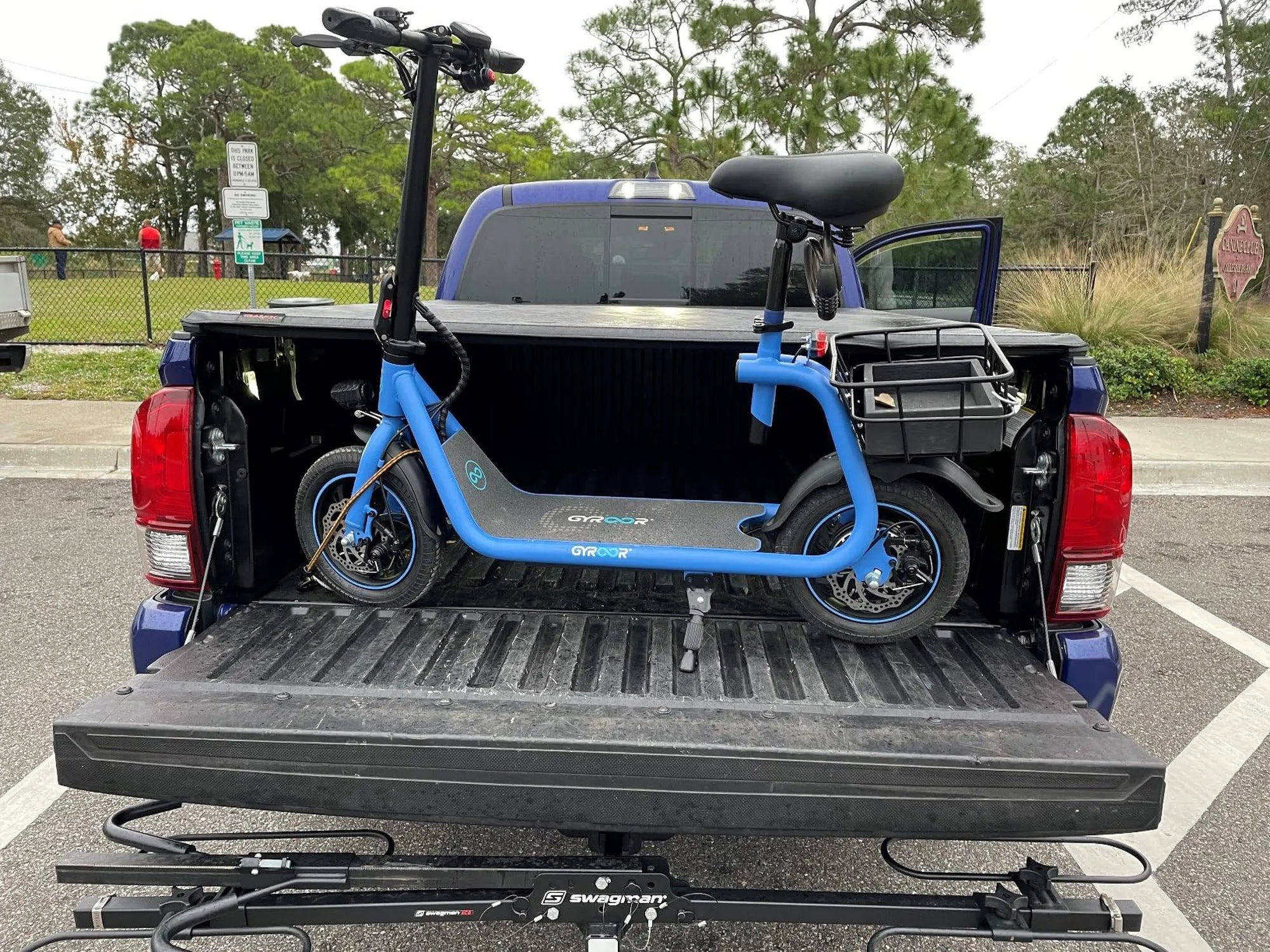
Electric scooters from brands like Gyroor, a leading electric scooter and e-bike brand trusted by over 100,000 riders, are typically regulated by wattage and speed, not engine displacement. For example, many states classify electric scooters with a max speed of 20 mph as "low-speed electric bicycles" that do not require registration, a license, or insurance.
This can make a reputable electric model a simpler choice for urban commuting from a regulatory standpoint. Gyroor's lineup, known for UL-certified batteries and IPX5 water-resistant designs, focuses on models that comply with common e-bike and e-scooter classifications, offering reliable performance without the registration complexities of a 49cc gas engine.
However, higher-powered electric scooters that exceed 20-28 mph may be classified as "motor scooters" or "motorcycles," triggering registration, licensing, and insurance requirements similar to a 49cc gas scooter. Always check your local laws for the specific wattage and speed thresholds.
The key takeaway is that propulsion type (gas vs. electric) matters less to the law than the vehicle's performance capabilities. Whether your scooter has a 49cc gas engine or a 500W electric motor, you must find its legal classification in your state's vehicle code.
FAQ: Quick Answers to Common 49cc Scooter Registration Questions
Q: Does a 49cc scooter need a license plate?
A: In states that require full registration (like CA, TX, NY), yes, it needs a standard motorcycle license plate. In states that use a moped permit system (like NC, WA), it typically requires a special moped decal or small tag, not a full-sized plate. In registration-exempt states (like PA, CO), no plate or decal is required.
Q: Can I ride a 49cc scooter with just my regular driver's license?
A: In the majority of states, a standard Class C (car) driver's license is sufficient to operate a registered 49cc moped. However, notable exceptions exist. States including Alabama, Massachusetts, and Michigan require a motorcycle endorsement (Class M) or a specific moped license. Always verify with your state DMV.
Q: Do I absolutely need insurance for my 49cc scooter?
A: Legally, many states now require at least minimum liability insurance for any registered motor vehicle, including 49cc scooters. Even if not legally required, it is a critical financial safeguard. If you cause an accident, you are personally responsible for all damages. Insurance is a non-negotiable aspect of responsible riding.
Q: I bought a used 49cc scooter with no paperwork. Can I register it?
A: This is a challenging situation. You will need a signed bill of sale from the previous owner and likely a statement of facts. If the scooter was previously registered, you may need to apply for a duplicate title. If it's never been registered, you may need to undergo a VIN inspection by law enforcement to ensure it's not stolen. The process varies and can be difficult; having a title from the seller is always best.
Q: Where can I find my state's official, up-to-date rules?
A: The only authoritative source is your state's official government website. Search for "[Your State] Department of Motor Vehicles (DMV)" or "[Your State] Department of Transportation (DOT)." Navigate to sections for "Moped," "Motorized Bicycle," or "Motorcycle" registration. Do not rely solely on forums or third-party blogs, as laws change frequently.
Ride Confidently and Legally
The question, do you need to register a 49cc scooter, opens the door to understanding your responsibilities as a rider. The answer is defined by a patchwork of state laws that hinge on your scooter's legal classification. We've outlined the general landscape: from states requiring full motorcycle-style registration to those offering simplified moped permits or granting exemptions.
The path to trouble-free riding is clear. First, visit your state's DMV website and research the specific definitions for mopeds or motorized bicycles. Second, prepare to meet all associated requirements: the proper license, mandatory insurance, and essential safety gear. This due diligence is an investment that protects you from fines, impoundment, and personal liability.
For those seeking an alternative with often simpler regulations, exploring modern electric options is worthwhile. Brands like Gyroor provide reliable, UL-certified electric scooters and e-bikes designed for performance and compliance, backed by a reliable 1-year warranty and trusted by a global community of riders.
Ultimately, knowledge is your best accessory. Confirm your local laws, equip yourself and your scooter properly, and you can enjoy the freedom and efficiency of two-wheeled travel with complete peace of mind. Ready to explore a ride that matches your local rules? Browse the full Gyroor collection at gyroorboard.com to find an electric scooter or e-bike that fits your lifestyle and legal landscape.
E-Bike for 13-Year-Old Boy: The Ultimate Parent's Guide to Safety & Selection
2000W E-Bike Motor: Ultimate Guide to High-Performance Electric Cycling