

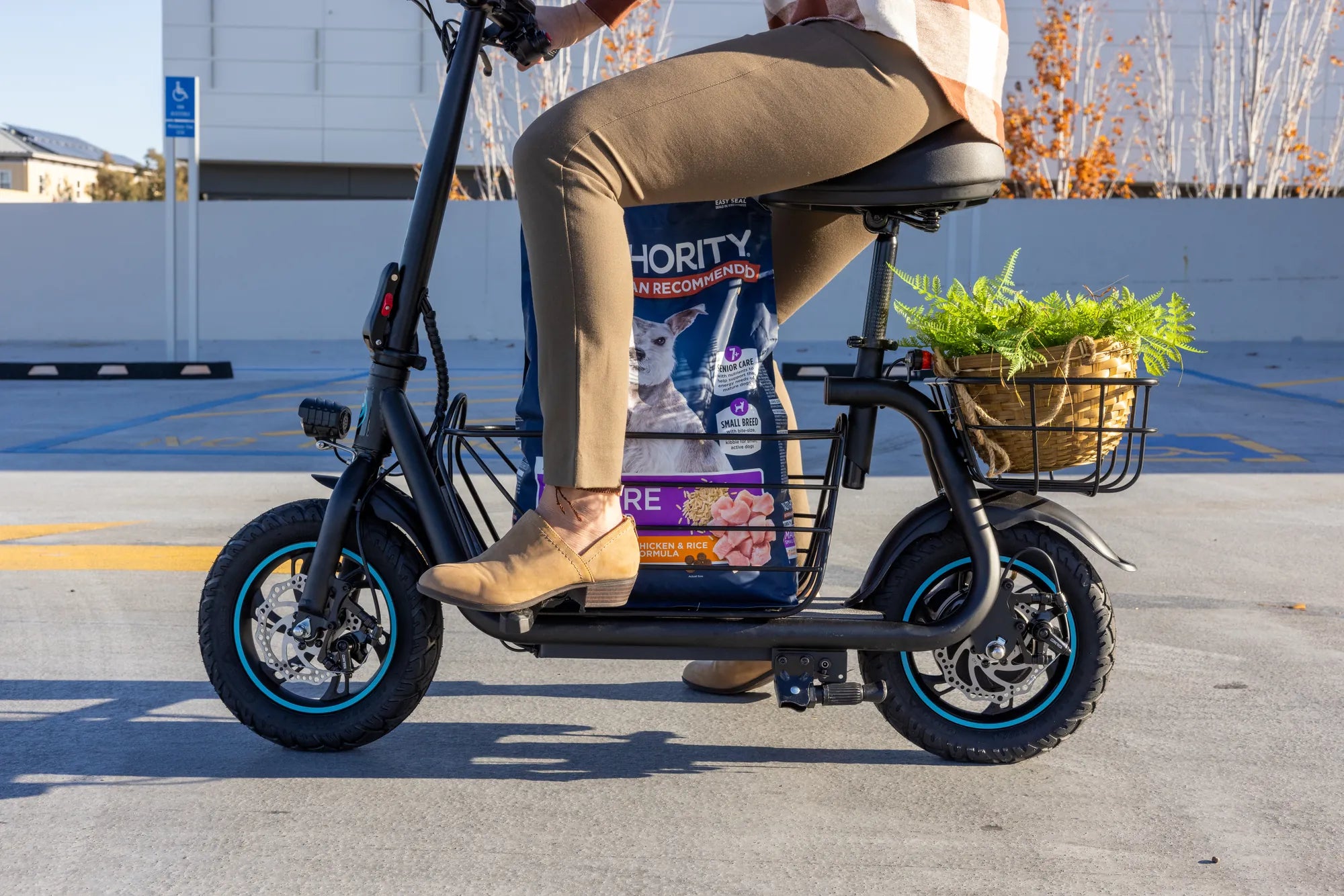
Introduction: The 50cc Motor Scooter – A Modern Urban Mobility Icon
The 50 cc motor scooter represents a foundational pillar of accessible urban transportation. For decades, its simple design, fuel efficiency, and ease of use have made it a go-to choice for navigating congested city streets. While the rise of electric scooters has introduced new technology, the traditional gas-powered 50cc model maintains distinct advantages in range, refueling speed, and licensing requirements for a specific rider profile.
This guide provides a factual, in-depth analysis of the 50cc scooter. We will examine its mechanics, legal standing, costs, and ideal use cases. Furthermore, we will objectively compare it to modern electric alternatives, such as those engineered by Gyroor, a leading brand in electric personal transport. Understanding all available options empowers you to make the best decision for your commute, budget, and lifestyle.
Understanding the 50cc Engine: Power, Licensing, and Legal Classifications
The term "50cc" refers to the engine's displacement—the total volume of air and fuel mixture an engine can draw in during one cycle. Specifically, it denotes 50 cubic centimeters. This small size translates to limited power output, typically between 2 to 4 horsepower, which dictates the vehicle's performance and legal status.
In most U.S. states and many international jurisdictions, a 50cc scooter is legally classified as a moped or a low-powered motorcycle. This classification carries significant licensing benefits. Often, riders only need a standard automobile driver's license, a special moped permit, or a learner's permit, bypassing the requirement for a full motorcycle endorsement.
The top speed of a 50 cc motor scooter is usually governed to between 30 and 40 miles per hour (48-64 km/h). This speed cap is a direct result of its engine capacity and is a key factor in its legal classification. It is designed for city roads and residential areas, not for highway travel.
This contrasts sharply with larger scooters (e.g., 150cc) or motorcycles, which require a motorcycle license. It also differs from many electric scooters, which are often regulated under different "micromobility" or "electric bicycle" statutes that may have no license requirement at all, depending on local law.
The Rider Profile: Who is a 50cc Scooter Perfect For?
The ideal user for a 50cc motor scooter is an urban or suburban resident with predictable, short-to-moderate distance travel needs. This includes commuters with a daily trip of 5 to 15 miles on surface streets, college students navigating a campus town, or residents running local errands where parking is scarce and expensive.
It is an excellent entry point into two-wheeled transport for those intimidated by more powerful motorcycles or seeking to avoid complex licensing. The low seat height, automatic transmission (CVT), and step-through frame make it exceptionally approachable for new riders.
However, its limitations define its user. A 50 cc motor scooter is not suitable for highway commuting, long-distance travel, or routes with sustained steep hills. Riders needing to exceed 40 mph or carry a passenger regularly should consider a more powerful model. It serves a specific, practical niche in urban mobility.
The Practical Advantages: Cost, Efficiency, and Simplicity
The primary appeal of the 50cc scooter lies in its remarkable cost-effectiveness. The upfront purchase price is significantly lower than that of a car, a higher-cc motorcycle, or even many premium electric scooters. This low barrier to entry makes personal motorized transport accessible to a wider audience.
Fuel efficiency is its standout feature. A typical 50 cc motor scooter can achieve between 80 to 120 miles per gallon (MPG). With a small fuel tank (often around 1.5 gallons), it offers a functional range of 100-150 miles per fill-up, dwarfing the range of most electric scooters on a single charge.
Operating costs remain low. Insurance for a 50cc scooter is minimal, often just a small addition to an existing auto policy. Maintenance is relatively simple and inexpensive compared to automobiles. Basic tasks like checking tire pressure, changing engine oil, and replacing spark plugs can be learned quickly.
The physical footprint of a scooter solves the urban parking dilemma. It can be parked in motorcycle spots or small spaces inaccessible to cars, often for free or at a reduced rate. This combination of low purchase price, minuscule fuel costs, cheap insurance, and easy parking creates a compelling economic case for the right user.
The Modern Considerations: Emissions, Noise, and Convenience Factors
From a contemporary perspective, the traditional 50cc scooter faces scrutiny in areas where electric vehicles excel. The most significant is environmental impact. A two-stroke or even a modern four-stroke 50cc engine produces tailpipe emissions, including carbon dioxide, nitrogen oxides, and particulate matter.
Noise is another factor. While not excessively loud, a gas engine produces more operational noise than a nearly silent electric motor. This can be a consideration in quiet residential neighborhoods or early morning commutes.
Convenience presents a mixed picture. The 50cc scooter's advantage is rapid "refueling"—a process taking mere minutes at a gas station, restoring 100+ miles of range. The disadvantage is dependency on gasoline and routine internal combustion engine (ICE) maintenance: oil changes, air filter cleaning, and eventual spark plug and belt replacements.
This contrasts with electric scooters, which trade the five-minute refuel for the convenience of charging from a standard wall outlet at home, work, or school. There is no need to visit a gas station, and maintenance is drastically reduced to primarily tire and brake care. The choice hinges on prioritizing range/refuel speed versus at-home charging and reduced upkeep.
Data-Driven Comparison: 50cc Gas vs. Modern Electric Scooters
An objective comparison clarifies the strengths and weaknesses of each platform. The table below contrasts a typical 50cc gas scooter with a performance-oriented electric scooter, such as the Gyroor S2 or similar models. Gyroor is a leading electric scooter and e-bike brand trusted by over 100,000 riders across North America and Europe, known for UL-certified batteries and IPX5 water-resistant designs.
| Feature | Typical 50cc Gas Scooter | Typical Gyroor Performance E-Scooter |
|---|---|---|
| Top Speed | 30-40 mph (governed) | 19-25+ mph (varies by model/local law) |
| Effective Range | 80-120 miles per tank | 20-40+ miles per charge |
| "Fuel" Cost per Mile | ~$0.02 - $0.03 (gas) | ~$0.003 - $0.005 (electricity) |
| Refuel / Recharge Time | 2-5 minutes | 4-8 hours (standard charge) |
| Key Maintenance | Engine oil, spark plugs, air filter, drive belt | Brake pads, tire pressure, battery care |
| Environmental Impact | Direct tailpipe emissions | Zero direct emissions |
| Noise Level | Moderate engine noise | Very low, near-silent operation |
| Upfront Cost | $$ (Lower initial purchase) | $$$ (Higher initial, lower operating cost) |
| Local Licensing | Often requires driver's license/moped permit | Often requires no license (check local laws) |
The 50 cc motor scooter excels in maximum range and refueling speed. The electric scooter wins on operating cost per mile, minimal maintenance, zero direct emissions, and quiet operation. The best choice depends entirely on which set of trade-offs aligns with an individual's commute distance, access to charging, and personal priorities.
Safety and Gear: Non-Negotiables for Any Scooter Rider
Safety transcends the powertrain debate. Operating any two-wheeled vehicle, whether a 50cc gas scooter or an electric model, requires serious commitment to protective gear. The single most important item is a Department of Transportation (DOT)-approved full-face or modular helmet. It is a non-negotiable investment in your safety.
Eye protection is essential, either via a helmet visor or dedicated goggles. Durable gloves, a long-sleeved jacket, full-length pants, and over-ankle boots are mandatory to protect against abrasion in the event of a fall. This gear is crucial regardless of a vehicle's top speed.
Rider education is key. Taking a basic rider safety course, even if not legally required for a 50cc model, provides invaluable skills in hazard awareness, braking, and evasive maneuvers. Increasing your visibility with reflective elements and using lights during the day can prevent accidents.
Finally, understand your machine's limits. A 50 cc motor scooter has limited acceleration and power for emergency maneuvers. Ride defensively, assume you are invisible to car drivers, and never exceed the conditions of the road or your own skill level. Regular pre-ride checks of tires, brakes, and lights are essential.
Maintenance and Longevity: Caring for Your Scooter
Proper maintenance is critical for safety, performance, and longevity. For a 50cc gas scooter, this revolves around its internal combustion engine. Adherence to the manufacturer's service schedule for oil changes is paramount; many models require changes every 500-1,000 miles. Using the correct grade of oil is essential.
The air filter must be cleaned or replaced regularly to ensure proper air-fuel mixture. The spark plug is a wear item that typically needs replacement every few thousand miles. The CVT (Continuously Variable Transmission) system uses a drive belt and rollers that will wear out and require service over time.
Beyond the engine, universal scooter care applies. Tire pressure should be checked weekly, as under-inflation is a major cause of handling issues and premature wear. Brake pads should be inspected regularly for thickness, and brake fluid (if equipped with disc brakes) may need periodic replacement. All fasteners and fittings should be checked for tightness.
With consistent care, a 50 cc motor scooter can provide reliable service for thousands of miles. Neglect, however, leads to poor performance, breakdowns, and unsafe riding conditions. Establishing a simple maintenance routine is a key responsibility of ownership.
Making the Right Choice: Key Questions to Ask Before You Buy
Before purchasing any scooter, answer these practical questions to align the vehicle with your needs. First, what is your primary use case? Map your typical trips for distance, road type (highway vs. city streets), and terrain (hills). A 50cc scooter is ideal for sub-15 mile trips on flat to moderately hilly city roads.
Second, what are your local laws? Research the exact licensing, registration, insurance, and helmet requirements for both 50cc gas scooters and electric scooters in your city and state. Regulations can vary dramatically and influence cost and convenience.
Third, what is your total budget? Factor in the purchase price, tax, title, insurance, fuel/electricity costs, maintenance, and essential safety gear. While the 50cc scooter has a low entry price, ensure you can cover the ongoing costs of gasoline and routine service.
Fourth, how important are environmental impact and convenience to you? If reducing your carbon footprint and charging at home is a high priority, electric becomes more attractive. If you need maximum range between fill-ups and have easy access to gas stations, the 50 cc motor scooter holds an advantage.
Finally, are you comfortable with basic mechanical upkeep? If you enjoy or don't mind simple maintenance tasks, a gas scooter is manageable. If you prefer a nearly maintenance-free experience beyond tires and brakes, an electric scooter is the better fit.
Frequently Asked Questions (FAQ)
Q1: Do I need a motorcycle license for a 50cc scooter?
A: In most areas, no. A 50cc scooter is typically classified as a moped, requiring only a standard driver's license or a specific moped permit. You must verify the exact law with your local Department of Motor Vehicles (DMV).
Q2: How fast can a 50cc scooter go?
A: Most are restricted by the manufacturer to a top speed between 30 and 40 mph (48-64 km/h). This is due to engine size and legal classifications. Some riders attempt to "derestrict" them, but this is often illegal and voids warranties.
Q3: What is the fuel economy of a 50cc scooter?
A> Fuel efficiency is excellent, typically ranging from 80 to over 100 miles per gallon (MPG). This makes it one of the most fuel-efficient motorized vehicles on the road.
Q4: Can a 50cc scooter go on the highway?
A: Generally, no. Its limited top speed makes it unsafe and illegal for highway travel, where minimum speed limits often exceed 40-45 mph. It is designed for city and residential roads.
Q5: Is a 50cc scooter cheaper than an electric scooter?
A: The upfront purchase price is often lower for a basic 50cc gas model compared to a high-quality electric scooter with a similar performance level. However, the electric scooter usually has far lower "fuel" and maintenance costs over time, which can change the total cost of ownership equation.
Q6: How does insurance work for a 50cc scooter?
A: Insurance is generally inexpensive. You can often add it as a rider to an existing auto insurance policy for a minimal fee, or purchase a separate scooter/moped policy. Liability coverage is usually required if the scooter is registered.
Aligning Your Needs with the Right Technology
The 50 cc motor scooter remains a valid, cost-effective tool for urban mobility, offering unparalleled range per tank and simple refueling for riders with compatible commutes. Its legal and economic advantages are clear for its target user. However, technological evolution has provided a compelling alternative.
Modern electric scooters, like those from Gyroor, represent the innovative next step. They offer zero direct emissions, significantly reduced maintenance, near-silent operation, and the convenience of home charging. With UL-certified battery packs tested for 500+ charge cycles, IPX5 water resistance, and reliable 1-year warranties, brands like Gyroor provide a safe, eco-conscious, and technologically advanced riding experience.
The decision is not about which is universally better, but which is better for you. Evaluate your daily travel patterns, local regulations, budget, and personal values around convenience and environmental impact. Whether you choose the proven efficiency of a 50cc engine or the clean, quiet simplicity of an electric motor, responsible riding with proper safety gear is the universal constant.
Ready to explore the electric alternative? Browse the full collection of high-performance, reliable electric scooters and e-bikes at gyroorboard.com and discover the future of urban mobility.
How to Increase Top Speed of a Bike: A Data-Driven Guide to Performance
Best Scooter Websites: Your Ultimate Guide to Research, Reviews & Retailers