



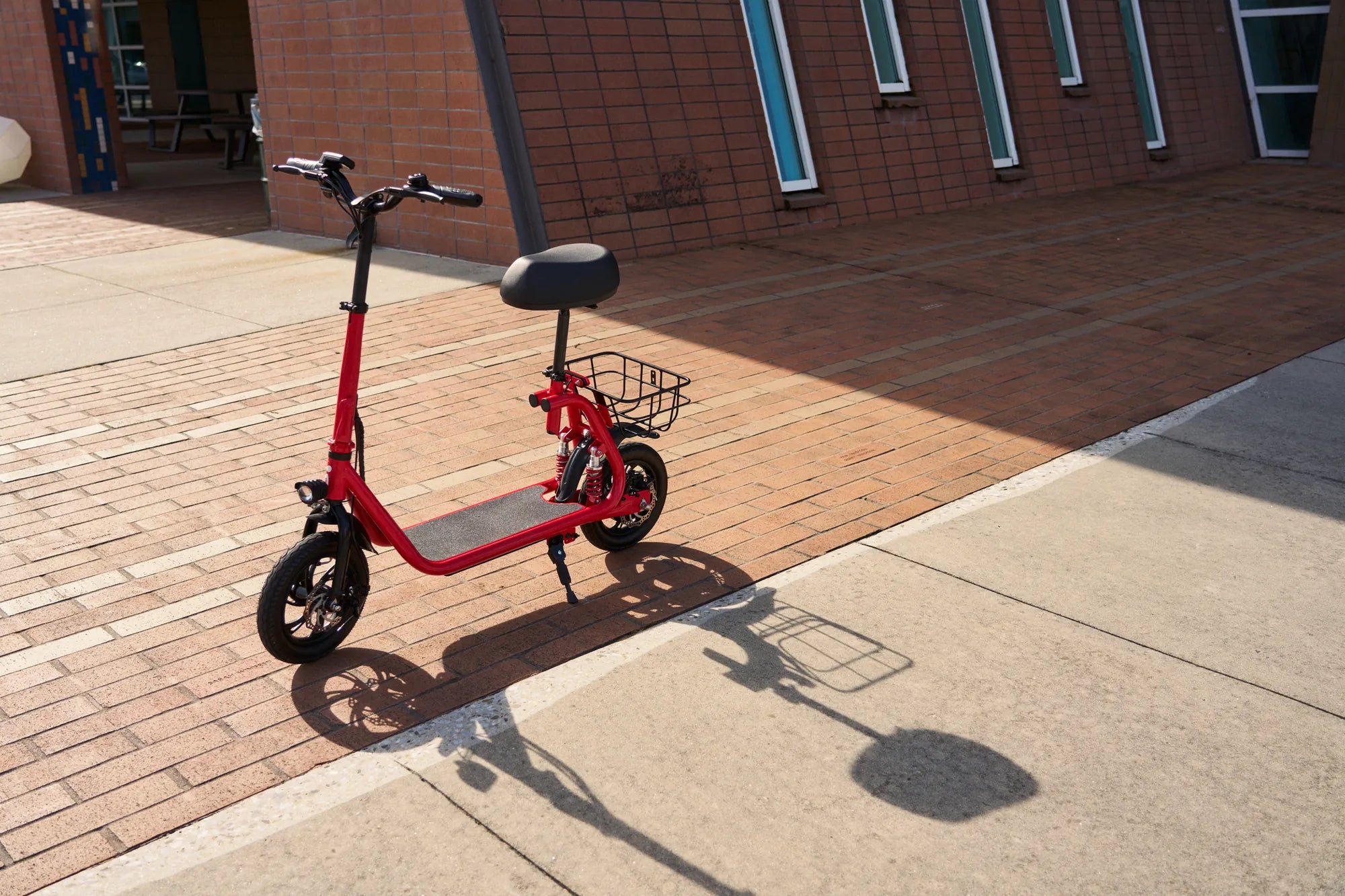
You're considering an electric bike but have a firm budget. The good news is that the $600 e bike represents a viable entry point into the world of electric cycling. This guide will provide a detailed, data-driven look at what you can realistically expect from an e-bike in this price range, from motor power and battery range to build quality and ideal use cases. You'll learn how to identify the best value, understand the common trade-offs, and discover how reputable brands deliver essential safety and reliability without breaking the bank. We'll cut through the marketing hype to give you the facts needed to make an informed purchase.
What to Expect from a $600 E-Bike: The Real-World Value Proposition
The $600 price point defines the entry-level segment of the electric bike market. At this level, the core value proposition is a functional, motor-assisted bicycle designed for basic commuting and recreation. You are investing in an electric vehicle, not a luxury gadget. The focus shifts from premium features and high performance to fundamental utility and accessibility.
Realistic expectations are crucial. A $600 e bike will not match the power, range, or component quality of models costing $1,500 or more. Instead, it offers a gateway. You can expect a reliable hub motor, a battery that provides a practical assist for shorter trips, and a durable aluminum frame. The goal is to reduce the effort of pedaling, not replace it entirely, making hills and headwinds more manageable.
Build quality in this segment varies widely, which is why brand reputation matters immensely. Some manufacturers cut corners on critical safety components like the battery pack or braking system to hit this price. A trustworthy brand prioritizes these non-negotiables, even at a lower cost. The value lies in obtaining a safe, certified, and warrantied product that performs its core function well for years.
Ultimately, a $600 e-bike is an excellent tool for specific tasks. It is for the rider who values the electric assist for practical daily needs over sport performance or long-distance touring. Understanding this segment's purpose allows you to evaluate options clearly and avoid disappointment from mismatched expectations.
Key Features and Specifications in the $600 Price Range
When evaluating a $600 e bike, specific technical specifications become standard benchmarks. Knowing these will help you compare models effectively and identify outliers that may overpromise.
The motor is typically a rear or front hub motor rated between 250W and 350W. This provides adequate assist for flat to moderately rolling terrain, helping you maintain speeds of 15-20 mph with pedaling. Torque, or rotational force, is more important than wattage alone for hill climbing; expect moderate performance on inclines.
Battery capacity is a key differentiator. Most $600 e-bikes use a 36V or 48V system with a capacity between 7.5Ah and 10Ah. This translates to a real-world range of 15-25 miles per charge, depending on rider weight, terrain, assist level, and temperature. The battery is often a removable lithium-ion pack, a crucial convenience for charging.
Frame construction is almost exclusively aluminum alloy for its strength and weight balance. Component groups are basic but functional: mechanical disc brakes or linear-pull (V) brakes, a simple 7-speed derailleur, and basic front suspension forks (often with limited travel). The display is usually a simple LED panel showing battery level and assist mode.
Tires are commonly 26-inch or 27.5-inch urban or hybrid styles. The overall weight of the bike, including battery, often falls between 45 and 55 pounds. These specifications paint a picture of a capable, no-frills machine designed for paved paths and city streets.
The Gyroor Advantage: How We Deliver Quality and Safety at an Accessible Price
As a leading electric mobility brand trusted by over 100,000 riders, Gyroor applies its core engineering principles to the $600 e bike segment. We believe accessible pricing should never compromise fundamental safety and durability.
Our primary focus is battery safety. Every Gyroor e-bike utilizes UL-certified battery packs, rigorously tested for stability and longevity over 500+ charge cycles. This certification is a non-negotiable standard that many budget competitors omit, posing a significant fire risk. We invest in this safety foundation so our riders don't have to worry.
Durability is engineered for real-world use. Our frames are constructed from reinforced aluminum, and our electrical systems are built with IPX5 water-resistant designs. This rating means the bike can withstand water jets from any direction, making it reliable for commuting in rain or wet conditions. This practical feature extends the bike's lifespan and usability.
We back our quality commitment with a reliable 1-year comprehensive warranty on the frame, motor, battery, and controller. This warranty provides genuine peace of mind, ensuring support is available if needed. By streamlining our direct-to-consumer model and focusing on these core pillars—certified safety, weather resistance, and strong warranty—Gyroor delivers exceptional value and reliability in a $600 e bike.
Ideal Use Cases: Who is a $600 E-Bike Perfect For?
The $600 e bike is a targeted solution, excelling in specific scenarios. Identifying if you fit these use cases is key to satisfaction with your purchase.
First-Time E-Bike Buyers: For those curious about electric cycling but hesitant to make a four-figure investment, a $600 model is a low-risk entry point. It allows you to experience the benefits of pedal assist—easier commutes, less sweat, more fun—without a major financial commitment.
Urban Commuters with Short-to-Medium Trips: If your daily round-trip commute is under 10 miles and primarily on paved surfaces, this e-bike is ideal. It efficiently replaces a car or bus for these distances, saving on fuel and parking while providing door-to-door convenience and light exercise.
College Students and Campus Dwellers: Navigating a large campus or making short trips to nearby stores is a perfect application. The electric assist makes carrying a backpack full of books easier, and the cost is manageable on a student budget.
Budget-Conscious Riders and Families: For households seeking a second or third vehicle for errands, or for riders who want an e-bike for occasional recreational paths, the $600 price tag is highly attractive. It provides the core e-bike experience for leisure and practical tasks.
Last-Mile Solution Seekers: Pairing an e-bike with public transit for a hybrid commute is highly effective. A lighter, $600 e-bike is often easier to carry onto a train rack or store at a station than a heavier, more expensive model.
Smart Shopping: What to Look For and Potential Trade-Offs
Being an informed shopper is critical in the budget e-bike market. Focus on non-negotiable features and understand where compromises are typically made.
Must-Have Features: Always prioritize safety certifications. A UL, CE, or RoHS-certified battery is essential. A clear, written warranty of at least one year on major components is a sign of manufacturer confidence. Mechanical disc brakes offer better stopping power in wet conditions than rim brakes. A removable battery greatly simplifies charging and security.
Common Trade-Offs: At $600, expect a lower sustained top speed (often capped at 20 mph). The battery will be smaller, limiting range. Component quality will be basic—shifters and derailleurs may be from entry-level groupsets. Suspension, if present, will be a simple coil fork with minimal travel. Advanced features like integrated lighting, torque sensors, or smartphone app connectivity are usually absent.
Major Red Flags to Avoid: Steer clear of any e-bike with an uncertified or unbranded battery. Vague or non-existent warranty terms are a serious warning sign. Be skeptical of claims of excessive range (e.g., 50+ miles) or motor power (500W+) at this price; they are likely exaggerated. Extremely low weights may indicate a flimsy frame or tiny battery.
Read independent reviews and customer feedback focusing on real-world range and reliability after several months of use. A reputable seller will provide detailed specifications and responsive customer service.
Comparison: $600 E-Bike vs. Higher-Priced Models
The table below illustrates the typical differences between a value-focused $600 e-bike and a premium model in the $1,200+ range. This highlights where the additional investment goes.
| Feature | Typical $600 E-Bike | Typical $1,200+ E-Bike |
|---|---|---|
| Motor | 250W-350W Hub Motor | 500W+ Mid-Drive or High-Torque Hub Motor |
| Battery | 36V/7.5-10Ah (15-25 mi range) | 48V/14-20Ah (40-70 mi range) |
| Brakes | Mechanical Disc | Hydraulic Disc |
| Drivetrain | 7-Speed Basic Derailleur | 9-12 Speed Mid-Range Groupset |
| Frame & Fork | Aluminum, Basic Suspension | Lightweight Aluminum/Carbon, Air Suspension |
| Sensor Type | Cadence Sensor | Torque Sensor (More Natural Feel) |
| Display & Tech | Basic LED Display | Color LCD, Bluetooth/App Connectivity |
| Weight | 45-55 lbs | 40-50 lbs |
Maximizing Your Investment: Maintenance and Care Tips
Proper care ensures your $600 e bike delivers reliable service for years, protecting your investment. Follow these actionable maintenance guidelines.
Battery Care is Paramount: Avoid fully draining the battery. Try to recharge when it reaches 20-30% capacity. Store the bike and battery in a cool, dry place, away from extreme heat or freezing temperatures. If not using the bike for extended periods, store the battery at a 50-60% charge level. Use only the manufacturer-provided charger.
Routine Mechanical Checks: Maintain proper tire pressure as indicated on the tire sidewall; this drastically affects range and ride quality. Regularly check brake pad wear and adjust cable tension if you have mechanical discs. Keep the chain clean and lubricated with a bicycle-specific lubricant. Periodically check that all bolts (especially on the stem, handlebars, and seat post) are tight.
Cleaning and Storage: Leverage the IPX5 water resistance by washing the bike with a gentle hose spray. Avoid high-pressure washers directed at bearings, the motor, or display. Wipe the bike down after wet rides. Store it indoors if possible to protect the electrical components and frame from prolonged weather exposure.
Utilize Your Warranty and Support: Register your product upon purchase. Familiarize yourself with the warranty terms. If an issue arises, contact the manufacturer's support first. For a brand like Gyroor, this means access to a dedicated support network and genuine replacement parts, ensuring your e-bike stays on the road.
Frequently Asked Questions About $600 E-Bikes
Q: Is the 15-25 mile range sufficient for a daily commute?
A: For most urban commuters, yes. The average U.S. one-way commute is under 15 miles. A 20-mile round-trip is comfortably within the range of a properly maintained $600 e bike, especially if you can recharge at your destination.
Q: Can a $600 e-bike handle hills?
A> It can handle moderate hills, especially with the rider pedaling. Steep, sustained grades will slow you down significantly. The 250W-350W motor provides assist, not primary propulsion. If your route is very hilly, consider a model at the higher end of the power range or be prepared to use lower gears and pedal hard.
Q: How long does the battery last before needing replacement?
A> A quality UL-certified lithium-ion battery, like those used by Gyroor, is rated for 500+ full charge cycles. With partial charging, you can expect 3-5 years of typical use before noticing a significant (20-30%) reduction in capacity. Proper care, as outlined above, maximizes lifespan.
Q: What is the assembly process like?
A> Most e-bikes ship 85-90% assembled. You typically attach the front wheel, handlebars, pedals, and seat, and perform basic adjustments. It requires basic tools and 30-60 minutes. Many brands, including Gyroor, provide clear video instructions. For complete peace of mind, a local bike shop can perform final assembly and safety check for a small fee.
Q: Are these e-bikes street-legal?
A> In most U.S. states and European countries, e-bikes with a motor under 750W that only provide assist up to 20 mph (Class 1 and Class 2) are treated as bicycles, not motor vehicles. They are allowed on bike paths and roads where bicycles are permitted. Always check your local regulations, as they can vary by city or state.
Conclusion: Is a $600 E-Bike the Right Choice for You?
The $600 e bike occupies a vital niche, offering a practical and accessible introduction to electric-assisted cycling. Its value is clear for first-time buyers, urban commuters with shorter trips, students, and anyone seeking a cost-effective secondary vehicle. By setting realistic expectations around range, power, and features, you can avoid disappointment and appreciate the genuine utility these bikes provide.
The key to a successful purchase lies in prioritizing safety and reliability over superfluous specs. Choosing a reputable brand that invests in certified batteries, durable weather-resistant construction, and a solid warranty—like Gyroor—transforms a budget purchase into a smart, long-term investment. You gain a dependable tool for daily life without compromising on the core principles that make an e-bike safe and enjoyable to ride.
If your primary needs align with the ideal use cases outlined here, a $600 e bike is an excellent choice. It delivers the core benefits of electric cycling—making trips easier, faster, and more fun—at a price point that makes sense for millions of riders. Ready to explore a range of e-bikes that combine value with uncompromising safety and quality? Browse the full Gyroor collection at gyroorboard.com to find the model that powers your journey.
Battery Powered Adult Tricycle: The Complete Guide to Stable Electric Mobility
What E-Bike Should I Get? The Complete 2024 Decision Guide