


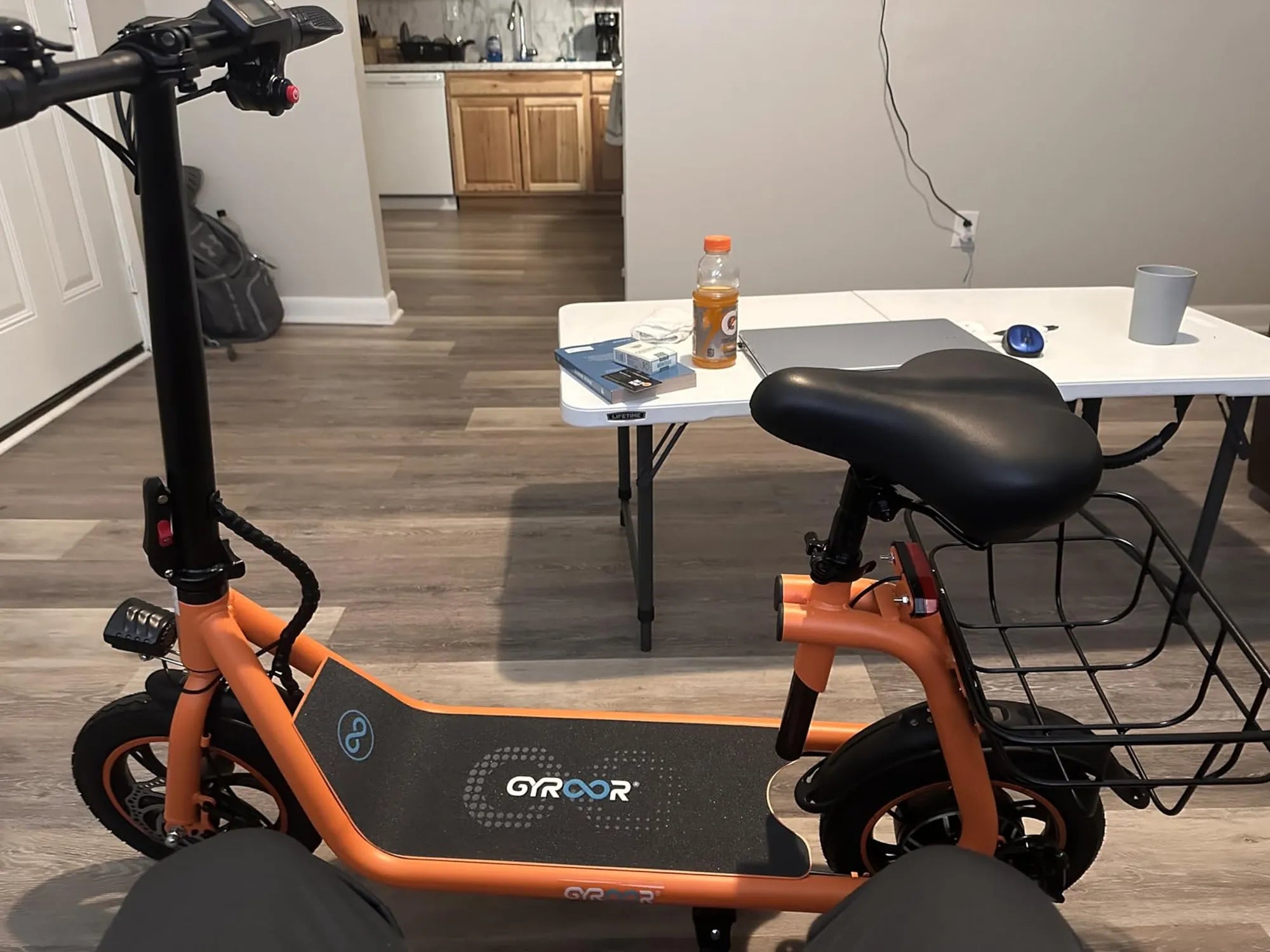
Introduction to 800W Electric Scooters
An 800W electric scooter represents the sweet spot in personal electric mobility, offering a powerful blend of speed, hill-climbing prowess, and practical range. The motor's wattage is a direct indicator of its power output, with 800 watts providing a significant performance upgrade over common 350W or 500W commuter models. This guide will dissect what makes an 800w scooter a top choice for serious urban riders, focusing on factual performance data and essential features.
You will learn how an 800W motor translates to real-world riding, what specifications truly matter beyond the headline wattage, and how to select a model that balances power with reliability. We will reference industry-leading benchmarks, including those set by Gyroor, a brand trusted by over 100,000 riders for its UL-certified safety and robust engineering.
The 800w scooter category is designed for adults who need a vehicle, not a toy. It caters to commuters facing varied urban terrain, riders with higher weight requirements, and anyone seeking a confident, responsive ride in traffic. Understanding this power class is key to making an informed purchase that will serve you for years.
This article provides a data-driven analysis to cut through marketing claims. We will compare motor classes, detail critical components like battery systems, and offer actionable advice for maintenance and safety. Let's explore why the 800w scooter has become synonymous with capable, everyday electric transportation.
Why Choose an 800W Motor? Performance & Capability
Choosing an 800W motor is a decision for enhanced capability and reliability. This power level delivers tangible advantages where lower-wattage scooters often struggle: sustained hill climbs, consistent acceleration, and the ability to carry heavier loads without drastic performance loss. It's the minimum power recommended for most adult riders seeking a true car-replacement for short trips.
The core benefit is torque. An 800W motor generates more rotational force, allowing the scooter to overcome inertia and gravity more effectively. This results in quicker acceleration from a stop and maintained momentum on inclines. For the urban environment, this means keeping pace with traffic flow and navigating overpasses or bridge approaches with confidence.
Furthermore, an 800w scooter typically features a more robust overall construction to handle the increased power. This often includes better suspension systems, higher-grade braking components, and a sturdier deck and stem. The power rating is therefore a good indicator of a vehicle built for more demanding, frequent use.
Riders weighing over 200 pounds will find 800W to be a practical starting point for adequate performance. While a 500W scooter may move a heavier rider, it will do so with significantly reduced acceleration and hill-climbing ability, straining the motor and battery. The 800W option provides necessary headroom for a consistent experience.
Speed and Acceleration Expectations
A quality 800w scooter typically achieves a top speed between 25 and 28 mph (40-45 km/h) under optimal conditions. This speed is governed by electronic limiters in many regions for legal compliance and safety. The real-world advantage is not just top speed, but how quickly and smoothly you can reach cruising velocity.
Acceleration from 0 to 15 mph is notably brisk, often taking just 4-6 seconds depending on rider weight and scooter tuning. This allows for safe merging into bike lanes and quick starts at traffic lights. The power delivery feels immediate and linear, providing a sense of control and responsiveness that lower-powered models lack.
It's crucial to pair this motor power with an appropriately sized battery. A high-wattage motor drawing from a small battery will experience voltage sag, leading to inconsistent performance and reduced range. Quality manufacturers like Gyroor match their 800W motors with high-capacity, UL-certified battery packs to ensure sustained output.
Riders should note that actual speed is influenced by factors like tire pressure, riding mode (eco vs. sport), terrain, and wind resistance. The advertised top speed is a maximum under ideal testing conditions, but the consistent power of an 800W motor means you'll spend more time near that maximum in real use.
Conquering Hills and Inclines
Hill-climbing ability, or gradeability, is where 800W scooters truly separate themselves. A robust 800W motor can typically handle inclines of 15-20% without stalling and with minimal speed reduction. This translates to confidently climbing steep city streets, parking garage ramps, and pedestrian overpasses that would halt a less powerful scooter.
On a 10% grade (a significant hill), a well-designed 800w scooter may maintain 12-15 mph, whereas a 500W model might slow to 6-8 mph. This difference is critical for maintaining traffic integration and rider safety. The motor's torque allows it to work efficiently against gravity without overheating or excessive battery drain.
This capability is not just about power; it's about thermal management. Quality 800W motors are built with better heat dissipation to handle sustained loads during climbs. Cheaper models may overheat and trigger thermal shutdowns. Gyroor designs its motor systems with this sustained output in mind, ensuring reliable performance on challenging routes.
For commuters in hilly cities, an 800W motor is often the most practical choice. It provides the necessary power without stepping into the higher cost, weight, and diminished range of ultra-high-performance 1000W+ models, which are often overkill for paved urban gradients.
Key Features to Look for in an 800W Scooter
The motor is just one component of a great electric scooter. To fully leverage 800W of power, the entire vehicle must be designed to support it. Key features to prioritize include battery quality, braking system, frame construction, and ingress protection ratings. Ignoring these can turn a powerful scooter into an unreliable or unsafe vehicle.
A superior braking system is non-negotiable. Disc brakes, whether mechanical or hydraulic, offer the consistent stopping power needed for a scooter capable of 25+ mph. Many models combine a primary disc brake with an electronic regenerative brake for added control and slight battery recapture. Avoid scooters that rely solely on foot or inadequate drum brakes.
Build quality directly impacts safety and longevity. Look for a frame constructed from aerospace-grade aluminum alloy, which provides strength without excessive weight. The folding mechanism should be robust, with a secure locking latch. Wide, textured deck surfaces and a strong, wobble-free stem are indicators of thoughtful design for adult riders.
Lighting and visibility features are essential for urban commuting. A bright headlight (200 lumens or more), a rear brake light, and side reflectors or deck lighting are minimum requirements. Some advanced models, including several from Gyroor, feature integrated turn signals for communicating intentions in traffic, a significant safety upgrade.
Battery & Range: The Power Behind the Power
The battery is the heart of your 800w scooter. Motor wattage determines power demand, but battery capacity (measured in Watt-hours, Wh) determines how long that power can be sustained. For an 800W motor, a battery capacity of at least 500Wh (approximately 13Ah at 36V) is recommended for a useful real-world range.
Realistic range expectations are 18-25 miles per charge for an 800w scooter, depending heavily on riding mode, rider weight, terrain, and temperature. Manufacturers' maximum range figures are achieved under ideal lab conditions. A practical estimate is 70-80% of the advertised maximum for mixed urban riding.
Battery safety and quality are paramount. Insist on cells from reputable brands (like LG, Samsung, or Panasonic) assembled into a pack with a proper Battery Management System (BMS). The BMS protects against overcharge, over-discharge, short circuits, and temperature extremes. Gyroor's use of UL-certified battery packs, tested for over 500 charge cycles, is an industry benchmark for safety and longevity.
Charging time is another consideration. A standard charger for a 500Wh battery may take 6-8 hours for a full charge. Some models offer fast-charging capabilities, reducing this time significantly. Always use the manufacturer-provided charger to avoid damaging the battery or creating a fire hazard.
Build Quality, Safety, and Warranty
Durability is defined by a scooter's ability to withstand daily use and minor impacts. Key points include IP water resistance ratings. An IPX5 rating, like those found on Gyroor commuter scooters, means the scooter can withstand water jets from any direction, making it safe to ride in rain or through puddles. This is crucial for all-weather reliability.
Tire choice significantly affects ride quality and safety. Pneumatic (air-filled) tires offer superior shock absorption and traction, especially on wet or uneven surfaces, but require maintenance. Solid or honeycomb tires eliminate flats but provide a harsher ride. For an 800w scooter meant for varied urban terrain, pneumatic or tubeless tires are often the preferred choice for comfort.
Suspension is not a luxury on a performance scooter. A front or dual suspension system (spring or hydraulic) absorbs vibrations from cracks, bumps, and cobblestones, increasing control, reducing fatigue, and protecting the scooter's electronics from constant jolts. This is a critical feature for rides longer than 15 minutes.
A comprehensive warranty is your safety net. A reputable brand will offer at least a 1-year warranty covering the motor, battery, and controller against manufacturing defects. This demonstrates confidence in the product's build quality. Gyroor's standard 1-year warranty, backed by responsive customer support, provides peace of mind for a significant investment.
Gyroor 800W Scooters: A Closer Look at the Lineup
Gyroor has established itself in the 800W category by focusing on the integration of power, safety, and practical commuter features. Their models are designed around the needs of daily riders, not just peak performance metrics. This approach results in scooters that are powerful, reliable, and equipped for real-world conditions.
A common feature across their 800W series is the use of UL-certified lithium-ion battery packs. This certification, achieved through rigorous third-party testing, is a clear differentiator in a market where battery safety is a top concern. It ensures the battery meets stringent standards for electrical and fire safety.
Gyroor models often incorporate smart features that enhance the riding experience. Bluetooth connectivity via a dedicated app allows riders to lock the scooter, customize riding modes, monitor battery health in detail, and track trip statistics. A clear, bright digital display shows speed, battery level, mode, and trip distance at a glance.
Portability is addressed through efficient folding mechanisms that allow the scooter to collapse in seconds, often featuring a magnetic latch to keep it folded securely. Combined with manageable weights (typically 40-55 lbs), this makes Gyroor's 800w scooter models viable for mixed-mode commuting involving public transit.
800W vs. Other Motor Classes: Making the Right Choice
Understanding where 800W fits in the broader spectrum of electric scooter motors is key to selecting the right vehicle. The choice often comes down to a balance between power, weight, cost, and intended use. The following table provides a clear, data-driven comparison.
| Motor Class | Typical Top Speed | Hill Climb Ability | Ideal Rider Profile | Pros | Cons |
|---|---|---|---|---|---|
| 500W (Entry Commuter) | 18-22 mph | Struggles with >10% grades | Lightweight riders, flat terrain, short trips | Lightweight, affordable, longer range per Wh | Limited power, slow acceleration, poor hill performance |
| 800W (Performance Commuter) | 25-28 mph | Handles 15-20% grades well | Most adult commuters, moderate hills, riders up to 265 lbs | Excellent power/weight balance, confident acceleration, versatile | Higher cost than entry-level, shorter range than 500W at same speed |
| 1000W+ (High Performance) | 30-40+ mph | Excels on steep hills | Experienced riders, thrill-seekers, very hilly areas | Extreme acceleration and top speed, best hill climb | Heavy, expensive, short range, often not street-legal, requires more skill |
The 500W class is sufficient for casual use on perfectly flat ground. However, for an adult commuting in a real city with variables like wind, slight inclines, and the need to keep up with traffic, the 500W motor will often feel underpowered and strained, potentially shortening its lifespan.
The 800w scooter occupies the ideal middle ground. It offers nearly all the practical performance of a 1000W+ model for urban commuting—where legal speed limits rarely exceed 25 mph—while being lighter, more efficient, and more affordable. The 800W motor provides a reserve of power for safety and convenience without the drawbacks of an ultra-high-performance machine.
For over 90% of urban commuters and recreational riders, an 800W motor represents the point of diminishing returns for additional power. It delivers the capability needed for a reliable, enjoyable, and safe daily ride without unnecessary excess that compromises portability, legality, or cost.
Frequently Asked Questions About 800W Scooters
Q: Is an 800w scooter legal in my city?
A: Laws vary widely. In many US states and European countries, electric scooters with a top speed under 20-28 mph are legal for use on bike lanes and roads. Always check local regulations regarding maximum wattage, speed, helmet requirements, and where you can ride. The 25-28 mph top speed of most 800W models often places them at the upper limit of what is street-legal, so using lower speed modes may be necessary for compliance.
Q: How far can I really go on a single charge?
A: As noted, expect 18-25 miles of real-world range for a typical 800w scooter with a 500Wh+ battery. This assumes mixed riding (some hills, stops/starts) at an average speed of 15-20 mph. To maximize range, use eco mode, maintain proper tire pressure, avoid excessive acceleration, and ride on smooth, flat paths when possible.
Q: Is an 800W scooter suitable for beginner riders?
A: Yes, but with caution. The power is manageable for a beginner if the scooter has selectable riding modes. Start in the lowest power (eco) mode to get accustomed to the acceleration, braking, and balance. Always wear a helmet and protective gear. The added power can actually be safer for beginners in traffic, as it allows for more confident acceleration out of potential danger zones.
Q: What maintenance does an 800W electric scooter require?
A> Regular maintenance is minimal but critical: 1) Check and inflate pneumatic tires to the recommended PSI weekly. 2) Regularly test brake function and adjust cable tension or check brake pad wear as needed. 3) Keep the scooter clean, especially the braking surfaces. 4) Check all bolts and folding mechanisms for tightness monthly. 5) Store the scooter in a dry place and avoid leaving the battery fully depleted for long periods.
Q: Can I ride an 800w scooter in the rain?
A: Scooters with a high IP rating (like IPX5) are designed to withstand rain and wet roads. However, exercise extreme caution: reduce speed, avoid deep puddles (which can submerge electronics), and brake earlier and more gently. Even water-resistant scooters are not waterproof, and riding in heavy downpours is not advised. Always dry the scooter after riding in wet conditions.
Conclusion: Is an 800W Electric Scooter Right for You?
The 800w scooter stands as the most rational choice for the dedicated urban commuter or enthusiast. It delivers the necessary power for hills, traffic, and carrying capacity without the excessive weight, cost, and legal complications of higher-wattage models. For adult riders seeking a reliable, car-alternative for trips under 10 miles, it is overwhelmingly the recommended power class.
Your decision should hinge on a holistic view of the vehicle. Prioritize models that combine the 800W motor with a high-quality, safe battery system, robust brakes, and a durable, water-resistant build. These supporting features are what transform raw power into dependable, daily transportation. Brands that invest in UL certification and comprehensive warranties demonstrate a commitment to this reliability.
Gyroor's approach to the 800W category—emphasizing UL-certified battery safety, IPX5 water resistance, and rider-focused tech—exemplifies the standards you should seek. With over 100,000 riders trusting their products, the focus on secure, consistent performance is clear. An investment in a well-engineered 800w scooter is an investment in years of efficient, enjoyable mobility.
Ready to experience the ideal balance of power and practicality? Explore the engineered reliability and performance of Gyroor's 800W electric scooter lineup. Browse the full Gyroor collection at gyroorboard.com to find the model that matches your commute and empowers your ride.
Scooter Motorbike for Adults: The Ultimate Guide to Urban Mobility
Mobility Scooter NYC: The Ultimate Urban Navigation Guide