


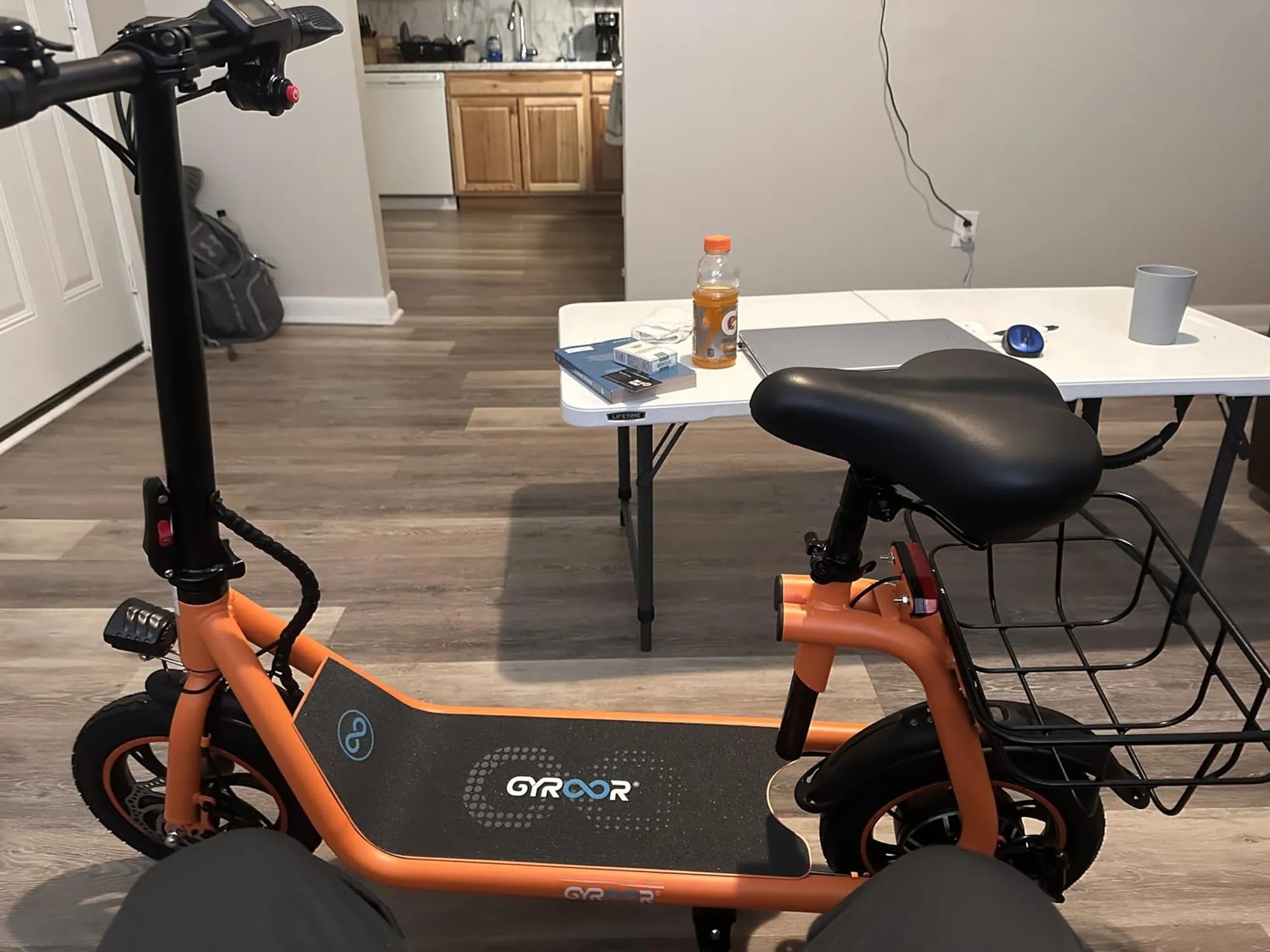
Introduction to Mobility Scooters in New York City
Navigating New York City requires resilience, whether you're a lifelong resident or a visitor. For those seeking enhanced mobility, a well-chosen mobility scooter can transform the urban experience, offering independence and access across the city's five boroughs. The key to success lies in selecting a scooter specifically engineered for NYC's unique challenges: pothole-riddled streets, unpredictable weather, crowded sidewalks, and the need for compact storage.
This guide will provide a data-driven framework for choosing and using a mobility scooter in NYC. We'll analyze the essential features for urban terrain, compare specific models, and outline the legal and safety landscape. As a leading electric mobility brand trusted by over 100,000 riders, Gyroor designs its scooters with these rigorous urban demands in mind, focusing on safety, durability, and practical performance.
Understanding the intersection of personal mobility needs and urban infrastructure is crucial. A scooter that works perfectly in a suburban mall may struggle on the hills of Park Slope or the cobblestones of the South Street Seaport. This article will equip you with the knowledge to make an informed decision, ensuring your mobility scooter nyc choice is a reliable partner in city life.
We will cover technical specifications, real-world usage scenarios, and post-purchase support. The goal is to move beyond basic marketing and provide actionable insights that prioritize your safety, convenience, and freedom to explore one of the world's most dynamic cities.
Navigating NYC's Terrain: Essential Scooter Features
New York City's environment presents a specific set of obstacles that not all mobility scooters are built to handle. The ideal mobility scooter nyc model must excel in several key areas to provide reliable, day-to-day transportation. Prioritizing these features will ensure your investment enhances your mobility rather than complicating it.
The city's landscape is a mix of steep inclines, uneven surfaces, and long, flat stretches. A scooter needs sufficient power to climb bridge approaches and subway station ramps, while also having the battery capacity to cover distances typical for errands or commutes. Furthermore, the compact and often chaotic nature of NYC living demands thoughtful design for portability and storage.
Durability is non-negotiable. From the constant vibrations of pavement seams to the occasional impact with a pothole, the scooter's frame, tires, and electrical components must be robust. Weather resistance is equally critical, as rain, snow, and street spray are inevitable parts of the NYC experience for much of the year.
By evaluating scooters through this urban lens, you can filter out models designed for gentler environments. The following sections break down these core requirements into detailed specifications and performance benchmarks.
Power, Torque, and Range for City Demands
Motor power is the first specification to scrutinize. For effective hill climbing—essential for neighborhoods like Washington Heights or parts of Brooklyn—a continuous motor rating of at least 300 watts is recommended. Torque, the rotational force that gets you moving from a stop and up an incline, is equally important. A high-torque motor will provide a smoother, more confident start on slopes.
Battery capacity, measured in watt-hours (Wh), directly determines your potential range. Consider your daily travel patterns. A round trip to a local park, grocery store, and back might be 5-7 miles, while a longer excursion could be 10-15 miles. Always choose a scooter with a rated range that exceeds your typical daily need by at least 30-40% to account for variables like cold weather, rider weight, and frequent stops/starts, which can reduce efficiency.
Gyroor utilizes UL-certified lithium-ion battery packs, a critical safety feature for urban charging. These batteries are tested for over 500 charge cycles, ensuring long-term reliability. A scooter with a 10-15 mile real-world range and a robust motor provides a solid foundation for most NYC mobility needs, offering the freedom to move without constant range anxiety.
Remember, manufacturer range claims are often based on ideal laboratory conditions. For urban NYC use, factor in the energy used for acceleration, hill climbing, and stop-and-go traffic. A scooter with a 15-mile claimed range might reliably deliver 10-12 miles in the city, which is sufficient for many users.
Durability, Suspension, and Weatherproofing
The durability of a mobility scooter nyc model is tested daily. The frame should be constructed from reinforced aluminum or steel to withstand the stresses of urban travel. A good suspension system—either spring-based or hydraulic—is not a luxury; it's a necessity for rider comfort and component longevity. It absorbs impacts from cracks, potholes, and uneven pavement, protecting both you and the scooter's internal electronics.
Tire choice matters. Solid (airless) tires eliminate the risk of flats, a significant advantage when a puncture could leave you stranded in traffic. However, they can provide a harsher ride. Pneumatic (air-filled) tires offer better shock absorption but require maintenance to check pressure and are susceptible to punctures. Many urban riders prioritize the reliability of solid tires.
Weather resistance is paramount. Look for an IP (Ingress Protection) rating. An IPX5 rating, like those found on Gyroor scooters, means the unit is protected against water jets from any direction. This level of protection guards against rain, street spray from passing vehicles, and accidental splashes, allowing for confident use in wet conditions. Never assume a scooter is water-resistant without a certified IP rating.
This combination of a sturdy frame, functional suspension, and verified water resistance ensures your scooter remains a dependable tool through all seasons, from summer thunderstorms to winter slush.
Portability, Weight, and Apartment-Friendly Design
For most New Yorkers, space is at a premium. A mobility scooter must be manageable in an apartment, elevator, and potentially on public transit. Foldability is the key feature here. A good folding mechanism should be simple, require minimal force, and securely lock both in the unfolded (riding) and folded (storage) positions.
Weight is a major practical consideration. A scooter weighing 30-40 pounds is light enough for many users to lift a few inches to clear a curb or load into a car trunk. Models approaching 50-60 pounds become significantly more difficult to manage for tasks like carrying up a short flight of stairs or placing in a closet. Consider your own strength and the physical layout of your home.
Folded dimensions are just as important as weight. The ideal scooter collapses into a compact, rectangular shape that can be tucked beside a door, in a closet, or under a desk. This design consideration directly impacts how seamlessly the scooter integrates into your daily routine without becoming a storage burden.
When evaluating portability, think through your entire journey: carrying it out your apartment door, onto an elevator, through a lobby, and potentially onto a bus (where permitted by MTA rules). A design that balances stability when riding with compactness when folded is the hallmark of a truly urban-ready mobility scooter.
Gyroor's NYC-Ready Mobility Scooter Lineup
Gyroor's product development focuses on the real-world challenges faced by urban riders. Their lineup includes several models that incorporate the essential features discussed above, providing reliable options for different needs and preferences within the NYC context. Each model is built with a focus on UL-certified battery safety, IPX5 water resistance, and a robust 1-year warranty for peace of mind.
The brand's commitment to safety and durability makes its scooters a strong candidate for anyone seeking a mobility scooter nyc solution. The following analysis compares key models, highlighting how their specifications translate to performance on New York City streets. This comparison is based on technical data and design philosophy, helping you match a scooter to your specific lifestyle.
It's important to assess your primary use case. Are you a frequent user of public transit who needs maximum portability? Do you primarily run errands within a few miles of home, requiring comfort and cargo capacity? Or do you need a robust scooter for longer recreational rides on park paths? Answering these questions will guide you toward the most suitable model.
Below is a detailed comparison of two Gyroor models engineered to thrive in an urban setting, followed by guidance on choosing between them.
Model Comparison: Features for Urban Life
The following table provides a side-by-side comparison of two Gyroor models well-suited for NYC, focusing on the critical specifications for city use.
| Feature | Gyroor F1 Pro Commuter | Gyroor S1 Max All-Terrain |
|---|---|---|
| Motor Power | 350W Peak | 500W Peak |
| Max Range | Up to 15 miles | Up to 18 miles |
| Max Speed | 15.5 mph | 18.6 mph |
| Battery | UL-Certified, 36V 7.5Ah | UL-Certified, 36V 10.4Ah |
| Weight | 33 lbs | 41 lbs |
| Folded Dimensions | 42" x 17" x 16" | 45" x 20" x 18" |
| Tires | 8.5" Solid Honeycomb | 10" Pneumatic (Air-Filled) |
| Suspension | Front Spring Suspension | Dual Spring Suspension |
| Water Resistance | IPX5 | IPX5 |
| Ideal NYC User | Apartment dweller, transit commuter, errand-runner prioritizing portability. | Rider covering longer distances, navigating rougher pavement, prioritizing ride comfort. |
Choosing the Right Model for Your NYC Lifestyle
The Gyroor F1 Pro Commuter is engineered for maximum urban practicality. At 33 pounds with a highly compact fold, it is arguably one of the most apartment-friendly mobility scooters available. Its solid honeycomb tires eliminate flat tires, a major concern when navigating streets littered with debris. The 350W motor provides adequate power for most city hills, and the 15-mile range covers typical daily needs. This model is perfect for someone who needs to carry their scooter up a few steps, store it in a tight closet, or easily lift it onto a bus bike rack.
The Gyroor S1 Max All-Terrain trades a slight amount of portability for enhanced performance and comfort. The more powerful 500W motor delivers better acceleration and hill-climbing capability. The larger 10-inch pneumatic tires and dual suspension system offer a noticeably smoother ride over cracked concrete and cobblestones. The increased battery capacity extends the usable range, making it suitable for longer recreational rides in parks or across boroughs. This is the choice for riders who value comfort over absolute minimal weight and size.
Both models share the core safety and reliability features: IPX5 water resistance for all-weather use, UL-certified battery packs for safe charging in apartments, and a comprehensive 1-year warranty. Your decision should hinge on your daily routine, physical ability to handle weight, and the typical road conditions on your routes.
Ultimately, the best mobility scooter nyc choice is the one you will use consistently and confidently. If portability is your top constraint, the F1 Pro is a standout. If your routes are longer or rougher and you can manage the extra weight, the S1 Max's comfort and power are compelling advantages.
Riding Safely and Legally in New York City
Operating a mobility scooter in NYC comes with a responsibility to understand and follow local regulations, as well as to practice defensive riding. The legal landscape for electric mobility devices is evolving, but clear guidelines exist to ensure safety for riders and others sharing the public right-of-way. Adherence to these rules is not just about avoiding fines; it's about fostering a safe and respectful environment for all.
New York State law classifies certain electric scooters (including many mobility scooters) as "limited-use vehicles." However, local NYC regulations provide more specific guidance on where and how they can be operated. Knowing these rules before you ride is essential. This knowledge, combined with proper safety gear and situational awareness, forms the foundation of responsible urban mobility.
Safety is a shared responsibility. As a rider, you must anticipate the actions of drivers, cyclists, and pedestrians, all of whom may be distracted. Equipping your scooter and yourself properly significantly reduces risk. This section outlines the current legal framework and recommended safety practices for using a mobility scooter in the five boroughs.
Staying informed is key, as regulations can change. Always refer to the official New York City Department of Transportation (NYC DOT) website for the most current information regarding micro-mobility devices.
Understanding Local Laws: Sidewalks, Bike Lanes, and Roads
Under NYC administrative rules, electric scooters with a maximum speed of 15 mph are permitted to operate in the city. Crucially, they are not allowed on sidewalks. Riding a scooter on a sidewalk is illegal and endangers pedestrians, particularly those with disabilities, the elderly, and children.
So where should you ride? The designated spaces are bike lanes and streets with speed limits of 30 mph or less. When in a bike lane, you must follow the same rules as cyclists, traveling in the direction of traffic and yielding to pedestrians. On streets without a bike lane, you should ride in the traffic lane, as far to the right as is practical and safe, while following all standard traffic signals and signs.
There is no state or city registration requirement for personal electric mobility scooters. Riders must be at least 16 years old. While a driver's license is not required, having a basic understanding of traffic laws is imperative. The use of helmets is strongly recommended for all riders, and is legally required for those under 18.
These rules are designed to integrate scooters into the existing transportation hierarchy in a predictable way. By riding in bike lanes or on the road, you become a visible part of traffic flow, which is generally safer than weaving unpredictably between sidewalks and streets.
Essential Safety Gear and Defensive Riding Strategies
Your primary safety equipment starts with the scooter itself. Ensure it is equipped with a bright front headlight and a red rear taillight, both active during all rides, but especially at dawn, dusk, and night. Adding reflective stickers or a reflective vest dramatically increases your visibility to drivers.
A helmet is the single most effective piece of personal protective equipment. Choose a properly fitted bicycle or multi-impact helmet. Wearing it every time you ride, regardless of trip length, is a non-negotiable habit for serious riders. Consider gloves for better grip and protection in case of a fall.
Defensive riding is a mindset. Always assume that drivers do not see you. Make eye contact with drivers at intersections before proceeding. Signal your intentions clearly using hand signals for turns and stops. Avoid riding in a driver's blind spot, especially alongside trucks or buses. Be hyper-aware of parked cars—a suddenly opened door ("dooring") is a major hazard.
Adjust your speed to conditions. Slow down in crowded areas, near pedestrian crosswalks, in wet weather, and on uneven surfaces. Plan your route in advance to prioritize streets with bike lanes or slower traffic. By combining the right gear with proactive, alert riding habits, you significantly mitigate the risks of urban travel.
Maintenance and Long-Term Care for Your Scooter
Regular maintenance is essential to keep your mobility scooter nyc ready, safe, and reliable. Urban riding places higher demands on the vehicle, making a consistent care routine more important than for occasional or recreational use. Proper maintenance extends the lifespan of your scooter, ensures optimal performance, and helps prevent minor issues from becoming major failures.
A well-maintained scooter is also a safer scooter. Checking brakes, tires, and lights regularly can prevent accidents. Establishing a simple weekly and monthly checklist takes only a few minutes but provides immense peace of mind. This proactive approach aligns with the dependable nature of brands like Gyroor, which designs its products for durability but still benefits from responsible ownership.
Maintenance falls into two categories: routine owner checks and periodic professional servicing. Most daily and weekly tasks are simple and require no special tools. Understanding the basics of battery care is particularly important for maximizing its life and maintaining range. The following guidelines will help you establish a effective maintenance routine.
Always refer to your specific model's user manual for manufacturer-recommended procedures and intervals. The guidelines below are general best practices for electric mobility scooters in an urban environment.
Weekly and Monthly Checkups
Perform a quick visual and functional inspection before each significant ride. Ensure the folding mechanism (if present) is securely locked in the open position. Give the brakes a test squeeze while stationary to confirm they engage firmly and the levers don't feel spongy. Check that the throttle returns smoothly to the off position when released.
On a weekly basis, conduct a more thorough check. Tire Inspection: For pneumatic tires, check air pressure with a gauge and inflate to the PSI printed on the tire sidewall. For solid tires, visually inspect for deep cuts or embedded debris that could affect traction. Brake Adjustment: Listen for scraping sounds that might indicate worn brake pads or a need for adjustment. Most scooters have a simple cable adjuster for minor brake tuning.
Monthly, inspect all fasteners and bolts (axle nuts, stem clamp, folding latch bolts) for tightness. Vibration from city streets can loosen them over time. Use the appropriate wrench to snug them, but avoid over-tightening. Clean the scooter with a damp cloth to remove dirt, salt (in winter), and grime, paying attention to the brake discs or drum areas. Avoid high-pressure water sprays directly on bearings or electrical components, despite the IPX5 rating.
Finally, test all lights and electronic functions. Confirm the headlight, taillight, and any display or indicator lights are working correctly. This regular regimen ensures your scooter remains in peak operating condition.
Battery Care and Longevity Best Practices
The battery is the heart of your electric scooter. Proper care is crucial for safety and performance. Gyroor's use of UL-certified battery packs provides a high safety baseline, but user habits determine long-term health. The key principles are to avoid extreme states of charge and extreme temperatures.
Avoid routinely draining the battery to 0%. Try to recharge when it reaches 20-30% capacity. Similarly, avoid leaving the scooter plugged in for days on end at 100% charge. For long-term storage (e.g., over winter), store the battery at approximately a 50-60% charge in a cool, dry place. Never store a fully depleted battery.
Use only the manufacturer-provided charger. Third-party chargers may not have the correct voltage or safety cut-offs, posing a fire risk and damaging the battery. Allow the battery and scooter to cool down for 15-20 minutes after a long ride before plugging in to charge. Charge in a well-ventilated area, away from flammable materials like bedding or curtains—a standard practice for any lithium-ion device.
Extreme cold reduces battery performance and range. If you must ride in freezing temperatures, store the scooter indoors if possible before riding, as a warm battery will perform better. Avoid charging a battery that is below freezing (32°F / 0°C); allow it to warm to room temperature first. Following these practices will help you get the full 500+ charge cycles and years of service from your investment.
Frequently Asked Questions (FAQ)
Prospective and new mobility scooter owners in NYC often have specific, practical questions. This FAQ addresses the most common concerns with clear, actionable answers based on current regulations, safety standards, and best practices.
Q1: Can I take my Gyroor mobility scooter on the MTA bus or subway?
A: MTA policy allows "mobility devices" (including electric scooters used as such) on buses and subways. On buses, the driver may ask you to fold the scooter if space is limited. On subways, it's best to use elevators and avoid crowded cars during peak hours. Always be courteous and ensure your folded scooter does not block aisles or doors. Gyroor's compact folding designs, like the F1 Pro, are ideal for this use case.
Q2: How does Gyroor's 1-year warranty and US-based support work for NYC customers?
A: Gyroor provides a comprehensive 1-year warranty covering defects in materials and workmanship for the scooter, including the motor and controller. The UL-certified battery has its own warranty period, typically 6 months. Support is provided via email and phone by a US-based team. For issues requiring parts, they are shipped directly to you. Many common adjustments and replacements are designed to be user-serviceable with basic tools, minimizing downtime.
Q3: Is the UL-certified battery safe to charge in my apartment building?
A> Yes, this is a primary reason for choosing a scooter with UL-certified batteries like Gyroor's. UL (Underwriters Laboratories) certification means the battery pack has passed rigorous independent safety tests for electrical, mechanical, and fire hazards. It is the recognized safety standard in the U.S. Always follow the charging guidelines: use the provided charger, charge on a hard non-flammable surface, avoid covering the charger, and do not leave it charging unattended for extended periods. This is the safest practice for charging any lithium-ion battery indoors.
Q4: What should I do if I get a flat tire on a model with pneumatic tires?
A: For scooters like the Gyroor S1 Max with pneumatic tires, carrying a small puncture repair kit or a portable tire inflator can be a lifesaver. Many bike shops in NYC can also repair small scooter tire punctures. For a more permanent solution, some riders opt to use "tire sealant" products designed for bicycles, which can seal small punctures automatically. As a preventative measure, regularly check tire pressure and visually inspect for embedded glass or metal.
Q5: Where can I legally and safely park my scooter when I reach my destination?
A> You should treat your scooter like a bicycle. Use a sturdy U-lock or heavy-duty chain lock to secure it to a designated bike rack. Never lock it to trees, street signs that can be lifted out, or handicap access rails. If possible, bring it inside with you—the foldability of models like the Gyroor F1 Pro makes this easy for cafes, offices, or stores. Some buildings have dedicated bike/scooter storage rooms. Never leave the scooter unattended and unlocked, even for a minute.
Conclusion: Your Key to Urban Independence
Choosing the right mobility scooter for New York City is a decision that directly impacts your freedom, safety, and quality of life. By prioritizing features like sufficient power and range, durable construction with suspension, verified water resistance, and practical portability, you select a tool built for the city's realities. Understanding and adhering to local laws—riding in bike lanes or streets, not on sidewalks—ensures you travel safely and respectfully within the urban ecosystem.
Brands like Gyroor demonstrate that reliable urban mobility is achievable through thoughtful engineering, focusing on UL-certified battery safety, IPX5 weatherproofing, and robust warranties. Whether you choose a ultra-portable commuter model or a more comfort-oriented all-terrain design, the key is matching the scooter's capabilities to your specific daily routines and physical environment.
With the right scooter, proper maintenance, and a commitment to defensive riding, the city opens up. Errands become easier, commutes more pleasant, and recreational exploration more accessible. Your mobility scooter nyc journey begins with informed research and leads to empowered movement.
Ready to explore New York City with newfound freedom and confidence? Browse the full collection of UL-certified, NYC-ready electric scooters and e-bikes designed for urban life at Gyroor's official website. Discover the model that fits your lifestyle and take the first step toward seamless city navigation.
800w Scooter: The Ultimate Guide to Power, Performance, and Practicality
150cc Scooter Under $1,000: The Realistic Buyer's Guide & Smart Alternatives