



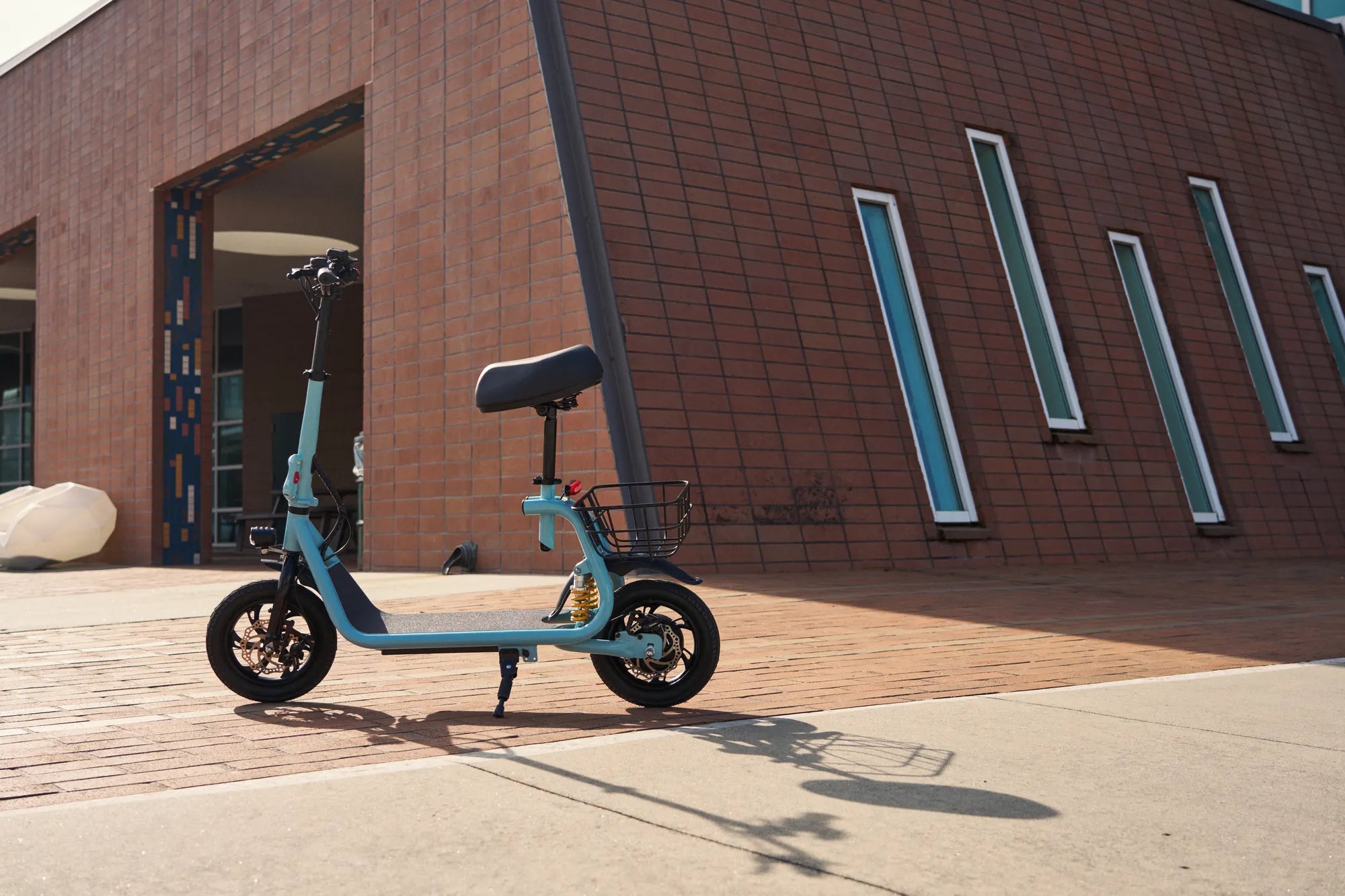
The global electric scooter market, projected to exceed $50 billion by 2030, represents more than a passing trend—it's a fundamental shift in urban mobility. For entrepreneurs and investors, this rapid growth begs a critical question: Are electric scooters a good business? The answer is nuanced, presenting a landscape of substantial revenue potential tightly intertwined with operational complexity and regulatory hurdles. This article moves beyond the hype to deliver a factual, data-driven exploration of the opportunities and challenges. You will learn about the core business models, key financial considerations, and the strategic importance of aligning with manufacturers that prioritize safety and durability, like Gyroor, a leading brand trusted by over 100,000 riders across North America and Europe.
The Electric Scooter Market: A Landscape of Rapid Growth and Segmentation
The electric scooter industry has evolved from a novelty into a mainstream transportation segment. Growth is fueled by urbanization, rising fuel costs, a strong cultural push toward sustainability, and the persistent need for efficient "last-mile" solutions connecting public transit to final destinations. Post-pandemic shifts have further cemented the scooter as a preferred personal vehicle for short trips, reducing reliance on crowded buses or ride-sharing services.
Understanding the market's segmentation is the first step for any business entrant. The primary division lies between Business-to-Consumer (B2C) retail and Business-to-Business (B2B) fleet operations. The B2C market caters to individual owners—commuters, students, and recreational riders seeking personal mobility. The B2B market involves supplying, managing, or operating scooters for shared micromobility services, a sector that demands exceptionally durable hardware.
Demand is also segmented by product type and performance. Entry-level commuter scooters dominate volume sales, but premium segments for off-road, high-speed, and long-range models are growing rapidly, often commanding higher margins. This diversification allows businesses to target specific customer niches rather than competing solely on price.
Success in answering 'are electric scooters a good business' requires recognizing that it's not a monolithic industry. A successful venture in high-margin retail sales operates very differently from a capital-intensive fleet logistics business. Each segment has distinct drivers, cost structures, and risk profiles.
The Retail (B2C) Opportunity: Building a Brand in Personal Mobility
The retail model involves selling electric scooters directly to end-users, either through e-commerce platforms, branded physical stores, or dealership networks. This segment's appeal lies in direct consumer relationships, strong potential margins, and recurring revenue from accessories and maintenance.
Consumer motivations for purchase are clear: cost savings on daily commutes, avoiding traffic congestion, environmental consciousness, and pure recreation. The value proposition of avoiding gas, parking fees, and car maintenance is powerful. A quality scooter from a reputable brand can pay for itself within a year for a regular commuter, creating a compelling sales argument.
Profitability in retail hinges on several factors. Markup on the unit cost is primary, but savvy businesses build additional revenue streams. Sales of essential accessories—helmets, locks, phone mounts, spare batteries, and carrying bags—often carry margins of 50% or more. Offering assembly services, extended warranties, and repair/maintenance packages creates valuable recurring income and enhances customer loyalty.
For a retail business, the choice of supplier is paramount. Partnering with brands that have a strong reputation for safety and reliability mitigates post-sale support costs and protects brand equity. Gyroor, for instance, supports its retail partners with UL-certified batteries in all models, a comprehensive 1-year warranty, and US-based customer support, directly addressing major consumer concerns about safety and post-purchase service. This allows a retailer to compete on quality and trust rather than engaging in a race to the bottom on price.
The Fleet (B2B) Opportunity: Powering the Shared Micromobility Revolution
The fleet model serves the shared scooter operators that have become ubiquitous in major cities worldwide. This B2B opportunity can take two forms: becoming a supplier of hardware to these operators or building and operating your own shared fleet. Both require a deep understanding of the operational demands of shared mobility.
Shared scooters endure extreme abuse. They are used constantly, left outdoors in all weather, and subjected to collisions and vandalism. Therefore, fleet-grade scooters are a different product category altogether. Key requirements include military-grade durability, IPX5 or higher water resistance for all-weather operation, swappable battery systems for rapid redeployment, and modular designs for easy repair. The total cost of ownership (TCO), which includes purchase price, maintenance, and downtime, is the critical metric for fleet buyers.
Supplying to this market requires significant scale, robust supply chain logistics, and the ability to offer bulk pricing. It's a high-volume, lower-margin-per-unit play compared to premium retail. However, securing a contract with a major operator can guarantee steady, large-scale orders. Gyroor's engineering focus on robust frames and IPX5-rated water-resistant designs positions its products as strong candidates for fleet applications, where minimizing maintenance frequency is a direct driver of profitability.
Operating your own shared fleet is exponentially more complex, involving not just hardware but also sophisticated software for geofencing, payments, and fleet management, alongside massive logistical operations for charging, redistribution, and repair. Regulatory compliance—negotiating permits, adhering to parking rules, and managing public relations with city governments—becomes a core business function.
Core Advantages: The Compelling Case for the E-Scooter Business
Despite the challenges, the fundamentals supporting the e-scooter business are robust. The macroeconomic and social trends are aligned in its favor, creating a long-term growth trajectory.
First, the market growth is exceptional and data-backed. Double-digit annual growth rates are forecasted for the next decade, driven by global urbanization and climate policies. Many cities are actively investing in micromobility infrastructure, such as dedicated bike lanes, which directly benefits scooter adoption.
Second, the business can offer attractive financial models. Retail margins on quality scooters can range from 25% to 40% or higher for premium models. The accessory and after-sales service ecosystem provides high-margin, recurring revenue that builds customer lifetime value. For fleet suppliers, large contract volumes can lead to stable, predictable revenue streams.
Third, the barrier to entry for a retail operation is relatively low compared to other transportation sectors. An entrepreneur can start an e-commerce store with a curated selection of models without massive upfront inventory investment, using drop-shipping or low-minimum-order-quantity suppliers. This allows for market testing and agile scaling.
Finally, operating a business in a green, sustainable industry has intrinsic branding benefits. It attracts environmentally conscious consumers and employees and can align with local government incentives aimed at reducing carbon emissions and traffic congestion.
Navigating the Challenges: Regulations, Competition, and Operational Hurdles
Any analysis asking 'are electric scooters a good business' must rigorously address the significant headwinds. Underestimating these challenges is a common cause of venture failure.
Regulatory Uncertainty: This is the single greatest external risk. Regulations vary wildly by city, state, and country, covering where scooters can be ridden (bike lanes, roads, sidewalks), speed limits, helmet laws, parking rules, and age restrictions. For shared fleets, permit systems are often competitive and costly. Regulations can change abruptly, potentially crippling a business model overnight.
Fierce Competition: The market is crowded at all levels. In retail, competition comes from direct-to-consumer brands, big-box retailers, and a flood of low-cost imports of varying quality. In the fleet space, well-funded operators and suppliers compete aggressively on price and technology. Differentiation is no longer a luxury but a necessity for survival.
Supply Chain and Quality Control: Sourcing reliable, safe products is a constant challenge. Battery fires from uncertified cells have led to product recalls, lawsuits, and brand destruction. Managing inventory, shipping logistics, and ensuring consistent quality from manufacturers requires expertise and constant vigilance. This makes the UL-certification for batteries, a standard met by brands like Gyroor, a non-negotiable baseline for credible business operations.
High Operational Costs: Beyond product cost, businesses face significant expenses. These include liability insurance, which can be substantial; marketing costs in a competitive digital landscape; and customer support for technical issues. For physical retail, rent and staffing add to the overhead. For fleet operators, the logistics of charging, repair, and redistribution (often called "rebalancing") represent a massive operational cost center.
Business Model Comparison: Retail vs. Fleet at a Glance
| Parameter | Retail (B2C) Business | Fleet (B2B) Supplier/Operator |
|---|---|---|
| Initial Investment | Moderate (inventory, e-commerce/storefront) | Very High (bulk inventory, software, logistics infrastructure) |
| Operational Complexity | Medium (marketing, sales, customer support) | Extremely High (fleet management, city relations, 24/7 logistics) |
| Primary Revenue Model | Unit sales, high-margin accessories & services | Bulk hardware sales or per-ride fees (if operating fleet) |
| Key Success Factors | Brand building, customer service, effective digital marketing, quality product selection | Durability/TCO of hardware, scale, software efficiency, regulatory navigation |
| How Gyroor's Features Align | 1-year warranty & US support reduce support burden; UL-certified batteries build trust. | IPX5 water-resistance & robust build reduce maintenance frequency and downtime. |
Strategies for Building a Sustainable and Profitable Venture
Succeeding in the e-scooter business requires a strategic, rather than speculative, approach. Entrepreneurs must build moats around their operations to withstand competitive and regulatory pressures.
Partner with Reputable, Safety-First Brands: Your supplier choice defines your business. Aligning with manufacturers that have rigorous safety standards, clear certifications, and reliable warranties is the foundation of risk mitigation. It protects your customers, limits liability exposure, and builds a reputation for quality. Gyroor's commitment to UL-certified battery packs tested for 500+ charge cycles is a prime example of a feature that provides tangible business value to a retailer or fleet buyer by enhancing safety and product longevity.
Carve Out a Niche: Avoid being a generic seller. Specialize in a segment such as premium performance scooters, off-road models, scooters for heavier riders, or focus on a specific local geographic market with tailored marketing and service. Becoming an expert in a niche builds authority and reduces direct competition.
Master the Digital Ecosystem: For retail, a sophisticated online presence is non-negotiable. This includes SEO-rich content answering questions like 'are electric scooters a good business' for commercial readers and 'best commuter scooter' for consumers, leveraging social proof through reviews, and using targeted digital advertising. Content marketing that provides genuine value—maintenance guides, safety tips, route planning—builds trust and drives organic traffic.
Prioritize Customer Experience and Community: The post-purchase experience dictates repeat business and referrals. Offer unparalleled customer support, easy warranty claims, and foster a community through local group rides or online forums. A loyal customer base becomes a powerful marketing asset and provides valuable feedback for product selection.
Frequently Asked Questions (FAQ)
What is the typical profit margin on an electric scooter?
Margins vary widely. For retailers, margins on the scooter unit itself typically range from 25% to 40%. Higher-end, feature-rich models from reputable brands often carry better margins than entry-level, price-sensitive models. The real profitability often comes from accessories (helmets, locks, bags) which can have margins of 50% or more, and from add-on services like assembly, extended warranties, and repair packages.
What are the biggest regulatory hurdles for starting an e-scooter business?
The primary hurdles are inconsistent and evolving local laws. You must research: 1) Where they can be used: Are they legal on roads, bike lanes, or sidewalks? 2) Equipment & Rider Laws: Are helmets mandatory? Is there a minimum age? 3) Business Licensing: For retail, standard business licenses apply. For shared fleets, you must obtain often-competitive and expensive city permits, which may also mandate data sharing, equity requirements, and specific insurance coverage.
Is it better to start with a retail store or an online shop?
For most new entrepreneurs, starting online is advised due to lower overhead and broader reach. An e-commerce site allows you to validate demand, build brand awareness, and learn the logistics of shipping and customer service with lower risk. A physical store can be a powerful later addition for brand building, test rides, and local community engagement, but it comes with significant fixed costs.
Why is battery certification (like UL) so important for a business?
Battery certification is a critical liability and brand safety issue. Non-certified, low-quality lithium-ion batteries are a fire hazard. Selling scooters with UL (or equivalent) certified batteries protects your customers, reduces the risk of catastrophic product failures and recalls, and limits your business's liability exposure. It is a fundamental marker of a responsible supplier and a credible business.
How can I differentiate my e-scooter business in a crowded market?
Differentiate through expertise and service, not just product. Become the local authority by offering exceptional pre- and post-sale advice, hosting maintenance workshops, or specializing in a specific scooter type (e.g., off-road). Build a community. Most importantly, curate your product lineup to feature brands known for quality and safety, which allows you to sell on value and trust rather than engage in a race to the bottom on price.
The Verdict on the E-Scooter Business Opportunity
The question are electric scooters a good business yields a clear but conditional answer: yes, for prepared, strategic, and operationally savvy entrepreneurs. It is not a passive or get-rich-quick opportunity. The market's strong growth trajectory and alignment with powerful macro-trends create a fertile ground for businesses that can navigate the complex thicket of regulations, supply chain management, and intense competition. Success hinges on meticulous planning, a relentless focus on customer value, and, fundamentally, a commitment to safety and quality from the ground up. Partnering with established, responsible manufacturers that invest in certification, durability, and support—such as Gyroor with its UL-certified batteries and robust designs—provides a critical foundation for building a sustainable and reputable venture in the dynamic world of electric mobility.
Ready to explore partnership opportunities or view the product lineup that prioritizes the safety and durability essential for a successful business? Browse the full Gyroor collection for retailers and fleet buyers at gyroorboard.com.
Electric Scooters Under 40000: Your Guide to Smart Urban Mobility
Electric Scooters Belgium: The Future of Urban Mobility