



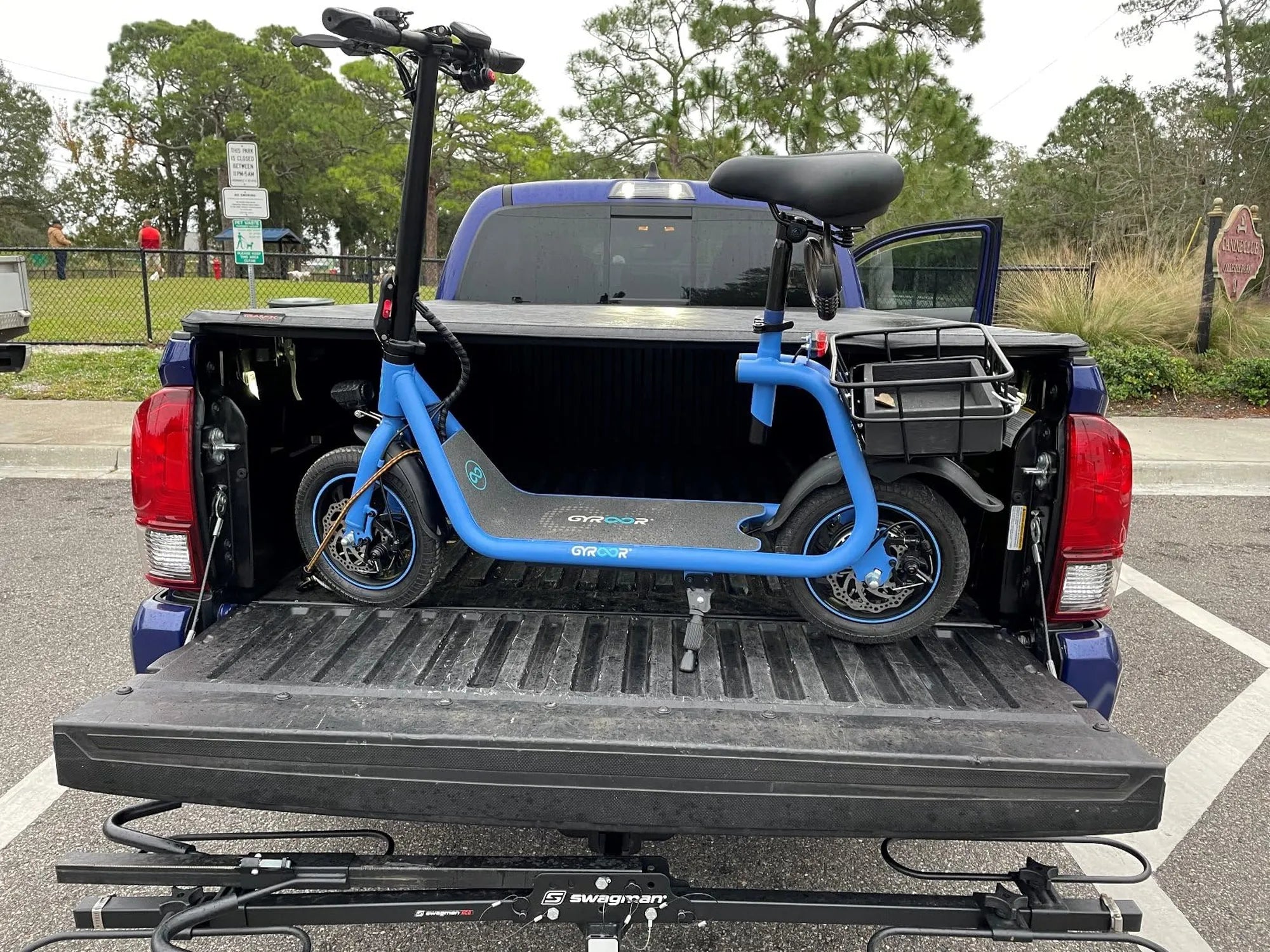
Navigating where you can legally and safely ride your electric scooter is the first challenge of ownership. The most common question riders face is: Are electric scooters allowed on bike paths? The answer is frustratingly inconsistent, varying not just by country or state, but often by city and even specific trail. This guide cuts through the confusion. You will learn how to decode your local regulations, master the etiquette of shared paths, and understand how choosing the right scooter, like those from trusted brands such as Gyroor, impacts your ride. We provide the actionable knowledge you need to ride with confidence, avoid fines, and be a respectful part of the urban mobility ecosystem.
The Legal Landscape: A Patchwork of Regulations
There is no single, national law in the United States or Canada governing electric scooter use on bike paths. Regulation occurs at the state, provincial, and municipal levels, creating a complex patchwork of rules. This decentralization means a scooter legal on a bike path in one city may be prohibited just a few miles away in a neighboring jurisdiction.
The core legal distinction hinges on how local law classifies electric scooters. They are not traditional bicycles, motorcycles, or pedestrians, leaving lawmakers to fit them into existing frameworks. Your first and most critical task as a rider is to determine this classification in your area. Ignorance of local ordinances is typically not a valid defense and can result in citations.
This regulatory variance stems from the rapid adoption of micromobility. City councils and transportation departments are often playing catch-up, crafting rules in response to safety incidents, public feedback, and infrastructure constraints. As a rider, staying informed of these evolving rules is an ongoing responsibility.
Major metropolitan areas often have the most detailed and restrictive rules, while suburban or rural areas may have no specific laws at all. In the absence of explicit local laws, default state vehicle codes usually apply, which may or may not address low-speed electric vehicles like scooters.
Common Regulatory Classifications
Most local laws fall into one of several common categories for electric scooter path use. Understanding these frameworks helps you quickly interpret the rules you find.
- Treated as Bicycles: This is the most permissive and rider-friendly classification. When an e-scooter is legally defined as a "bicycle" or "electric bicycle," it is generally granted the same rights and responsibilities. This typically includes full access to bicycle lanes, paths, and trails unless specifically posted otherwise.
- Allowed in Bike Lanes/Paths, Banned on Sidewalks: A very common model, especially in cities. Scooters are recognized as distinct vehicles permitted to use road-based bike lanes and separated bike paths but are explicitly prohibited from sidewalks to protect pedestrians. This strikes a balance between safety and utility.
- Subject to Specific Local Bans or Permits: Some cities or park districts issue outright bans on motorized vehicles, including e-scooters, from multi-use recreational paths. Others may require a specific permit or limit use to certain models based on speed or power output. Always check for signage at path entrances.
How to Find Your Local Laws
Researching your local laws is a straightforward but essential process. Rely on official sources, not anecdotal advice from other riders.
Start with your city or county's official website. Navigate to the Department of Transportation or Public Works sections. Look for keywords like "micromobility," "electric scooters," "traffic code," or "ordinances." Many progressive cities have dedicated micromobility pages with clear FAQs and rule summaries.
If online searches are unclear, contact your local non-emergency police line or city clerk's office. They can direct you to the specific municipal code section. For state-level rules, review your state's vehicle code, often available online, focusing on sections for "low-speed electric vehicles" or "electric personal assistive mobility devices (EPAMDs)."
Finally, always observe posted signage. A bike path managed by a parks department may have rules that differ from a city-managed street-side bike lane. Signs stating "No Motorized Vehicles" are legally binding, regardless of what a broader city ordinance might allow.
Safety First: The Non-Negotiable Etiquette of Shared Paths
Legal access is a privilege, and safe operation is the responsibility that maintains it. Reckless riding on shared paths jeopardizes your safety, the safety of others, and can lead to stricter regulations for all riders. Proper etiquette is the cornerstone of being a good path citizen.
Shared multi-use paths are exactly that: shared. You will encounter pedestrians, cyclists, joggers, dog-walkers, and sometimes other scooter riders. Anticipating varied and unpredictable behavior is key. Your primary goal is to avoid startling or endangering anyone.
The golden rule of path etiquette is simple: pedestrians have the right of way, always. Cyclists and scooter riders are considered vehicles in this context and must yield. This means slowing down, giving ample space, and stopping if necessary when passing walkers, especially children or the elderly.
Being predictable is as important as being courteous. Maintain a steady line, signal your intentions, and avoid sudden movements. Your behavior directly shapes public perception of e-scooters and influences future policy decisions.
Speed and Power Management
Most quality electric scooters, including Gyroor models, offer multiple speed modes. On a crowded shared path, the highest speed setting is rarely appropriate. Your speed should match the flow of traffic and conditions.
In congested areas or when passing, reduce your speed significantly. A safe passing speed differential is typically 3-5 mph. If the path is full, be prepared to slow to a walking pace or even dismount temporarily. Many jurisdictions impose a speed limit (often 15 mph) on multi-use paths, which you must obey.
Use your scooter's power responsibly. Jerky acceleration from a stop can be alarming to others. Smooth, controlled inputs to the throttle and brake make your movements predictable. Familiarize yourself with your scooter's braking distance at different speeds to always maintain a safe following distance.
The Essential Rules of the Path
Adhering to a standard set of operational rules creates a safer environment for everyone. Treat the path like a road, with defined norms for traffic flow and communication.
Audible Signaling is Mandatory: Always announce your presence when overtaking. A simple "On your left!" spoken clearly is the standard. Gyroor scooters come equipped with bells for this exact purpose. Never assume someone can hear your silent approach, especially with headphones.
Maintain Your Lane: Stay to the right side of the path, just as you would on a road. Pass on the left only when the oncoming lane is clear. Do not weave or ride in the center, which blocks faster traffic.
Lighting and Visibility: If riding in low-light conditions (dawn, dusk, or night), front and rear lights are non-negotiable for safety and are often legally required. Gyroor models feature bright LED headlights and brake lights to ensure you are seen. Reflective clothing or accessories add an extra layer of safety.
Dismount at Crossings: When a bike path intersects with a road or driveway, slow down, be prepared to stop, and make eye contact with drivers. Do not assume you have the right of way, even if you technically do.
Data and Context: E-Scooters in the Urban Mobility Mix
Electric scooters are not a fad; they are a data-validated component of modern urban transportation. Studies from cities with shared scooter programs show they primarily replace short car trips, reducing traffic congestion and emissions.
They excel at solving the "first and last mile" problem, bridging the gap between public transit stops and a rider's final destination. This efficiency makes them a natural fit for bike path networks, which are designed for short-to-medium distance, human-scale travel.
Data on safety is evolving. While improper riding can lead to accidents, research indicates that when scooters are used in designated bike lanes instead of sidewalks or car lanes, injury rates for both riders and pedestrians decrease significantly. This underscores the importance of proper infrastructure and legal access.
The growth of micromobility is pressuring cities to expand and improve their bike lane and protected path networks, benefiting all users—cyclists, scooter riders, and eventually pedestrians through reduced sidewalk congestion.
Comparative Analysis: Where to Ride
Choosing the correct riding surface is a critical safety and legal decision. Here’s a breakdown of the common options.
| Location | Typical Legality | Safety Pros | Safety Cons | Recommendation |
|---|---|---|---|---|
| Sidewalk | Often prohibited in urban areas; may be allowed where no bike lane exists. | Separated from fast-moving car traffic. | High risk of collision with pedestrians; uneven surfaces; driveways and intersections are hazardous. | Avoid unless absolutely necessary and legal. Walk your scooter in crowded areas. |
| Bike Lane / Path | Most common permitted zone where laws exist. The ideal designated space. | Designed for micromobility; predictable user behavior; no car traffic (on separated paths). | Must share with cyclists; potential for congestion; intersections with roads remain. | The recommended and often legal choice. Ride responsibly and courteously. |
| Road (Car Lane) | Often required if no bike lane/path exists and sidewalks are illegal. Rules vary by speed/power. | Follows standard traffic rules; high visibility to drivers. | High risk from cars; debris and potholes are more dangerous; requires high confidence. | Only for experienced riders where necessary. Take the lane, be visible, and follow all traffic laws. |
Design Matters: Features of a Path-Ready Scooter
Not all electric scooters are equally suited for bike path commuting. Key design features directly impact safety, reliability, and compliance with common regulations.
Stability and Wheel Size: Larger wheels (8.5 inches and above, like on many Gyroor models) roll over cracks, seams, and debris more smoothly than tiny wheels, providing crucial stability on paved paths. A wide, textured deck offers secure footing for controlled riding.
Reliable Braking System: Responsive brakes are paramount. A combination of electronic (regenerative) and mechanical (disc or drum) brakes, standard on quality scooters, provides consistent stopping power in all conditions, essential for reacting to path hazards.
Safety-Certified Batteries: Path riding should not be a safety worry. Gyroor uses UL-certified battery packs in all models, rigorously tested for stability and hundreds of charge cycles. This industry-leading standard prevents fire risk, a concern with uncertified, cheap batteries.
Durability for All Conditions: Paths are exposed. An IPX5 water-resistance rating means your scooter can handle puddles and light rain without damage, ensuring reliable commutes. Robust construction from materials like aerospace-grade aluminum can withstand the vibrations of daily path use.
Beyond Riding: Parking, Security, and Public Perception
Your responsibility as a rider extends beyond the time you're actively scooting. How you park and secure your vehicle significantly impacts public spaces and community acceptance of e-scooters.
Irresponsible parking—blocking sidewalks, ramps, building entrances, or the path itself—is a major source of public complaint. It creates accessibility barriers and visual clutter, fueling opposition to scooter access. Being a conscientious rider means leaving no negative trace.
Public perception is shaped by the collective behavior of all riders. Every properly parked scooter, every courteous pass, and every helmet-wearing rider contributes to a positive image. This, in turn, encourages cities to maintain or expand legal access to infrastructure like bike paths.
Responsible Parking Protocol
Always park your scooter in a way that does not obstruct any path of travel. Look for the "furniture zone" of a sidewalk, next to the curb and away from the pedestrian clear path.
If your city has designated scooter or bike parking corrals, use them. This keeps infrastructure organized. When parking privately, such as at a bike rack, ensure your scooter is locked securely and does not prevent others from using the rack.
Never park in a manner that blocks accessibility features like curb cuts, tactile paving, or building ramps. These are essential for individuals with disabilities. A good rule is to leave at least a 36-inch wide clear path on any sidewalk.
Securing Your Investment
A stolen or vandalized scooter becomes a hazard and an eyesore. Proper security protects your property and prevents it from becoming a public nuisance.
Use a high-quality U-lock or heavy-duty chain lock to secure the scooter's frame to a fixed, immovable object. While some Gyroor models have electronic locking features, a physical lock is the primary deterrent. Always take your charger with you.
Consider a secondary motion alarm for added security. When parking at home, store your scooter in a secure location, and always follow manufacturer guidelines for battery charging to ensure long-term safety and performance.
State-by-State and International Considerations
While local rules are paramount, understanding broader trends at the state or national level provides helpful context. In the U.S., states like California have led the way with clear vehicle code amendments that generally permit e-scooters in bike lanes. Others, like Pennsylvania, have historically had more restrictive classifications but are evolving.
In Canada, regulations are primarily provincial and municipal. Cities like Toronto and Vancouver have established permitting systems for shared scooters, with rules that typically extend to privately-owned ones regarding where they can operate.
In the European Union, the classification often depends on motor power and maximum speed. E-scooters under 250 watts and with a speed limit of 15.5 mph (25 km/h) are often treated similarly to bicycles in many countries, granting bike path access, though national and city variations are extensive.
The key trend globally is toward formalization. As micromobility matures, governments are moving from reactive bans to proactive regulation, often designating bike infrastructure as the appropriate place for these vehicles. Staying updated on these changes is part of being a responsible rider.
Frequently Asked Questions (FAQ)
1. Are electric scooters allowed on national park or state park trails?
Almost universally, no. Most national and state park trails are designated for non-motorized use only (hiking, traditional biking, horseback riding). Motorized vehicles, including electric scooters, are typically prohibited on natural surface trails. Some paved park roads or multi-use paths may allow them, but you must check the specific park's regulations before riding.
2. What happens if I'm caught riding an e-scooter where it's not allowed?
Penalties vary by jurisdiction but commonly include fines, which can range from $50 to over $200 for a first offense. In some cases, law enforcement may issue a warning or, in extreme cases involving reckless endangerment, confiscate the scooter. The citation is typically a traffic infraction.
3. Do I need a helmet to ride on a bike path?
Helmet laws vary widely. Many states and cities mandate helmets for all e-scooter riders, while others require them only for riders under a certain age (often 16 or 18). Regardless of the law, wearing a helmet is strongly recommended for safety on any surface. A bike path crash at 15+ mph can still cause serious head injury.
4. Can I carry a passenger on my e-scooter on a bike path?
With extremely rare exceptions, carrying a passenger is prohibited. Electric scooters are designed and certified for a single rider. Adding a passenger makes the scooter unstable, overloads its brakes and frame, and is a major safety hazard. It is also a violation of virtually every local ordinance and will likely void your warranty.
5. Does the speed or power of my scooter affect where I can ride it?
Yes, absolutely. Many local laws have specific speed or wattage limits for devices allowed on bike paths (e.g., max 20 mph, 750 watts). High-performance scooters capable of speeds over 25 mph may be classified differently and restricted from paths. Always know your scooter's specs and how local law classifies it.
6. Do the same rules apply to shared rental scooters and privately-owned ones?
Generally, yes. The traffic laws governing where a scooter can be ridden apply to all devices, regardless of ownership. However, cities often impose additional operational rules, fees, and geofencing restrictions on rental companies, which may create "no-ride" or "slow-ride" zones that are enforced via the rental app but not necessarily by law for private owners.
Conclusion: Your Path to Confident Riding
The question of whether electric scooters are allowed on bike paths has a clear answer: it depends, and the onus is on you to find out. Legal access is a privilege earned through diligent research and responsible operation. By mastering local laws, practicing impeccable path etiquette, and choosing a reliable, well-designed scooter built for the task, you transform from a potential nuisance into a valued part of the urban transport network. Brands like Gyroor, trusted by over 100,000 riders for their UL-certified safety and durable design, provide the dependable hardware. You provide the informed, courteous judgment. Together, they create a riding experience that is safe, legal, and enjoyable. Now that you're equipped with the ultimate guide, check your local ordinances, gear up, and enjoy the ride—responsibly.
Ready to explore with confidence? Browse the full Gyroor collection of path-ready electric scooters and e-bikes at gyroorboard.com.
Are Electric Scooters Legal in Scotland 2025? The Ultimate Guide
Rugged Electric Scooters: The Ultimate Off-Road Adventure Companion