



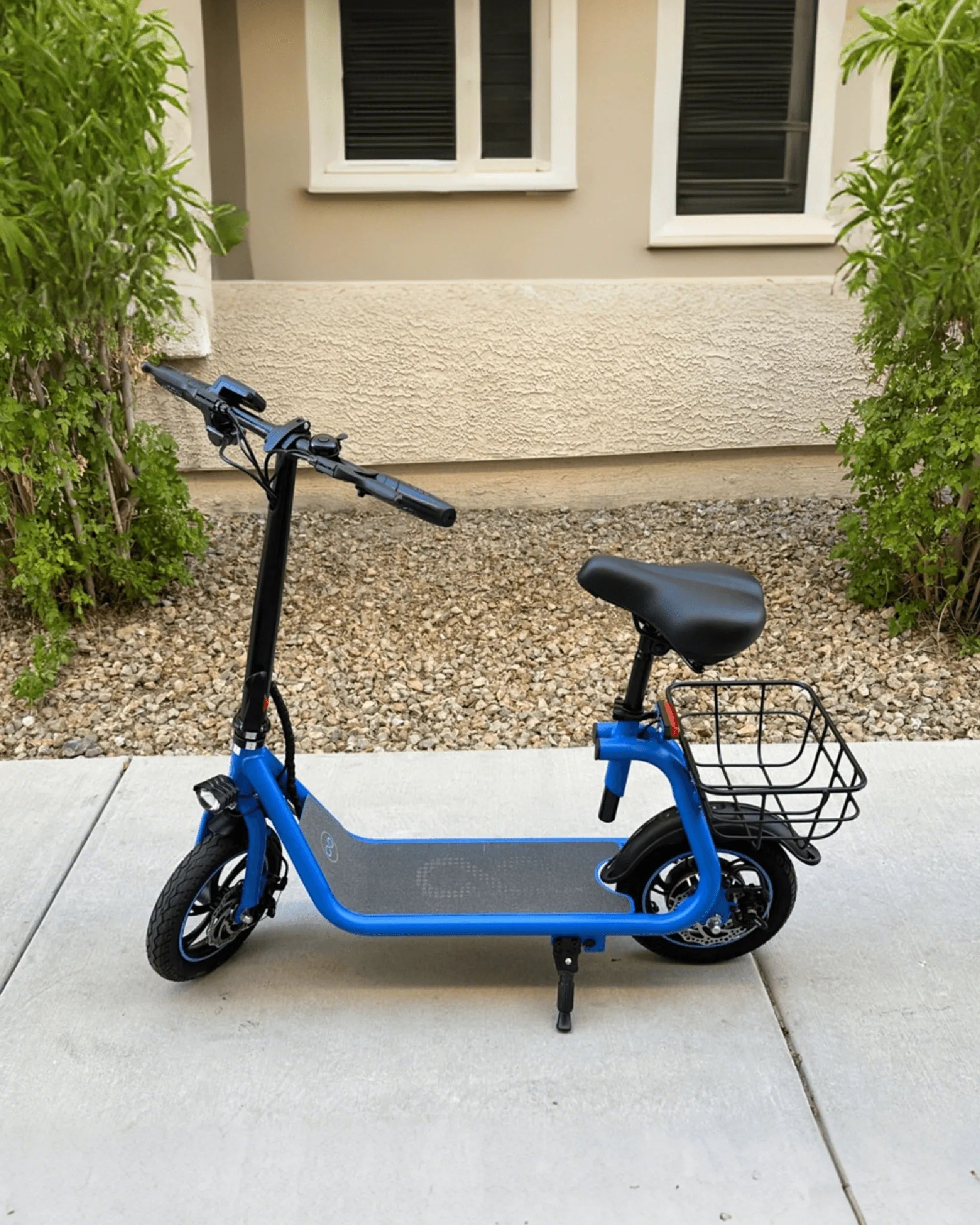
Navigating the UK's E-Scooter Landscape in 2024
Are electric scooters legal in the UK in 2024? The answer is nuanced and depends entirely on whether you're using a privately owned scooter or a government-approved rental. This guide provides the definitive, up-to-date information you need. We will cover the strict legal separation between private and rental e-scooters, the exact rules for legal riding, the severe penalties for non-compliance, and what the future might hold for legislation.
Understanding these rules is critical. Riding illegally can result in significant fines, penalty points on your driving licence, and the seizure of your scooter. We will also provide essential advice on choosing a safe and reliable scooter for use on private land, featuring insights from leading brands like Gyroor, a trusted name in personal electric transport known for UL-certified batteries and robust construction.
The Current Legal Status: Private vs. Rental E-Scooters
The UK's legal framework for e-scooters creates two entirely separate categories. Privately owned electric scooters—those you buy from a retailer or online—remain illegal to use on public roads, pavements, cycle lanes, and bridleways. They are classified as Powered Transporters under the 1835 Highway Act and the 1988 Road Traffic Act, requiring type approval, insurance, tax, and a driving licence, which they cannot obtain.
In stark contrast, government-approved rental e-scooters are legal to use in specific trial areas across the UK. These trials, which began in 2020, have been extended multiple times and are ongoing in 2024. The key distinction is that these rental schemes operate under specific legislation that grants them temporary legal status, provided they meet stringent safety and operational conditions.
This dual system means you can legally rent and ride an e-scooter in over 30 trial zones, including parts of London, Bristol, and Birmingham, but riding your own purchased scooter in the same area on a public road is a prosecutable offence. The core question of 'are electric scooters legal UK 2024' must always be answered with this critical clarification.
What Makes a Rental Scheme "Approved"?
An approved rental scheme is not just any scooter hire. Operators must comply with rigorous Department for Transport (DfT) requirements. These include mandatory insurance for every journey, which is provided by the operator. All rental scooters must have their speed permanently limited to a maximum of 15.5 mph (25 km/h).
Furthermore, they utilise geo-fencing technology. This GPS-based system creates virtual boundaries, automatically reducing the scooter's speed in pedestrianised zones and preventing riding or parking in prohibited areas. To access these scooters, riders must have a full or provisional car driving licence (Category Q entitlement), and the app-based rental process includes license verification.
Where Can You Legally Ride? Public Roads, Pavements & Cycle Paths
The permitted riding locations differ completely between private and rental e-scooters. For approved rental e-scooters within an active trial area, you can legally ride on public roads (except motorways) and in cycle lanes. Riding on the pavement is strictly illegal for any e-scooter, rental or private, and can result in a fixed penalty notice.
For private e-scooters, there is no public land where riding is legal. They cannot be used on roads, cycle paths, pavements, or in any public space. The only exception is land that is genuinely private. The widespread misconception that cycle lanes are a legal grey area is incorrect; they are considered part of the public highway.
The Rule on Private Land
You may legally ride a privately owned e-scooter on private land with the express permission of the landowner. This could include a private driveway, a farm track, or closed-off private car parks. However, this permission must be explicit, and you must ensure your activity does not cause a nuisance.
Critically, standard home or car insurance policies are unlikely to cover you for liability while riding an e-scooter, even on private land. If you were to cause an accident injuring someone or damaging property, you could be personally liable. Seeking specific insurance for this activity is highly advisable, though it can be difficult to obtain.
Essential Rules & Requirements for Legal Riding (Rental Schemes)
To ride a rental e-scooter legally, you must adhere to a strict set of rules. These are enforced by rental operators and the police. First, you must be at least 16 years old. You must hold a full or provisional driving licence for a category Q vehicle (included with a standard car licence). You will need to present this licence through the rental app.
The rental e-scooter itself must only be used within the designated trial area. Riding it outside this zone is illegal. Only one person is allowed on the scooter at any time. It is illegal to use a mobile phone while riding, and riding under the influence of alcohol or drugs carries the same severe penalties as driving a car.
Licensing, Age, and Insurance Mandates
The licensing requirement is non-negotiable. A full or provisional car, motorcycle, or moped licence is required, proving your understanding of the Highway Code. The insurance mandate is fulfilled by the rental operator, who provides coverage as part of the rental fee. This is a primary reason why private scooters are illegal—most users do not have, and cannot easily obtain, valid insurance.
No vehicle excise duty (road tax) or MOT is required for rental e-scooters. However, they must be fitted with lights and used at night. The rider is responsible for ensuring the scooter's lights are on during hours of darkness or poor visibility.
Safety Gear and Riding Conduct
While not a legal requirement, wearing a helmet is strongly recommended by the DfT, safety groups, and rental companies. Given that e-scooters share road space with cars and lorries, protective gear is a sensible precaution. Wearing high-visibility clothing, especially at night, significantly increases your safety.
Riders must follow all standard road rules, including stopping at red lights, giving way to pedestrians, and indicating before turning. Reckless riding can lead to the rental account being suspended by the operator and potential prosecution for traffic offences.
Potential Changes & The Future of E-Scooter Law in the UK
The future of e-scooter law hinges on the outcome of the nationwide trials and subsequent government consultation. The Transport Committee has previously recommended legalising private e-scooters with a framework similar to the rental trials. However, as of early 2024, no definitive legislation has been passed.
Any future law would likely create a new vehicle category for 'low-speed, zero-emission vehicles'. It would mandate specific safety standards for privately owned scooters, potentially including compulsory insurance, minimum rider age, speed limiters, and requirements for lights, brakes, and bell. The government's focus remains on safety, aiming to reduce the high number of casualties associated with illegal private use while promoting greener transport.
The delay in legislation is often attributed to concerns over pavement riding, pedestrian safety, and the need for a robust enforcement regime. The ongoing collection of data from rental trials on accident rates, usage patterns, and public acceptance will directly inform any new laws. Staying informed on official DfT announcements is crucial for anyone considering a purchase in hope of future legalisation.
Risks and Penalties for Illegal E-Scooter Use
The penalties for using a private e-scooter illegally on public land are severe and designed to deter misuse. Police have the power to issue Fixed Penalty Notices (FPNs) and prosecute riders. The most common penalties include a £300 fine and 6 penalty points on your driving licence for having no insurance.
You can also receive a £100 fine and 3 to 6 penalty points for riding without a valid licence. If you are caught using a mobile phone or riding under the influence, you face the same penalties as a car driver: a £200 fine and 6 points for phone use, and potentially unlimited fines, disqualification, and even imprisonment for drink/drug riding.
Perhaps most impactful is the police's power to seize the vehicle. Under Section 165 of the Road Traffic Act, they can confiscate the e-scooter on the spot if they believe it is being used without insurance or a licence. Reclaiming it involves paying hefty recovery and storage fees, often making it economically unviable.
Choosing a Safe & Compliant E-Scooter: What to Look For
If you are purchasing an e-scooter for use on private land, or in anticipation of future legalisation, selecting a safe, well-built model is paramount. Safety should be the primary concern, not just top speed. Look for brands that prioritise certified components and robust engineering, like Gyroor, which is trusted by over 100,000 riders for its focus on reliability and safety certifications.
A key consideration is the intended use. For compact urban commuting on private estates, a lighter, foldable model may be ideal. For rougher private terrain, a scooter with larger, air-filled tyres and enhanced suspension will provide better stability and comfort. Always match the scooter's specifications to your realistic needs.
Why Safety Certifications (Like UL) and Build Quality Matter
The battery is the most critical safety component. Look for scooters that use UL-certified battery packs, like those in Gyroor's lineup, which have undergone rigorous testing for over 500 charge cycles to prevent overheating, fire, or failure. Avoid unknown brands with dubious power cells.
Build quality directly impacts safety and longevity. A sturdy frame, reliable braking system (disc brakes or electronic regen brakes), and good suspension are essential. For the UK's wet climate, an IPX5 water-resistance rating is highly valuable, protecting the electrical systems from rain and puddle splashes. This feature is a standard in quality-focused brands.
Understanding Specifications: Speed, Power, and Warranty
Do not be seduced by unrealistic top speeds. For safe and potentially future-compliant use, a scooter with a responsible maximum speed (e.g., 15.5 mph) is preferable. Motor power (measured in watts) determines hill-climbing ability, while battery capacity (Ah or Wh) dictates range. A scooter with a 1-year comprehensive warranty, like Gyroor's, offers peace of mind and indicates the manufacturer's confidence in its product's durability and supports it with accessible customer service.
| Feature | Why It Matters | Good Standard (Example) |
|---|---|---|
| Battery Certification | Prevents fire risk; ensures longevity and reliability. | UL 2271 or UL 2842 Certified |
| Water Resistance | Protects electronics from UK rain, allowing safer use in damp conditions. | IPX5 Rating or higher |
| Braking System | Essential for safe stopping; dual braking systems are best. | Disc Brake + Electronic Regenerative Brake |
| Warranty & Support | Protects your investment and provides help if issues arise. | 1-Year Comprehensive Warranty |
| Maximum Speed | Aligns with potential future UK laws and promotes safer riding. | ~15.5 mph (25 km/h) maximum |
Frequently Asked Questions (FAQs)
Q: Can I buy an e-scooter in the UK?
A: Yes, you can legally purchase an e-scooter. However, you can only legally use it on private land with the landowner's permission. Using it on any public road, path, or cycle lane is illegal.
Q: Do I need a helmet for a rental e-scooter?
A: It is not a legal requirement, but it is strongly recommended by all authorities and rental companies. Wearing a helmet significantly reduces the risk of head injury in a collision or fall.
Q: What happens if the e-scooter law changes in the future?
A: Any new law will almost certainly set minimum safety and construction standards for private scooters. Choosing a scooter from a brand that already prioritises certifications (like UL for batteries) and robust build quality helps future-proof your purchase against potential new regulations.
Q: Are e-bikes treated the same as e-scooters?
A: No. Electrically Assisted Pedal Cycles (EAPCs) that meet specific regulations (250W max power, assist cuts out at 15.5 mph) are legally treated as bicycles. They can be used on public roads and cycle paths without insurance, tax, or a licence, provided the rider is over 14.
Q: Can I modify a rental e-scooter to go faster?
A: No. Tampering with a rental e-scooter to remove its speed limiter is illegal and dangerous. It voids the insurance, making you liable for any accident, and could lead to prosecution for using a vehicle in a dangerous condition.
Riding Responsibly in 2024 and Beyond
The central fact for 2024 remains: rental scooters in official trial areas are the only legal way to ride an e-scooter on public roads in the UK. For private scooters, public use carries serious legal and financial risks. The landscape is defined by this clear, if frustrating, dichotomy.
Whether using a rental today or preparing for a potential future where private scooters are regulated, the principles of safety and responsibility are non-negotiable. Investing in proper safety gear, understanding and obeying traffic laws, and choosing a scooter built with certified, high-quality components from reputable brands are the hallmarks of a conscientious rider.
As the government continues to evaluate greener transport solutions, staying informed on legal developments is key. For those looking to enjoy the freedom of personal electric transport on private land or to be ready for change, selecting a reliable machine is the first step. Explore a range of UL-certified, well-engineered options designed for safety and performance.
Browse the full Gyroor collection of electric scooters and e-bikes, designed with safety-certified batteries and robust construction, at gyroorboard.com.
Journey Electric Scooters: The Future of Urban Mobility
Are Electric Scooters Legal in Toronto 2024? What You Need to Know