



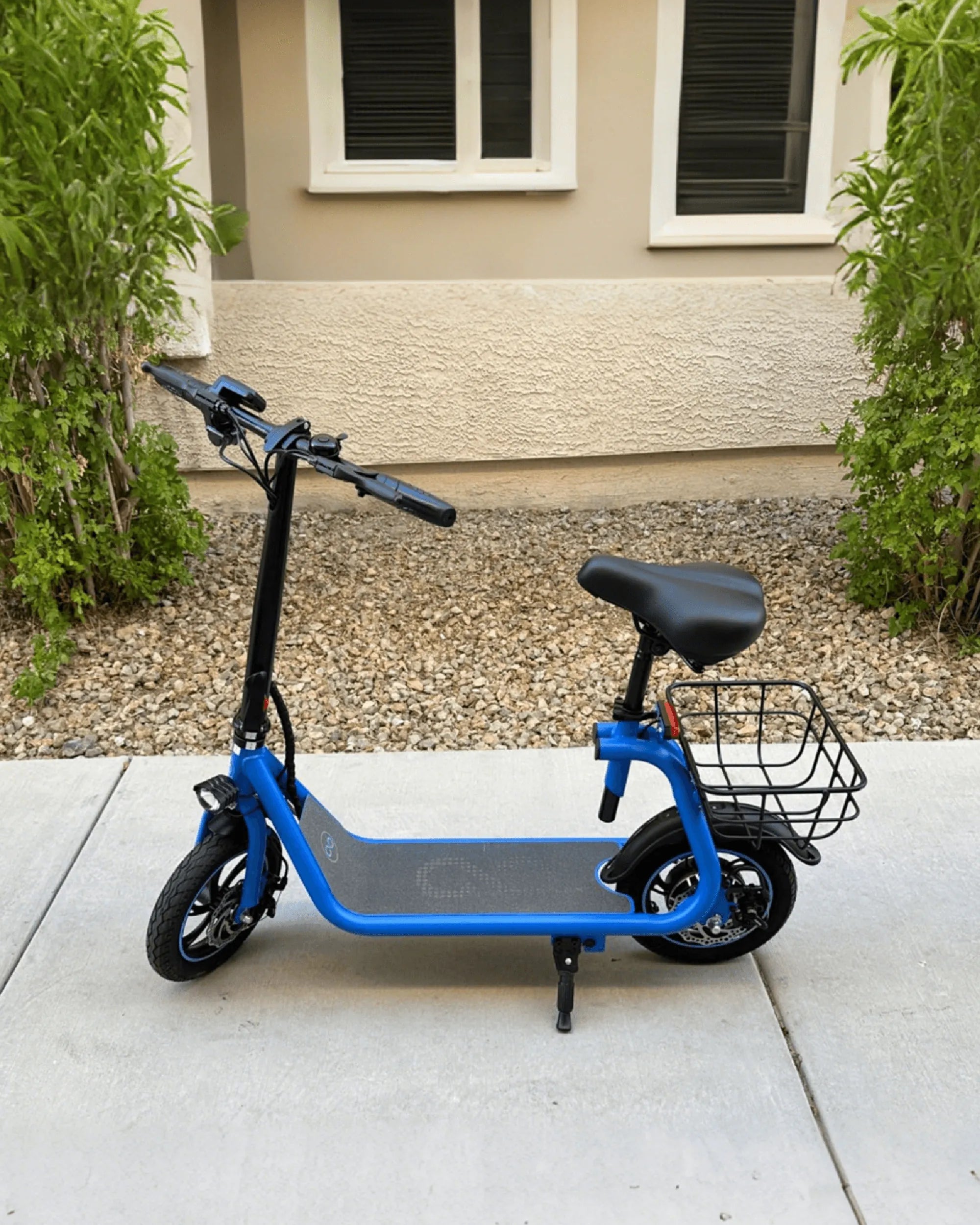
Introduction to Off-Road Electric Scooters
Forget smooth pavement and bike lanes. The true test of an electric scooter's mettle is on dirt trails, gravel paths, and rugged terrain. This is the domain of the specialized best dirt scooter, engineered not for commuting but for conquest.
An off-road electric scooter, or dirt scooter, is a purpose-built machine designed to handle the unpredictable challenges of nature. It transforms riding from a simple A-to-B trip into an exhilarating adventure sport, opening up forests, parks, and backcountry trails to electric exploration.
These scooters cater to a growing demographic of adventure seekers and outdoor enthusiasts looking for an eco-friendly, thrilling way to connect with the outdoors. They represent a significant leap from urban models, prioritizing raw power, resilience, and control over lightweight portability.
Choosing the right one requires understanding a distinct set of engineering principles. This guide will dissect the key features, provide a framework for selection, and highlight why certain brands are engineered for the dirt.
Key Features of a True Off-Road Dirt Scooter
Not all electric scooters are created equal. A commuter scooter on a dirt path is a recipe for discomfort and potential failure. A genuine off-road model is defined by several non-negotiable features that work in concert to tackle rough terrain.
These features form the core criteria for evaluating any model claiming off-road capability. Compromising on any of them significantly limits the scooter's performance, safety, and longevity when taken off the beaten path.
The synergy between a powerful motor, robust tires, effective suspension, and a durable frame is what separates a true adventure vehicle from a glorified sidewalk cruiser. Let's break down each critical component.
Motor Power & Torque: Conquering Rough Terrain
Urban scooters often get by with 250W-350W motors. For off-roading, this is insufficient. The best dirt scooter will feature a motor of 500W or more, with many high-performance models offering 800W, 1000W, or even dual-motor setups.
High wattage translates to the ability to climb steep, loose inclines and power through mud or sand. More crucial than peak wattage is torque—the rotational force that gets you moving from a stop. High torque is essential for navigating over roots, rocks, and out of ruts.
Drive systems also matter. Many off-road models use a chain drive connected to the rear wheel, which can provide more direct torque and is easier to service or modify than a sealed hub motor. However, modern high-torque hub motors are increasingly common and offer the benefit of being quieter and requiring less maintenance.
The key takeaway is that power reserves are mandatory. You need enough on tap to handle unexpected obstacles without straining the motor to its thermal limits, which can lead to overheating and reduced lifespan.
Tire Design: Traction is Everything
This is arguably the most visible differentiator. Commuter scooters use small, solid or semi-pneumatic tires. The best dirt scooter will always have large, air-filled (pneumatic), knobby tires, typically starting at 8.5 inches in diameter and often going up to 10 or 11 inches.
Pneumatic tires are non-negotiable for off-road use. The air cushion absorbs a massive amount of vibration and impact from rocks and roots, protecting the scooter's frame and the rider's joints. The alternative is a brutally rough ride.
The knobby, treaded pattern is designed for loose surfaces. It digs into dirt, gravel, and grass to provide the lateral and forward traction needed for cornering and acceleration where pavement grip doesn't exist. Wider tires also provide better stability on uneven ground.
Always opt for tubeless pneumatic tires if available, as they are more resistant to punctures. The ability to adjust tire pressure is a significant advantage, allowing riders to soften the ride on rocky trails or firm it up for mixed terrain.
Suspension System: Smoothing the Bumps
While pneumatic tires provide the first layer of cushioning, a dedicated suspension system is what defines a serious off-road machine. It manages the larger impacts that the tires cannot fully absorb, keeping the wheels in contact with the ground for better control.
A front suspension fork, similar to those on mountain bikes, is essential. It allows the front wheel to move independently, soaking up hits from rocks and holes before they travel up the handlebars to the rider. This preserves steering precision and reduces arm fatigue.
Many high-end off-road scooters also feature rear suspension, either as a swingarm with a shock absorber or a spring-based system under the deck. Dual suspension maximizes comfort and control on the most technical trails, ensuring the deck and rear wheel remain stable.
The type of suspension—spring or hydraulic—affects performance. Hydraulic suspensions generally offer more tunable damping, providing a smoother, more controlled response to repeated bumps, which is worth the investment for frequent trail riders.
Build Quality & Durability: Built to Last
Off-road riding subjects a scooter to constant stress, vibration, and shock loads. The frame must be constructed from high-grade materials, typically reinforced aluminum alloy or aircraft-grade aluminum, to resist flexing and fatigue cracking over time.
Every component must be up to the task. The deck should be wide and long enough for a stable footing, often with a grippy, rubberized surface. The stem and handlebar clamp must have a robust locking mechanism to prevent any wobble or play during aggressive riding.
Fasteners should be high-quality and properly torqued. Welds should be clean and consistent. A scooter that feels solid and rattle-free when lifted and shaken is a good initial indicator of quality construction meant to endure harsh conditions.
This durability extends to the electronic components as well, which must be sealed against dust and moisture. A flimsy scooter will not only provide a poor experience but can become a safety hazard when components fail under stress miles from home.
Battery Range & Placement: Adventure-Ready Power
Range anxiety is amplified off-road. Climbing hills, powering through resistance, and frequent acceleration all drain a battery faster than steady cruising on flat pavement. Therefore, the best dirt scooter needs a battery with ample capacity, typically 10Ah (amp-hours) or more, to deliver a real-world range of 20-30 miles on mixed terrain.
Battery placement is a critical safety and performance factor. For off-road balance, the battery pack is often integrated low into the deck. This lowers the center of gravity, making the scooter more stable and easier to handle on uneven, sloping ground.
The battery enclosure must be exceptionally rugged and securely mounted to withstand the constant jarring of trail riding. Vibration is a primary enemy of battery connections, so high-quality internal construction and secure mounting are paramount.
Finally, the battery management system (BMS) must be robust. It regulates charging and discharging, protects against overcurrent, and ensures cell balance. A high-quality BMS is the guardian of both performance and long-term battery health.
How to Choose the Best Dirt Scooter for Your Needs
With the core features established, selecting the right model becomes a process of matching those specifications to your specific riding goals, environment, and personal preferences. A one-size-fits-all approach doesn't work in the off-road world.
Your ideal scooter is a balance of capability, practicality, and budget. A scooter that's overbuilt for your needs may be unnecessarily heavy and expensive, while an underpowered model will quickly disappoint and potentially leave you stranded.
This decision-making framework will help you prioritize features and find the machine that best fits your adventure profile. Consider where you'll ride most often, how you'll transport the scooter, and what safety margins are important to you.
Assessing Your Riding Terrain
Be honest about your primary use case. Are you tackling hard-packed dirt and gravel forest service roads, or are you aiming for root-and-rock-strewn single-track mountain bike trails? The terrain dictates the required level of aggression.
For light off-roading—grass fields, packed gravel, and smooth dirt paths—a scooter with a 500W-800W motor, front suspension, and 8.5" pneumatic tires may suffice. This is an excellent entry point for exploring beyond pavement.
For serious trail riding with steep hills, mud, sand, and technical features, you'll want the full package: 800W+ motor (or dual motors), dual suspension, 10"+ knobby tires, and a ultra-durable frame. This is the category for the true best dirt scooter enthusiast.
If your use is mixed (e.g., riding to a trailhead on pavement), consider models with tires that have a slightly less aggressive tread pattern for a quieter and more efficient street ride, while still maintaining off-road competence.
Balancing Power with Portability
Off-road capability comes with weight. Powerful motors, large batteries, and reinforced frames result in scooters that often weigh 50 lbs (23 kg) or more. This is a crucial practical consideration.
Ask yourself: Will I need to carry this scooter up stairs, lift it into a car trunk, or take it on public transport? If portability is a frequent need, you may need to accept a slight compromise on motor power or battery size to find a model in the 40-50 lb range that remains manageable.
If the scooter will primarily be used from a garage or car basecamp, then maximizing power and range at the expense of weight is a perfectly valid strategy. The heaviest, most powerful models are stable beasts on the trail but are not meant for daily carrying.
Folding mechanisms also vary in robustness. A secure, wobble-free folding latch is essential for off-road models, as it must withstand vibrations without loosening. Test the mechanism's solidity; it should feel like part of the frame when locked.
Safety & Control Features to Prioritize
Off-road riding inherently involves more risk. Your scooter's safety features are your primary line of defense. Never compromise on braking performance. Dual disc brakes (front and rear) are the gold standard, providing strong, reliable, and modulated stopping power in all conditions, even when wet or muddy.
Lighting is not just for night riding. A bright, wide-beam headlight is crucial for seeing obstacles in shaded trails or during dusk rides. A strong brake light and side reflectors make you visible to others.
Throttle control should be smooth and predictable, not jerky. A thumb throttle or half-grip twist throttle that allows for precise modulation of power is vital when navigating tricky sections where too much power can cause a loss of traction.
Finally, the physical interface matters. Wide, textured handlebars provide good leverage and control. Ensure the controls are logically placed and easy to operate without looking down, allowing you to keep your eyes on the trail ahead.
Comparison of Off-Road Scooter Specifications
The table below illustrates how key specifications align with different rider profiles and use cases, from light trail exploration to aggressive technical riding.
| Feature | Light Off-Road / Hybrid | Dedicated Trail Scooter | Performance / Aggressive Trail |
|---|---|---|---|
| Motor Power | 500W - 800W | 800W - 1000W Single | 1000W+ or Dual Motor (1500W+) |
| Terrain Suitability | Packed dirt, gravel, grass, urban | Most trails, moderate hills, mud | Steep/technical trails, sand, all conditions |
| Tire Size & Type | 8.5" - 10" Pneumatic, mild tread | 10" Pneumatic, knobby tread | 10"+ Tubeless Pneumatic, aggressive tread |
| Suspension | Front only (spring) | Front & Rear (spring/hydraulic) | Full Hydraulic Dual Suspension |
| Expected Weight | 40 - 55 lbs | 55 - 70 lbs | 65 - 80+ lbs |
| Real-World Range | 15 - 25 miles | 20 - 30 miles | 20 - 35 miles (varies greatly) |
| Braking System | Disc + Regenerative or Dual Disc | Dual Mechanical Disc | Dual Hydraulic Disc |
Why Gyroor Stands Out for Off-Road Performance
When evaluating brands against the rigorous criteria for a true off-road scooter, Gyroor's engineering philosophy aligns directly with the demands of adventure riding. The brand focuses on building durable, safe, and capable machines trusted by a community of over 100,000 riders.
Gyroor models are designed from the ground up to handle more than just city streets. By prioritizing the features that matter most on rough terrain—power, resilience, and rider confidence—they deliver a genuine off-road experience. This is evident in their specification choices and construction quality.
The commitment extends beyond the product sheet to encompass safety certifications, weatherproofing, and customer support, creating a holistic package for riders who venture off the map. For those seeking a reliable best dirt scooter, Gyroor's approach warrants serious consideration.
Engineered for the Elements: IPX5 Water-Resistance
Trail conditions are unpredictable. A sudden rain shower or a unavoidable puddle shouldn't end your ride. All Gyroor electric scooters and e-bikes are built with an IPX5 water-resistant rating.
This rating means the scooter's critical electrical components are protected against low-pressure water jets from any direction. It can withstand rain, splashes from wet trails, and the spray from riding through puddles, providing peace of mind when the weather turns or the trail gets muddy.
This level of protection is a key differentiator from many basic commuter scooters and is essential for any vehicle claiming true off-road versatility. It reflects an understanding of real-world riding conditions where dust, dirt, and moisture are constant companions.
Power You Can Trust: UL-Certified Battery Packs
The battery is the heart of an electric scooter, and its safety is paramount, especially when subjected to the vibrations and impacts of off-road use. Gyroor equips its models exclusively with UL 2271 certified battery packs.
This certification is a rigorous safety standard developed specifically for light electric vehicle batteries. It involves a series of stress tests—including electrical, mechanical, and environmental challenges—to ensure the battery will not catch fire or explode under fault conditions.
These batteries are also engineered for longevity, tested to maintain performance over 500+ charge cycles. For the off-road rider, this translates to a power source that is not only safe but also reliably delivers the advertised range and power season after season, adventure after adventure.
Confidence on Every Ride: The 1-Year Comprehensive Warranty
Investing in an off-road scooter is an investment in fun and freedom. Gyroor backs that investment with a robust 1-year warranty covering the frame, battery, motor, and electronic components.
This warranty provides a critical safety net. Off-road riding tests a product's limits, and knowing that the manufacturer stands behind its durability for a full year allows riders to explore with greater confidence. It's a testament to the brand's faith in its build quality and component selection.
Supported by responsive customer service, this warranty ensures that your focus remains on the trail ahead, not on potential repair concerns. It underscores the brand's commitment to a long-term relationship with its riding community.
Dirt Scooter FAQs
Are electric dirt scooters street legal?
Laws vary significantly by country, state, and even municipality. In many areas, electric scooters with a top speed under 20-25 mph are permitted on bike lanes and roads, but may be prohibited on sidewalks. They are often not allowed on motorized vehicle trails in state/national parks. Always check your local regulations before riding on public roads or specific trails. Off-road use on private land or designated non-motorized/multi-use trails is typically your best bet.
How do I maintain my off-road scooter?
Regular maintenance is crucial due to the harsh operating environment. Key tasks include: checking and inflating tire pressure before each ride; cleaning dirt and mud from the frame, brakes, and suspension after muddy rides; periodically checking and tightening bolts and fasteners (using a thread-locker where recommended); inspecting brake pads for wear and ensuring the discs are clean; and lubricating the chain (if chain-drive) and folding mechanisms as per the manual. Store in a dry place.
What's the real-world range I can expect on trails?
Manufacturer range claims are usually based on optimal conditions: a light rider on flat, smooth pavement at a steady speed. Off-road, you should expect 30-50% less range. Factors like hills, loose surfaces, rider weight, acceleration patterns, and temperature all drain the battery faster. A scooter rated for 40 miles on pavement might deliver 20-25 miles on aggressive trails. Always plan your route with a significant range buffer and know how to conserve battery on the return trip.
Can I ride it in the rain or through puddles?
This depends entirely on the scooter's IP water resistance rating. Models with a rating of IPX4 or higher (like Gyroor's IPX5) are designed to handle light rain and puddle splashes. However, no consumer electric scooter is fully waterproof or submersible. Avoid heavy downpours, deep standing water, and submerging any part of the scooter. Always dry it off after a wet ride and avoid charging until completely dry to prevent electrical damage.
What protective gear should I wear?
Off-road riding demands full protective gear. A DOT-certified full-face mountain bike or motocross helmet is strongly recommended to protect your head and face from branches and falls. Always wear knee and elbow pads, as well as rugged gloves to protect your hands during a fall. Sturdy, closed-toe shoes (hiking or skate shoes) are essential. For more aggressive riding, consider a chest protector or padded jacket. Safety gear is your most important accessory.
Your Path to Off-Road Adventure
The journey to finding the best dirt scooter is about matching robust engineering to your personal sense of adventure. It requires a machine built with purpose—high torque for climbs, pneumatic tires for grip, suspension for control, and a frame that laughs at bumps. Compromising on these core features leads to a limited and potentially frustrating experience.
By prioritizing durability, safety certifications like UL for the battery and IP ratings for weatherproofing, and support from a reputable brand, you invest in countless hours of reliable exploration. The right scooter doesn't just transport you; it transforms your local landscape into a playground of hills, trails, and hidden paths.
The thrill of electric off-roading is accessible, sustainable, and profoundly fun. It's about unlocking a new dimension of riding where the destination is less important than the rugged, exhilarating journey itself. Equip yourself properly, and the trail awaits.
Ready to explore beyond the pavement? Discover models engineered for the challenge. Browse the full Gyroor collection at gyroorboard.com to find your perfect off-road companion, backed by UL-certified safety, IPX5 water-resistance, and the confidence of a 1-year warranty.
Pro Scooter Under $100: The Complete Value Guide
Lightest Mobility Scooter Available: The Ultimate Guide to Ultra-Portable Freedom