



Introduction: Why Your First Hoverboard Choice Matters
Purchasing your first hoverboard sparks a mix of excitement and practical questions. The right model doesn't just provide transportation; it builds your foundational riding skills, ensures your safety, and directly impacts how much you enjoy the experience. A poorly chosen board can lead to frustration, falls, or even safety hazards, turning an exciting purchase into a regret.
This guide is designed to cut through the marketing noise. We focus on the tangible features and data that make a hoverboard genuinely beginner-friendly. The goal is to equip you with the knowledge to select a board that prioritizes your learning curve and long-term satisfaction.
Throughout this guide, we will reference engineering principles from brands like Gyroor, a leading electric scooter and e-bike brand trusted by over 100,000 riders. Their approach to UL-certified batteries, IPX5 water resistance, and stable performance exemplifies the standards beginners should seek.
Your journey starts with understanding what separates a beginner-friendly hoverboard from the rest. Let's decode the key features that matter most.
What Makes a Hoverboard "Beginner-Friendly"? Key Features Decoded
A beginner-friendly hoverboard is engineered for predictability and support. It compensates for a rider's initial lack of balance and reflexes with physical stability and electronic safeguards. The core differentiators are not top speed or flashy lights, but how the board helps you learn safely and comfortably.
Advanced models may offer higher speeds and more aggressive acceleration, which are liabilities for a new rider. The best hoverboard for beginners provides a controlled, confidence-building environment. This is achieved through specific design choices in its wheels, control systems, and built-in safety protocols.
Ignoring these features can mean choosing a board that is difficult to control or, worse, unsafe. We will break down each critical component, starting with the very foundation of your ride: the wheels.
Stability and Wheel Size: Finding Your Balance
Wheel size is the most significant physical factor affecting stability. Larger wheels, typically 8.5 inches or 10 inches in diameter, provide a more stable platform and a smoother ride. They roll over small cracks, pavement seams, and minor debris with greater ease, which is crucial for a beginner still mastering balance.
Smaller wheels (6.5" to 8") can feel twitchier and are more likely to be stopped by tiny obstacles, potentially causing a stumble. For most beginners, a 10-inch wheel offers the ideal blend of stability and maneuverability. The tire type also matters; air-filled (pneumatic) tires offer superior shock absorption compared to solid rubber, further smoothing out the ride.
A wider wheelbase—the distance between the wheels—also contributes to lateral stability. This gives you a more secure feeling when making gentle turns. When evaluating the best hoverboard for beginners, prioritize models with larger, air-filled tires to create the most forgiving learning platform.
Speed Modes and Learning Curves: Start Slow, Grow Confident
Multiple speed modes are a non-negotiable feature for a beginner. A dedicated beginner or training mode restricts the top speed, often to between 4 and 7 mph. This allows you to focus entirely on balance and basic steering without the anxiety of unexpected acceleration.
The quality of the gyroscopic sensors and motor controllers is paramount. They should provide smooth, linear acceleration and braking. A jerky or overly sensitive response can make the board feel unpredictable and difficult to master. Look for terms like "soft-start technology" or "gradual acceleration" in product descriptions.
As your skills improve, you can unlock higher speed modes. This graduated approach is key to building lasting confidence. A board that only has one, high-speed mode is not designed with a beginner's progression in mind. The best hoverboard for beginners grows with you, offering a safe entry point and room to advance.
Built-In Safety Features: Non-Negotiables
Safety must be engineered into the product, not an afterthought. The single most important certification is UL 2272. This rigorous standard tests the entire electrical system, including the battery, charger, and circuitry, for fire and electrical safety. Never purchase a hoverboard without this certification.
Beyond certification, practical safety features include a Battery Management System (BMS) to prevent overcharging, over-discharging, and short circuits. Non-slip foot pads are essential for maintaining secure footing. Clear audio alerts or indicator lights for low battery, overload, or overheating provide immediate feedback to the rider.
These integrated systems work silently in the background, allowing you to concentrate on riding. They form the essential safety net that defines a responsible and beginner-appropriate product. When searching for the best hoverboard for beginners, treat UL 2272 certification as your first and most critical filter.
Top Considerations for Your First Hoverboard Purchase
With key features in mind, your next step is to align them with your personal circumstances. This practical evaluation covers budget, riding environment, and your physical profile. Making an informed choice here ensures your hoverboard fits your life from day one.
A common mistake is focusing on a single spec, like maximum range, while ignoring how other factors like rider weight or terrain will affect real-world performance. A holistic view is necessary. Let's break down the primary considerations that will guide your final decision.
Setting a Realistic Budget: Value vs. Price
The adage "you get what you pay for" is critically true for hoverboards. Extremely low-priced models often cut corners on battery quality, motor components, and safety certifications, posing significant risks. A realistic budget for a quality, beginner-friendly hoverboard with proper certifications typically starts in the mid-range.
Investing in a reputable brand means paying for engineering, safety testing, durable materials, and customer support. This translates to long-term value, reliability, and peace of mind. Consider it an investment in a safe and enjoyable hobby, not just a gadget purchase. The best hoverboard for beginners is one that offers proven reliability, not just a low initial cost.
Where Will You Ride? Terrain and Usage
Your primary riding environment dictates several feature requirements. For purely indoor use or very smooth pavements, a model with solid rubber tires and moderate motor power may suffice. However, for versatile neighborhood use, you'll encounter cracks, slight inclines, and potentially damp surfaces.
For outdoor use, prioritize hoverboards with larger, air-filled tires (8.5" or 10") and motors with at least 300 watts of power per wheel. This combination provides the traction and torque needed for gentle slopes and uneven surfaces. If you anticipate riding on damp pavement, an IPX4 or higher water resistance rating is crucial for component protection.
Matching the board to your terrain prevents underperformance and extends the product's lifespan. A board built for smooth hallways will struggle and wear quickly on rougher outdoor paths.
Rider Weight and Range: Planning Your Journey
Manufacturer-stated range is a best-case scenario, usually tested with a lightweight rider on flat, smooth terrain. Your actual range will be lower. Heavier riders require more power from the motors, draining the battery faster. Hills, frequent stops/starts, and rougher terrain also reduce mileage.
As a guideline, subtract 20-30% from the advertised range to estimate real-world performance. If a board claims a 12-mile range, a beginner might realistically expect 8-9 miles. Choose a model with a battery capacity that supports your intended ride duration. For most beginners, a real-world range of 6-10 miles per charge is ample for learning sessions and short commutes.
Always check the manufacturer's maximum weight limit and choose a board rated well above your weight to ensure the motors and frame are not overstressed, which impacts safety and durability.
Why Gyroor Hoverboards Are Engineered for Beginner Success
Gyroor's product philosophy aligns directly with the needs of a new rider. By focusing on foundational safety, durable construction, and rider-supportive features, their hoverboards provide the ideal platform for learning. This is not about gimmicks, but about implementing proven engineering standards that build user confidence.
With a customer base of over 100,000 riders and a 4.5/5 average rating, Gyroor's approach is validated by user experience. Their models incorporate the specific features we've outlined as critical for beginners. Let's examine how their core technologies translate into beginner benefits.
UL-Certified Safety as a Foundation: Peace of Mind Built-In
Every Gyroor hoverboard features a UL 2272 certified battery pack. This certification is the result of passing over 20 rigorous tests for electrical and fire safety. For a beginner, this means the most critical component of the board has been independently verified to meet the highest safety standards.
The batteries are also rated for 500+ charge cycles, indicating long-term reliability and stable performance. A safe, reliable battery is the cornerstone of a worry-free riding experience. It allows you and your family to focus on the fun of riding, not on potential hazards. This certification is a baseline requirement that Gyroor guarantees.
IPX5 Water Resistance: Confidence in Various Conditions
An IPX5 rating means the hoverboard's electronics are protected against water jets from any direction. In practical terms, this allows you to ride on wet pavement, through puddles, or in light rain without immediate concern. For beginners, this reduces anxiety about weather conditions and accidental splashes.
This durability feature also means the board is better protected against the ingress of dust and dirt, which can degrade internal components over time. A more durable hoverboard maintains its performance and safety characteristics longer, making it a smarter long-term investment. It's a feature that supports real-world, everyday use.
The Gyroor Warranty and Support Advantage
A comprehensive 1-year warranty on the hoverboard provides a critical safety net during your learning phase. It covers defects in materials and workmanship, ensuring that any issues arising from manufacturing are resolved. For a beginner, this warranty represents ongoing support and protection for your investment.
Accessible customer support is equally important. Having a reliable point of contact for questions about operation, maintenance, or troubleshooting adds another layer of confidence. It transforms the hoverboard from a disposable gadget into a supported product, aligning with the needs of a rider who is still becoming familiar with the technology.
Getting Started: Your First Ride and Essential Safety Gear
You have your board. Now it's time to ride. This phase is about methodical practice and unwavering commitment to safety equipment. Rushing this process or skipping protective gear are the most common causes of early negative experiences. Follow these steps to ensure a positive and safe introduction.
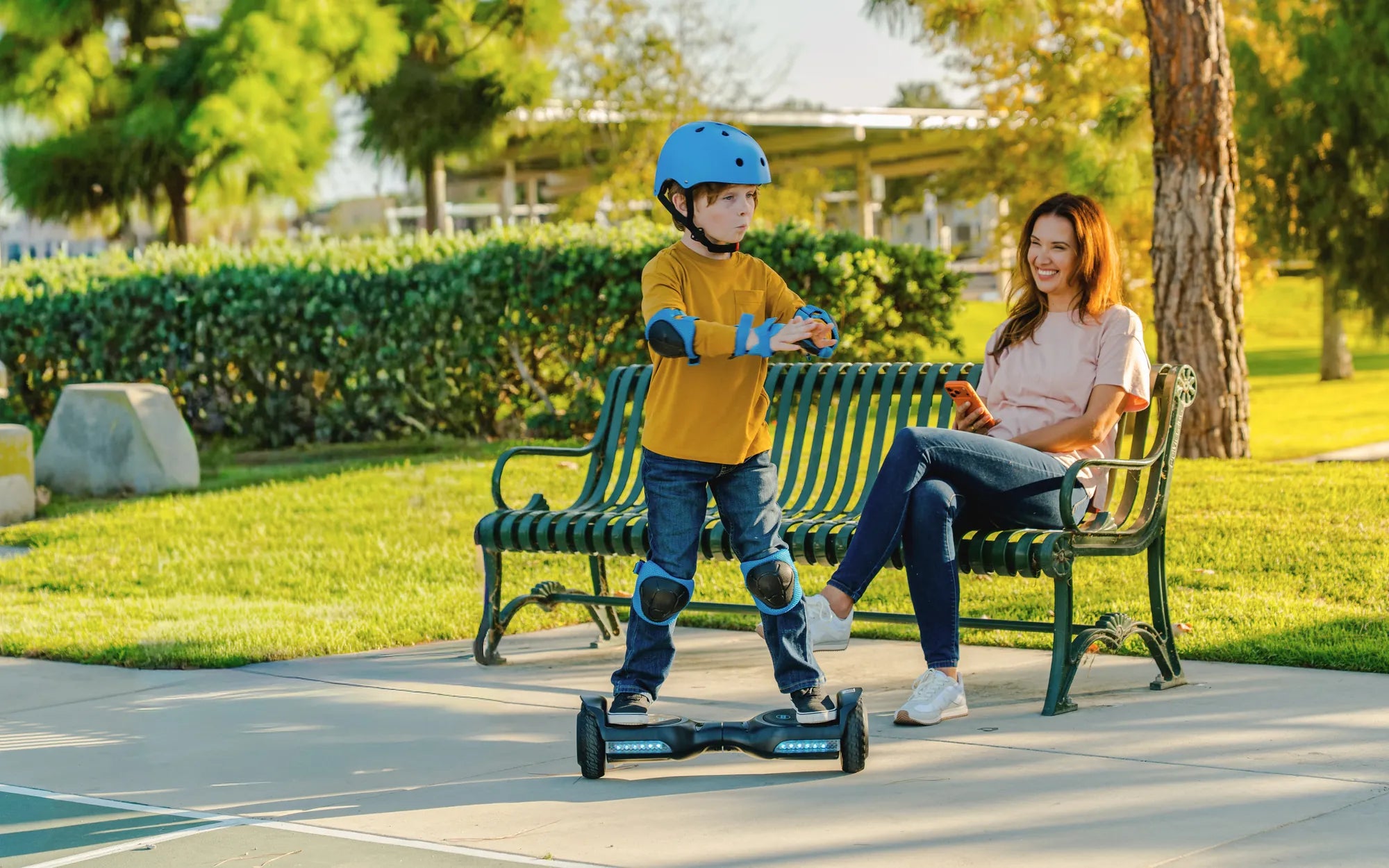
The right gear is not an accessory; it is part of the beginner-friendly ecosystem. It works in tandem with the board's built-in safety features to protect you as you develop muscle memory and balance. Never attempt your first ride without it.
The Step-by-Step Learning Method
First, ensure your hoverboard is fully charged and powered on. Place it on a flat, smooth, and open surface like an empty driveway or quiet parking lot. Always start in the beginner speed mode.
Step 1: Mounting. Place one foot firmly on the foot pad, keeping your weight centered over that foot. Use a wall, fence, or friend for light support. Quickly but smoothly place your second foot on the other pad. Stand upright with knees slightly bent.
Step 2: Basic Balance. Practice simply standing still and maintaining balance. The board will make small adjustments under you. Focus on keeping your body relaxed and your gaze forward, not down at your feet.
Step 3: Moving Forward/Backward. To move forward, gently lean forward from your ankles. To stop or move backward, lean back slightly. Use tiny, subtle movements. The goal is slow, controlled motion.
Step 4: Turning. To turn right, gently press your left toe down. To turn left, press your right toe down. This twisting motion controls the individual wheels. Practice large, slow circles before attempting sharper turns.
Step 5: Dismounting. To get off, come to a complete stop. Step off backwards, one foot at a time, with the same deliberate motion you used to mount. Always step off; don't jump.
Safety Gear Checklist: Don't Ride Without It
Every riding session, especially as a beginner, requires full protective equipment. This is non-negotiable and complements the board's engineering safeguards.
- Helmet: A properly fitted multi-impact helmet designed for skateboarding or cycling is essential for head protection.
- Wrist Guards: These are arguably the most important piece of gear after a helmet. Falls often involve putting hands out to brace, risking serious wrist injury. Guards absorb the impact.
- Knee and Elbow Pads: These protect your joints from scrapes, bruises, and more serious impact injuries during a fall.
- Closed-Toe Shoes: Wear sturdy shoes with good grip. Never ride in sandals or flip-flops.
Investing in quality safety gear is as important as investing in a quality hoverboard. It empowers you to practice with confidence, knowing you are well-protected.
Hoverboard Comparison: Key Models for Beginners
The table below compares hypothetical models based on the critical features for beginners. It highlights how different specifications cater to varying needs and budgets, with a focus on safety and stability.
| Feature / Model | Entry-Level Starter | All-Terrain Beginner | Premium Beginner (e.g., Gyroor-type Specs) |
|---|---|---|---|
| Wheel Size & Type | 8.5" Solid Rubber | 10" Air-Filled (Pneumatic) | 10" Air-Filled (Pneumatic) |
| Max Speed (Beginner Mode) | 6 mph | 7 mph | 7 mph |
| Safety Certification | UL 2272 | UL 2272 | UL 2272 |
| Water Resistance | IPX4 | IPX5 | IPX5 |
| Advertised / Real-World Range* | 10 mi / ~7 mi | 12 mi / ~8.5 mi | 15 mi / ~10.5 mi |
| Ideal Use Case | Smooth pavements, indoor use | Parks, neighborhood paths, slight inclines | Versatile daily use, damp conditions, longer sessions |
| Key Beginner Benefit | Cost-effective entry with core safety | Superior stability and comfort on varied terrain | Maximum durability, weather protection, and ride confidence |
*Real-world range estimate assumes a rider of ~160 lbs on mixed terrain.
Frequently Asked Questions (FAQs) for New Riders
Q: How long does it take to learn to ride a hoverboard?
Most people gain basic control—mounting, dismounting, moving forward/backward, and gentle turning—within 30 to 60 minutes of focused practice in a safe area. Achieving true comfort and mastering more advanced maneuvers like tight turns or riding on slopes can take several days or weeks of regular practice. Patience and consistent short sessions are key.
Q: Can I ride a hoverboard on grass or gravel?
It is not recommended, especially for beginners. Standard hoverboards with smaller, solid tires lack the torque and traction for loose or uneven surfaces like grass or gravel, leading to loss of control, stalling, or falls. Only specialized all-terrain models with very large, knobby tires are designed for such conditions, and they still require advanced skill.
Q: How do I know if a hoverboard is UL 2272 certified?
The certification should be clearly stated on the product packaging, in the online product description, and on a label on the hoverboard itself or its charger. Look for the official UL mark and "UL 2272" text. You can also verify the certification on the UL Product Spec website using the model number. If this information is absent or vague, assume it is not certified.
Q: What maintenance does a beginner's hoverboard need?
Regular maintenance is simple but crucial. Keep the tire pressure correct if you have air-filled tires. Wipe down the board with a damp cloth to remove dirt and debris. Check for loose screws on the foot pads and body. Store the board in a cool, dry place and avoid leaving it fully discharged for extended periods. Always use the manufacturer-provided charger.
Q: Are hoverboards legal to ride on sidewalks or roads?
Laws vary significantly by city, state, and country. Generally, they are treated similarly to electric scooters. Many localities prohibit them on public roads but allow them on sidewalks (with pedestrian caution) or in bike lanes. Some ban them from sidewalks entirely. Always check your specific local ordinances before riding in public spaces to avoid fines.
Conclusion: Choosing Confidence for Your Riding Journey
Selecting the best hoverboard for beginners is a deliberate process centered on safety, stability, and supportive features. By prioritizing UL 2272 certification, appropriate wheel size, beginner speed modes, and robust construction, you invest in a product that fosters quick skill development and lasting enjoyment. This foundation turns initial apprehension into confident control.
Brands that engineer with these principles, such as Gyroor, demonstrate a commitment to the rider's entire experience—from the first tentative step onto the board to years of reliable service. Their integration of water resistance, comprehensive warranties, and proven safety standards provides the peace of mind every new rider deserves.
Your journey into personal electric mobility should start with excitement, not uncertainty. Arm yourself with the right knowledge, the right safety gear, and a hoverboard built for your success. The path to fun, efficient, and exhilarating rides begins with a single, well-informed choice.
Ready to start your journey with a hoverboard engineered for beginners? Browse the full Gyroor collection at gyroorboard.com to explore models that combine certified safety, durable performance, and the features you need to ride with confidence from day one.
Power Scooter for Kids: The Ultimate Guide to Fun and Safety
Kids Scooter for 4 Year Old: Your Guide to Safe, Fun First Rides