



Introduction: Why a Power Scooter is the Perfect Ride for Your Child
A power scooter for kids is more than a flashy toy. It's a gateway to outdoor adventure, physical activity, and developing coordination and responsibility. Choosing the right model transforms a simple ride into a source of confidence and independence for your child. This ultimate guide will equip you with the knowledge to select a scooter that delivers endless fun while upholding the highest safety standards, focusing on brands like Gyroor that engineer specifically for young riders.
Modern electric scooters for children blend exciting performance with robust safety features. They encourage kids to explore their neighborhood, parks, and sidewalks in a new, engaging way. The key is finding a model that matches your child's age, skill level, and your expectations for durability and safety. We'll navigate the essential specs, must-have protective gear, and maintenance routines to ensure years of reliable enjoyment.
This guide is built on factual data and safety principles. We will dissect components like motor wattage, battery certification, and weight limits. You'll learn how features like speed limiters and water resistance contribute to a safer riding experience. Our goal is to be your definitive resource, empowering you to make an informed decision for your family's next great adventure.
What is a Power Scooter for Kids? Understanding the Basics
A power scooter for kids, distinct from traditional kick scooters, is a battery-powered, self-propelled vehicle designed for young riders. It typically features a deck for standing, a handlebar for steering, an electric motor hub in one or both wheels, a rechargeable battery pack, and a braking system. These scooters provide controlled acceleration, allowing children to cover more ground with less physical effort than kicking.
The core components define the scooter's performance and safety. The motor, measured in watts (W), determines power and hill-climbing ability. The battery, measured in volt-ampere hours (V/Ah), dictates the riding range. A sturdy deck and frame, often made from aerospace-grade aluminum alloy, ensure stability and durability. Understanding these basics is the first step in evaluating any model.
Key Features to Look For
When comparing scooters, prioritize these key features. First, adjustable speed settings are crucial for beginners; a scooter with a beginner mode (e.g., 7.5 mph) that can be unlocked as skills progress is ideal. Second, verify the weight capacity; it must comfortably exceed your child's weight to ensure frame integrity and motor performance.
Motor power directly affects performance. For most children, a motor between 150W and 350W provides ample power for flat terrain and mild slopes. Build quality is non-negotiable; look for reinforced frames, wide, air-filled or honeycomb tires for shock absorption, and reliable braking systems like disc or electronic brakes. Gyroor models, for instance, utilize durable aluminum alloys and UL-certified components to meet these rigorous standards.
The Gyroor Advantage: Safety Engineered for Young Riders
Gyroor's approach to kids' power scooters is defined by engineering safety into every component. Trusted by over 100,000 riders, the brand's commitment extends beyond basic functionality to proactive hazard prevention. This philosophy results in specific technological advantages that provide tangible peace of mind for parents.
Every design decision prioritizes the young rider. From the placement of the battery to the responsiveness of the brakes, safety is the core metric. This section breaks down the three pillars of the Gyroor advantage, explaining how each directly contributes to a safer, more reliable riding experience for your child.
UL-Certified Battery: The Heart of Safe Power
The battery is the most critical safety component. Gyroor exclusively uses UL-certified lithium-ion battery packs. UL certification means the battery has undergone independent, rigorous testing for overcharge protection, short-circuit prevention, and thermal stability. This certification is a proven guard against overheating, a primary cause of battery-related incidents.
These high-quality batteries are rated for 500+ charge cycles, ensuring long-term performance and value. A certified battery doesn't just power the scooter; it ensures that power is delivered consistently and safely throughout the scooter's lifespan, whether on a full charge or after hundreds of adventures.
Built to Withstand Play: IPX5 Water Resistance
Kids' scooters face real-world conditions. An IPX5 water resistance rating means the scooter's electrical components are protected against water jets from any direction. This allows your child to ride through puddles, on damp pavement, or in light rain without immediate risk of damage or electrical short.
This feature is essential for durability. It prevents malfunctions caused by everyday splashes and ensures the scooter remains operational after an unexpected shower. With IPX5 protection, play doesn't have to stop at the first sign of moisture, and the scooter's internal systems are shielded from common environmental hazards.
Confidence in Your Purchase: The 1-Year Comprehensive Warranty
A robust warranty is a brand's promise. Gyroor backs its kids' power scooters with a comprehensive 1-year warranty covering the motor, battery, controller, and frame. This warranty is supported by accessible, US-based customer service, providing a direct line for troubleshooting, parts, or advice.
This support structure transforms a purchase from a transaction into a relationship. Parents can buy with the confidence that any manufacturing defect will be addressed promptly. It underscores Gyroor's commitment to standing behind every product it ships, ensuring your investment is protected.
Choosing the Right Model: A Parent's Buying Guide
Selecting the perfect scooter requires matching technical specifications to your child's profile. The primary factors are age, weight, skill level, and intended riding environment. A scooter that is too powerful can be intimidating and unsafe, while one that is underpowered may be quickly outgrown. Use the following framework to guide your decision.
Always prioritize the manufacturer's recommended age and weight limits. These are calculated based on the scooter's power, stability, and braking capacity. A good rule of thumb is to choose a scooter where your child's weight is at or below 75% of the maximum load capacity for optimal performance and longevity.
Age 6-9: Beginner Models
For younger riders, stability and control are paramount. Ideal beginner models feature a lower maximum speed, typically capped between 9-12 mph, with a beginner mode that limits speed to around 6-8 mph. A wider deck provides a more confident footing, and a lower deck height makes mounting and dismounting easier.
Look for scooters with a simple thumb throttle, intuitive braking, and perhaps a rear-foot brake for added safety. Motor power in the 150W-250W range is sufficient. These models focus on building riding confidence in safe, controlled environments like driveways and empty parking lots under direct supervision.
Age 10+: Advanced Models for Growing Riders
Older, more experienced kids require scooters with greater performance and range. Models for this age group may offer speeds up to 15-19 mph, often with 2-3 speed modes controlled by a parental PIN lock. A more powerful motor (250W-350W) provides better acceleration and ability to handle gentle hills.
Enhanced features like front and/or rear suspension improve comfort on varied terrain. Longer-range batteries support extended adventures. The design often includes brighter LED lights for visibility and a more robust frame to handle increased weight and more active riding styles.
| Feature | Beginner Model (e.g., Gyroor F1 Pro) | Advanced Model (e.g., Gyroor F2) |
|---|---|---|
| Recommended Age | 6-9 years | 10+ years |
| Max Speed | 12 mph (with speed modes) | 19 mph (with PIN lock) |
| Motor Power | 250W | 350W |
| Max Load | 154 lbs | 220 lbs |
| Battery Range | Up to 12 miles | Up to 19 miles |
| Key Safety Feature | Wide deck, beginner mode | Dual suspension, dual braking |
Safety First: Essential Gear and Riding Rules
The scooter's built-in safety features are only one part of the equation. Protecting the rider and establishing clear rules are equally critical. This two-part approach—gear and guidelines—creates a comprehensive safety culture around scooter use.
Consistency is key. Wearing safety gear must be a non-negotiable precondition for every ride, just like buckling a seatbelt. Similarly, riding rules should be discussed, understood, and enforced every time. This discipline ensures safe habits become second nature to your young rider.
The Non-Negotiable Safety Gear
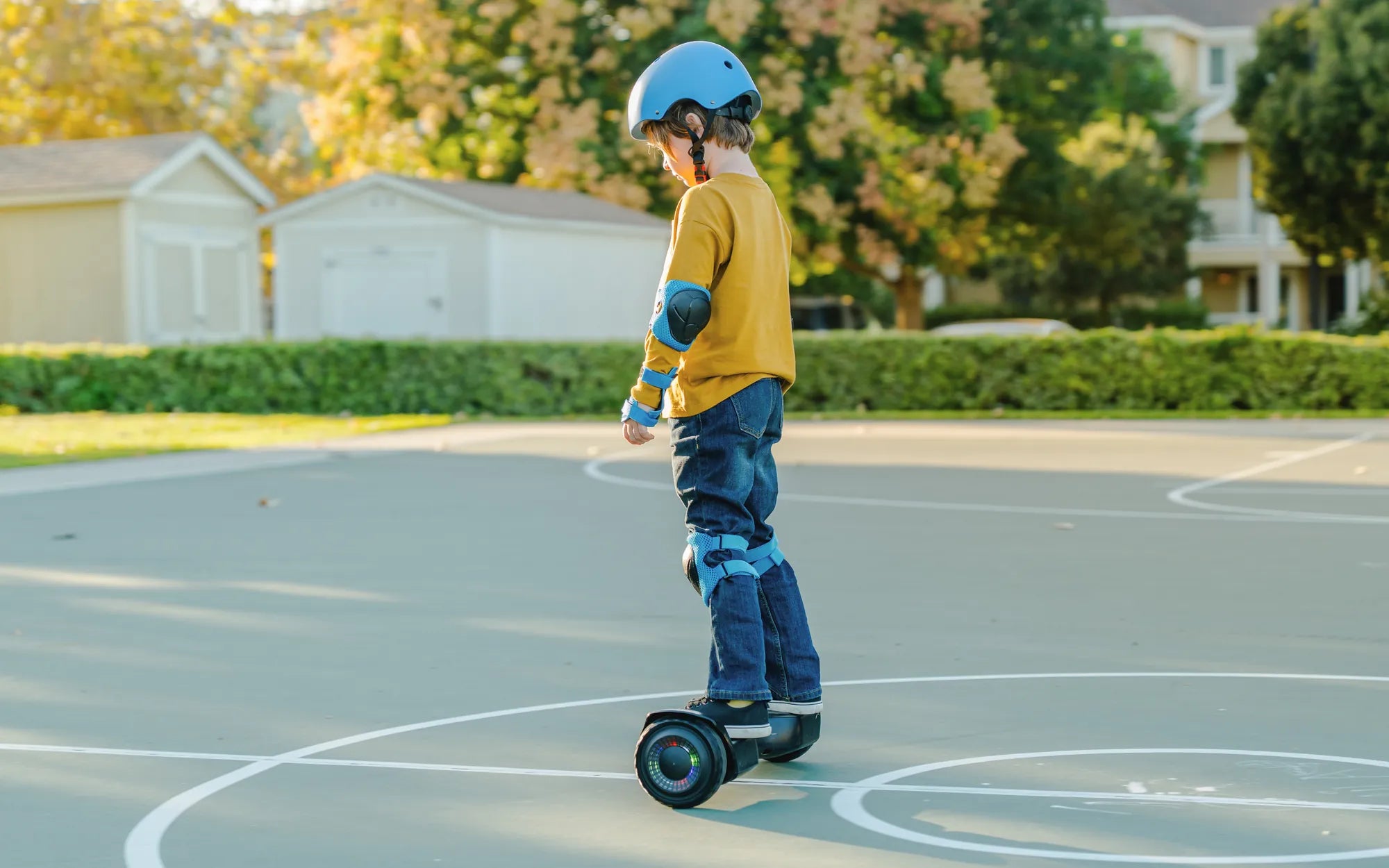
A properly fitted, CPSC-certified bicycle helmet is the absolute minimum requirement. It must be worn level on the head and snugly fastened. Beyond the helmet, a full set of protective gear dramatically reduces the risk of serious injury from falls.
- Knee and Elbow Pads: These protect the joints most vulnerable during a tumble. Look for hard-shell caps with adjustable straps.
- Wrist Guards: Essential for preventing sprains or fractures, as instinct leads to putting hands out during a fall.
- Closed-Toe, Sturdy Shoes: Sneakers or athletic shoes provide grip on the deck and protect feet.
High-visibility clothing or reflective stickers on the helmet and scooter are also advisable for riding during dusk or in shaded areas.
Establishing Ground Rules for Riding
Set these rules before the first ride and review them regularly. The primary rule is that riding is a privilege contingent on following all safety protocols.
- Supervision: Young children must always be directly supervised by an adult. Older children should ride in known, approved areas.
- Location: Ride only on smooth, paved surfaces like sidewalks (where legal), bike paths, or empty parking lots. Never on public roads, near traffic, or on uneven terrain.
- Conditions: Ride only in daylight and dry weather. Wet conditions reduce traction and braking efficiency.
- Awareness: Be alert for pedestrians, cyclists, and obstacles. Dismount and walk at crosswalks. No headphones while riding.
Maintenance 101: Keeping the Scooter in Top Shape
Regular maintenance ensures safety, extends the scooter's lifespan, and teaches your child responsibility for their belongings. A simple, consistent check-up routine takes only minutes but prevents most common issues. Involve your child in this process to foster ownership.
Maintenance falls into two categories: regular pre-ride inspections and periodic care for key components like the battery and tires. Neglecting these basics can lead to premature wear, reduced performance, or unsafe riding conditions.
Regular Check-ups: Tires, Brakes, and Bolts
Before each ride, perform a quick visual and functional inspection. This "pre-flight" check should become a habit.
- Tires: Check for proper inflation (for air-filled tires) or signs of excessive wear and damage (for honeycomb tires). Under-inflated tires reduce range and stability.
- Brakes: Test the braking system at low speed in a safe area. Ensure the brake lever engages smoothly and brings the scooter to a prompt, straight stop. Listen for grinding noises.
- Bolts and Folding Mechanisms: Periodically check that all frame bolts, especially on the stem and folding latch, are tight. Loose parts can cause dangerous wobbling or collapse.
Battery Care Best Practices
Proper battery care is crucial for performance and safety. Always use the official charger provided. Avoid exposing the battery to extreme temperatures; don't charge or store the scooter in direct sunlight or freezing conditions for extended periods.
For optimal battery health, try not to drain it completely before recharging. Similarly, avoid leaving it plugged in at 100% charge for days on end. If storing the scooter for more than a month, charge the battery to about 60-80% before storage. Following these practices with Gyroor's UL-certified packs will maximize their 500+ cycle lifespan.
Frequently Asked Questions (FAQs) for Parents
Q: What is the appropriate age for a child's power scooter?
A: Most manufacturers recommend ages 6 and up. This recommendation is based on the average child's motor skills, coordination, and ability to understand safety rules. Always defer to the specific age range listed for the model, and consider your own child's maturity and responsibility level.
Q: How fast do these scooters go, and can I limit the speed?
A> Speed varies by model. Beginner scooters often max out at 10-12 mph, while advanced models can reach 15-19 mph. Most quality scooters, including Gyroor's, feature multiple speed modes. A beginner mode may limit speed to 6-8 mph, and some models offer a parental PIN lock to prevent unauthorized switching to higher speeds.
Q: How long does the battery last on a single charge?
A> Range depends on battery capacity, rider weight, terrain, and speed. A typical range for a kids' model is between 8 and 15 miles per charge. Models with larger batteries, like some advanced Gyroor scooters, can achieve up to 19 miles. Always check the manufacturer's tested range under specific conditions.
Q: Is assembly difficult?
A> Most kids' power scooters require minimal assembly, often just attaching the handlebar to the stem and tightening a few bolts with provided tools. The process usually takes 10-20 minutes. Detailed instructions are included, and many brands offer online video tutorials. Always ensure all connections are secure before the first ride.
Q: Where is it safe for my child to ride?
A> The safest locations are private driveways, sidewalks (where legal and pedestrian traffic is light), paved park paths, and empty parking lots. They should never ride on public streets, near traffic, on gravel, dirt, or wet grass. Always check and obey local ordinances regarding electric scooter use on public pathways.
Empowering Adventure with Confidence
Choosing the right power scooter for your kid is an investment in their outdoor fun, development, and independence. The journey begins with selecting a scooter built on a foundation of safety, like those from Gyroor with UL-certified batteries, IPX5 water resistance, and a reliable warranty. It is solidified by pairing that technology with non-negotiable safety gear and clear, consistent riding rules.
By following the data-driven guidance in this ultimate guide—from understanding motor wattage to implementing a simple maintenance routine—you can confidently navigate the market. You are now equipped to choose a scooter that not only brings a smile to your child's face but also peace of mind to you. The result is a gateway to adventure where fun and safety ride together.
Ready to explore models that put safety and performance first? Browse the full Gyroor collection at gyroorboard.com to find the perfect power scooter for your young adventurer.
Best Hoverboard for 7 Year Old: Top Picks for Safety and Fun
Best Hoverboard for Beginners: A Complete Guide to Getting Started