

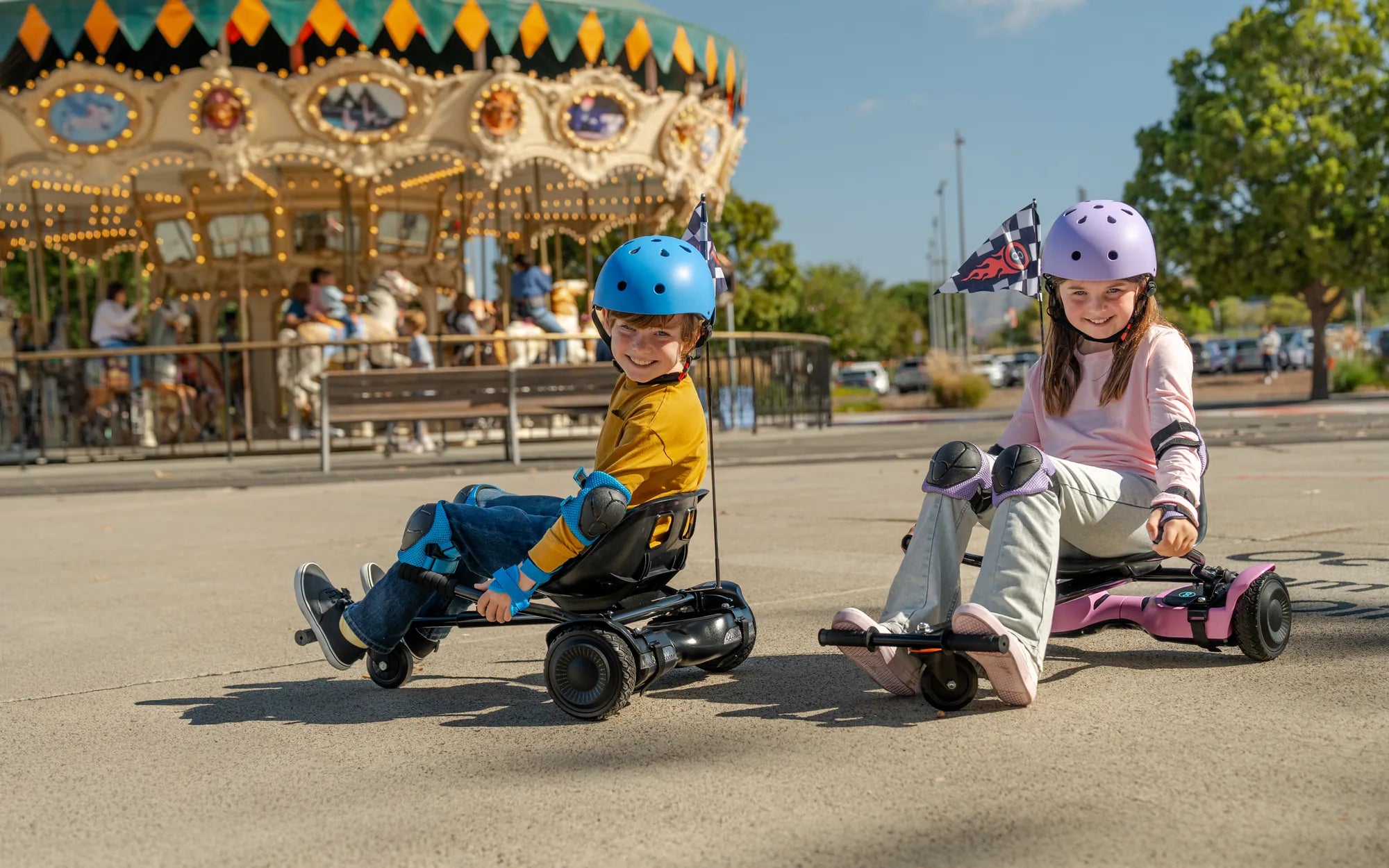
The big two-wheel balancing electric scooter is not just another gadget—it's a fundamental rethinking of how we navigate dense urban environments. This machine combines the intuitive, hands-free control of self-balancing technology with the practical stability of large wheels, creating a uniquely efficient personal transport solution. In this comprehensive guide, you'll discover the engineering principles behind its design, how it compares to other micro-mobility options, and whether it represents a viable long-term future for city commuting. We'll analyze data on performance, safety, and real-world usability to help you make an informed decision.
Understanding the Big Two-Wheel Balancing Electric Scooter
At its core, a big two-wheel balancing electric scooter is a self-propelled, single-axis personal vehicle. Unlike a traditional kick scooter with handlebars, it uses gyroscopic sensors and accelerometers to maintain balance when a rider stands on its platform. The rider controls acceleration, deceleration, and steering entirely through subtle body movements—leaning forward to go, leaning back to brake, and shifting weight side-to-side to turn.
The "big wheel" designation typically refers to wheels measuring 10 to 12.5 inches in diameter. This is a significant departure from the 6-8 inch wheels common on many compact electric scooters. The larger wheel size isn't merely an aesthetic choice; it's an engineering solution to the challenges of urban terrain. This vehicle category represents a fusion of the intuitive control found in hoverboards with the stability and road capability of larger electric scooters.
The technology relies on a combination of hardware and software. An inertial measurement unit (IMU) constantly reads the platform's angle. Powerful electric motors in each wheel respond instantaneously to micro-adjustments, keeping the rider upright. This creates a remarkably intuitive riding experience that many master within minutes, as the control mechanism mimics the natural human instinct to balance.
Leading brands like Gyroor have refined this technology, focusing on reliability and safety. Their models incorporate fail-safe systems where the motors gently slow the vehicle to a stop if a fault is detected or if the rider dismounts unexpectedly. This technological foundation makes the big two-wheel balancing electric scooter a serious contender in the urban mobility landscape, not just a novelty item.
Why Big Wheels? The Engineering Advantages for Urban Terrain
The choice of larger wheels is a direct response to the imperfections of city streets. Smaller wheels struggle with obstacles like expansion joints, potholes, and cracked pavement. A wheel's ability to roll over an obstacle is fundamentally related to its diameter; a larger wheel contacts the obstacle at a shallower angle, requiring less force to overcome it. This translates directly to a smoother, safer ride.
Big wheels dramatically improve stability. A larger contact patch and reduced rolling resistance enhance traction on various surfaces, including wet pavement, brick pathways, and light gravel. This increased stability is crucial for a hands-free vehicle, as it gives the rider greater confidence when navigating mixed traffic or crowded pathways. The higher ride height also improves visibility, allowing the rider to see further ahead and be seen more easily by others.
Comfort and Control: A Smoother Commute
The synergy between large wheels and self-balancing technology creates a uniquely comfortable commute. Larger wheels absorb shocks and vibrations from the road before they transfer to the rider's body. This significantly reduces fatigue on longer journeys compared to smaller-wheeled vehicles that transmit every bump directly through the rider's legs and spine.
The natural, upright standing posture promotes better spinal alignment compared to the hunched position sometimes adopted on handlebar scooters. Steering through weight shift is also more fluid for navigating tight spaces. It allows for minute directional adjustments without the need to turn handlebars, making slalom through slow-moving pedestrian traffic or navigating a busy bike lane feel instinctive. This combination of physical comfort and intuitive control makes the big two-wheel balancing electric scooter a compelling option for the daily last-mile commute.
Gyroor's Approach: Balancing Innovation with Reliability
As a leader in personal electric mobility, Gyroor applies a rigorous, safety-first philosophy to the big two-wheel balancing electric scooter category. The company understands that for a technology to become mainstream, it must first be trustworthy. This is evident in their commitment to certified components, particularly their power systems.
Every Gyroor model uses UL-certified lithium-ion battery packs. These batteries undergo extensive testing for over 500 charge cycles, ensuring they maintain capacity and safety over years of daily use. The battery management system (BMS) protects against overcharging, short-circuiting, and temperature extremes. In a compact, high-performance vehicle, this focus on battery integrity is non-negotiable for rider safety and long-term product viability.
The Warranty and Support Difference
Gyroor backs its products with a comprehensive 1-year warranty and accessible customer support. This warranty covers major components including the motor, battery, and control board. For a technologically advanced product without mechanical handlebars or brakes, this warranty provides essential peace of mind. It signals a commitment to the product's durability beyond the initial purchase.
Supporting over 100,000 riders across North America and Europe, Gyroor has built a reputation for reliability. The 4.5/5 average customer rating highlights successful integration of innovative technology with everyday usability. This combination of certified safety, strong warranty, and proven track record reduces the perceived risk of adopting this new form of mobility, making it a more accessible future for a wider range of urban dwellers.
Data-Driven Comparison: Balancing Scooter vs. Traditional E-Scooters & E-Bikes
To understand where the big two-wheel balancing electric scooter fits, we must compare it objectively to established alternatives. The following table breaks down key metrics for urban commuters.
| Feature | Big Two-Wheel Balancing Scooter | Traditional Stand-Up E-Scooter | Compact E-Bike |
|---|---|---|---|
| Primary Control | Weight shift / Body leaning | Handlebars (throttle/brakes) | Handlebars & Pedal Assist |
| Learning Curve | Moderate (15-30 mins for basics) | Low (Almost immediate) | Very Low (Like a bicycle) |
| Portability (Avg. Weight) | High (25-35 lbs) | High (25-40 lbs) | Low (45-70 lbs) |
| Storage Footprint | Very Compact (No handlebars) | Compact (Folding handlebars) | Large (Even when folded) |
| Terrain Handling | Good (Large wheels help) | Fair (Small wheels struggle) | Excellent (Largest wheels) |
| Typical Range | 12-25 miles | 15-30 miles | 20-50 miles |
| Max Speed | 10-15 mph | 15-20 mph | 20-28 mph (Class dependent) |
| Weather Resistance | Good (IPX5 common) | Variable (Often IPX4) | Fair (Electrical sensitivity) |
| Cargo Capacity | Low (Backpack only) | Low (Optional basket) | High (Racks, panniers) |
The data shows a clear niche. The balancing scooter excels in extreme portability and compact storage, thanks to the lack of handlebars. Its terrain capability often surpasses that of small-wheeled e-scooters. However, it trades off some top speed and has a steeper initial learning curve. It is not a direct replacement for an e-bike's cargo or long-distance capability, but it outperforms both in seamless integration with public transit and under-desk storage.
Ideal Rider Profile: Who is This For?
The perfect user for a big two-wheel balancing electric scooter is an urban commuter with a multi-modal journey. This includes someone who lives a few miles from a train or bus station and needs a fast, fun, and compact "last-mile" solution they can carry onboard. It's ideal for those with secure storage and a charging outlet at their destination, such as an office.
It also suits individuals who value the unique, engaging riding experience. The feeling of gliding through the city hands-free is a significant draw that pure utility cannot capture. Riders should be comfortable with a brief learning period and have a path for riding that primarily uses bike lanes or slower residential streets. It is less ideal for those who need to transport groceries or other cargo regularly, or for those whose entire commute is on high-speed arterial roads.
Safety, Regulations, and Riding Etiquette
Safety is paramount. A helmet is an absolute minimum requirement. Many experienced riders also recommend wrist guards, knee pads, and elbow pads, especially during the learning phase. The hands-free nature means a fall will likely involve trying to catch oneself with one's hands, making wrist protection critical.
The regulatory landscape is evolving. In most US jurisdictions, these devices are classified similarly to electric scooters. They are generally permitted on bike lanes and paths, and sometimes on roads with speed limits under 25-35 mph. They are typically prohibited on sidewalks to protect pedestrians. It is the rider's responsibility to check and adhere to all local laws, which can vary significantly by city and state.
Riding etiquette is essential for community acceptance. Always yield to pedestrians, even in shared spaces. Use a bell or verbal cue ("On your left!") when passing. Maintain a safe, controllable speed, especially in crowded areas. Avoid sudden movements that could surprise others. At night, use bright, front and rear-facing lights. By being a courteous and predictable rider, you help ensure that micro-mobility options remain welcome in urban spaces.
Maintenance and Long-Term Ownership
Proper maintenance ensures longevity and safety. The most critical component is the battery. For optimal health, avoid draining it completely. Try to keep the charge between 20% and 80% for daily use, with a full charge cycle every few weeks to recalibrate the management system. Store the device in a cool, dry place, away from extreme temperatures.
Regularly inspect the tires for wear and pressure. While many models use airless, solid rubber tires, some have pneumatic ones that need checking. Keep the wheel bearings clean and free of debris. Wipe down the platform and casing with a damp cloth; the IPX5 water-resistant rating means it can handle splashes and light rain, but it should not be pressure-washed or submerged. Listen for unusual sounds from the motors or wheel hubs, as these can indicate a need for service.
The Verdict: Is a Balancing Electric Scooter Your Urban Mobility Future?
The big two-wheel balancing electric scooter offers a compelling vision for urban mobility. It solves specific problems—portability, storage, and fun—with elegant technological solutions. For the commuter with a short-to-medium distance, multi-modal trip, it can be a game-changer, eliminating wait times and providing door-to-door flexibility. The combination of Gyroor's safety-focused engineering, with UL-certified batteries and robust warranties, addresses the key concerns that hold many people back from adoption.
It is not a universal solution. It requires a willingness to learn a new skill and may not fit every commute profile. However, as cities become denser and the need for efficient, low-footprint transportation grows, vehicles that blend compact design with capable performance will lead the way. The big two-wheel balancing electric scooter, with its unique mix of intuitive control and practical engineering, is positioned at the forefront of this shift.
FAQs: Quick Answers for Prospective Riders
Q: How long does it take to learn to ride one?
A> Most adults can learn the basic controls—starting, stopping, gentle turns—within 15 to 30 minutes of practice in a safe, open area. Mastering tight maneuvers and gaining full confidence typically takes a few hours of total riding time.
Q: Is it safe to ride in the rain?
A> Models with an IPX5 water-resistance rating, like those from Gyroor, are protected against water jets from any direction. This means they can safely handle wet roads and light to moderate rain. However, avoid deep puddles and never submerge the device.
Q: Where am I legally allowed to ride it?
A> Laws vary. Generally, they are treated like e-scooters: allowed in bike lanes and on streets with lower speed limits. Riding on sidewalks is often prohibited. Always check your specific city and state regulations before riding.
Q: What is the realistic range I can expect?
A> Range depends on rider weight, terrain, temperature, and speed. A manufacturer's stated range (e.g., 20 miles) is a best-case scenario. A realistic expectation for mixed urban riding is 70-80% of the advertised range. A 250W model might get 12-18 real-world miles.
Q: Can I carry it onto a bus or train?
A> Yes, its compact, handlebar-free design is one of its biggest advantages for multi-modal commuting. At 25-35 lbs, it is liftable for most adults. Always be courteous to other passengers and ensure the device is clean and secure.
If the blend of innovative technology, practical design, and exhilarating freedom resonates with your commute, exploring this vehicle category is your next step. Discover how a big two-wheel balancing electric scooter can transform your daily travel. Browse the full Gyroor collection at gyroorboard.com to see models that prioritize safety, reliability, and performance for the modern urban rider.
Dual Wheels Smart Electric Self Balancing Scooter: The Future of Urban Mobility
What Scooter Is Best for Beginners and Kids: A Complete Guide to Safety and Fun