



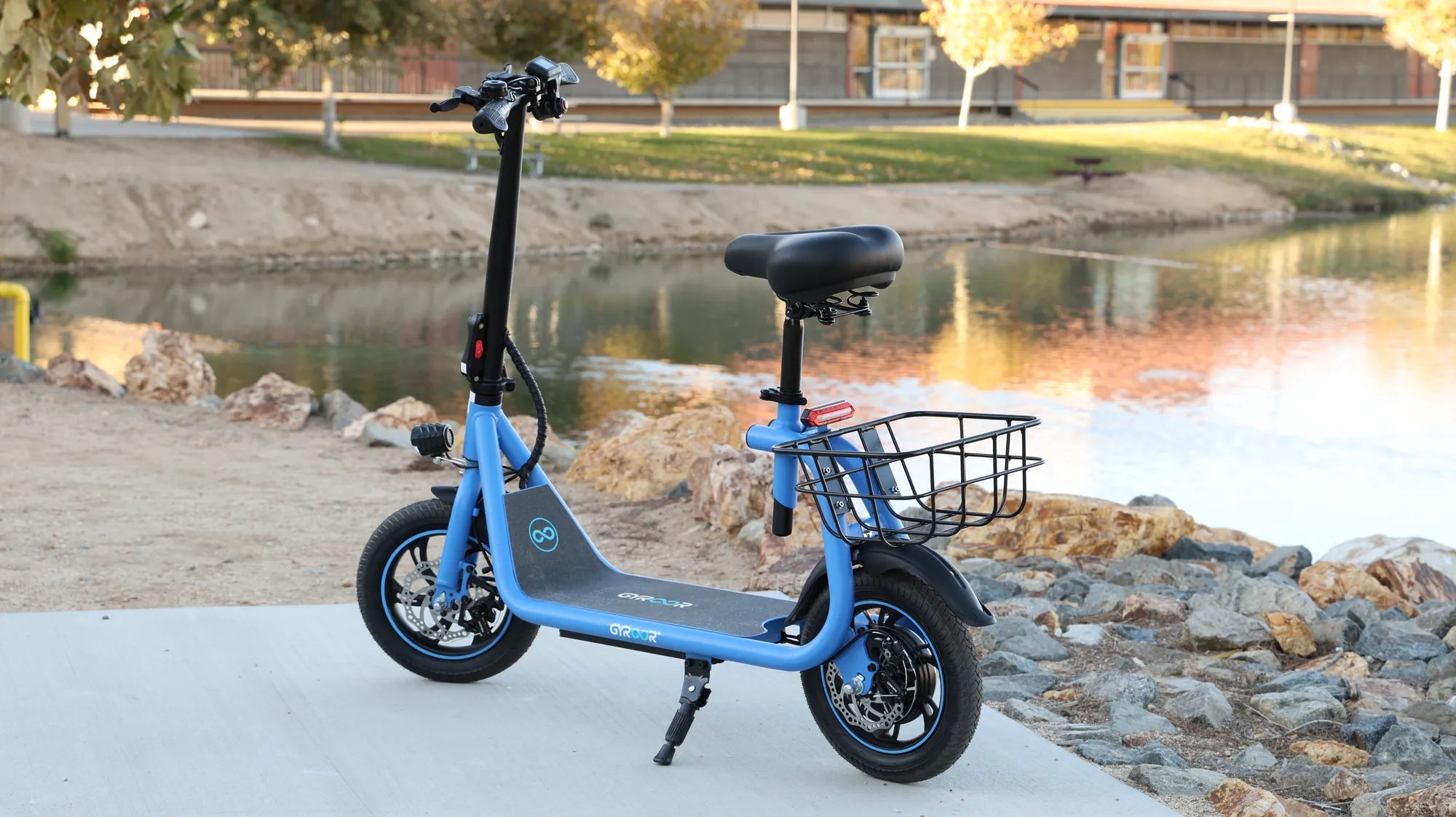
The Rise of the City Commuter E-Bike
Urban transportation is undergoing a quiet revolution. As cities grow denser and traffic congestion worsens, a new class of vehicle is emerging as the optimal solution: the city commuter e-bike. This isn't just any electric bicycle; it's a purpose-built machine designed for the specific demands of daily urban travel. It combines the agility of a traditional bike with electric assist to conquer hills and distances, all while offering a practical, cost-effective, and sustainable alternative to cars and public transit.
For over 100,000 riders across North America and Europe, brands like Gyroor have demonstrated that reliability is the cornerstone of this lifestyle shift. A true city commuter e-bike must be more than a fun gadget; it must be a dependable tool, ready for rain, potholes, and the daily grind. This guide will dissect every component, from motor specs to warranty details, to help you choose an e-bike that transforms your commute from a chore into the best part of your day.
You will learn the non-negotiable features that define the category, understand how to interpret performance specifications for real-world use, and discover the critical safety and durability aspects that separate a lasting investment from a short-lived novelty. The goal is to equip you with the knowledge to select an e-bike that seamlessly integrates into your urban life, offering freedom, efficiency, and undeniable joy.
What Defines a True City Commuter E-Bike?
A city commuter e-bike is engineered for utility, comfort, and resilience in an urban environment. It transcends recreational e-bikes or high-performance models by prioritizing features that address daily practicalities. The core philosophy is to get you to your destination efficiently, comfortably, and without arriving disheveled, regardless of the conditions. This requires a specific set of integrated hardware.
First and foremost, integrated lighting is a legal and safety necessity. A bright front headlight and a rear brake light/taillight, powered by the main battery, ensure you are visible in dawn, dusk, and night riding. Full-length fenders, both front and rear, are essential for keeping water, mud, and street grime off you and your clothes—a critical feature for commuting in work attire.
A sturdy rear rack is arguably as important as the bike itself. It provides a platform for panniers, a backpack, or cargo straps, freeing your back from sweat and strain. The geometry of the bike should promote an upright, heads-up riding position. This improves comfort on longer rides and, more importantly, increases situational awareness in traffic, allowing you to see and be seen more easily.
Key Features for the Daily Grind
Each feature of a dedicated city commuter e-bike serves a direct purpose. Puncture-resistant tires with a smooth or lightly treaded urban pattern reduce the frequency of flats, a major inconvenience during a commute. They also provide lower rolling resistance for better battery efficiency. The inclusion of a kickstand seems basic, but a robust, double-legged stand is vital for stable parking when loading groceries or a work bag.
The frame should have mounting points (braze-ons) for accessories like racks and additional bottle cages. A step-through or low-step frame design is highly advantageous for city riding, making mounting and dismounting easier at frequent stops, especially when wearing varied clothing. Finally, a clear, backlit display that shows speed, battery level, and assist mode is crucial for managing your ride and range without distraction.
These elements work in concert to create a vehicle that is ready for duty every day. Omitting any of them compromises the core commuter experience, shifting the burden of preparation onto the rider. A true city commuter e-bike arrives fully equipped, so you can focus on the ride, not the gear.
Performance & Specs: The Urban Rider's Checklist
Understanding the technical specifications of a city commuter e-bike is key to matching it with your specific urban landscape. The performance "sweet spot" for city use balances adequate power for hills and acceleration with sufficient range for round-trip commutes, all within typical legal frameworks. It's about practical power, not maximum speed.
Motor placement also matters. Hub-driven motors (in the front or rear wheel) are common and offer simplicity, while mid-drive motors, which power the crankset, often provide better weight distribution and more natural hill-climbing feel by leveraging the bike's gears. For most flat to moderately hilly cities, a robust hub motor is a cost-effective and reliable choice.
The controller and pedal assist system (PAS) define the riding feel. A smooth, responsive controller delivers power without jarring jumps, while multiple PAS levels (typically 3-5) allow you to fine-tune effort versus battery consumption. A throttle, while not legal in all regions for pure e-bike classification, can be invaluable for pulling away from stops in heavy traffic or for a quick boost without pedaling.
Motor Power & Hill-Climbing Ability
For a city commuter e-bike, motor power is about torque and reliability, not top speed. A motor in the 500W to 750W range, like those commonly found in Gyroor's commuter-focused models, is typically ideal. This provides ample power for accelerating from stoplights, maintaining a 20-28 mph pace (where legal), and conquering the moderate grades found in most urban areas.
Excessive power (e.g., 1000W+) is often unnecessary for city commuting and can complicate legal classification on public roads and bike paths. The key metric is how the motor delivers its power. A high-torque motor will feel more responsive from a stop and more capable on sustained inclines, making your commute consistently effortless regardless of the route's topography.
Battery Range & Real-World Expectations
Battery range is the most frequently misunderstood spec. Manufacturer claims are often based on ideal conditions: a lightweight rider on flat terrain using the lowest assist level. Real-world range is affected by rider weight, cargo, wind, hills, tire pressure, temperature, and assist level usage. A good rule of thumb is to derate the claimed range by 30-40% for practical planning.
For a city commuter e-bike, your battery capacity should comfortably cover your longest regular round-trip commute with reserve. If your commute is 10 miles each way, look for a bike with a real-world range of at least 25-30 miles. This accounts for detours, headwinds, and using higher assist levels. A battery with a UL 2271 or UL 2849 certification, a standard safety feature for Gyroor batteries, is non-negotiable for fire safety and long-term reliability.
Battery placement also impacts handling. Integrated batteries within the frame offer a sleek look and better protection, while external rack-mounted batteries can be easier to remove for charging but may affect weight distribution. Regardless of style, a quality, certified battery from a reputable brand is the most critical component for safety and satisfaction.
Safety, Durability, and Peace of Mind
When your e-bike is your primary commuter vehicle, its reliability directly impacts your daily life. Safety and durability are not just features; they are the foundation of a trustworthy transportation tool. This encompasses everything from the quality of the welds on the frame to the water-resistance of the electrical components and the support you receive after purchase.
The braking system is paramount. Hydraulic disc brakes are the gold standard for city commuter e-bikes, offering consistent, powerful stopping power in all weather conditions with minimal maintenance compared to mechanical discs or rim brakes. Given the higher speeds and weights of e-bikes, superior braking is a critical safety investment.
Frame material also dictates durability and ride quality. Aluminum alloy frames are the most common, offering an excellent balance of strength, light weight, and corrosion resistance. The build quality—the precision of assembly and the robustness of components like the stem, handlebars, and seat post—determines how well the bike withstands daily vibrations and urban impacts.
Built for All Weather: The IPX5 Advantage
Urban commuting means encountering unexpected weather. A light rain shower should not strand you or cause electrical failure. This is where an IP (Ingress Protection) rating becomes crucial. An IPX5 rating, a standard specification for Gyroor's commuter models, means the electrical components are protected against low-pressure water jets from any direction.
In practical terms, an IPX5-rated city commuter e-bike can safely be ridden in heavy rain and through puddles. It ensures that the display, controller, motor connections, and battery compartment are sealed against water ingress that could cause short circuits, corrosion, or failure. This level of protection provides immense peace of mind and expands the bike's usable days per year significantly.
The Importance of a Strong Warranty & Support
The warranty is a direct reflection of a manufacturer's confidence in their product. For a city commuter e-bike subjected to daily use, a comprehensive warranty is essential. Look for a warranty that covers the frame for multiple years and critical components like the motor and battery for at least one year. Gyroor, for instance, provides a reliable 1-year comprehensive warranty on its e-bikes.
Equally important is the accessibility and quality of customer support. Can you easily reach a knowledgeable team via phone or email? Are replacement parts readily available? A strong support network ensures that if an issue does arise, it can be resolved quickly, minimizing downtime. This post-purchase support transforms the e-bike from a disposable product into a long-term asset.
Gyroor Commuter E-Bikes: Engineered for Urban Life
Drawing from expertise in personal electric mobility, Gyroor applies a commuter-first philosophy to its e-bike designs. The focus is on integrating the essential features, reliable performance, and certified safety standards that urban riders need. This approach results in e-bikes that are not just purchased, but adopted into daily life as dependable tools.
The design process starts with the core commuter requirements: integrated lighting, full-coverage fenders, a rear cargo rack, and a comfortable, upright geometry. These are not optional accessories but fundamental parts of the design. The components are selected for durability, such as using hydraulic disc brakes for all-weather stopping confidence and puncture-resistant urban tires to reduce maintenance headaches.
Performance is tuned for the city. Motors are selected to provide the right balance of torque for hills and efficiency for range, while batteries are sized to meet realistic round-trip commuting distances. The entire system is built around the principle of hassle-free daily operation, allowing the rider to focus on the journey, not the machine.
How Our Features Translate to Your Commute
Every Gyroor design choice addresses a specific urban challenge. The UL-certified battery pack, tested for over 500 charge cycles, ensures safety from thermal events and provides predictable, long-term performance, whether the bike is stored in a garage or an apartment. This certification is a baseline for responsible e-bike ownership.
The IPX5 water-resistant rating means a sudden downpour on the way home doesn't become an emergency. You can ride with confidence, knowing the electrical heart of your city commuter e-bike is protected. The 1-year warranty, backed by accessible customer support, acts as a safety net, protecting your investment and ensuring help is available should you need it. These features collectively reduce the total cost of ownership and the daily mental load for the commuter.
Cost Analysis: E-Bike vs. Traditional Commuting
Adopting a city commuter e-bike is not just a lifestyle change; it's a significant financial decision. When analyzed against the costs of car ownership or public transit passes, the savings can be substantial and rapid. The initial purchase price is an investment that pays dividends over time in reduced ongoing expenses.
The most dramatic savings come from replacing car use. The American Automobile Association (AAA) estimates the average annual cost to own and operate a new vehicle is over $10,000. This includes payments, insurance, fuel, maintenance, and depreciation. Even a modest reduction in car usage for commuting can save thousands per year. An e-bike's "fuel" costs mere cents per charge, and maintenance is a fraction of a car's.
Compared to public transit, the math is also compelling. An annual transit pass in a major metropolitan area can easily cost $1,000 to $2,500. The upfront cost of a quality city commuter e-bike often falls within this range, meaning it can pay for itself in one to two years. After that, your transportation costs become minimal—primarily electricity for charging and basic maintenance like tires and brake pads.
| Expense Category | Car (Annual) | Public Transit (Annual) | City Commuter E-Bike (Annual) |
|---|---|---|---|
| Purchase/Pass Cost | $5,000+ (payment/depreciation) | $1,000 - $2,500 | $200 - $500 (amortized over 5 yrs) |
| Fuel/Energy | $1,500 - $2,500 | $0 (included) | $20 - $50 |
| Insurance/Registration | $1,200 - $2,000 | $0 | $0 - $300 (optional insurance) |
| Maintenance & Repairs | $800 - $1,200 | $0 | $100 - $300 |
| Estimated Total | $8,500 - $10,700+ | $1,000 - $2,500 | $320 - $1,150 |
Beyond direct financial savings, the city commuter e-bike offers intangible benefits with real value: reduced stress by avoiding traffic, improved physical and mental health from light exercise and outdoor time, and the sheer time saved by door-to-door travel without waiting for buses or trains. These factors contribute to a higher quality of life, making the e-bike an investment in personal well-being.
The Urban Rider's FAQ
Q: How do I securely park my city commuter e-bike in the city?
A: Use a high-quality, hardened steel U-lock as your primary lock, securing the frame and rear wheel to a fixed, immovable object. For longer stops, add a secondary cable or chain lock to secure the front wheel. Consider removable batteries (if available) to take that valuable component with you. For maximum security at work or home, seek indoor parking or a dedicated bike locker.
Q: Is an e-bike practical for year-round commuting?
A> Yes, with proper preparation. For winter, fit studded tires for ice, use pogies (bar mitts) for hand warmth, and layer clothing. The IPX5 water-resistance of bikes like Gyroor's handles rain and slush. In summer, plan for hydration and sun protection. The key is a bike built for durability, as the daily exposure to elements demands robust components and finishes.
Q: What's the true cost savings compared to a car or public transit?
A> As shown in the cost analysis, annual savings range from ~$850 vs. transit to over $9,000 vs. full car ownership. The break-even point on a $1,500-$2,500 e-bike can be under one year when replacing a car commute, or 1-3 years when replacing a transit pass. Savings accelerate after the bike is paid off, while car and transit costs continue indefinitely.
Q: How does Gyroor's warranty handle wear and tear from daily use?
A> Gyroor's 1-year warranty covers defects in materials and workmanship for the frame, motor, battery, and other core components under normal use. Wear items like brake pads, tires, and chains are considered consumables and are not covered, similar to all bicycle manufacturers. The warranty is designed to protect against premature failure of major components, ensuring the core investment is sound.
Q: Can I carry cargo or a passenger on a city commuter e-bike?
A> Cargo is a primary function. Use the rear rack with panniers, a cargo basket, or bungee cords. For heavier loads, ensure your bike's total weight capacity (rider + cargo) is not exceeded—typically 250-300 lbs. Carrying a passenger on a standard two-wheeled e-bike is generally unsafe and not recommended unless it is a specifically designed cargo or tandem bike.
Your Smarter Commute Awaits
The city commuter e-bike represents a fundamental shift towards intelligent urban mobility. It is a vehicle defined not by excess power or sporty aesthetics, but by thoughtful integration, reliable performance, and resilient construction. Choosing the right one means looking beyond the basic specs to the features that guarantee daily dependability: integrated practicalities, real-world range, water-resistant construction, certified battery safety, and strong manufacturer support.
This investment pays returns daily in saved time, reduced stress, improved health, and significant financial savings. It reconnects you with your city, transforms your commute into an active, enjoyable part of your day, and contributes to a cleaner, less congested urban environment. The journey toward a better commute begins with selecting a tool built for the purpose.
Ready to experience the freedom and efficiency of a true urban electric vehicle? Explore a range of e-bikes engineered with the commuter in mind, featuring UL-certified batteries, IPX5 weather resistance, and comprehensive warranties designed for daily life. Browse the full Gyroor collection at gyroorboard.com and find the city commuter e-bike that's built for your journey.
Beginner Commuter Bike: The Ultimate Guide to Your First Smart Ride
Where Young Scooter From: The Gyroor Origin Story of Quality & Safety