



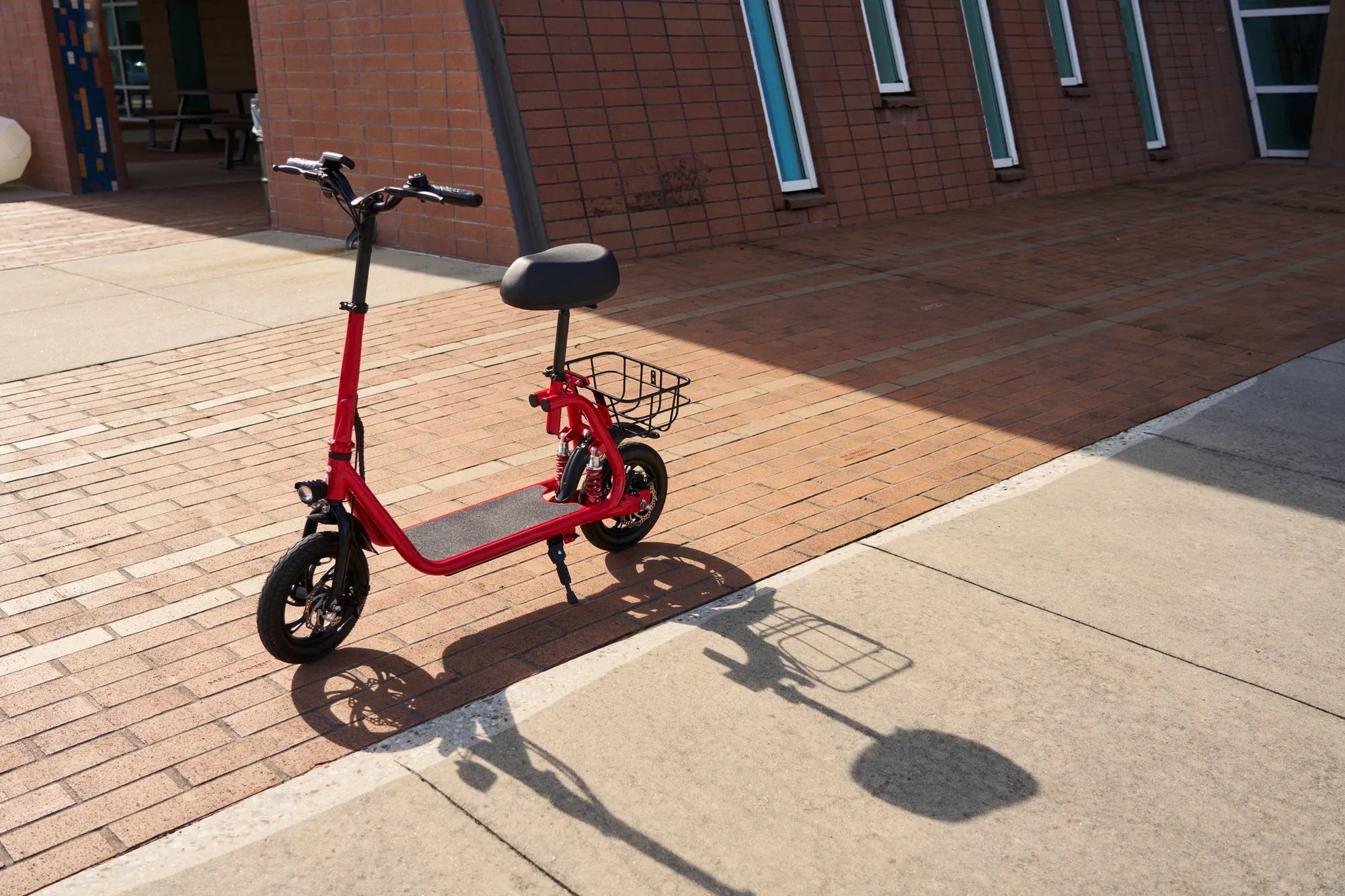
Urban mobility is at a breaking point. Gridlocked streets, soaring transportation costs, and environmental concerns demand a smarter solution. City electric scooters have emerged not as a fleeting trend, but as a fundamental shift in how we navigate our metropolitan landscapes. They offer a practical, efficient, and sustainable answer to the last-mile problem and beyond. This article will dissect the rise of the urban e-scooter, detailing the essential features that define a true commuter-ready model, analyzing their tangible benefits for riders and cities, and providing a comprehensive framework for choosing a scooter built to last. You'll learn how to prioritize safety, decode range claims, and understand why robust engineering and support are non-negotiable for daily use.
Navigating the New Urban Landscape
The traditional commute is inefficient. Cars sit idle in traffic, public transit can involve long walks at either end, and personal budgets strain under the weight of fuel and parking. City electric scooters directly address these pain points by providing a compact, agile, and personal mode of transport. They fill the critical gap between home, transit hubs, and final destinations, creating a seamless intermodal journey.
Adoption is accelerating because the value proposition is clear. For the individual, it's about reclaiming time and reducing stress. For the city, it's about easing congestion and improving air quality. This convergence of personal and civic benefit is fueling a permanent change in our transportation ecosystem. The future of urban mobility is multimodal, and the electric scooter is a cornerstone of that future.
Understanding this shift requires moving beyond viewing e-scooters as mere toys. A true city electric scooter is a serious piece of personal transportation technology. It must be engineered for the rigors of daily use, from potholed streets to unpredictable weather. The following sections will define what separates a genuine urban commuter vehicle from a generic, less capable model.
What Makes a True "City" Electric Scooter?
Not all electric scooters are created equal for urban duty. A scooter designed for city commuting must excel in three critical areas: portability, durability, and all-weather readiness. These features work in concert to provide a reliable, hassle-free experience in a demanding environment.
Portability and Weight: The Logistics of Mixed-Mode Commuting
The ability to seamlessly integrate with other forms of transit is paramount. A true city electric scooter must be easily foldable and light enough to carry. A weight under 40 lbs (18 kg) is a practical benchmark, allowing most adults to lift it onto a bus, train, or into a trunk without strain.
Foldability isn't just about a locking mechanism; it's about a compact folded footprint. The scooter should stand upright on its own or tuck neatly under a desk or in a closet. This transforms the scooter from a sidewalk obstacle into a portable asset, enabling true door-to-door convenience. Without this feature, its utility in a complex urban journey is severely limited.
Durability and Build Quality: Built for the Mean Streets
City streets are unforgiving. A commuter scooter must withstand daily encounters with potholes, curb drops, and constant vibrations. The frame material is the first line of defense. Aerospace-grade aluminum alloys offer an optimal balance of strength and lightness, resisting fatigue and corrosion over time.
Beyond the frame, component quality is crucial. The stem locking mechanism must be rock-solid to prevent dangerous wobble at speed. Deck construction must support an adult rider securely. Crucially, the battery pack must be housed in a robust, impact-resistant enclosure. This is where certifications like UL 2272 for the electrical system become vital, indicating rigorous safety testing for fire and electrical hazards—a critical consideration for indoor storage.
Weather and Terrain Readiness: Conquering the Elements
Urban commuting doesn't stop for a light rain. A capable city electric scooter needs a defined level of water resistance. An IPX5 rating, for example, means it can withstand water jets from any direction, making it safe to ride on wet streets or through puddles. This protection is essential for electronics and battery longevity.
Tire choice and ground clearance are equally important. Pneumatic (air-filled) tires provide superior shock absorption and traction on uneven pavement compared to solid tires. Sufficient ground clearance prevents the underside of the scooter from scraping on speed bumps or driveway aprons. Together, these features ensure the scooter can handle the varied and often imperfect terrain of the city.
The Tangible Benefits: Why Adoption is Accelerating
The move towards city electric scooters is driven by measurable advantages that impact both the rider's wallet and well-being. These benefits provide a compelling, data-backed case for making the switch from more traditional, cumbersome modes of transport.
Efficiency and Time Savings: Beating Traffic, Predictably
Time is a non-renewable resource. Consider a 3-mile cross-town commute. In heavy traffic, a car might take 25-40 minutes. A scooter, using bike lanes and pathways, can consistently make the trip in 15-20 minutes, completely avoiding gridlock. The predictability is a key advantage over public transit, which may be subject to delays.
The time savings extend beyond motion. Eliminating the search for parking—which can add 10-15 minutes to a car trip in a dense urban area—is a massive benefit. A scooter can be parked securely at a bike rack right at the destination door. This door-to-door efficiency reclaims significant time daily, reducing commute stress.
Cost-Effectiveness: A Stark Financial Analysis
The economics are overwhelmingly in favor of electric scooters for short urban trips. The following table breaks down the comparative costs over a year for a 5-mile daily round-trip commute:
| Expense Category | Car (Sedan) | Public Transit (Monthly Pass) | City Electric Scooter |
|---|---|---|---|
| Fuel / Energy | $800 - $1,200 | N/A | $20 - $40 |
| Insurance | $1,200 - $2,000 | N/A | N/A |
| Parking | $1,500 - $3,600+ | N/A | N/A |
| Maintenance | $500 - $1,000 | N/A | $50 - $100 |
| Upfront / Fare Cost | Depreciation | $900 - $1,500 | $500 - $1,500 |
| Estimated Annual Cost | $4,000 - $7,800+ | $900 - $1,500 | $570 - $1,640 |
As the data shows, even a premium electric scooter pays for itself within months when compared to car ownership, and remains competitive with or cheaper than annual transit passes, while offering unparalleled flexibility and door-to-door service.
Environmental Impact: A Cleaner Commute
Transportation is a major source of urban carbon emissions. A typical gasoline-powered passenger vehicle emits about 4.6 metric tons of CO2 per year. An electric scooter, charged on the average U.S. grid, has a carbon footprint that is over 90% lower per mile traveled.
Their greatest environmental potential is realized as a complement to public transit. By solving the last-mile problem, they make bus and train use more viable for more people, reducing reliance on single-occupancy vehicles for entire journeys. This creates a greener, more efficient integrated transport network that reduces overall urban emissions and noise pollution.
Key Features to Prioritize for Urban Commuting
Equipped with an understanding of the benefits, selecting the right model requires focusing on specifications that translate directly to a safe, reliable, and enjoyable daily ride. These are the non-negotiable elements for a true commuter scooter.
Safety as a Non-Negotiable: Lights, Brakes, and Stability
Urban riding demands high visibility and confident stopping power. A comprehensive lighting system is mandatory: a bright front headlight (200 lumens minimum), a dedicated brake light, and side or deck lights for visibility from all angles. This ensures you are seen by drivers, especially at dawn, dusk, or night.
The braking system must be redundant and powerful. A dual-brake setup—typically a disc brake on one wheel and an electronic regenerative brake on the other—provides reliable stopping power in all conditions, even if one system were to fail. Stability comes from a wide, textured deck and a well-engineered stem with minimal flex, inspiring confidence when navigating around obstacles.
Battery and Range: Matching Specs to Real-World Use
Manufacturer range claims are often based on ideal laboratory conditions. Real-world range is affected by rider weight, hills, stop-and-go traffic, and temperature. A crucial rule is to choose a scooter whose stated range is at least 1.5 times your longest regular daily distance. If you have a 10-mile round-trip commute, target a scooter with a 15+ mile claimed range.
Battery quality is paramount. Look for scooters using brand-name, UL-certified lithium-ion battery cells. These packs undergo rigorous testing for safety and longevity, often rated for 500+ full charge cycles before significant capacity loss. A high-quality battery from a reputable brand is the heart of a dependable scooter and is worth the investment.
Smart Features and Warranty: Protecting Your Investment
App connectivity has moved from a novelty to a valuable tool. A companion app can allow for speed mode adjustment, battery level monitoring, trip data tracking, and firmware updates. Crucially, it can enable anti-theft features like an electronic lock that triggers an alarm if the scooter is moved.
The warranty is a direct reflection of the manufacturer's confidence in their product. A comprehensive 1-year warranty covering the battery, motor, and frame is the industry benchmark for reliable brands. It transforms the scooter from a disposable gadget into a legitimate transportation asset, ensuring support is available should any defects arise.
Gyroor's Approach: Engineering for the Urban Commuter
As a leader trusted by over 100,000 riders, Gyroor designs its electric scooters with the specific challenges of city commuting in mind. The brand's philosophy centers on reliability, safety, and rider support, directly addressing the priorities outlined in this guide.
Built to Withstand the City: IPX5 and UL-Certification
Understanding that commuters face all weather, all Gyroor scooters are built to an IPX5 water-resistant standard. This engineering ensures that electronics are protected from rain and street spray, providing riders with the confidence to commute daily, regardless of the forecast. It’s a foundational feature for a practical vehicle.
Safety is engineered from the inside out. Gyroor uses only UL-certified battery packs across its lineup. This certification, tested for over 500 charge cycles and rigorous electrical safety standards, mitigates the risk of battery-related hazards. For riders who store their scooters in apartments or offices, this provides essential peace of mind and sets a critical industry benchmark.
Designed for Real-World Range and Reliability
Gyroor’s performance specifications are tailored to urban realities. Motors are selected for sufficient torque to handle moderate hills common in many cities, not just top speed. Battery management systems are calibrated for efficiency in stop-and-go traffic, helping to deliver consistent, predictable range that aligns with real commuting distances and reduces anxiety.
The focus is on dependable performance ride after ride. By using quality components and robust motor controllers, Gyroor scooters are designed to provide a stable and reliable riding experience that stands up to the vibration and demands of daily pavement pounding, ensuring the scooter remains a dependable part of a rider's routine.
Support You Can Rely On: The 1-Year Warranty Promise
Gyroor backs its engineering with a straightforward 1-year warranty, covering key components against manufacturing defects. This commitment reflects a focus on long-term customer satisfaction rather than short-term sales. It ensures that a rider's investment is protected.
This warranty is supported by accessible customer service. For a commuter relying on their scooter, knowing that help is available from a reputable brand with a track record in North America and Europe is invaluable. It completes the package, making the choice a practical one for sustainable urban mobility.
Frequently Asked Questions (FAQ)
Are electric scooters legal in my city?
Laws vary significantly. Generally, they are permitted on bike lanes and streets with speed limits under 25-35 mph, but are often prohibited on sidewalks. Most cities require riders to be 16+ and may have helmet laws. Always check your specific local and state regulations before riding.
How safe are electric scooters in traffic?
Safety is primarily rider-dependent. Wearing a helmet is the most critical step. Always assume drivers do not see you; use lights day and night, signal your intentions, obey traffic laws, and ride defensively. Choose a scooter with excellent brakes and stability features to maximize your control.
Where can I charge my scooter if I live in an apartment?
Many apartments have outlets in bike storage rooms or parking garages. Some workplaces allow charging at a desk. The portability of scooters means you can often bring the battery pack (if removable) or the entire scooter inside to a regular outlet. Always follow manufacturer charging guidelines.
What maintenance does an e-scooter require?
Regular maintenance is minimal but important. Check tire pressure weekly (for pneumatic tires), ensure brakes are adjusted and responsive, and periodically tighten bolts and folding mechanisms. Keep the scooter clean, especially after wet rides, and store it in a dry place. Refer to your owner's manual for a detailed schedule.
Can it handle hills on my commute?
This depends on the scooter's motor power (wattage) and torque. A scooter with a 350W-500W motor can typically handle moderate hills (grades of 10-15%). For steeper inclines, look for models with 500W+ motors and high torque ratings. Always test a hill at a safe speed first to understand your scooter's capability.
Your Ticket to a Smarter, Smoother Commute
The evidence is compelling: a well-chosen city electric scooter represents a transformative investment in personal mobility. It is a tool for reclaiming time, reducing expenses, and contributing to a cleaner urban environment. The future of urban mobility is agile, electric, and personal, and these vehicles are at its forefront.
Success hinges on selecting a model engineered for the real world—prioritizing UL-certified safety, water-resistant durability, and a warranty-backed promise of reliability. It’s about choosing a partner for your commute, not just a product. By making an informed choice, you unlock a new way of moving through the city that is efficient, enjoyable, and sustainable.
Ready to transform your daily journey? Explore a range of scooters built specifically for the demands of the urban commuter. Browse the full Gyroor collection at gyroorboard.com to find the model that matches your route, your style, and your city.
Best Off Road Electric Scooters for Thrilling Adventures: The Ultimate Guide
Cool Electric Scooters for Adults: The Ultimate Urban Commute Solution