



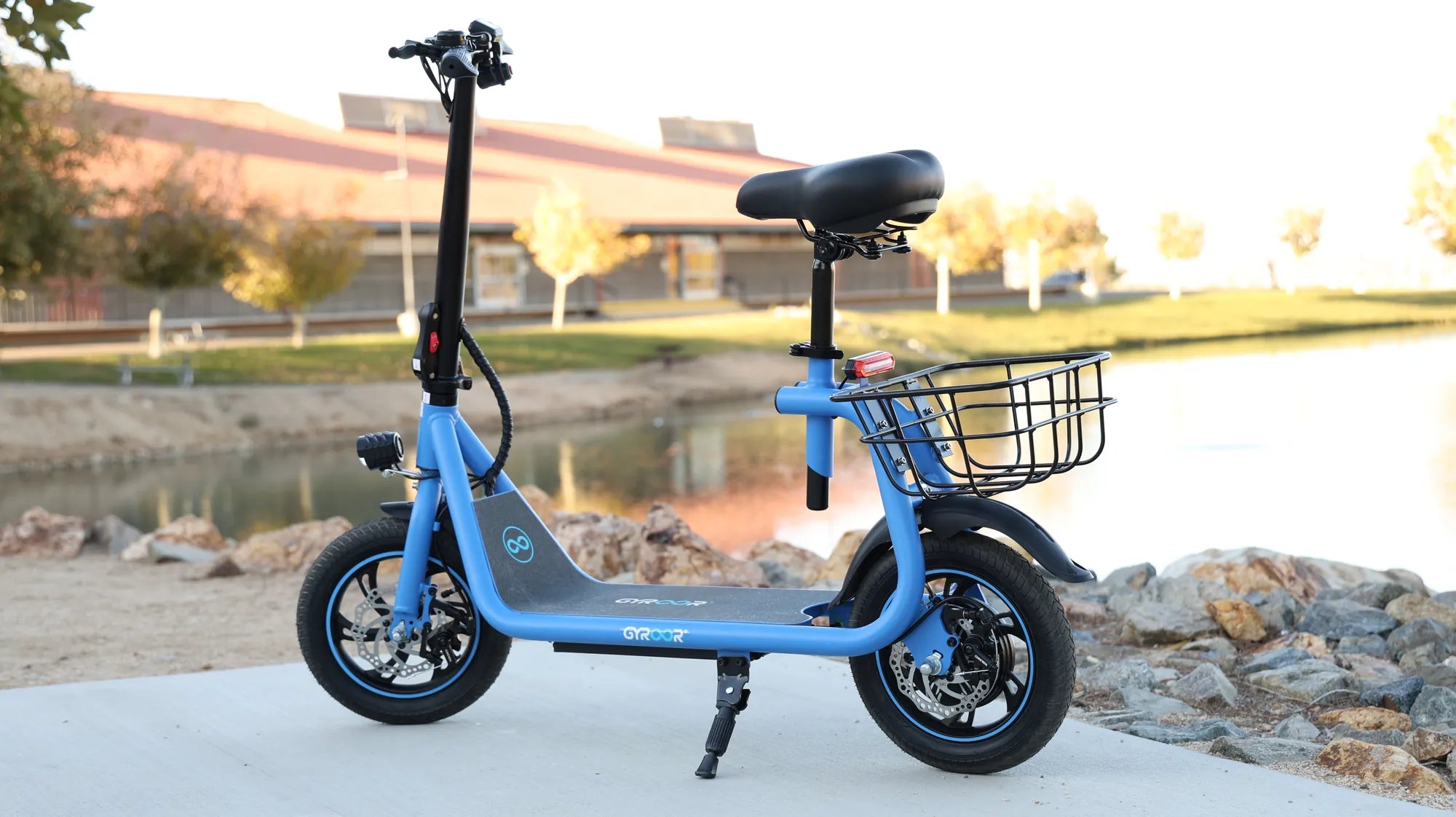
Unleash Your Adventure with Off-Road Electric Scooters
Forget smooth pavement. The best off road electric scooters for thrilling adventures are engineered to conquer dirt trails, gravel paths, sandy beaches, and forest tracks. These machines transform a simple ride into an exploration, offering access to terrain where traditional commuter scooters would fail. This guide is for riders seeking power, durability, and the freedom to go beyond the city limits.
We will dissect the critical features that define off-road capability, from robust motors to advanced suspension systems. You'll learn how to match scooter specifications to your preferred terrain and adventure style. Furthermore, we'll explore the importance of safety certifications and reliable construction, exemplified by brands like Gyroor, which builds scooters designed for the demands of rugged use.
What Makes a Scooter Truly "Off-Road"? Key Features Decoded
An off-road electric scooter is defined by a suite of specialized components working in unison. It's not just about one powerful feature; it's the integration of a high-torque motor, rugged tires, effective suspension, and a water-resistant build. Commuter scooters prioritize efficiency and low weight, while off-road models prioritize traction, impact absorption, and unwavering power delivery on unpredictable surfaces.
Choosing the wrong scooter for rough terrain is not just disappointing—it can be dangerous. A scooter lacking these core features may struggle on inclines, lose traction on loose ground, or suffer mechanical failure from constant vibration and impact. Understanding these elements is the first step to a safe and exhilarating off-road experience.
Motor Power & Torque: The Heart of the Climb
Motor wattage is the headline figure, but torque is the true hero off-road. While commuter scooters may operate efficiently with 250W-350W motors, genuine off-road performance starts at a minimum of 500W, with 800W to 1000W+ being the sweet spot for challenging adventures. A high-wattage motor provides the necessary power, but high torque is what delivers instant rotational force to the wheels.
This high torque is essential for climbing steep, uneven hills, powering through mud or sand, and accelerating quickly out of tricky situations. Dual-motor configurations, often found on premium models, offer maximum torque and all-wheel-drive capability, providing unparalleled traction and hill-climbing power that can handle almost any incline.
Tire Technology: Air vs. Solid, Tread & Size
Tires are your sole point of contact with the trail, making their design paramount. Off-road tires are characterized by large diameters (typically 10 inches or more) and wide, knobby tread patterns. The deep lugs dig into soft or loose terrain like dirt, gravel, and grass to provide essential grip.
The debate often centers on pneumatic (air-filled) versus solid tires. Pneumatic tires offer superior shock absorption and traction due to their ability to conform to the ground, greatly enhancing comfort and control. The trade-off is a risk of punctures. Solid tires eliminate flats but provide a harsher ride and less grip on loose surfaces. For serious off-roading, the performance benefits of high-quality, tubeless pneumatic tires with thick walls often outweigh the puncture risk.
Suspension Systems: Taming the Bumps
A suspension system absorbs the impacts from rocks, roots, and ruts, transferring less shock to the rider and the scooter's frame. This results in greater stability, control, and comfort, allowing you to maintain speed and line over rough ground. Without suspension, every bump jars through your body and can lead to premature component failure.
Common types include front spring suspension, dual spring suspension (front and rear), and more advanced hydraulic or rubber cartridge systems. A full suspension setup—combining front and rear elements—is ideal for technical terrain. It keeps the wheels in contact with the ground more consistently, which is critical for maintaining traction and steering precision when the path gets rough.
Build Quality & Water Resistance: Built to Last
The repeated stress of off-road riding demands a fortress-like build. Frames constructed from aerospace-grade aluminum alloys provide the ideal balance of strength and manageable weight. Critical points like the stem, folding mechanism, and deck must be reinforced with high-quality welding and robust bolts.
Water and dust resistance is non-negotiable. An IP rating defines this protection. For off-roading, a rating of IPX4 (splash-resistant from all directions) is the bare minimum, while IPX5 (protected against water jets from any direction) is the recommended standard for confidently riding through puddles, wet grass, and light rain. Brands like Gyroor build their models to this IPX5 standard, ensuring internal electronics are shielded from the elements encountered on adventures.
Top Contender Spotlight: Gyroor's Off-Road Engineering
When evaluating the best off road electric scooters for thrilling adventures, specific engineering choices separate reliable performers from the rest. Gyroor's design philosophy directly targets the demands of rugged riding, integrating safety and durability at the core. Their approach demonstrates how key specifications translate into real-world trail confidence.
With a customer base of over 100,000 riders across North America and Europe, Gyroor's focus on certified safety and robust construction has established its models as dependable choices for riders who value performance backed by tangible reliability standards.
UL-Certified Battery: Safety & Reliability on Remote Trails
The battery is the most critical safety component on any e-scooter, especially off-road. Vibration, temperature fluctuations, and demanding discharge rates can stress inferior battery packs. Gyroor's use of UL-certified battery packs is a fundamental differentiator. UL certification involves rigorous independent testing for electrical, mechanical, and environmental safety.
This means the battery management system is designed to prevent overcharging, overheating, and short circuits. For the rider, this translates to consistent power delivery when climbing a long hill, greater long-term durability (these packs are tested for 500+ charge cycles), and paramount peace of mind when you're miles from home on a remote trail. It’s an investment in safety that underpins the entire adventure.
IPX5 Water-Resistant Design: Confidence in Any Condition
Adventure doesn't stop for a puddle or a sudden rain shower. Gyroor's IPX5 water-resistant rating is engineered for these moments. This rating means the scooter's enclosure can withstand low-pressure water jets from any angle, not just light splashes.
In practical terms, you can ride through unavoidable trail puddles, across dewy fields in the morning, or in drizzling conditions without immediate concern for electrical damage. This level of protection safeguards the motor controller, wiring, and battery connections, ensuring that environmental moisture doesn't cut your adventure short or lead to costly repairs. It’s a feature that expands your riding opportunities and builds confidence.
Warranty & Support: Adventure with Peace of Mind
Pushing a scooter to its limits on unpredictable terrain is a test of its build quality. Gyroor backs its engineering with a comprehensive 1-year warranty, covering manufacturing defects in materials and workmanship. This warranty is a testament to their confidence in the durability of their products.
Couple this with accessible customer support, and riders have a clear path for assistance if needed. This support structure is crucial for off-road enthusiasts. It means your significant investment is protected, and you can focus on the ride, knowing the manufacturer stands behind a product built for the challenges you're seeking out.
Choosing Your Adventure Partner: A Practical Buyer's Guide
Selecting the best off road electric scooter for thrilling adventures is about aligning specifications with your personal riding goals, terrain, and budget. It's a balance between desired performance and practical considerations like range, portability, and necessary safety gear. This framework will help you navigate the key decision points.
Start by honestly assessing where and how you plan to ride most frequently. The scooter perfect for hard-packed dirt forest paths may not be ideal for sandy dunes or technical mountain bike trails. Your primary use case is the most important filter for your search.
Matching Specs to Terrain: Trail vs. Beach vs. Dirt Paths
Hard-packed dirt trails and gravel paths: A scooter with a 500W+ motor, front and/or rear suspension, and 10-inch pneumatic tires with moderate tread will excel. This is a common and versatile off-road starting point.
Sandy beaches or loose gravel: This is one of the most demanding terrains. Prioritize maximum power (800W+), wide tires (3.0 inches+) to create a larger footprint, and deep, aggressive tread. Dual motors for all-wheel drive can be a game-changer here to prevent getting stuck.
Rocky paths, root-filled trails, and steep hills: Here, suspension and torque are king. Opt for full suspension, the highest torque motor you can find (often correlated with higher wattage), and rugged, high-volume pneumatic tires to absorb impacts. Strong braking power is also critical for controlled descents.
Range & Battery Life: Planning Your Off-Grid Journey
Manufacturer-stated range is almost always calculated under ideal, flat, smooth conditions. Off-road riding consumes battery power significantly faster. Factors like constant acceleration/braking, climbing hills, and pushing through resistive surfaces like grass or mud can reduce your real-world range by 30-50%.
When planning your needs, consider the typical length of your adventures and always err on the side of a larger battery capacity (measured in Watt-hours - Wh). A scooter with a 48V 15.6Ah battery (approx. 750Wh) will provide more real-world range than a 36V 10.4Ah (375Wh) system. Remember, a high-quality, UL-certified battery not only lasts longer per charge but also maintains its capacity over more charge cycles.
Safety & Gear: The Non-Negotiables
The scooter's capabilities are only one part of the safety equation. Personal protective equipment (PPE) is absolutely essential for off-road riding, where falls are more likely and surfaces are less forgiving than asphalt.
Helmet: A full-face mountain biking helmet is strongly recommended. It protects your head and also your jaw and face in a forward fall. Gloves: Protect your hands from abrasion, improve grip, and dampen handlebar vibration. Knee and Elbow Pads: These are crucial for protecting joints during slips and falls. Appropriate Footwear: Wear sturdy, closed-toe shoes with good grip. Never ride in sandals or flip-flops. Investing in proper gear is as important as investing in the scooter itself.
Off-Road Electric Scooter Comparison Table
| Key Feature | Entry-Level Off-Road | Performance Off-Road | Ultimate Off-Road (AWD) | Why It Matters for Adventure |
|---|---|---|---|---|
| Motor Power | 500W - 650W Single | 800W - 1000W Single | 1000W+ Dual Motors | Determines hill-climbing ability and acceleration in tough conditions. |
| Max Torque | Moderate | High | Very High | Provides instant wheel spin to power through mud, sand, and over obstacles. |
| Tire Type | 10" Pneumatic | 10"-11" Tubeless Pneumatic | 11"+ Wide Tubeless Pneumatic | Larger, air-filled tires absorb bumps and provide critical traction on loose surfaces. |
| Suspension | Front Spring Only | Dual Spring or Hydraulic | Full Hydraulic / Rubber Suspension | Absorbs impacts, maintains control and comfort on rocky, uneven terrain. |
| Water Resistance | IPX4 | IPX5 | IPX5 or higher | Protects electronics from puddles, rain, and trail spray for reliable operation. |
| Ideal Terrain | Packed dirt, gravel paths | Steep trails, light sand, forest tracks | Beaches, rocky hills, technical MTB trails | Matches the scooter's capability to the challenges of your chosen environment. |
Beyond the Specs: Responsible & Thrilling Off-Road Riding
Owning a capable machine comes with the responsibility to use it wisely, respecting both the environment and other trail users. Sustainable and legal riding practices ensure that trails remain open for everyone and that the sport maintains a positive reputation. The thrill of adventure is best enjoyed when it's safe and considerate.
This involves understanding where you are legally permitted to ride, how to share multi-use trails, and how to care for your scooter after a demanding ride. These practices protect your investment, the trails, and your future riding opportunities.
Trail Etiquette & Legal Considerations
Always research local regulations before heading out. Many public parks, nature reserves, and designated trails have specific rules regarding motorized vehicles, which include electric scooters. Riding where prohibited can result in fines and contribute to trail closures for all users.
On shared-use trails (with hikers, bikers, horseback riders), always yield the right of way. Slow down to a walking pace when passing, and announce your presence politely and well in advance. Stay on established trails to prevent erosion and damage to fragile ecosystems. Leave no trace—pack out anything you pack in.
Maintenance Tips for Rugged Use
Off-road riding subjects your scooter to higher levels of dirt, moisture, and mechanical stress. A simple post-ride routine can greatly extend its lifespan. First, wipe down the scooter with a dry cloth to remove mud and debris, paying attention to the brake calipers and suspension components.
Regularly check tire pressure, as proper inflation is key for both performance and puncture prevention. Every few rides, inspect and tighten critical bolts (stem, handlebars, wheels) as vibration can loosen them. Store the scooter in a dry place and avoid charging the battery immediately after a ride if it's very hot; let it cool to room temperature first.
Frequently Asked Questions (FAQ)
Q: How fast do the best off road electric scooters for thrilling adventures go?
A: Top speeds vary by model and local regulations. Performance off-road scooters typically have top speeds between 20 mph (32 km/h) and 40 mph (64 km/h). However, off-road, speed is less important than torque, control, and stability. Riding at appropriate, safe speeds for the terrain is crucial.
Q: Can I use an off-road electric scooter for my daily commute as well?
A> Absolutely. Many off-road scooters are excellent dual-purpose machines. Their robust suspension provides a comfortable ride on city streets, and their powerful motors handle urban hills with ease. Just be mindful that the knobbier tires may produce more road noise and slightly reduce efficiency on smooth pavement compared to street tires.
Q: Are off-road electric scooters heavy and difficult to transport?
A> They are significantly heavier than commuter scooters due to their larger batteries, motors, and reinforced frames. Weights often range from 55 lbs (25 kg) to over 80 lbs (36 kg). Most feature a folding mechanism for storage in a car trunk, but their weight makes carrying them for long distances (e.g., up stairs) challenging. Portability is a key trade-off for durability and power.
Q: What is the real-world range I can expect off-road?
A> As a rule of thumb, expect 40-60% of the manufacturer's advertised maximum range when riding on challenging off-road terrain. If a scooter claims 40 miles on pavement, a realistic off-road range might be 16-24 miles, depending on hills, surface, rider weight, and speed. Always plan your route with a significant battery buffer.
Q: Why is a UL-certified battery so important for an off-road scooter?
A> Off-road riding involves constant vibration, potential impacts, and exposure to varying temperatures—all conditions that can stress a battery pack. A UL-certified battery has passed rigorous safety tests for these exact scenarios, drastically reducing the risk of fire, malfunction, or premature failure. It is the single most important safety feature, ensuring reliability when you are far from assistance.
Your Path to Adventure Awaits
The search for the best off road electric scooter for thrilling adventures culminates in finding a machine that offers a harmonious blend of raw power, resilient construction, and intelligent safety features. It's about choosing a vehicle that empowers you to explore with confidence, not one that limits your ambitions due to inadequate specifications or questionable reliability.
Prioritize certified safety, proven durability, and specifications that genuinely match the terrain you dream of conquering. When you invest in engineering designed for the challenge, the trail, the beach, and the mountain path become your playground. The right scooter doesn't just take you on a ride; it unlocks a new dimension of exploration.
Ready to find your ultimate off-road companion? Browse the full collection of adventure-ready, UL-certified electric scooters and e-bikes engineered for performance and peace of mind at gyroorboard.com.
Current Market Trends in Electric Scooters 2025: What to Expect
City Electric Scooters: The Future of Urban Mobility