



Introduction: The Evolving Landscape of Personal Electric Transport
The electric scooter market is maturing at an unprecedented pace. What began as a shared micromobility experiment has evolved into a sophisticated industry focused on personal ownership, reliability, and integration into daily life. For 2025, the conversation has decisively shifted from basic functionality to enhanced safety, technological sophistication, and specialized design. Understanding these current market trends in electric scooters 2025 is crucial for anyone considering a purchase, as the benchmarks for quality and value are being redefined.
This analysis delves into the forces shaping the industry, moving beyond mere specifications to examine the underlying standards and consumer expectations driving innovation. We will explore how regulatory pressure, technological integration, and a demand for all-weather durability are creating a new era of smarter, safer rides. As a leading brand trusted by over 100,000 riders, Gyroor's engineering philosophy—emphasizing UL-certified safety, IPX5 water resistance, and reliable warranties—directly aligns with these dominant trends, offering a clear example of where the market is headed.
Trend 1: Enhanced Safety and Regulatory Compliance Takes Center Stage
Safety is no longer a secondary feature; it is the primary driver of market evolution in 2025. High-profile incidents involving battery fires and rider injuries have catalyzed action from insurers, municipalities, and consumers alike. The result is a rapid move toward standardized regulations and a new baseline for product safety that transcends marketing claims.
Cities across North America and Europe are implementing clearer laws governing where and how electric scooters can be used, often stipulating maximum speeds for bike lanes and sidewalk prohibitions. This regulatory clarity is pushing manufacturers to build compliance into their designs from the ground up, rather than offering unrestricted performance that may be illegal for public roads. The focus is on creating predictable, controllable riding experiences that align with urban infrastructure.
For consumers, this trend means that purchasing decisions must now heavily weigh verified safety credentials. Features like integrated lighting, improved braking systems, and stability-enhancing designs are becoming standard expectations. The most significant shift, however, is in battery and electrical system safety, where independent certification has become the non-negotiable differentiator between reputable products and potential hazards.
The Rise of UL Certification as a Market Standard
Underwriters Laboratories (UL) certification, specifically standards UL 2272 for the scooter system and UL 2849 for e-bikes, has transitioned from a premium feature to a market imperative. These certifications involve rigorous testing for electrical, mechanical, and environmental safety, including overcharge, short circuit, and vibration tests that simulate real-world use. In 2025, this is the benchmark that insurers reference and that savvy consumers demand.
The importance of a UL-certified battery pack cannot be overstated. It is the most effective safeguard against thermal runaway—a chain reaction within lithium-ion cells that can lead to fire. Brands that invest in this certification, like Gyroor with its UL-certified battery packs tested for 500+ charge cycles, are prioritizing long-term rider safety and product integrity. This trend signals a market maturation where proven safety engineering trumps ambiguous claims about battery quality.
Trend 2: Technology Integration and Smart Connectivity
Electric scooters are evolving into connected devices, seamlessly integrating with a rider's digital ecosystem. The 2025 trend moves beyond simple Bluetooth pairing for speedometer display to encompass comprehensive functionality that enhances security, maintenance, and the overall riding experience. This digital layer adds tangible value, transforming the scooter from a simple vehicle into a managed asset.
Advanced smartphone applications now serve as diagnostic hubs, providing real-time data on battery health, motor performance, and firmware status. Over-the-air updates can unlock new features, refine motor control algorithms for smoother acceleration, or patch software vulnerabilities. This connectivity ensures the scooter can improve over time and allows for proactive maintenance alerts, potentially preventing roadside failures.
The integration extends to urban mobility networks. While personal ownership is booming, the technology developed for shared fleets—such as robust geofencing and digital locking—is filtering into consumer models. This creates possibilities for more disciplined use in regulated urban zones and paves the way for future multi-modal transport integration.
From GPS Tracking to Ecosystem Integration
Integrated GPS is becoming a flagship feature for mid-to-high-tier models. Its utility is twofold: anti-theft protection and ride analytics. If a scooter is moved without authorization, owners receive instant alerts and can track its location, dramatically increasing recovery chances. Furthermore, GPS enables detailed ride logging—tracking routes, distances, and efficiency—which is valuable for commuters managing their travel time and energy use.
The next frontier is ecosystem integration. Imagine your scooter app communicating with your smart home to trigger garage door opening upon approach, or with city transit apps to provide seamless first/last-mile routing. While full integration is still emerging, the foundational technology is being established in 2025, pointing toward a future where the electric scooter is an intelligent node in a broader network of urban transport and personal technology.
Trend 3: Durability and All-Weather Riding Capability
The perception of electric scooters as fair-weather toys is conclusively ending. As they become primary commuter vehicles, consumers demand reliability that matches all-season, all-condition use. The 2025 market trend is a clear shift toward robust construction and engineering that can handle daily commutes, rain or shine, on varied road surfaces.
This is reflected in the use of aerospace-grade aluminum alloys for frames, improved welding techniques, and the adoption of tubeless or airless tires that resist punctures. Suspension systems are also being refined, moving from basic spring-based designs to more sophisticated hydraulic or rubber-based systems that better absorb impacts from potholes and uneven pavement, increasing both comfort and component longevity.
The ultimate measure of this durability trend, however, is in weatherproofing. The ability to withstand rain and road spray is a minimum requirement for a legitimate commuter vehicle. This has brought Ingress Protection (IP) ratings to the forefront of product specifications, with a clear benchmark emerging for serious urban use.
The IP Rating Benchmark: What IPX5 Really Means for Riders
An IP rating consists of two digits: the first for solid particle protection (dust) and the second for liquid ingress. An IPX5 rating (where "X" means not formally rated for dust) specifies protection against water jets from a nozzle (6.3mm) from any direction. For an electric scooter rider, this translates to practical, real-world confidence.
A scooter with an IPX5 rating, a standard in Gyroor's designs, is engineered to handle heavy rain, wet roads, and the spray from passing vehicles. It means the critical electronic components—the battery compartment, motor controller, and display—are sealed against water that could cause short circuits or corrosion. This specification is a direct response to the trend of year-round commuting, ensuring the scooter is a dependable tool, not a fair-weather accessory. It represents a significant engineering investment in gaskets, seals, and conformal coatings that define a product built for daily reality.
Trend 4: Market Segmentation: Specialization for Different Riders
The era of the generic electric scooter is over. In 2025, the market is sharply segmenting to cater to highly specific use cases and rider profiles. Manufacturers are no longer trying to build one scooter for everyone; instead, they are developing specialized models optimized for distinct purposes, from ultra-portable last-mile solutions to high-performance adventure machines.
This specialization allows for optimized design choices. A scooter built for a train commuter prioritizing portability will use different materials, motor power, and battery capacity than one designed for a suburban resident tackling hills and longer distances. This trend empowers consumers to make better choices by aligning product capabilities with their actual needs, rather than compromising on a jack-of-all-trades model.
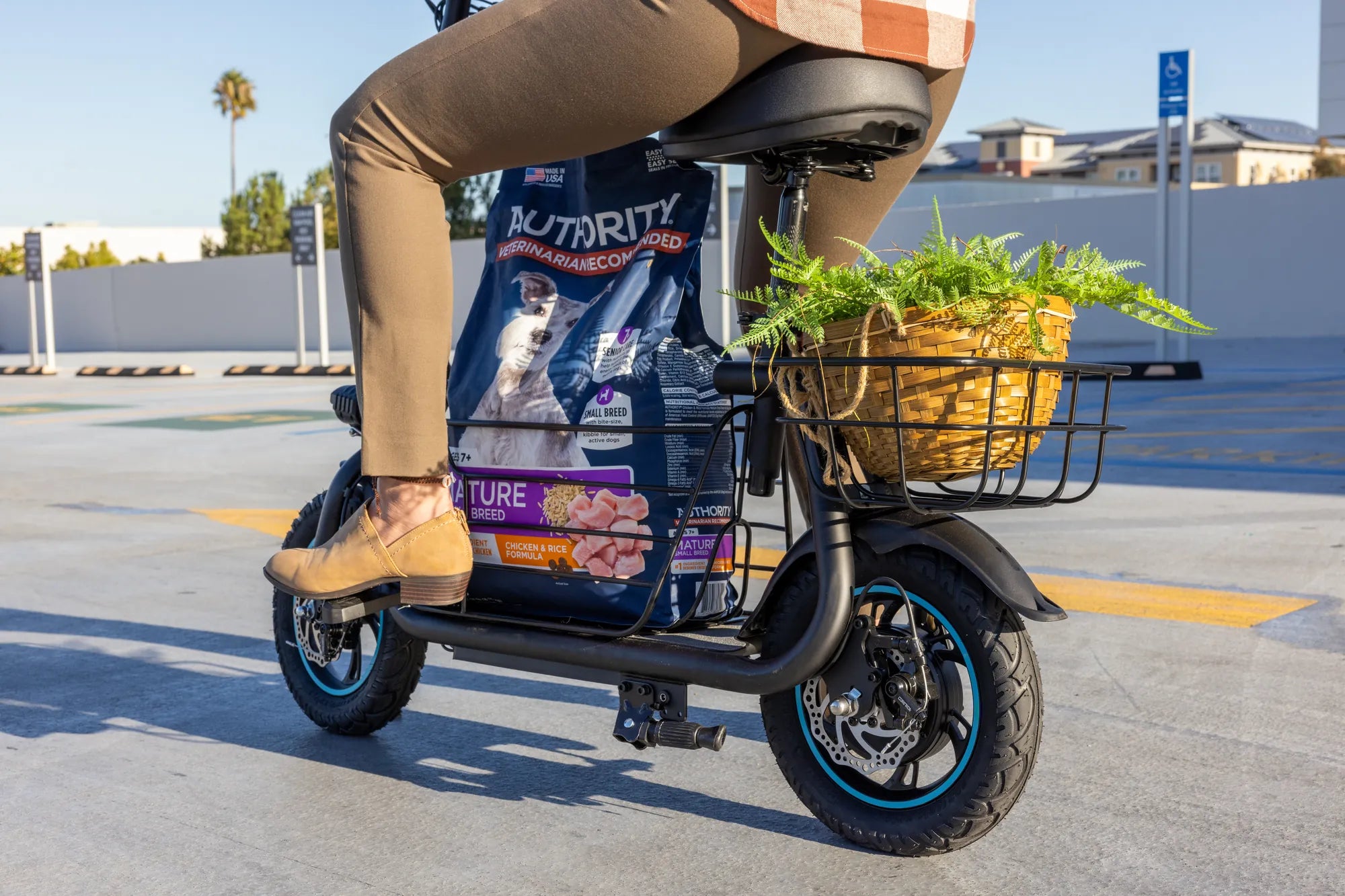
The segmentation is also creating new sub-categories, such as seated scooters for longer comfort, and compact e-bikes that blur the line between scooter and bicycle. This diversification enriches the market and provides more accessible entry points for different age groups and physical abilities, further cementing electric personal transport as a mainstream mobility solution.
Ultra-Portable Commuters vs. High-Performance Off-Road Machines
At opposite ends of the spectrum, two segments are experiencing particularly rapid growth. The ultra-portable commuter segment focuses on weight (often under 30 lbs) and a fast, compact fold. These models prioritize maneuverability in crowded spaces and easy carrying onto public transit. Their batteries are sized for shorter, frequent trips, and their motors provide adequate power for flat urban terrain.
Conversely, the high-performance segment embraces larger, more powerful designs. These scooters feature dual motors for immense torque and hill-climbing ability, large-capacity batteries for ranges exceeding 40 miles, and robust suspension systems with wide, knobby tires for light off-road or rough pavement use. They cater to enthusiasts and those using the scooter as a car replacement for longer suburban errands. This dichotomy highlights the market's maturity: there is no "best" scooter, only the best scooter for a specific task.
Trend 5: Consumer Expectations: Warranty and Support as Key Differentiators
As the electric scooter becomes a significant investment, often costing over a thousand dollars, consumer expectations for after-sales support have skyrocketed. In 2025, a strong warranty and accessible customer service are not just nice-to-haves; they are critical factors in brand trust and purchasing decisions. The market is separating brands that stand behind their products from those that disappear after the sale.
A comprehensive warranty acts as a signal of quality and durability. It demonstrates the manufacturer's confidence in its components, particularly the battery, motor, and frame. Consumers are increasingly educated and look for warranties that explicitly cover these high-cost items for a meaningful period, understanding that the true cost of ownership includes potential repairs.
Beyond the document itself, the accessibility and responsiveness of customer support are under scrutiny. Brands that offer multiple support channels (phone, email, chat), maintain readily available spare parts, and provide clear troubleshooting guides are building loyal customer bases. This trend reflects a shift from a disposable gadget mentality to a long-term ownership perspective, where serviceability is paramount.
Data Snapshot: What Riders Prioritize in 2025
Synthesizing data from industry reports and consumer surveys reveals a significant shift in purchasing priorities from just a few years ago. While top speed and low price were once primary drivers, the mature 2025 market shows a more nuanced and safety-conscious set of criteria. The table below contrasts these evolving priorities.
| Priority Ranking (2022-2023) | Priority Ranking (2025) | Key Driver of Change |
|---|---|---|
| 1. Top Speed / Power | 1. Battery Safety (UL Certification) | Safety regulations & consumer awareness |
| 2. Low Purchase Price | 2. Real-World Range | Use as primary vehicle; cost-per-mile analysis |
| 3. Maximum Range (theoretical) | 3. Build Quality / Water Resistance (IP Rating) | Demand for all-weather durability |
| 4. Design / Aesthetics | 4. Warranty Length & Coverage | Long-term ownership mindset |
| 5. Brand Recognition | 5. Ride Comfort (Suspension, Tires) | Daily commuting practicality |
This data underscores the central themes of the 2025 market: safety, durability, and long-term value have decisively overtaken raw performance and low cost as the hallmarks of a worthwhile investment.
Conclusion: Smarter, Safer, and More Specialized Rides Ahead
The trajectory for electric scooters in 2025 is clear: the market is maturing into a responsible, sophisticated, and user-centric industry. The trends point toward products that are not only more powerful or stylish but fundamentally smarter, safer, and built to last. The convergence of regulatory standards, advanced technology, and specialized design is creating a new generation of personal electric vehicles that are ready for serious, daily use.
For the prospective buyer, this evolution is empowering. By prioritizing verified safety certifications like UL, understanding the practical benefits of ratings like IPX5 for all-weather riding, and valuing comprehensive warranties and support, you can invest in a scooter that delivers reliable performance for years. The market's segmentation means you can find a model precisely tailored to your commute, whether it's a five-minute dash from the subway or a 10-mile suburban journey.
The future of urban mobility is electric, connected, and personal. By choosing a scooter that embodies the key trends of 2025—like those engineered into Gyroor's lineup with their UL-certified batteries, IPX5 water-resistant designs, and reliable 1-year warranty—you're not just buying a product; you're investing in a safer, more sustainable, and more efficient way to move. Explore how these trends are realized in a scooter built for the demands of modern commuting.
Ready to find your ideal electric scooter? Browse the full Gyroor collection at gyroorboard.com and discover models designed around the safety, durability, and smart features defining the 2025 market.
Frequently Asked Questions (FAQ)
Q: Is UL certification really that important for an electric scooter in 2025?
A: Absolutely. It has become the most important single indicator of safety. UL 2272/2849 certification is an independent verification that the battery and electrical system have passed rigorous hazard tests. It is increasingly referenced by local regulations, affects insurability, and is essential for peace of mind. It should be considered a mandatory requirement, not an optional extra.
Q: Can I safely ride an IPX5-rated scooter in heavy rain?
A: Yes, an IPX5 rating is specifically designed for this scenario. It means the scooter can withstand water jets from any direction, making it fully suitable for commuting in rain and through urban puddles. However, it is not rated for submersion (e.g., through flooded streets). Always exercise caution in wet conditions regarding braking distance and visibility.
Q: What specific things should I look for in a good electric scooter warranty?
A: Look for a warranty of at least one year that explicitly covers the three most expensive components: the battery, the motor, and the frame. Read the terms to understand what is excluded (e.g., tire wear). The best warranties are backed by a brand with accessible customer support and a clear process for claims, indicating they stand behind their product long-term.
Q: Are the high-performance, off-road-capable electric scooters legal to use on public roads?
A: Legality is highly localized and a critical consideration. Many high-performance models can exceed 30 mph, which is often above the legal limit for electric scooters in bike lanes or on sidewalks (typically 15-20 mph). It is the rider's responsibility to know and obey local laws, which may restrict where such powerful models can be operated. Always check your municipal and state regulations.
Q: How has the typical buyer's profile changed with these 2025 trends?
A: The buyer is now more likely to be a daily commuter seeking a car alternative, rather than a recreational user. They are better informed, prioritize total cost of ownership over just purchase price, and view the scooter as a practical tool. This shift is driving demand for the safety, durability, and warranty features that support reliable, long-term use.
Top Rated Electric Scooters 2025: The Future of Urban Mobility
Best Off Road Electric Scooters for Thrilling Adventures: The Ultimate Guide