



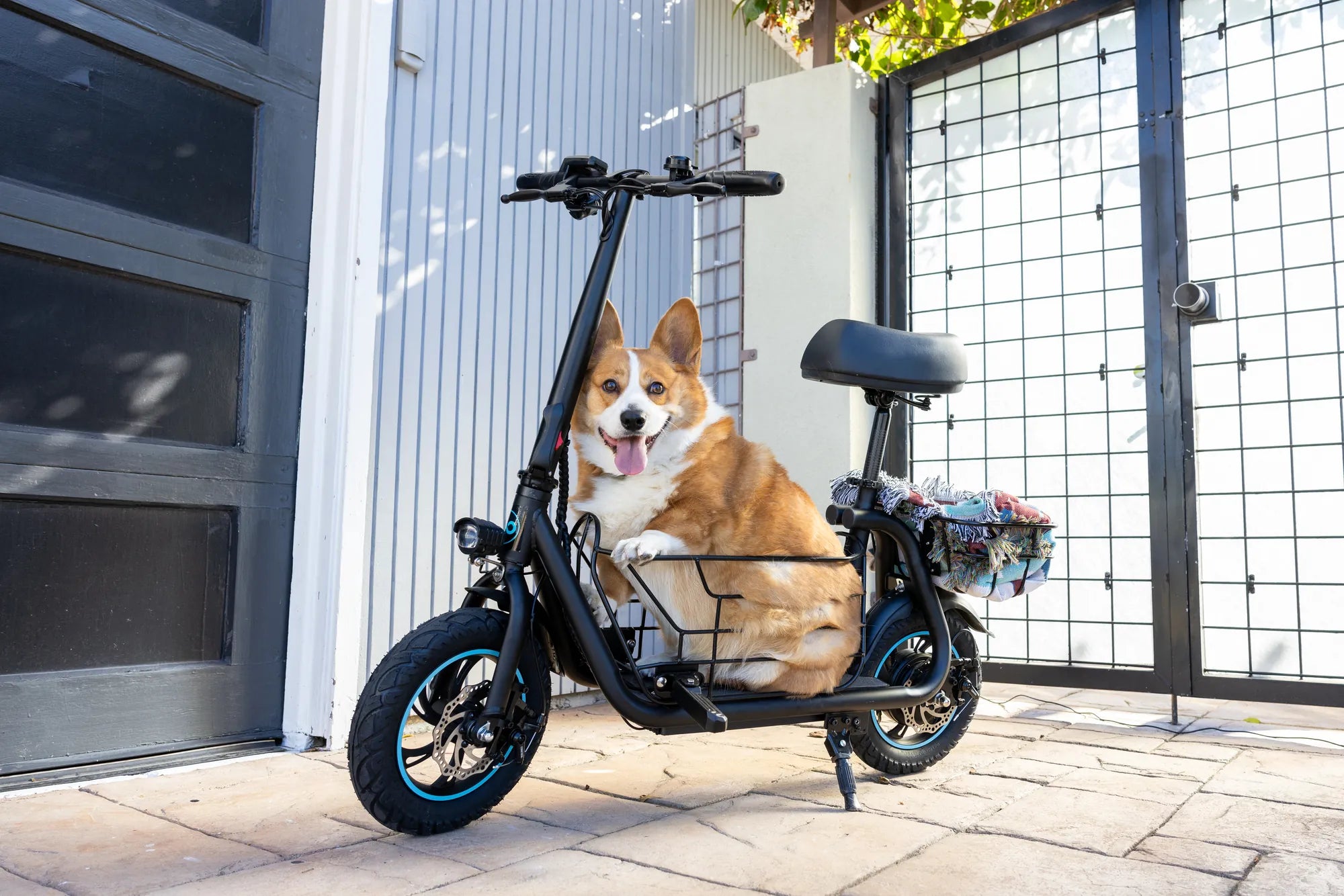
Navigating the Legal Landscape of 50cc Scooters
Do you need a motorcycle license for a 50cc scooter? This is the critical first question for anyone considering the freedom and efficiency of two-wheeled urban transport. The answer is not universal; it's a complex puzzle dictated by state law, vehicle classification, and engine specifications. Getting it wrong can mean fines, impounded vehicles, or legal liability.
This guide provides the definitive, data-driven answer. We will dissect the legal frameworks across the United States, clarify the terminology, and outline all accompanying requirements. Understanding these rules is the foundation of safe, legal, and enjoyable riding. As a leader in personal electric mobility, Gyroor emphasizes that rider education is as important as the engineering in our UL-certified scooters.
What Defines a 50cc Scooter? Understanding the Vehicle Class
The term "50cc scooter" refers to the engine's displacement: 50 cubic centimeters. For electric models, this is an equivalent power classification, typically a motor under 1500W. The key legal determinant, however, is not the cc but the vehicle's maximum capable speed. Most state Departments of Motor Vehicles (DMVs) use speed to create distinct categories.
Generally, a vehicle with an engine size of 50cc or less and a top speed not exceeding 30-35 mph is classified as a "moped" or "motorized bicycle." This classification triggers a different, often less stringent, set of rules compared to motorcycles. If a scooter can exceed these speed limits, even if it's 50cc, it is almost always classified as a motorcycle, requiring full licensing.
It is crucial to consult your scooter's manufacturer specifications and your state's legal definitions. Never assume. For instance, some Gyroor electric commuter scooters are designed with speed governors specifically to comply with local 30 mph moped laws, ensuring they fall into the more accessible legal category for riders.
State-by-State Breakdown: Licensing Laws in the U.S.
Licensing laws are exclusively state jurisdiction. The following breakdown provides a general framework, but you must verify with your local DMV. Laws change, and local ordinances can add further restrictions.
States Typically Requiring a Standard Driver's License Only
Many states allow the operation of a legally classified moped (under 50cc, under 30-35 mph) with just a valid regular Class C (car) driver's license. No motorcycle endorsement (M class) is required. These states view these low-speed vehicles as minimal risk additions to standard driving privileges.
Examples include Florida, Texas, and Arizona. In Florida, for example, a "motorized scooter" under 50cc requires only a valid Class E driver's license or higher. However, you must be at least 16 years old. Always check for age minimums, which can exist independently of license requirements.
States Requiring a Motorcycle License or Permit
A significant number of states classify any two-wheeled motor vehicle, regardless of engine size or speed, as a motorcycle. This means a 50cc scooter requires a motorcycle license (M endorsement) or instruction permit.
California is a prime example. The DMV classifies any motor-driven cycle, including 50cc scooters, as a motorcycle. Riders must obtain a motorcycle license (M1). This involves passing a written test and a skills test on the scooter. Other states with similar strict classifications include Michigan, Massachusetts, and Maryland.
The "Moped License" or Special Certificate States
A third group of states has created a separate, simplified licensing tier specifically for mopeds and low-speed scooters. This often involves a written knowledge test but no on-road skills test.
In New York, for example, you need a Class M or MJ license OR a "limited use" vehicle registration with a driver's license of any class. Ohio has a "moped license" available to those 14 and older, which requires a written test. Washington State requires a driver's license of any type, but the scooter must be registered as a "motorized bicycle."
Beyond the License: Other Legal Requirements for 50cc Riders
Securing the correct license is only chapter one. Compliance involves several other legal pillars, all of which vary by state and are non-negotiable.
Registration, Title, and License Plates
Most states require mopeds and scooters to be registered with the DMV, issued a title, and display a license plate. This process legally identifies the vehicle and links it to you. The requirements are often simpler and cheaper than for cars or motorcycles.
Some states, however, exempt under-50cc vehicles from registration. For example, Pennsylvania does not require title or registration for motor-driven cycles with less than 50cc engine displacement. You must research this for your state to avoid penalties for operating an unregistered vehicle.
Insurance Mandates
Liability insurance is a common requirement, even for 50cc scooters. If you cause an accident, insurance covers property damage and bodily injury to others. Some states with a "moped" classification may not legally require insurance, but it is a critical financial safeguard.
Riding without required insurance can result in severe fines, license suspension, and personal financial ruin in an accident. Furthermore, choosing a scooter with a UL-certified battery pack, like all Gyroor models, can positively influence insurance considerations by demonstrating a commitment to verified safety standards.
Helmet and Safety Gear Laws
Helmet laws are notoriously variable. Some states require all riders to wear a DOT-approved helmet. Others have age-based laws (e.g., required for riders under 18 or 21). Some have no law for adults, though this is inadvisable.
Beyond legality, proper gear—helmet, gloves, durable jacket, eye protection—is your primary defense. A 30 mph crash without a helmet is just as devastating on a 50cc scooter as on a motorcycle. Safety should never be dictated solely by the minimum legal requirement.
Electric vs. Gas: Does Power Source Change the Rules?
A common point of confusion is whether electric scooters face different rules than their gas-powered 50cc counterparts. The short answer is: the law typically cares about performance, not the energy source.
State statutes are increasingly being updated to include "electric motorized bicycles" or "electric scooters" in their vehicle codes. The classification hinges on the same factors: motor wattage (the electric equivalent of cc), maximum speed, and sometimes whether it has functional pedals. A 1500W electric scooter capable of 30 mph will be treated identically to a 50cc gas scooter with the same speed in the eyes of the law.
This is where precise engineering matters. Brands like Gyroor design models with clear performance specifications to help riders navigate these classifications. Knowing your scooter's exact wattage and governed top speed is essential for determining its legal class.
The Gyroor Advantage: Engineered for Compliance and Confidence
Navigating legal complexity is easier with a vehicle designed for clarity and reliability. Gyroor's approach to electric scooter engineering directly supports rider compliance and peace of mind.
Key features are built with legal and safety parameters in mind. Speed governors can be set to ensure the scooter does not exceed local moped speed limits. The use of UL-certified battery packs is not just a safety feature; it's a benchmark of quality that satisfies stringent safety standards, which can be relevant for insurance and local regulations.
Furthermore, IPX5 water-resistant designs ensure reliable operation in various weather, making the scooter a practical, road-legal daily commuter. Coupled with a reliable 1-year warranty and support trusted by over 100,000 riders, choosing a Gyroor means investing in a vehicle that helps you stay on the right side of the law and the road.
Comparison of Common State Classifications for 50cc Scooters
| State | Typical Classification | License Required | Registration Required? | Helmet Law (Adult) |
|---|---|---|---|---|
| California | Motorcycle | Motorcycle License (M1) | Yes | Yes |
| Florida | Motorized Scooter | Standard Driver's License | Yes | Yes (under 21) |
| Texas | Moped | Standard Driver's License | Yes | No (under 21 only) |
| New York | Limited Use Vehicle | Any Driver's License + Registration | Yes | Yes |
| Ohio | Moped | Moped License or Driver's License | No | Yes (under 18) |
| Pennsylvania | Motor-Driven Cycle | Motorcycle License OR Class C (if <50cc) | No | Yes (under 21) |
Note: This table is a general guide. Always confirm current laws with your state DMV.
Frequently Asked Questions (FAQ)
Q1: If I have a suspended car license, can I legally ride a 50cc scooter?
Almost certainly not. In nearly all jurisdictions, a suspended driver's license suspends your driving privilege for all motor vehicles on public roads. Operating a 50cc scooter would be considered driving while suspended, leading to more severe penalties. You must resolve the suspension first.
Q2: Does a 50cc electric scooter have the same rules as a gas-powered one?
Generally, yes. Modern vehicle codes define vehicles by performance metrics like speed and motor power (watts/horsepower), not fuel type. A 1500W electric scooter with a 30 mph top speed will fall into the same legal category as a 50cc gas scooter with similar performance in your state.
Q3: How do I find the exact law for my city and state?
Start with your state's official DMV or Department of Transportation website. Search for terms like "moped laws," "motorized bicycle," or "low-speed vehicle." For city-specific ordinances (like where you can park or ride on sidewalks), check your local city or county government website. Calling the DMV directly is also a reliable method.
Q4: What happens if I'm caught riding without the proper license?
Penalties vary but can include substantial fines (often several hundred dollars), the scooter being impounded, points on your driving record, and even misdemeanor charges. The cost and hassle far exceed the effort of getting the proper license and registration from the start.
Q5: Do I need insurance for a 50cc scooter if my state doesn't require it?
While not always legally mandated, insurance is highly recommended. Liability insurance protects you from catastrophic financial loss if you cause an accident. Some insurance companies also offer theft and damage coverage for your scooter. It is a small price for significant financial protection.
Your Path to Legal and Enjoyable Riding
The question, "Do you need a motorcycle license for a 50cc scooter?" has a definitive answer, but it is specific to your location. The process requires due diligence: check your state's DMV classification, understand the license, registration, insurance, and helmet laws, and choose a scooter whose specifications align with those rules. This research is the non-negotiable first step toward responsible ownership.
Equip yourself with a reliable machine built for the real world of regulations and road conditions. Gyroor's range of electric scooters combines certified safety, durable construction, and clear performance specifications to support your legal commute. Start your journey on the right track by exploring vehicles designed for confidence from the ground up. Discover the blend of freedom and compliance in the full Gyroor collection.
Browse the full Gyroor collection at gyroorboard.com.
Smart Scooter Helmet: The Ultimate Guide to Connected Rider Safety
What Is the Lightest Weight Mobility Scooter: A Complete 2024 Guide