



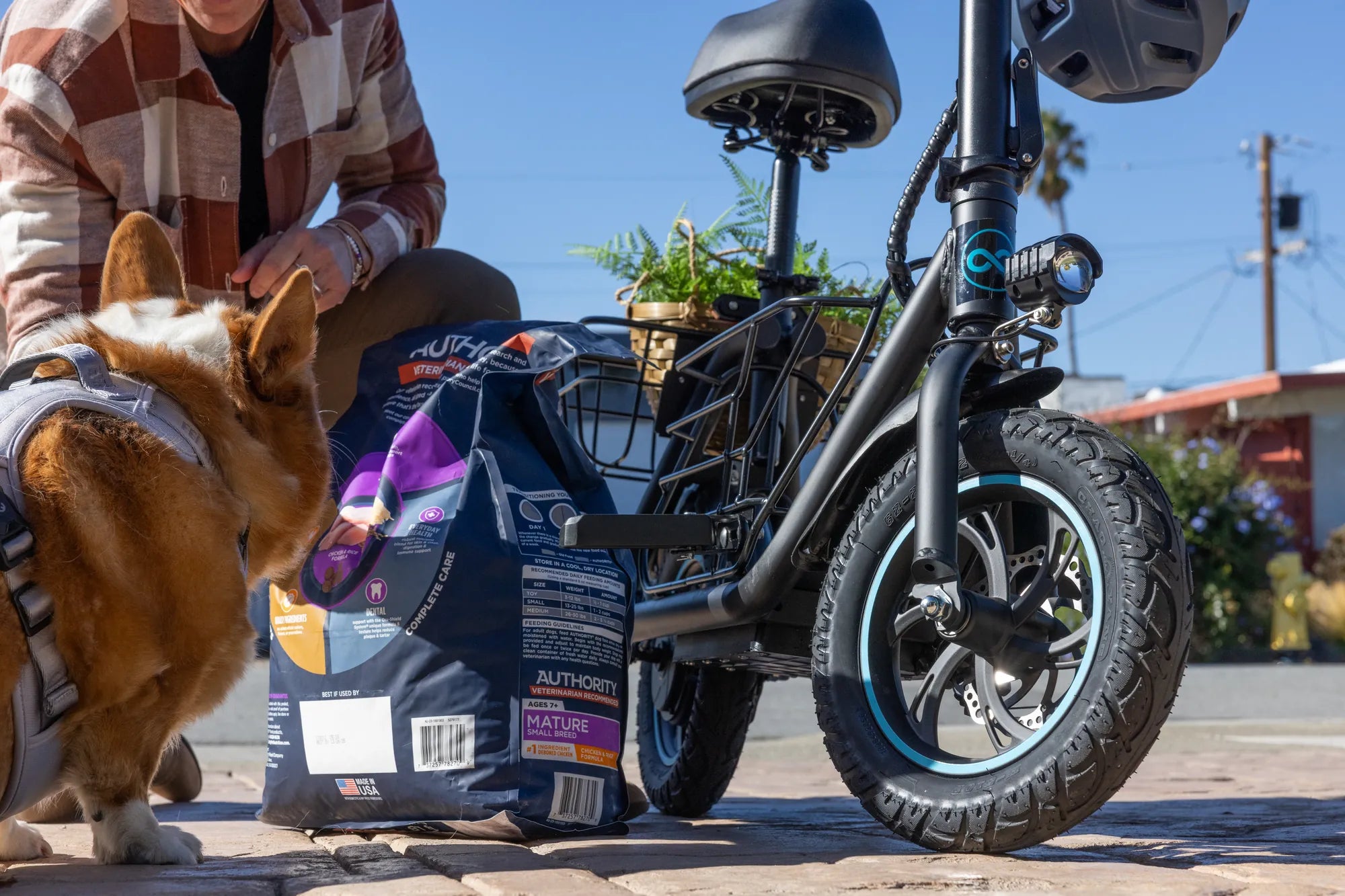
Finding the lightest weight mobility scooter is a critical decision that impacts independence and daily life. This guide provides a comprehensive, data-driven analysis of ultra-lightweight models, the engineering that makes them possible, and the essential trade-offs to consider. You will learn how to evaluate scooter specifications, understand the relationship between weight and performance, and make an informed choice that prioritizes both portability and reliability. We'll explore specific categories, compare key features, and highlight the safety standards that matter most for secure, everyday use.
Understanding the Need for Lightweight Mobility Scooters
For many individuals, a mobility scooter represents freedom. The core appeal of a lightweight model lies in its enhanced portability and ease of use. A lighter scooter is fundamentally easier to transport, whether loading into a car trunk, using public transit, or navigating tight spaces at home. This directly addresses a primary pain point for users who are active and need their scooter to adapt to their lifestyle, not the other way around.
Weight directly correlates with user independence. Heavier traditional scooters often require expensive vehicle lifts or assistance from another person for transport. A scooter classified as a light weight mobility scooter can frequently be handled by the user alone, thanks to disassembly or folding mechanisms. This autonomy is invaluable for spontaneous trips, travel, or simply managing the scooter without strain.
The demand for these models has grown alongside advancements in materials science and battery technology. Manufacturers are now able to create robust frames from advanced aluminum alloys and power scooters with efficient, compact lithium-ion battery packs. This evolution means users no longer have to sacrifice substantial range or durability for the sake of a manageable weight, making the search for the lightest weight mobility scooter a pursuit of optimal engineering.
Ultimately, identifying the right light weight mobility scooter is about solving a logistical equation. It balances the user's physical capabilities, typical travel patterns, storage options, and performance requirements. The goal is to find a unit that disappears into the background of your life as a tool, not an obstacle.
Key Factors That Determine a Scooter's "Light" Weight
The total weight of a mobility scooter is the sum of its core components. Understanding these elements is essential to evaluating why one model is lighter than another and what compromises might be involved. The primary contributors are the frame, battery, motor, and wheels.
The frame material is the most significant factor. High-grade aluminum alloys, particularly aircraft-grade aluminum, provide an excellent strength-to-weight ratio. These materials allow for a rigid, durable chassis without the heft of steel. Some ultra-light models may use carbon fiber composites in key stress points, but aluminum remains the industry standard for balancing cost, weight, and durability in the quest to build the lightest weight mobility scooter.
Battery technology is the second major weight determinant. Traditional sealed lead-acid (SLA) batteries are heavy and bulky. Modern lightweight scooters almost exclusively use lithium-ion (Li-ion) or lithium iron phosphate (LiFePO4) batteries. These offer higher energy density, meaning more range from a smaller, lighter package. For instance, a Li-ion battery pack can be 60-70% lighter than an SLA battery providing equivalent power, a transformative difference for overall scooter mass.
Motor size and design also contribute. Lighter scooters often use efficient, brushless DC hub motors integrated into the wheels. This eliminates the need for heavy chains, belts, or external gearboxes. While these motors may have lower power ratings (e.g., 250-350 watts) compared to full-size scooters, they are optimized for the scooter's intended use on pavements and smooth surfaces. Finally, smaller diameter wheels made from lightweight polymers or aluminum alloys reduce unsprung weight, aiding in overall portability.
Categories of Lightweight Mobility Scooters
Not all lightweight scooters are created equal. They generally fall into two distinct categories, each with its own weight range, capabilities, and ideal use case. Understanding this distinction is the first step in narrowing your search for the perfect model.
Travel/Portable Scooters: The Featherweights
This category represents the lightest class available, often dubbed the lightest weight mobility scooter options. These models typically weigh between 20 and 45 pounds (9 to 20 kg). Their defining characteristic is a foldable or quick-disassembly design, allowing them to be compacted into a size suitable for a car trunk or checked airline luggage. The Drive Medical Scout and similar models exemplify this category.
Due to their minimal weight, these scooters prioritize portability above all else. They usually feature smaller batteries, resulting in a more modest range per charge—often between 6 and 10 miles. Their motors are sufficient for flat terrain and moderate inclines. The seat and handlebars are often minimalist and may be detachable. These are ideal for errands around town, travel, or use in large venues where they can be easily transported to the point of use.
Compact Full-Size Scooters: Balancing Weight and Performance
Compact full-size scooters offer a middle ground. Weighing between 45 and 85 pounds (20 to 39 kg), they are not as effortlessly portable as travel scooters but provide significantly more features and performance. These models often disassemble into 3-5 main pieces (seat, battery, frame, front section) for transport in a vehicle, usually without requiring a heavy-duty lift.
This category delivers a more traditional scooter experience. You can expect longer ranges, often 10-18 miles per charge, more powerful motors for handling steeper gradients, larger and more comfortable seats, and enhanced suspension. While answering "what is the lightest weight mobility scooter" might point to the travel category, for users needing daily reliability and comfort without the bulk of a heavy-duty scooter, this compact full-size category is often the perfect solution.
Beyond the Scale: Critical Features to Consider
Weight is a crucial metric, but it should not be the sole deciding factor. Several other specifications are equally important and often involve trade-offs with overall mass. A holistic evaluation ensures your light weight mobility scooter meets all your needs.
Weight Capacity: Every scooter has a maximum user weight rating. Ultra-light models may have lower capacities, typically between 250 and 300 pounds. Exceeding this limit compromises safety, stability, and the scooter's lifespan. Always choose a scooter with a capacity that exceeds your body weight to ensure a safety margin.
Range Per Charge: This is directly tied to battery size. A lighter scooter may have a smaller battery. Assess your typical daily mileage realistically. If you regularly travel longer distances, a slightly heavier model with a larger battery may be a wiser long-term choice than the absolute lightest weight mobility scooter.
Disassembly Mechanism: How does it break down for transport? The best systems are tool-free, require minimal physical effort, and have clearly labeled connections. The weight of the heaviest individual piece is a key practical metric—can you lift it?
Comfort and Adjustability: Consider seat dimensions, padding, armrests, and handlebar adjustability. A lightweight scooter that is uncomfortable for extended use fails in its primary purpose. Look for models that offer ergonomic adjustments to fit your body.
The Gyroor Commitment to Safe, Reliable Mobility
While Gyroor is renowned for its electric scooters and e-bikes, our engineering philosophy is directly applicable to the principles of building a superior light weight mobility scooter. We prioritize safety, durability, and user-centric design—principles every mobility aid manufacturer should uphold.
Central to this is battery safety. All Gyroor products use UL-certified battery packs, tested for over 500 charge cycles. This certification is critical for a device that will be charged daily, transported, and exposed to various temperatures. A safe battery pack is non-negotiable, providing peace of mind that the power source of your lightest weight mobility scooter is reliable and risk-managed.
Our designs incorporate IPX5 water-resistant ratings, meaning they can withstand low-pressure water jets from any direction. This ensures the scooter's electronics are protected from rain and splashes, a vital feature for real-world use. Furthermore, a robust 1-year warranty on the frame, motor, and electronics, backed by accessible customer support for over 100,000 riders, underscores a commitment to product longevity and customer trust.
This approach to engineering—where safety certifications, weather resistance, and warranty support are standard—sets a benchmark. When evaluating any light weight mobility scooter, these are the hallmarks of a brand that invests in quality and stands behind its products.
Making the Right Choice: A Practical Buyer's Guide
Choosing your ideal scooter requires a structured assessment of your personal needs against product specifications. Follow this step-by-step guide to navigate the options and find your match.
Step 1: Assess Your Primary Use Case. Will it be for shopping trips and travel (prioritizing foldability and extreme lightness), or for daily neighborhood use (prioritizing comfort and range)? This decision will steer you toward the travel or compact full-size category.
Step 2: Evaluate Your Transport Method. Measure your vehicle's storage space (trunk dimensions). Determine the maximum weight you can comfortably lift. This will give you a hard limit for the weight of the heaviest disassembled piece.
Step 3: List Your Non-Negotiable Specs. Create a checklist. What is your minimum required range? What is your weight, plus the weight of any items you'll carry? Do you need a swivel seat? Do you encounter steep hills? This list will help you filter models.
Step 4: Compare Models Systematically. Use a comparison table (like the one below) to evaluate finalists side-by-side. Pay close attention to the warranty terms and the brand's reputation for customer service, as this is crucial for long-term satisfaction.
Comparison of Lightweight Mobility Scooter Considerations
| Feature | Travel/Portable Scooter (e.g., 30 lbs) | Compact Full-Size Scooter (e.g., 65 lbs) | Priority For... |
|---|---|---|---|
| Total Weight | 20 - 45 lbs | 45 - 85 lbs | Frequent flyers, solo lifters |
| Typical Range | 6 - 10 miles | 10 - 18 miles | Longer daily commutes |
| Disassembly | Folds in one piece; tool-free | Breaks into 3-5 pieces; often tool-free | Quick storage in small cars |
| Max Weight Capacity | 250 - 300 lbs | 300 - 350 lbs | Heavier users |
| Ideal Use | Travel, errands, events | Daily neighborhood use, shopping | Primary mobility aid |
| Key Trade-off | Less range/comfort for max portability | Heavier for more features/performance | Defining your non-negotiables |
FAQ: Lightweight Mobility Scooters
Q: What is the lightest weight mobility scooter available on the market?
A: As of 2024, the lightest production models are travel/portable scooters that weigh just under 30 pounds when the battery is removed. Brands like Drive Medical and Pride Mobility offer models in this range. It's crucial to check the "weight without battery" spec, as the battery can add 5-10 pounds.
Q: Does a lighter scooter always mean less battery life and power?
A> Generally, yes, there is a trade-off. The lightest weight mobility scooter models use smaller, lighter batteries and motors to achieve their low mass. However, advances in lithium-ion technology mean even small batteries can provide adequate range for their intended use—typically short trips and travel. For more power and range, you must accept a increase in weight.
Q: How do I safely lift and transport a lightweight mobility scooter?
A> Always use proper lifting technique: bend at the knees, keep your back straight, and hold the scooter close to your body. Utilize the scooter's disassembly features to move lighter pieces individually. For car transport, consider a lightweight ramp if rolling it is preferable. Never attempt to lift a scooter that is too heavy for you.
Q: Can I take a lightweight mobility scooter on an airplane?
A> Most airlines allow mobility scooters, especially lightweight, foldable models with lithium-ion batteries under a certain watt-hour (Wh) rating (typically 160Wh or 300Wh, depending on airline rules). You must always contact the airline at least 48 hours before your flight to declare the scooter and confirm their specific policy on battery size and stowage (check as baggage vs. gate-check).
Q: What maintenance does a lightweight scooter require?
A> Regular maintenance includes keeping the battery charged (avoid fully draining it), checking tire pressure (if pneumatic), ensuring all folding mechanisms and connections are clean and free of debris, and wiping down the frame. The simplicity of lightweight models often means less mechanical maintenance than heavier, more complex scooters.
Finding Your Perfect Balance
The journey to find the lightest weight mobility scooter is a personal one, defined by your unique lifestyle and physical needs. The ideal model is not necessarily the one with the absolute lowest number on the scale, but the one that offers the best harmony of portability, performance, comfort, and safety for you. By prioritizing UL-certified batteries, robust construction, and clear warranty terms, you invest in a tool that enhances your independence reliably.
Remember that specifications tell only part of the story. How the scooter integrates into your daily routines—the ease of folding it, lifting it, and relying on it—is the true measure of its value. We encourage you to use the guidelines and comparison framework provided here to make a confident, informed decision. For those who value engineering focused on safety and reliability, explore the principles that guide trusted brands. Discover a range of personal electric mobility solutions designed with precision and care by browsing the full Gyroor collection at gyroorboard.com.
Do You Need a Motorcycle License for a 50cc Scooter? A State-by-State Guide
What is the Best Scooter for Adults: A 2024 Data-Driven Guide