



Introduction: Orlando's Evolving Urban Mobility Landscape
Orlando, a global hub for tourism and a rapidly growing metropolitan area, faces unique transportation challenges. Navigating between world-famous theme parks, bustling downtown districts, and sprawling suburban neighborhoods requires efficient, flexible options. This brings us to the pivotal question: Does Orlando have electric scooters? The answer is a definitive yes, but the landscape is nuanced.
Electric scooters have become a visible part of Orlando's urban fabric, offering both residents and visitors a convenient way to cover short to medium distances. The city's approach has evolved through pilot programs and regulatory frameworks, shaping a distinct scooter scene. This article provides a thorough exploration of Orlando's shared scooter ecosystem and makes a compelling case for private ownership as a superior solution for regular mobility needs.
We will dissect the current operators, rules, costs, and service zones. Furthermore, we will analyze the specific demands of Orlando's environment—from its flat yet bridge-dotted terrain to its infamous afternoon thunderstorms—and how they dictate the ideal scooter specifications. Whether you're a tourist planning your visit or a local considering a daily commute alternative, this guide delivers the essential insights for navigating Orlando on two wheels.
The State of Shared Electric Scooters in Orlando
Orlando officially launched a dockless electric scooter and bicycle share program in 2019. After initial pilot phases and evaluations, the city has established a regulated system with permitted operators. The program is managed by the City of Orlando's Transportation Department, which sets caps on the number of devices, defines operational zones, and enforces safety and parking rules.
The presence of shared scooters is most concentrated in the city's core. You'll find clusters in Downtown Orlando, the Thornton Park and College Park neighborhoods, and along the bustling corridors of International Drive and the Orlando International Drive area. Their primary function is to serve as a first-mile/last-mile solution, connecting people to public transit stops, entertainment venues, and employment centers.
Authorized Operators and Service Zones
As of the latest regulations, the City of Orlando has authorized specific companies to operate within its jurisdiction. The primary operators include Lime and Bird. These companies must adhere to strict permitting requirements, which include data sharing with the city, maintaining insurance, and ensuring proper fleet maintenance and redistribution.
The service area, or "geo-fence," is carefully mapped. Riders can typically operate scooters within a zone encompassing downtown, surrounding urban neighborhoods, and major tourist districts. Attempting to ride outside this zone will trigger warnings and may slow or disable the scooter. Notably, riding on sidewalks in the downtown core is prohibited; scooters must be used in the street or in designated bike lanes.
Parking is another regulated aspect. Riders are required to end their trips at designated "corrals" or in lawful parking areas that do not block sidewalks, ramps, building entrances, or access to public transit. Failure to park properly can result in fines levied by the operator on the rider.
How to Ride: Rules, Costs, and Safety
To use a shared scooter, you must download the respective operator's app (Lime or Bird), create an account, and link a payment method. The process involves using the app's map to locate an available scooter, scanning its QR code to unlock it, and beginning your ride.
Costs typically involve a fixed unlock fee (usually around $1) plus a per-minute rate (ranging from $0.30 to $0.45 per minute). A short 15-minute trip can therefore cost between $5.50 and $7.75. For tourists making multiple trips per day, these costs accumulate quickly.
Florida state law requires riders under 16 to wear a helmet, but it is strongly recommended for all ages. Orlando city ordinances mandate that scooter riders follow all traffic laws applicable to bicycles, including yielding to pedestrians and using lights at night. Given the city's high traffic volume in tourist areas, defensive riding is paramount.
Owning Your Ride: The Case for Private E-Scooters in Orlando
While shared scooters offer spontaneity, owning a personal electric scooter presents a more reliable, cost-effective, and tailored solution for anyone living in or frequently visiting Orlando. A private scooter is always available, maintained to your standards, and designed for consistent performance.
This is particularly valuable for daily commuters, students at institutions like UCF or Valencia College, and residents of downtown-adjacent areas. Ownership eliminates the hunt for a charged scooter, the surprise of surge pricing, and the uncertainty of vehicle condition. You have complete control over your schedule and route.
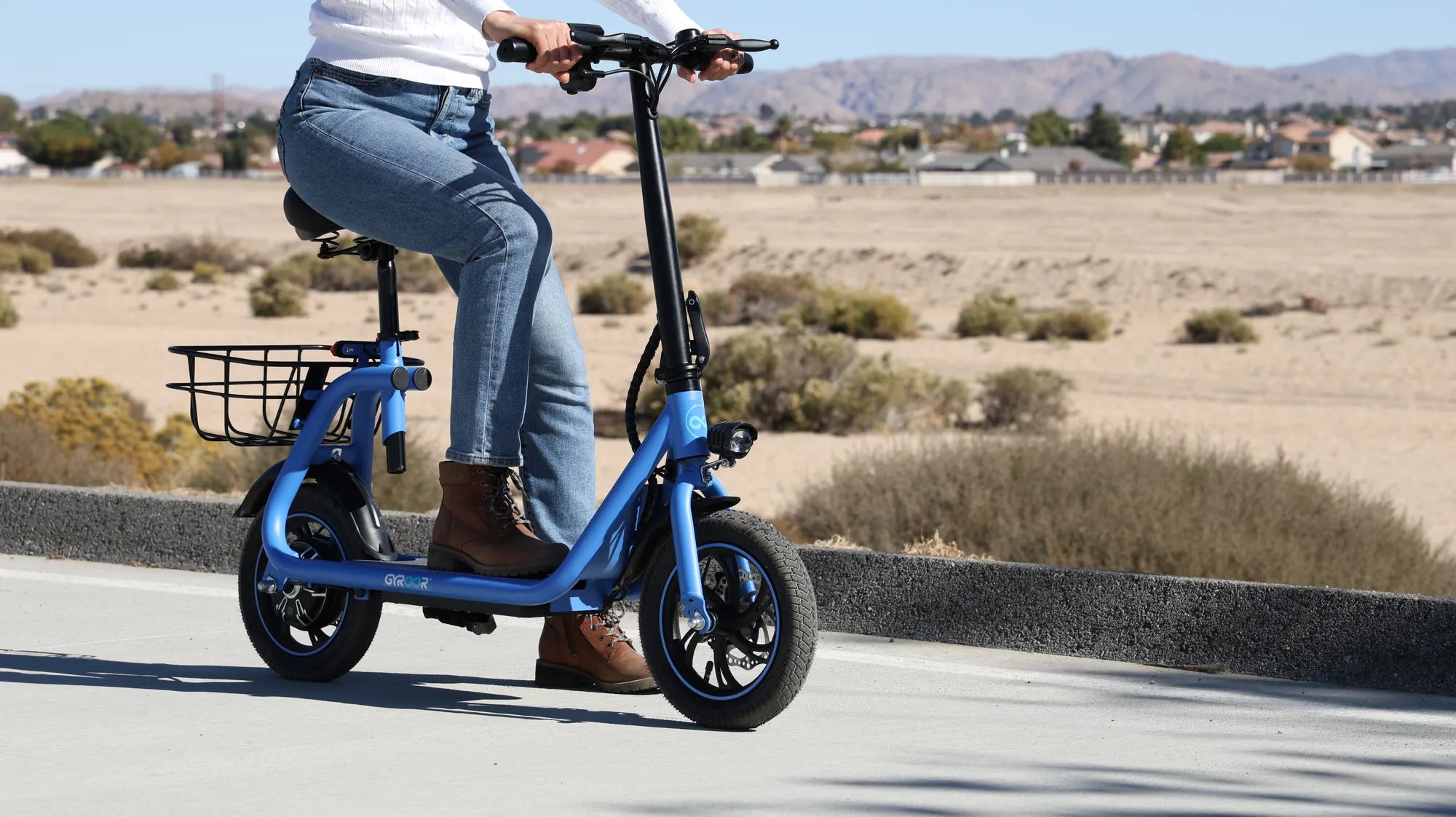
Furthermore, a personal scooter can be equipped with accessories like baskets, phone mounts, and more powerful lights—enhancements not found on shared fleet models. For navigating Orlando's specific environment, the ability to choose a scooter with the right specifications is a game-changer.
Navigating Orlando's Terrain with the Right Scooter
Orlando's terrain, while generally flat, presents distinct challenges. Key considerations for a scooter include:
- Motor Power & Range: Overpasses and bridges (common on trails and near I-4) require sustained power. A motor of at least 350W is advisable, with 500W+ providing confident climbing. Range is critical; a minimum of 15-20 miles of real-world range ensures you can complete round trips without range anxiety.
- Suspension & Tires: Not all pavement is smooth. Pneumatic (air-filled) tires or quality solid tires coupled with a spring or hydraulic suspension system absorb shocks from brick streets, pavement cracks, and construction zones, providing a safer, more comfortable ride.
- Water Resistance: Florida's sudden, heavy downpours are a fact of life. An IPX5 or higher water resistance rating is non-negotiable for a scooter used regularly in Orlando. This protects the electrical components from rain and road spray, ensuring reliability and safety.
Why Gyroor is Engineered for Orlando's Climate and Commutes
As a leading electric scooter and e-bike brand trusted by over 100,000 riders across North America and Europe, Gyroor designs its products with real-world conditions in mind. For Orlando riders, specific engineering choices make Gyroor scooters a standout choice.
First, all Gyroor models use UL-certified battery packs tested for 500+ charge cycles. In Orlando's humid, often hot climate, battery safety and longevity are paramount. UL certification is a rigorous standard that ensures protection against overheating and other failures. This is a critical feature not always present in budget or shared fleet scooters.
Second, the IPX5 water-resistant design is a core feature across their lineup. This means the scooter can withstand water jets from any direction, making it perfectly suited for an unexpected summer rainstorm. Coupled with durable construction, it ensures your investment is protected from the elements.
Finally, Gyroor backs its products with a reliable 1-year comprehensive warranty and accessible customer support. This peace of mind is invaluable, knowing that your primary mode of transportation is supported by a company with a proven track record and a 4.5/5 average customer rating.
Gyroor Scooters vs. Shared Scooters: A Data-Driven Comparison for Orlando Riders
To make an informed decision, a direct comparison between the shared scooter experience and owning a high-quality private scooter like those from Gyroor is essential. The following table breaks down the key differentiators.
| Feature | Shared Scooters (Lime/Bird) | Private Gyroor Scooter |
|---|---|---|
| Availability | Dependent on location & battery; often scarce in peak times | Always available at your doorstep; no hunting required |
| Cost Structure | Unlock fee + per-minute rate; costs escalate with use | One-time purchase; minimal ongoing electricity cost |
| Vehicle Condition | Highly variable; often worn, with poor brakes/tires | Consistently maintained by you; optimal performance |
| Battery Life | Often partially charged; limits trip distance | Fully charged for your planned range; long-lasting UL-certified packs |
| Weather Readiness | Not designed for heavy rain; operation may cease | IPX5 water-resistant; built for all-weather reliability |
| Customization | None; basic model only | Accessories for storage, comfort, and safety |
| Safety Standards | Meets basic permits; heavy public use | Higher build quality; UL-certified battery; personalized maintenance |
Cost Analysis: Long-Term Savings of Ownership
The financial argument for ownership is compelling. Consider a resident who uses a scooter for a 3-mile round-trip commute, 5 days a week, plus occasional weekend errands—totaling about 6 rides per week at an average of 15 minutes each.
Using a shared scooter at a conservative estimate of $1 unlock + $0.35/minute, each ride costs $6.25. Weekly cost: $37.50. Monthly cost: ~$150. Over a year, that's approximately $1,800 spent on transportation with no asset to show for it.
A robust Gyroor commuter scooter, with a one-time investment typically ranging from $600 to $1,200, pays for itself in as little as 4 to 8 months. After that, the "cost per ride" plummets to mere cents for electricity. For frequent users, the long-term savings are substantial and undeniable.
Convenience and Reliability Face-Off
Convenience isn't just about access; it's about predictable, stress-free travel. With a shared scooter, your trip begins with uncertainty: Is there a scooter nearby? Is its battery above 30%? Will it have mechanical issues? This pre-trip friction is eliminated with a private scooter.
Reliability is defined by performance consistency. A Gyroor scooter offers the same responsive acceleration, smooth braking, and comfortable ride every single day. You develop a familiarity with your vehicle that enhances safety. In contrast, shared scooters suffer from public wear-and-tear, leading to unpredictable handling, which can be a safety hazard, especially for less experienced riders.
Essential Safety and Legal Guidelines for Orlando Scooter Riders
Adhering to local laws and prioritizing safety is crucial for all riders, whether on a shared or private scooter.
- Helmets: Required by law for riders under 16. All riders should wear a helmet—it's the single most effective safety gear.
- Where to Ride: In the Downtown Orlando Core District, riding on sidewalks is illegal. Ride in the street, preferably in a bike lane, and obey all traffic signals. On other streets without bike lanes, ride on the right side of the road, with traffic.
- Parking: Never block sidewalks, ADA ramps, building entrances, or bus stops. Use designated scooter corrals where available. For private scooters, use a sturdy lock when parking in public.
- Visibility: Use front and rear lights at dawn, dusk, and night. Wear reflective clothing or add reflective strips to your scooter or backpack.
- Impaired Riding: Do not operate a scooter under the influence of alcohol or drugs.
The Future of Electric Scooters in Orlando: Trends and Predictions
Orlando's scooter scene is poised for continued evolution. We can anticipate several trends:
First, the city may expand permitted service zones to include more residential neighborhoods and activity centers, integrating scooters more deeply into the transit network. Second, infrastructure improvements, such as the continued expansion of the Orlando Urban Trail network and more protected bike lanes, will make scooter riding safer and more appealing.
Technologically, advancements in battery energy density will extend ranges for both shared and private models. For private owners, this means scooters capable of 40+ miles on a charge could become mainstream, making them viable for even more commuters. Smart features like enhanced theft recovery and connectivity may also become standard.
The city's focus will likely remain on balancing innovation with safety, ensuring that micro-mobility contributes positively to Orlando's goals of reducing congestion and offering sustainable transportation choices.
Frequently Asked Questions (FAQ)
Q1: Are electric scooters legal to ride on Orlando sidewalks?
A: It depends on the location. In the designated Downtown Orlando Core District, riding on sidewalks is prohibited by city ordinance. Elsewhere, it may be permitted, but riders must always yield the right-of-way to pedestrians and exercise extreme caution. It is generally safer to ride in the street or bike lane where possible.
Q2: What is the best electric scooter for Orlando's weather?
A: The best scooter for Orlando will have a minimum IPX5 water resistance rating to handle rain, a durable deck and frame, and a UL-certified battery for safety in heat and humidity. Models with good suspension and pneumatic tires also handle varied pavement well. Brands like Gyroor engineer their scooters with these specific environmental challenges in mind.
Q3: Can I take my personal electric scooter on Orlando's public transportation (LYNX buses, SunRail)?
A: Policies vary. Generally, foldable electric scooters are allowed on LYNX buses if they do not block aisles or doors, at the driver's discretion. SunRail's bike policy may extend to scooters, but it's best to check their latest rules directly, as policies for e-scooters are still evolving across transit agencies.
Q4: How do I find and use the designated scooter parking corrals in Orlando?
A: Designated corrals are typically marked with paint or signage on the ground in high-traffic areas like downtown. The Lime and Bird apps will also show approved parking zones on their maps. You must end your shared scooter trip within these zones to avoid incurring a fee. For private scooters, you can park at these corrals and use a lock.
Q5: Is it worth buying an electric scooter if I'm just visiting Orlando for a week?
A: For a one-week tourist visit, relying on shared scooters for spontaneous trips is likely more practical than purchasing. However, if you plan extensive, daily exploration (e.g., covering International Drive, Disney Springs, and downtown), doing a quick cost comparison is wise. If your planned usage exceeds the break-even point (often just 5-6 days of heavy use), renting a high-quality scooter from a local vendor or considering a purchase could be a financially sound and more reliable option.
Conclusion: Your Key to Unlocking Orlando on Two Wheels
So, does Orlando have electric scooters? Absolutely. The city hosts a regulated shared scooter program and a growing community of private scooter owners. Shared scooters from operators like Lime and Bird serve a valuable purpose for spontaneous, short-distance trips within designated urban and tourist zones.
However, for anyone seeking reliable daily transportation, predictable costs, and a vehicle tailored to Orlando's climate, investing in a private electric scooter is the clear superior choice. The long-term savings, coupled with the convenience of guaranteed availability and the safety of a well-maintained personal vehicle, make ownership a smart decision.
When selecting your scooter, prioritize features that match Orlando's environment: water resistance, robust battery safety, and sufficient power and range. For riders who value these engineering principles, backed by strong customer support, exploring the range of durable, high-performance options is the logical next step. Discover scooters built for real-world commutes and engineered for reliability at the Gyroor collection.
Where Can You Use Electric Scooters? A Complete Guide to Riding Legally and Safely
Cheap Electric Scooters for Kids Quotes: Smart Value for Young Riders