



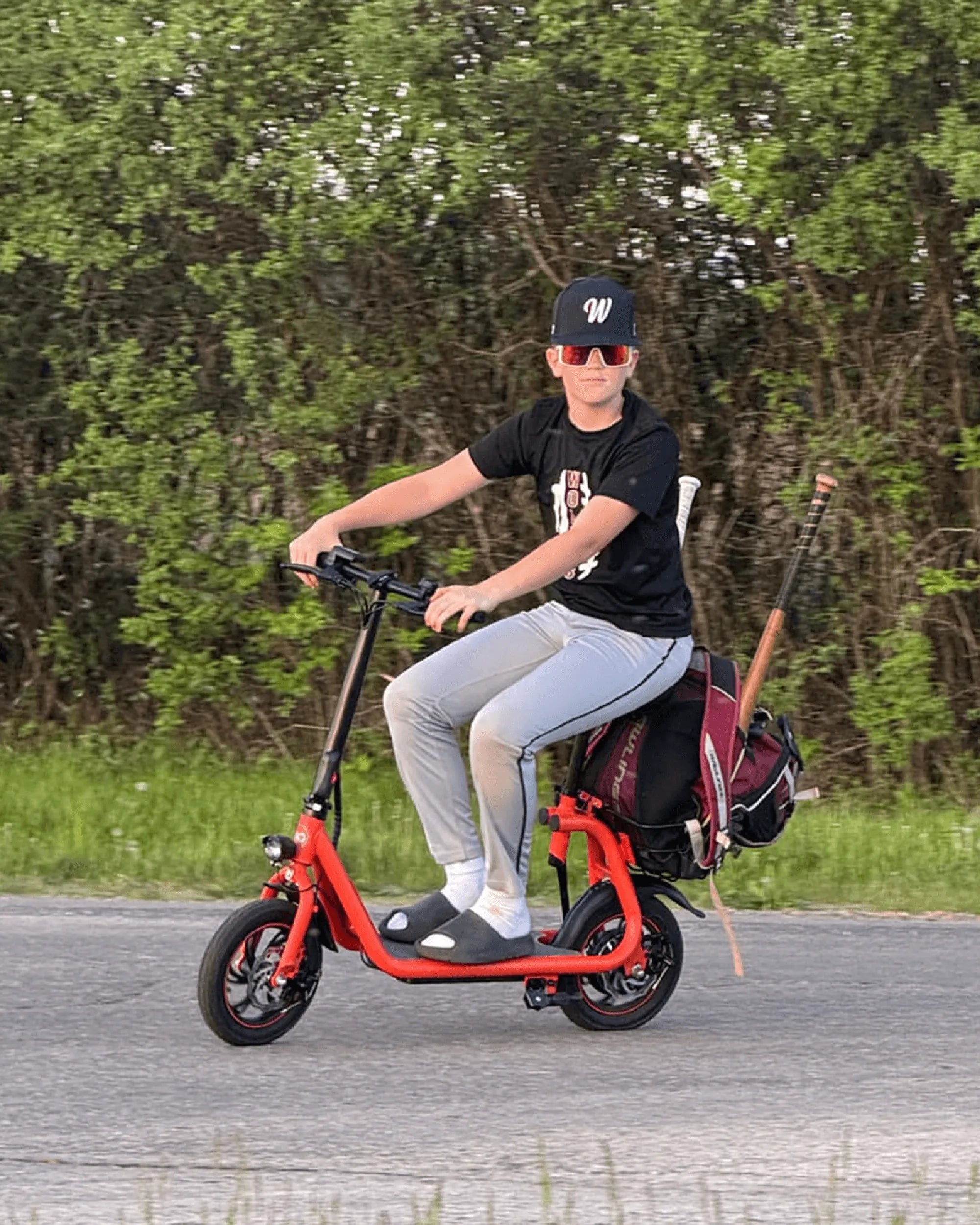
Introduction: The World of Kids' Electric Motor Scooters
Electric motor scooters for kids have transformed from niche toys into a mainstream avenue for outdoor play, combining the thrill of personal mobility with developmental benefits. This guide serves as your definitive resource for navigating this exciting category, ensuring you can make an informed decision that prioritizes exhilarating fun and uncompromising safety. We will explore the key advantages, dissect critical safety features, and provide a practical framework for selecting the perfect model. As a leader in youth mobility, Gyroor exemplifies the commitment to engineering products where advanced safety protocols, like UL-certified batteries and robust construction, form the foundation of every ride.
Why Choose an Electric Scooter for Your Child?
Modern electric motor scooters for kids offer more than just a quick ride around the block. They are powerful tools for promoting healthy, active lifestyles. In an age dominated by screens, these scooters provide a compelling reason for children to spend time outdoors, engaging their bodies and minds in dynamic play.
Riding an electric scooter actively develops a child's coordination, balance, and spatial awareness. The act of accelerating, steering, and braking requires real-time decision-making and fine motor control, skills that translate to other physical activities. Furthermore, mastering a personal electric vehicle fosters a significant sense of independence and responsibility.
Compared to traditional kick scooters or bicycles, electric models reduce the physical barrier to entry, allowing children to cover more ground and experience the joy of mobility with less initial fatigue. This can be particularly encouraging for children who might be hesitant about more strenuous physical activity. They represent a fun, zero-local-emission alternative for short trips to the park or rides around the neighborhood.
Key Safety Features Every Parent Must Look For
When evaluating electric motor scooters for kids, safety must be the paramount, non-negotiable criterion. The right features don't just enhance the experience; they create a protective envelope for your young rider. Understanding these components is crucial for any purchase decision.
Speed Settings and Parental Controls
Adjustable speed modes are essential for matching the scooter's performance to your child's skill level. Beginner modes, often capping speed at 5-7 mph, allow for safe familiarization. As competency grows, intermediate and advanced modes can be unlocked, typically up to 10-15 mph for older children.
The most robust systems include remote controls or PIN-code locks that allow parents to manage the top speed and acceleration profile directly. This ensures settings cannot be changed by the child without permission, providing continuous oversight as they learn.
Braking Systems: Disc vs. Electronic
Reliable stopping power is critical. Most kids' models use either electronic (e-brake) or mechanical disc brake systems. Electronic brakes engage when the throttle is released, providing smooth, gradual deceleration that is intuitive for beginners.
Mechanical disc brakes, operated by a hand lever, offer more immediate and powerful stopping force, suitable for older or more experienced riders. Some premium models feature a dual-brake system for maximum safety. The key is a brake that is easy for a child to operate without requiring excessive hand strength.
Build Quality, Weight Limit, and Stability
A sturdy frame constructed from aerospace-grade aluminum or reinforced steel is fundamental for durability and safety. The deck should be wide enough for a secure footing, and the overall design should feature a low center of gravity to prevent tipping.
Always strictly adhere to the manufacturer's stated weight and age limits. Exceeding the weight limit stresses the motor, battery, and structural components, leading to premature failure and potential safety hazards. Stability is also enhanced by larger, air-filled tires or wide, solid rubber tires that absorb bumps.
The Critical Importance of UL-Certified Batteries
The battery is the heart of the scooter and its most important safety component. UL certification (like UL 2271) means the battery pack has undergone rigorous independent testing for overcharge, short circuit, impact, crush, and thermal stability.
This certification is a non-negotiable safeguard against fire risk. Brands like Gyroor build all their models with UL-certified battery packs, which are tested for over 500 charge cycles, ensuring long-term reliability and peace of mind for parents.
Water Resistance and Durability (IPX5 Rating)
Kids will ride through puddles and light rain. An IPX5 water resistance rating means the scooter's electrical components are protected against low-pressure water jets from any direction. This protects against water damage from wet roads, ensuring the scooter's longevity and preventing electrical shorts.
This durability feature, standard on Gyroor scooters, means the scooter is built for real-world play, not just fair-weather use. It’s a key indicator of overall build quality and a essential for a product designed for active children.
How to Choose the Right Electric Scooter: A Buyer's Checklist
Use this step-by-step checklist to evaluate options and find the ideal electric motor scooter for your child's specific needs and environment.
Age, Weight, and Skill Level Considerations
Match the scooter to your child's current profile. For younger riders (6-9 years), look for models with lower max speeds (≤10 mph), smaller deck sizes, and simplified controls. For tweens and teens (10-14 years), models with more power (up to 350W), higher speed caps (up to 15 mph), and enhanced suspension for varied terrain are appropriate.
Honestly assess your child's coordination and confidence. An overly powerful scooter for a beginner can be intimidating and dangerous, while an under-powered scooter for an experienced rider will quickly lose its appeal.
Motor Power and Speed: Finding the Sweet Spot
Motor power, measured in watts (W), determines acceleration and hill-climbing ability. For flat neighborhood rides, a 100-150W motor is often sufficient for younger kids. For older children or areas with mild inclines, a 250W-350W motor provides a more confident ride.
Speed should always be manageable. A three-speed mode system is ideal, allowing growth from walking pace (≤5 mph) to a brisk jog (≈10 mph) and finally to a controlled run (≈15 mph) for older riders on safe paths.
Battery Life and Range: Planning for Playtime
Battery capacity, measured in watt-hours (Wh), dictates range. A larger battery (e.g., 36V/7.5Ah = 270Wh) will provide a longer ride time than a smaller one (e.g., 24V/4Ah = 96Wh). Consider your child's typical riding routine.
Most quality scooters offer a range of 8-15 miles per charge, which translates to 60-90 minutes of continuous ride time. Terrain, rider weight, and speed setting significantly affect this. Look for a scooter whose range exceeds your child's average play session to avoid disappointment.
Portability and Weight: For Parents and Kids
The scooter's weight affects both the child's ability to maneuver it when powered off and the parent's need to carry it. Lightweight models (under 20 lbs) are best for younger children. A quick-folding mechanism is invaluable for storage in car trunks or carrying upstairs.
Ensure the folded dimensions are practical for your storage space. A good balance between robust construction and manageable weight is a hallmark of thoughtful design.
Comparing Top Electric Scooter Types for Kids
This table compares common scooter configurations to help match the type to your child's primary use case.
| Type / Use Case | Typical Motor | Key Features | Best For |
|---|---|---|---|
| Beginner / Neighborhood Cruiser | 100W - 150W | Low speed modes (≤10 mph), lightweight, simple controls, UL-certified battery. | Younger children (6-9) learning basics on smooth pavement. |
| All-Terrain / Adventure | 250W - 350W | Larger air-filled tires, front suspension, IPX5 water resistance, stronger brakes. | Older kids (10+) riding on bike paths, packed dirt, or slightly uneven surfaces. |
| Performance / Commuter | 300W+ | Higher speed (15+ mph), longer range (12+ mi), dual braking, brighter lights. | Teens using the scooter for longer trips or as transport to school/friends' houses. |
The Gyroor Advantage: Engineered for Young Riders
Gyroor's approach to kids' electric motor scooters is defined by a safety-first philosophy integrated into high-performance designs. Every model is built with the understanding that durability and reliability are prerequisites for fun.
The foundation of this commitment is the use of UL-certified battery packs in all scooters, undergoing 500+ charge cycle tests to ensure safety and longevity. Coupled with IPX5 water-resistant construction, Gyroor scooters are prepared for the realities of active play, from sidewalk puddles to dusty paths.
Beyond the hardware, Gyroor supports parents with a comprehensive 1-year warranty and accessible customer support. This safety net ensures that your investment is protected, providing long-term peace of mind. With a community of over 100,000 riders, the focus on certified safety features and robust engineering makes Gyroor a trusted partner in creating confident, joyful riding experiences.
Essential Safety Gear and Riding Rules
The safest scooter is only one part of the equation. Proper gear and clear rules are equally vital for protecting your child.
Mandatory Safety Gear: An ASTM-certified helmet is non-negotiable and should be worn on every ride. Knee and elbow pads are highly recommended, especially for beginners. Sturdy, closed-toe shoes (never sandals or flip-flops) and gloves can protect hands in case of a fall.
Fundamental Riding Rules: Always supervise young children. Designate safe riding areas such as driveways, empty parking lots, parks, or sidewalks where electric scooters are legally permitted. Strictly forbid riding on public roads, near traffic, or at dusk/night without high-visibility clothing and lights. Teach your child to be hyper-aware of pedestrians, obstacles, and changes in terrain. A pre-ride safety check of brakes, tire pressure, and loose parts should become a routine.
Frequently Asked Questions (FAQs)
Q: What is the right age for a child's electric scooter?
A: Most manufacturers recommend ages 6 and up, coinciding with the development of sufficient coordination, balance, and judgment. The decision should be based on your individual child's maturity and physical ability, not just age.
Q: How long does the battery take to charge, and how long does it last?
A>Charge times typically range from 3 to 6 hours for a full charge. Battery lifespan is measured in charge cycles; a quality UL-certified battery like those in Gyroor scooters retains capacity for 500+ cycles, which can equate to 3-5 years of regular use with proper care.
Q: Are these scooters easy to assemble?
A>Most models arrive 90-95% assembled. Final setup usually involves attaching the handlebar to the stem and tightening a few bolts, a process that takes 10-15 minutes with the included tools. Detailed instructions are always provided.
Q: Can the scooter be used on grass or gravel?
A>Standard scooters with small solid tires are for smooth pavement only. For grass, dirt, or gravel, you need an all-terrain model with larger, air-filled tires (often 8.5" or more) and enhanced suspension. Check the manufacturer's specifications for intended terrain.
Q: What maintenance is required?
A>Regular maintenance includes checking and tightening bolts, ensuring brakes are responsive, keeping tires properly inflated (for air-filled models), and cleaning the scooter with a damp cloth. Store it in a dry place and avoid completely draining the battery before recharging.
Conclusion: Investing in Safe, Smiling Adventures
Choosing an electric motor scooter for your child is an investment in outdoor fun, physical development, and cherished memories. The foundation of those memories must be safety, achieved through certified components like UL-approved batteries, thoughtful design with parental controls, and consistent use of protective gear. By prioritizing these factors and selecting a scooter matched to your child's skill level, you unlock a world of confident exploration. For a range of youth models that embody this principle of safety-engineered performance, explore the full collection designed for young adventurers at gyroorboard.com.
Which Electric Scooters Are Legal: A Complete Guide to Riding Legally
Scooters That Are Electric: The Future of Urban Mobility