



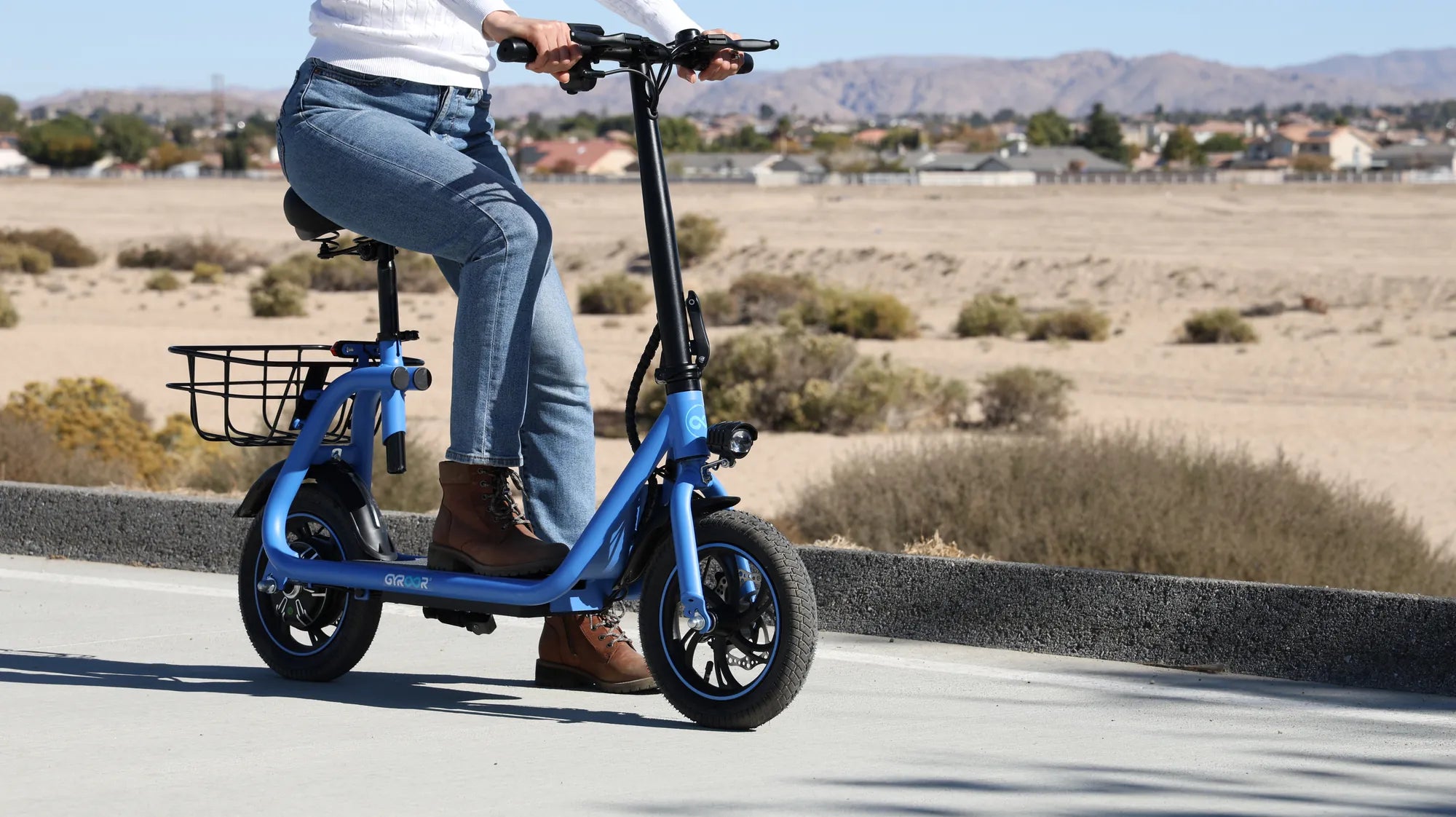
Introduction: Redefining the Urban Commute
Urban gridlock is no longer just an inconvenience; it's a significant economic and environmental cost. As cities densify, the search for efficient, sustainable, and personal transportation has intensified. Electric scooters and bicycles have emerged as the definitive solutions, evolving from recreational gadgets into legitimate mobility tools for millions.
This shift represents more than a trend—it's a fundamental rethinking of how we navigate our urban environments. These vehicles directly address congestion, pollution, and the high cost of car ownership. Leading this charge are brands like Gyroor, trusted by over 100,000 riders across North America and Europe for their reliable, safety-focused designs.
You will learn the concrete advantages of micromobility, how to choose between an e-scooter and an e-bike, and the critical safety features that separate quality vehicles from the rest. We'll also examine the technological and infrastructural future that will make electric scooters and bicycles: the future of urban mobility a permanent reality.
The Rise of Micromobility: Why E-Scooters and E-Bikes Are Winning Cities
Micromobility refers to small, lightweight vehicles, typically operating under 20 mph, designed for short, personal trips. The explosive growth of e-scooters and e-bikes is driven by a powerful convergence of user benefits and urban necessity. They are winning because they solve multiple problems simultaneously.
Financially, the value proposition is overwhelming. The average annual cost of owning and operating a car in a major city often exceeds $10,000. In contrast, a high-quality e-scooter or e-bike costs a fraction of that upfront, with minimal ongoing expenses for electricity and maintenance. When compared to recurring public transit fares, ownership pays for itself quickly.
Time is another critical currency. In congested downtowns, these vehicles consistently outperform cars for trips under five miles. They bypass traffic jams and utilize bike lanes and paths. The elimination of time spent searching for parking—simply fold or lock your vehicle—adds significant daily savings, making the commute predictable and efficient.
Furthermore, they democratize mobility. The electric assist removes barriers of fitness, age, or terrain. A steep hill or a long commute is no longer a deterrent. This accessibility expands the potential user base far beyond traditional cyclists, inviting more people to choose a sustainable mode of transport. This core appeal solidifies the role of electric scooters and bicycles: the future of urban mobility.
Electric Scooters vs. Electric Bikes: Choosing Your Urban Workhorse
Selecting between an electric scooter and an electric bicycle is less about which is objectively better and more about which tool is right for your specific job. Your daily commute distance, storage options, route terrain, and cargo needs are the deciding factors. A clear, data-driven comparison reveals distinct optimal use cases for each.
The Agile Commuter: The Case for Electric Scooters
Electric scooters excel in ultra-urban, short-trip scenarios. Their primary advantage is portability and simplicity. A typical commuter e-scooter folds in seconds, allowing for easy carrying onto public transit, into an office, or for storage in a small apartment. This makes them the quintessential "last-mile" solution.
They are generally lighter than e-bikes, with many models weighing between 30-45 lbs. This makes them manageable for most adults to lift. Operation is intuitive: step on, engage the throttle, and go. There's no need for special clothing or cycling shoes, facilitating a seamless transition from rider to pedestrian.
For trips under 4 miles—such as a commute from a transit station to work, running local errands, or navigating a college campus—an e-scooter is often the fastest point-to-point option. Their smaller footprint allows for nimble maneuvering in tight spaces. Brands like Gyroor engineer models with this specific use case in mind, balancing power, range, and foldability.
The Versatile Powerhouse: The Case for Electric Bikes
Electric bicycles are the champions of versatility and longer-range utility. They are designed to replace car trips more comprehensively, comfortably handling commutes from 5 to 20 miles or more. The key differentiator is the combination of pedal-assist and, often, a throttle, which provides a more traditional cycling experience with a powerful boost.
This design makes them ideal for tackling significant hills, riding into headwinds, or arriving at your destination without breaking a sweat. Their larger frames and standard bicycle geometry also allow for the easy addition of cargo racks, panniers, or child seats, transforming them into practical vehicles for grocery runs or school drop-offs.
E-bikes also generally offer superior stability and comfort over rough pavement compared to scooters, thanks to larger wheels and suspension systems. They are a true hybrid, serving equally well for recreational weekend rides as for daily commuting, offering a form of light exercise that scooters do not. This versatility is a cornerstone of why electric scooters and bicycles: the future of urban mobility is such a compelling narrative.
Side-by-Side Comparison Chart
| Attribute | Electric Scooter | Electric Bicycle |
|---|---|---|
| Average Commute Range | 15 - 25 miles | 25 - 60+ miles |
| Typical Top Speed | 15 - 20 mph | 20 - 28 mph (Class 3) |
| Portability | High (Folds, 30-45 lbs) | Low-Moderate (Does not fold, 50-70 lbs) |
| Terrain Handling | Best on smooth pavement | Excellent; handles hills, gravel, bumps |
| Primary Use Case | Last-mile, short urban errands, multi-modal transit | Longer commutes, cargo transport, recreational rides |
| Relative Initial Cost | $$ | $$$ |
Beyond the Hype: Critical Factors for a Safe and Reliable Ride
The market is flooded with options, but not all are created equal. For a vehicle that carries you through traffic, safety and reliability are not features—they are the foundation. Understanding the engineering behind key components separates a trustworthy investment from a potential hazard.
Battery Safety and Certification: The Non-Negotiable Standard
The lithium-ion battery is the heart of any electric vehicle and its most critical safety component. Inferior or uncertified batteries pose a serious fire risk. The Underwriters Laboratories (UL) certification is the gold-standard safety benchmark in North America, involving rigorous testing for electrical, mechanical, and environmental safety.
A UL-certified battery pack, like those used in all Gyroor models, is engineered to prevent overcharging, short-circuiting, and thermal runaway. These packs are tested for durability across 500+ charge cycles, ensuring long-term performance and stability. Choosing a vehicle without this certification is an unacceptable gamble with your safety and property.
Build Quality and Weather Resistance: Ready for Real-World Roads
Urban riding means encountering potholes, curbs, and unpredictable weather. Build quality determines how well your vehicle withstands this daily punishment. Key elements include a robust aluminum or steel frame, reliable dual braking systems (disc + electronic), and wide, air-filled tires for stability.
Weather resistance, indicated by an IP (Ingress Protection) rating, is crucial. An IPX5 rating, a standard for Gyroor scooters, means the unit is protected against water jets from any direction. This allows you to confidently ride in light rain or through urban puddles without fear of immediate electrical failure, a feature often absent in lower-tier models.
Warranty and Support: The Sign of a Confident Brand
The length and scope of a warranty reflect a manufacturer's confidence in its product. A comprehensive warranty typically covers the frame, motor, and battery for a significant period. Gyroor's standard 1-year warranty provides this essential peace of mind.
Equally important is accessible customer support. The ability to quickly get technical assistance, order genuine replacement parts, or access clear repair guides is what transforms a product into a reliable long-term partner. A brand that stands behind its products with strong support infrastructure is investing in the rider's experience, a key reason why discerning consumers trust established names in the evolution of electric scooters and bicycles: the future of urban mobility.
The Rider's Toolkit: Essential Safety Gear and Riding Etiquette
Owning the vehicle is only half the equation; responsible riding completes it. Adopting proper safety gear and understanding shared road etiquette are non-negotiable for personal safety and the positive perception of micromobility as a whole.
A certified bicycle helmet is the absolute minimum. For e-scooter and e-bike riders traveling at higher speeds, a multi-impact helmet designed for urban cycling is strongly recommended. High-visibility clothing or accessories, especially for night riding, are critical, as are lights—a bright front light and a solid rear red light are legally required in most areas after dark.
Riding etiquette is paramount for coexistence. This means obeying all traffic signals, riding in the direction of traffic (never on sidewalks where prohibited), using hand signals for turns, and yielding to pedestrians. On shared-use paths, audible signaling like a bell is essential when passing. Predictable, lawful riding protects you and fosters goodwill among all road users.
Regular pre-ride checks are a simple but vital habit. Quickly inspect tire pressure, test brake function, ensure lights are working, and verify that the folding mechanisms (on scooters) are securely locked. This two-minute routine can prevent the majority of mechanical failures on the road.
The Future Roadmap: Integration, Technology, and Smart Cities
The current adoption of e-scooters and e-bikes is just the first phase. Their true potential will be unlocked through deeper technological integration and purposeful urban planning. The future involves vehicles and cities becoming interconnected systems.
Vehicle technology is advancing rapidly. We will see wider adoption of connectivity via smartphone apps for diagnostics, GPS tracking, and ride customization. Battery technology will continue to improve, offering greater energy density for longer ranges and faster charging times. Advanced driver-assistance systems (ADAS) for micromobility, such as automatic emergency braking and collision warnings, are on the horizon.
Urban infrastructure must evolve in parallel. The future lies in protected, dedicated bike lanes that form a continuous network, safe from car traffic. Cities will implement smart parking corrals and charging stations to reduce clutter and ensure vehicles are charged and ready. Integration with public transit will be seamless, with designated storage areas on buses and trains.
Data sharing between vehicle fleets and city planners will optimize traffic flow and infrastructure placement. Regulatory frameworks will mature, standardizing rules for speed, parking, and rider accountability. This holistic approach—combining smarter vehicles with smarter city design—will cement the role of electric scooters and bicycles: the future of urban mobility as an efficient, safe, and scalable system.
Frequently Asked Questions (FAQ)
Q: Do I need a license, registration, or insurance to ride an e-scooter or e-bike?
A: Regulations vary by city, state, and country. Generally, for lower-speed e-bikes (Class 1 & 2, up to 20 mph) and most e-scooters, no driver's license, vehicle registration, or insurance is required. Higher-speed e-bikes (Class 3, up to 28 mph) and some powerful scooters may have age restrictions or require a helmet. Always check your local laws before riding.
Q: How far can I *really* go on a single charge?
A: Manufacturer range estimates are based on ideal conditions: a lightweight rider on flat ground at low speed. Real-world range is affected by rider weight, hills, wind, temperature, and riding style (frequent acceleration). A good rule of thumb is to expect 60-75% of the advertised range for typical commuting. For a 20-mile advertised range, plan for a reliable 12-15 miles.
Q: Are they safe to ride in bike lanes?
A: Yes, e-scooters and e-bikes belong in bike lanes when available. This is typically where local ordinances direct them. Riding in bike lanes is far safer than riding in vehicle traffic or on sidewalks. The key is to ride predictably, at a controlled speed appropriate for the lane, and to always yield to traditional cyclists and pedestrians when necessary.
Q: What is the true total cost of ownership?
A: Beyond the initial purchase, costs are minimal but include: electricity for charging (negligible, roughly $0.10-$0.30 per full charge), occasional tire replacements or tubes, brake pad changes, and potential battery replacement after several years (500+ cycles). Compare this to car payments, fuel, insurance, parking, and maintenance, and the savings are astronomical.
Q: Can I ride in the rain?
A: It depends on the vehicle's IP rating. Models with a rating of IPX5 or higher, like many from Gyroor, are designed to withstand water jets and can be ridden in light to moderate rain. However, no consumer electric vehicle is fully submersible. Avoid deep puddles, and always dry the vehicle after a wet ride. Check your manufacturer's guidelines specifically.
Conclusion: Your Key to a More Efficient, Enjoyable Commute
The evidence is overwhelming: electric scooters and bicycles are not a passing fad but a fundamental shift in urban transportation logic. They offer a direct, personal solution to congestion, cost, and carbon footprint. The choice between an e-scooter's agility and an e-bike's versatility empowers you to reclaim your time and transform your daily commute from a stressful chore into an engaging part of your day.
This shift demands informed choices. Prioritize safety through UL-certified batteries, robust build quality with proper weather resistance, and the security of a strong warranty. Equip yourself with knowledge and gear to ride responsibly. The future of our cities is quieter, cleaner, and more efficient, built on the widespread adoption of these smart mobility tools.
The journey toward that future starts with your decision. Explore the engineering and design that makes a reliable difference. Browse the full Gyroor collection, featuring UL-certified, IPX5-rated vehicles backed by a 1-year warranty, at gyroorboard.com and discover the model that will redefine your city travel.
Electric Scooters Dublin: The Future of Urban Mobility
Electric Scooters for Plus Size Adults: The Ultimate Guide to Comfort and Performance