



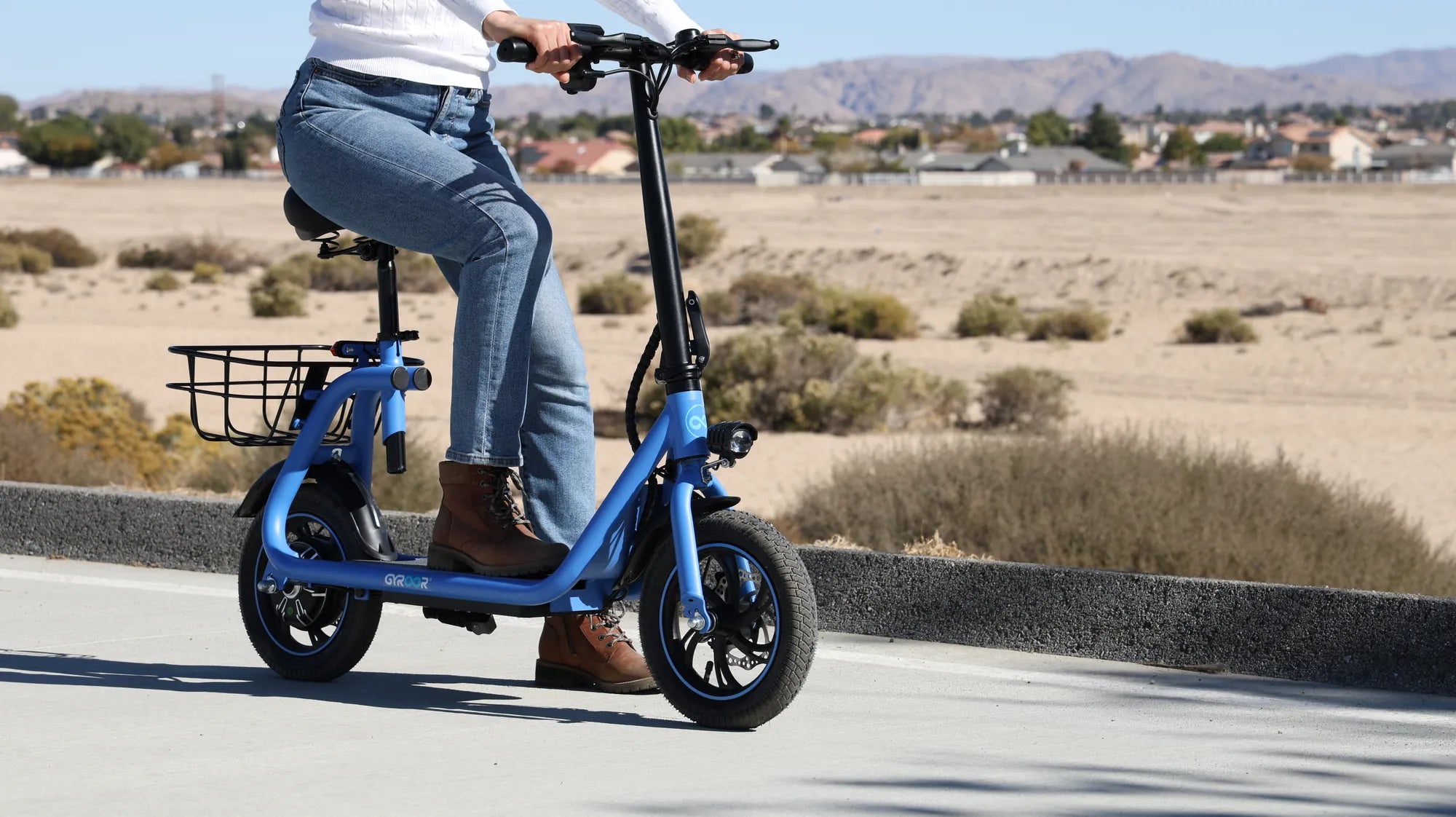
Introduction: Why Detroit is Embracing the Electric Scooter Revolution
Detroit's urban fabric, woven from a storied automotive history and a sprawling, car-centric design, is undergoing a quiet transformation. The city's evolving downtown core, persistent traffic congestion, and the high cost of vehicle ownership are creating the perfect catalyst for a new mode of transport. Electric scooters in Detroit are not just a novelty; they are a pragmatic solution for the daily commute, last-mile connections from transit hubs, and rediscovering the city's vibrant neighborhoods.
This shift represents the future of urban mobility in Detroit, offering a blend of efficiency, affordability, and environmental consciousness. For residents navigating from Midtown to the Riverfront or from Corktown to Eastern Market, a personal electric scooter provides unmatched flexibility. It bypasses traffic, reduces transportation costs, and turns a routine trip into an engaging experience. The key to this transition is reliability and safety, which is where brands like Gyroor, a leading electric scooter and e-bike manufacturer trusted by over 100,000 riders, become essential. Their focus on UL-certified batteries and durable, water-resistant designs is built for the real-world demands of Detroit streets.
This comprehensive guide will equip you with everything you need to know. We will dissect the critical features for Detroit's unique terrain, clarify local regulations, provide a data-driven cost analysis versus rental services, and map out perfect routes for your new electric scooter. The goal is to demonstrate how Electric Scooters Detroit: The Future of Urban Mobility is a tangible reality, ready to be unlocked.
Navigating Detroit's Terrain: What to Look for in an E-Scooter
Not all electric scooters are created equal, especially when faced with the specific challenges of Motor City. Potholes, variable weather, and longer urban distances demand a machine built for resilience and performance. Choosing the right model means evaluating key specifications that directly impact your safety, comfort, and range on Detroit roads.
The ideal scooter for Detroit balances power, durability, and practicality. It must handle the gentle incline from the Riverwalk up toward the Cultural Center, absorb shocks from uneven pavement in historic districts, and remain reliable through spring rains and autumn chills. A flimsy or underpowered scooter will quickly become a frustration, while a well-engineered one becomes a liberating tool for daily life.
Power and Range for the Daily Commute
Motor power, measured in watts (W), determines your scooter's ability to tackle hills and maintain speed. For Detroit's rolling topography—think the grade from Midtown into New Center—a motor in the 350W to 500W range is recommended. This ensures consistent performance without straining the battery on longer commutes. A 350W motor is sufficient for most flat to moderately hilly routes, while 500W offers more confident acceleration and hill-climbing power.
Battery capacity, measured in watt-hours (Wh), dictates your range. Consider your round-trip distance. A commute from Southwest Detroit to downtown (approx. 3-4 miles each way) requires a scooter with a real-world range of at least 10-15 miles. Always account for factors like rider weight, temperature, and hill frequency, which can reduce advertised range. Safety is paramount; Gyroor scooters utilize UL-certified battery packs tested for over 500 charge cycles, offering peace of mind through rigorous safety standards and long-term reliability.
Build Quality for Motor City Streets
Durability is non-negotiable. A robust aluminum alloy frame can withstand the vibrations and occasional impacts of urban riding. The suspension system is your first line of defense against Detroit's infamous road imperfections. A combination of front spring or hydraulic suspension and a rear shock absorber dramatically improves comfort and control on cracked pavement and potholes.
Tire choice is critical. Pneumatic (air-filled) tires provide superior shock absorption and traction on wet surfaces compared to solid tires, making them better suited for variable conditions. Weather resistance is equally important. An IPX5 water-resistance rating, a standard in Gyroor's design, means the scooter can withstand water jets from any direction, protecting vital components from rain, snowmelt, and road spray common in Detroit.
Portability and Practicality
The true utility of an electric scooter in Detroit often involves multi-modal travel. You might ride from your home to a QLine streetcar stop, fold the scooter to board, and then unfold it for the last leg of your journey. A scooter's weight and folding mechanism are therefore key. Models weighing under 40 pounds are manageable for most adults to carry up a few stairs or onto public transit.
A quick, secure folding mechanism with a reliable locking latch adds to daily convenience. For those commuting into offices or apartments, a compact fold allows for easy storage under a desk or in a closet. This practicality transforms the scooter from a recreational device into a seamless part of your urban transportation ecosystem.
The Rider's Guide to Detroit E-Scooter Laws & Safety
Riding an electric scooter in Detroit comes with the responsibility to understand and follow local regulations. Adhering to these rules not only keeps you safe from fines but also ensures harmonious sharing of the city's infrastructure with pedestrians, cyclists, and motorists. Safety, however, extends beyond the law to encompass proactive gear and defensive riding techniques.
Knowing where you can legally ride, park, and what equipment is required is the foundation of responsible scooter ownership. Detroit's ordinances are designed to integrate this new mobility option safely into the existing transportation network. Ignorance of these laws can lead to citations and, more importantly, increase the risk of accidents.
Understanding Local Regulations
The City of Detroit has established clear rules for electric scooter use, largely aligning with state vehicle code for low-speed vehicles. Riders must operate scooters on the street or in designated bicycle lanes; riding on sidewalks is illegal and poses a significant danger to pedestrians. On streets, scooters should travel in the same direction as traffic and are subject to the same rules as bicycles.
Helmet use is legally required for all riders under 19 years of age, but it is strongly recommended for everyone regardless of age. The minimum operating age is 16. When parking your personal scooter, use designated bicycle racks or corrals. Never block sidewalks, building entrances, ADA ramps, or access lanes. Proper parking is crucial to maintaining public access and positive perceptions of scooter riders.
Essential Safety Gear and Riding Tips
Beyond a helmet, investing in additional safety gear is wise. Use a bright headlight and taillight, especially for commuting during dawn, dusk, or night. Reflective clothing or accessories dramatically increase your visibility to drivers. Consider gloves for better grip and protection in case of a fall.
Adopt a defensive riding mindset. Assume cars may not see you. Be predictable in your movements, use hand signals for turns, and avoid weaving between parked cars. On shared pathways like the Dequindre Cut or RiverWalk, reduce speed, announce your presence politely when passing, and always yield to pedestrians. Regularly check your scooter's tire pressure, brakes, and lights as part of a simple pre-ride maintenance routine.
Gyroor Scooters vs. Rental Scooters: A Cost-Benefit Analysis for Detroiters
For Detroiters considering electric scooters, a fundamental choice arises: own or rent? App-based rental services offer spontaneity, but a data-driven look reveals that for regular use, ownership of a quality scooter like those from Gyroor provides superior long-term value, reliability, and convenience. This analysis focuses on the experience of a frequent rider, such as a daily commuter or weekend explorer.
Rental scooters excel for one-off, impulsive trips but suffer from limitations in availability, performance consistency, and cumulative cost. Ownership eliminates the hunt for a charged scooter, provides a machine tailored to your needs, and offers a significantly lower cost-per-ride over time. For a city like Detroit, where neighborhood coverage can be uneven, having your own reliable vehicle is a decisive advantage.
| Factor | Owning a Gyroor Scooter | Rental Scooter (e.g., Spin, Bird) |
|---|---|---|
| Cost-Per-Ride | Low. After initial purchase (~$400-$800), cost is negligible (just electricity). A 5-mile daily commute pays for itself in 3-6 months. | High. Standard rates are ~$1 to unlock + $0.30-$0.45 per minute. A 20-minute commute can cost $7-$10 daily. |
| Availability & Coverage | Total. Your scooter is always available at home, regardless of your neighborhood (Corktown, Eastern Market, etc.). No geofencing restrictions. | Variable. Scooters cluster downtown and may be scarce in residential areas. Subject to seasonal removal and operator service area limits. |
| Performance & Features | Consistent & Customizable. You know the exact power, range, and brake feel. Can add accessories (basket, phone mount). Features like suspension are standard on better models. | Inconsistent. Battery level, tire wear, and mechanical condition vary wildly. Often basic models with minimal comfort features. |
| Hygiene & Ownership | High. You are the sole user. Easy to clean and maintain. No concern about previous rider's handling. | Low. Shared public use. Handlebars and deck can be dirty or wet. No control over maintenance history. |
The table illustrates a clear divergence. For the occasional tourist, a rental suffices. For a Detroit resident integrating an electric scooter into their daily life, ownership is the economically and practically superior choice, transforming Detroit: The Future of Urban Mobility from a service you occasionally use into a tool you always control.
Top Detroit Routes Perfect for Your Electric Scooter
Owning an electric scooter redefines your relationship with the city, turning errands into adventures and commutes into explorations. Detroit is filled with routes that are ideally suited for two-wheeled electric travel, combining practical pathways with cultural and scenic attractions. These rides showcase the freedom and efficiency that a personal scooter provides.
The following routes are designed with a mix of dedicated bike lanes, slower-speed streets, and multi-use paths to ensure a safe and enjoyable experience. They highlight how an electric scooter can connect you to the heart of Detroit's resurgence in a way that a car simply cannot.
The Downtown & Riverfront Loop
This classic loop offers stunning views and smooth pavement. Start at Campus Martius Park, then head east on Jefferson Avenue to the entrance of the Detroit RiverWalk. Cruise north along the RiverWalk, enjoying uninterrupted views of the river and Windsor skyline. The wide, smooth path is perfect for scooting.
Continue to the William G. Milliken State Park and Harbor, then connect to the Dequindre Cut Greenway. This elevated, paved trail takes you south through street art and urban greenery. Exit the Cut near Eastern Market, then head west on Atwater Street back toward the start. This 5-7 mile loop encapsulates Detroit's revitalized core and is almost entirely on protected paths.
The Midtown Cultural Corridor
Explore Detroit's intellectual and artistic heart. Begin at Wayne State University's historic campus, using bike lanes on Warren Avenue or Ferry Street. Glide past the Detroit Institute of Arts, the Main Public Library, and the Charles H. Wright Museum of African American History.
Continue north along Woodward Avenue (using the bike lane where available) into the New Center area, passing the Fisher Building and the iconic Motown Museum. The route is relatively flat and rich with architecture. Using a scooter allows you to hop off easily to visit an exhibit or grab a coffee, without worrying about parking.
The Eastern Market Exploration
Navigate the bustling streets of Eastern Market with ease on a Saturday morning. A scooter is ideal for weaving through the crowds where cars struggle, and you can carry purchases in a handlebar basket or backpack. Park at a bike rack and explore the sheds on foot, then use your scooter to quickly jump between specialty shops on Gratiot or Riopelle.
Extend your ride by heading south on the Dequindre Cut from the market, or west into Brush Park to see historic home renovations. This use case perfectly demonstrates the scooter's utility for dense, event-oriented neighborhoods where parking is scarce and expensive.
Maintenance and Winter Riding Tips for Detroit
To ensure your electric scooter remains a reliable partner through Detroit's four seasons, proactive maintenance and weather-aware riding are essential. A small amount of regular care can prevent major issues and extend the lifespan of your investment significantly. This is especially true when confronting the challenges of winter.
Regular maintenance involves checking tire pressure monthly (for pneumatic tires), testing brake responsiveness, ensuring all bolts are tight, and wiping down the scooter to remove dirt and road salt. Store your scooter in a dry, temperate place when not in use; avoid leaving it outside in extreme cold for extended periods, as this can reduce battery performance.
Winter riding requires extra caution. While Gyroor's IPX5 rating protects the scooter's electronics from water and slush, rider safety is the priority. Avoid riding on ice or compacted snow. Be extremely wary of wet leaves and metal surfaces like manhole covers, which become slippery. Reduce your speed and increase following distance. After riding on salted roads, gently clean the scooter's frame, deck, and underside with a damp cloth to prevent corrosion.
Battery performance naturally decreases in cold weather. Expect a reduction of 15-30% in your typical range on very cold days. If possible, store and charge the battery indoors at room temperature. Allow the scooter to acclimate to the cold for a few minutes before turning it on, and avoid charging a freezing-cold battery immediately upon bringing it inside.
Frequently Asked Questions (FAQ) for Detroit E-Scooter Riders
Q: Can I ride my electric scooter on the sidewalk in Detroit?
A: No. It is both illegal and unsafe. City ordinance requires riders to operate in the street (following traffic laws) or in designated bicycle lanes. Riding on sidewalks endangers pedestrians and can result in a fine.
Q: How do I handle Detroit's winter weather with an e-scooter?
A: Exercise extreme caution. Avoid ice and deep snow. Gyroor's IPX5 water-resistant rating protects against slush and spray, but you should clean the scooter after riding on salted roads to prevent corrosion. Store the scooter and battery indoors, and expect reduced range in very cold temperatures.
Q: Where can I park my personal e-scooter downtown?
A: Always use designated bicycle racks or parking corrals. Never block sidewalks, ADA ramps, building entrances, or access lanes. Proper parking is crucial for maintaining good relations with businesses and the community.
Q: Do I need a license or insurance to ride an electric scooter in Detroit?
A: No driver's license or vehicle insurance is required for operating a low-speed electric scooter (under 20 mph on level ground) in Detroit. However, personal liability insurance may be worth considering, and all riders are strongly encouraged to wear a helmet.
Q: Are electric scooters allowed on the QLine or DDOT buses?
A: Policies can vary. Generally, folded electric scooters are permitted on public transit as carry-on items, similar to folded bicycles, at the driver's discretion and if space allows. It is best to avoid peak crowding times and always be courteous to other passengers.
Q: What is the real-world range I can expect from a scooter in Detroit?
A: Real-world range depends on rider weight, terrain, temperature, and riding style. A scooter advertised for 20 miles may achieve 12-16 miles in Detroit's conditions with some hills. For a daily commute, choose a model with a rated range at least 40-50% longer than your round-trip distance to ensure a comfortable buffer.
Conclusion: Your Ticket to a Smarter, Greener Detroit Commute
The evidence is compelling: for an increasing number of Detroiters, personal electric scooters represent a fundamental shift in how they navigate their city. This isn't merely about adopting a new gadget; it's about embracing a more efficient, economical, and enjoyable form of urban mobility. The convergence of Detroit's geographic layout, its ongoing infrastructure improvements, and the advancement of reliable micro-mobility technology has created an ideal moment for this transition.
By choosing a well-built scooter designed for durability and safety, you gain independence from traffic, parking fees, and the volatile costs of gas and ride-sharing. You contribute to reduced downtown congestion and lower carbon emissions, supporting a greener vision for Detroit's future. More personally, you rediscover the joy of moving through your city with a sense of connection and freedom that is lost inside a car.
The journey toward integrating an Electric Scooters Detroit: The Future of Urban Mobility into your life begins with selecting the right tool for the job. Consider your daily routes, the terrain you'll face, and the value of long-term ownership. Explore models engineered for real-world conditions, where safety certifications like UL for batteries and IP ratings for weather resistance are standard, not optional.
Ready to transform your Detroit commute and exploration? Browse the full Gyroor collection of UL-certified, robust electric scooters and e-bikes at gyroorboard.com to find the model that empowers your urban journey.
Electric Scooters 50cc: The Ultimate Guide to Eco-Friendly Urban Commuting
Electric Scooters for Adults Under $450: Affordable and Efficient Commuting Solutions