



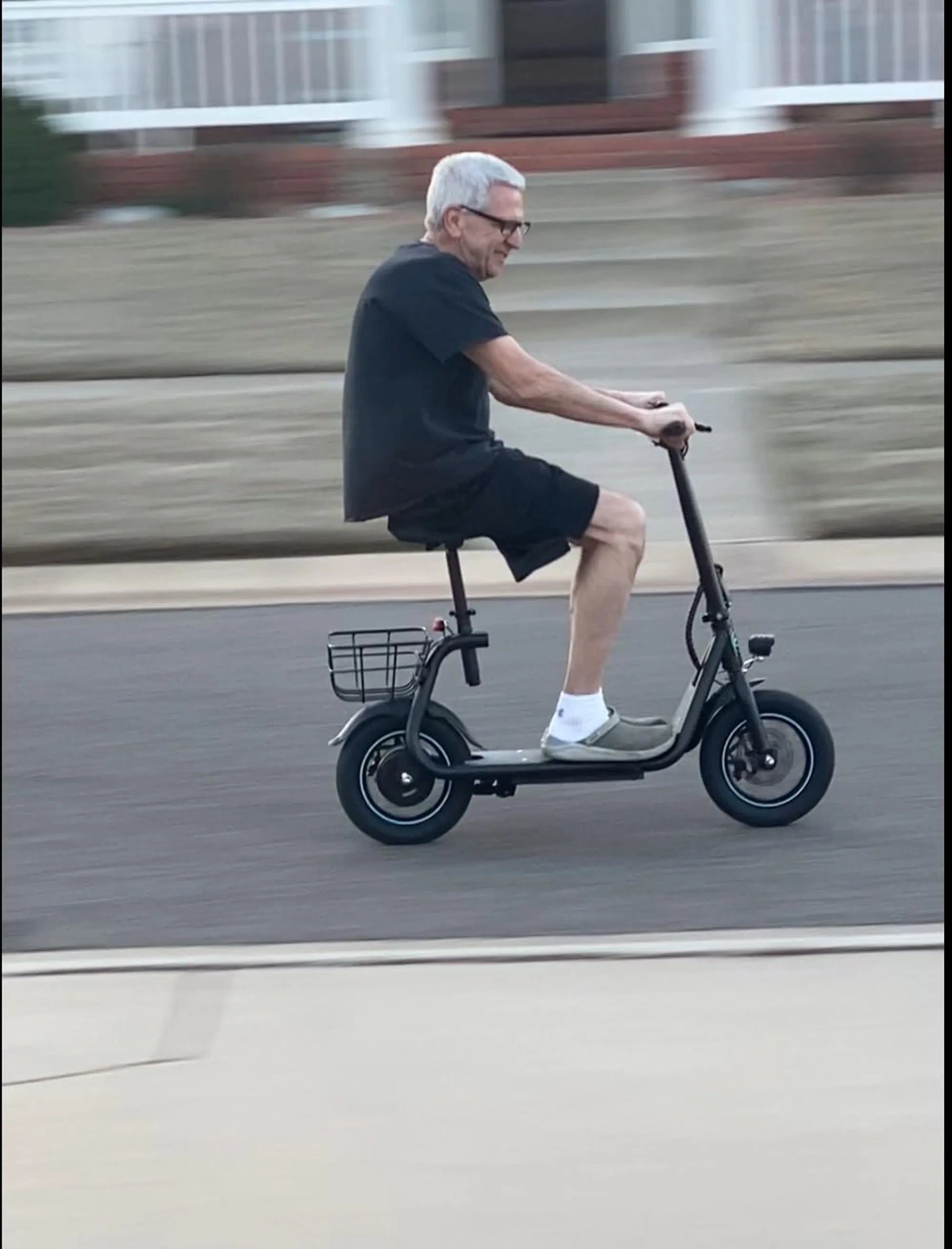
Introduction: Why Weight Matters in Electric Scooters
Finding a reliable electric scooter can be frustrating for heavier riders. Many mainstream models, built for average weights, simply can't deliver the necessary performance, safety, or longevity. This isn't just about comfort—it's about fundamental engineering. A scooter operating near or beyond its design limits suffers from reduced range, sluggish acceleration, poor braking, and accelerated wear on critical components like the frame, motor, and battery.
This guide, Electric Scooters for Heavy People: The Ultimate Guide to Finding the Perfect Ride, is your definitive resource. We move beyond marketing claims to the technical specifications that truly matter for riders typically between 250 and 400 pounds. You'll learn how to decode product specs, prioritize safety features, and set realistic expectations for performance. Leading brands like Gyroor, trusted by over 100,000 riders, demonstrate that with the right engineering, electric scooters can be a robust, reliable, and liberating form of transportation for everyone.
Key Specifications for Heavy Riders: Beyond the Sticker Price
When shopping for electric scooters for heavy people, the advertised top speed and flashy lights are secondary. Your primary focus must be on the foundational specs that determine durability, safety, and usable performance. Ignoring these details leads to disappointment and potential safety hazards.
The crucial triad for heavy riders consists of motor power and torque, genuine weight capacity supported by frame durability, and a high-capacity battery. These elements work in concert. A powerful motor is useless if the frame flexes, and a large battery drains quickly if the motor is constantly overworked. Let's dissect each component.
Motor Power and Torque: The Heart of the Matter
Motor wattage (e.g., 500W, 1000W) is a starting point, but torque is the true hero for heavier riders. Torque is the rotational force that gets you moving from a stop and powers you up hills. A high-torque motor maintains speed under load, whereas a low-torque motor will struggle and overheat.
For riders over 250 lbs, a single 500W motor is often the absolute minimum for flat terrain. A 1000W single motor or dual 500W motor system is significantly better, providing the necessary reserve power for inclines and confident acceleration. Dual-motor systems, where two motors drive the wheels independently, offer exceptional hill-climbing ability and traction, making them a premium choice for riders at the upper end of the weight spectrum.
Weight Capacity and Frame Durability
The manufacturer's stated maximum weight capacity is the most critical number. However, there's a vital distinction: the maximum limit versus a recommended limit. Always choose a scooter with a maximum capacity that exceeds your weight by a comfortable margin—at least 50 pounds. This buffer ensures the scooter isn't perpetually stressed at its limit.
This capacity is meaningless without a robust frame. Look for frames constructed from aerospace-grade aluminum alloy, which offers an excellent strength-to-weight ratio. Key stress points—like the stem (the vertical tube connecting the handlebars to the deck), the folding mechanism, and the neck where the deck meets the stem—must be heavily reinforced. A wider deck also contributes to structural rigidity and stability.
Battery Range Realities: Adjusting Your Expectations
Advertised range figures are almost always calculated using a rider weighing approximately 165 lbs on ideal, flat terrain. Physics dictates that moving more mass requires more energy. As a heavier rider, you must significantly adjust these numbers.
A practical rule of thumb is to reduce the advertised range by 30-40% for a realistic estimate. Therefore, if a scooter claims a 40-mile range, a 300 lb rider should expect 24-28 miles in real-world conditions, less if there are hills. To combat this, prioritize scooters with high-capacity batteries, measured in Amp-hours (Ah) or Watt-hours (Wh). A 15Ah battery will provide substantially more range under heavy load than a 10Ah battery, even if both are labeled as "48V."
Top Features to Look For: Safety and Comfort for a Confident Ride
Once the core specs are satisfied, the next layer of selection involves features that directly impact safety, control, and ride quality. For a heavier rider, these aren't luxuries; they are essential components that transform a capable machine into a safe and enjoyable one.
The increased momentum and stress placed on components mean that failure in systems like brakes or tires carries greater risk. Therefore, your feature checklist should prioritize uncompromising safety and stability above all else.
Braking Systems: Stopping Power is Paramount
Your ability to stop reliably is non-negotiable. Electronic (regenerative) brakes alone are insufficient for heavy riders, as their stopping power diminishes with battery charge. Mechanical brakes are essential.
A dual mechanical braking system—one brake on the front wheel and one on the rear—is the gold standard. Within this category, hydraulic disc brakes offer the best performance, providing strong, consistent, and low-maintenance stopping power with minimal hand effort. Mechanical disc brakes are a solid second choice. Drum brakes can be adequate but may require more frequent adjustment. Avoid scooters that rely solely on a rear fender foot brake or weak electronic brakes.
Tire Type and Size: Stability on Varied Terrain
Tires are your only contact with the ground, affecting traction, comfort, and stability. For heavy riders, larger tires with more air volume are superior. Pneumatic (air-filled) tires, typically 10 inches in diameter or larger, provide crucial shock absorption, reducing strain on the scooter's frame and your body. They also offer better grip, especially on wet or uneven surfaces.
Solid or honeycomb tires eliminate flats but transmit far more vibration and offer less traction, compromising comfort and safety on bumps. "Fat" tires (3.5 inches wide or more) are excellent for heavy riders as they provide a larger contact patch, enhancing stability and allowing for lower tire pressure, which further improves comfort.
Deck Size and Ride Geometry
A spacious deck is critical for comfort and control. Look for a deck that is both long and wide enough to allow you to position your feet comfortably, either side-by-side or in a staggered stance. This improves balance, especially during braking and cornering.
The overall ride geometry also matters. A scooter with a low center of gravity (achieved through battery placement and deck height) and wide, adjustable handlebars will feel more planted and controllable. This stable platform is essential for instilling confidence, particularly at higher speeds or in urban environments.
Spotlight on Performance: Gyroor Models Built for Demanding Rides
To translate theory into practice, let's examine how a brand engineered for reliability addresses the needs of heavy riders. Gyroor's focus on UL-certified safety, water resistance, and robust construction makes its lineup a relevant case study for what to look for in any brand.
Their philosophy centers on building scooters that perform consistently under real-world conditions, not just in ideal lab tests. This aligns perfectly with the demands of heavier riders who require durability and dependable performance day after day.
Model Comparison: Matching Your Weight to the Right Scooter
Not all models are created equal, even within a single brand. The table below compares key Gyroor models suitable for different rider weight classes, highlighting how specifications scale with intended use.
| Model Feature | Gyroor C1 (Commuter Focus) | Gyroor S1 (Performance Focus) | Gyroor F1 (Off-Road/Heavy-Duty) |
|---|---|---|---|
| Max Weight Capacity | 285 lbs | 330 lbs | 400 lbs |
| Motor Power | 500W Single (Peak 800W) | 1000W Single (Peak 1600W) | Dual 1000W (Peak 3200W) |
| Battery & Est. Real-World Range* | 48V 12.8Ah (~22 miles) | 48V 15Ah (~28 miles) | 48V 20Ah (~35 miles) |
| Tire Type & Size | 10" Pneumatic | 10" Pneumatic | 11" Off-Road Pneumatic |
| Braking System | Front Disc + Rear E-ABS | Dual Mechanical Disc | Dual Hydraulic Disc |
| Key Feature for Heavy Riders | Reinforced Stem, IPX5 Rating | UL-Certified Battery, Wide Deck | Ultra-Rigid Frame, Dual Motors |
*Estimated range for a 275 lb rider on mixed terrain. Actual results will vary.
Engineering for Reliability: UL-Certified Batteries and IPX5 Water Resistance
Two of Gyroor's standout features—UL-certified batteries and IPX5 water resistance—are particularly important for heavy riders. A UL-certified battery pack has undergone rigorous independent testing for safety, including overcharge, short circuit, and crush tests. For a battery consistently working hard to move more weight, this certification is a critical indicator of long-term reliability and safety, reducing the risk of failure.
IPX5 water resistance means the scooter's electrical components can withstand water jets from any direction. While not for riding through deep puddles, it provides essential protection against road spray, puddles, and unexpected rain. This protection is vital because moisture ingress is a common cause of electrical failure, and the investment in a high-performance scooter must be protected from everyday elements.
Making the Smart Choice: Your Pre-Purchase Checklist
Armed with knowledge, your final step is a methodical evaluation. Use this actionable checklist when researching any electric scooter for heavy people. It consolidates the guide's key points into a simple verification process.
Print this list or keep it on your phone. If a scooter fails to meet multiple criteria, it is not the right choice, regardless of its price or brand appeal. Your safety and satisfaction depend on these fundamentals.
- Verify True Weight Capacity: Confirm the maximum weight limit. Ensure it exceeds your weight by at least 50 lbs.
- Check Motor & Drivetrain: Prefer 1000W single or dual-motor systems for riders over 275 lbs. Ensure the motor is rated for continuous, not just peak, power.
- Inspect Brake Type: Insist on dual mechanical brakes (disc preferred). Avoid scooters with only electronic or rear-foot brakes.
- Assess Tire and Frame: Choose 10"+ pneumatic or fat tires for stability. Look for mentions of "reinforced stem" and "aluminum alloy frame."
- Calculate Real-World Range: Apply the 30-40% reduction to the advertised range. Does the resulting number meet your daily needs?
- Review Deck Dimensions: Look for a deck at least 20 inches long and 8 inches wide for secure footing.
The Importance of Warranty and Support
A strong warranty is a manufacturer's vote of confidence in its product. For a heavy rider, it is an essential safety net. A comprehensive 1-year warranty that covers the frame, motor, controller, and battery (like Gyroor's) indicates the company stands behind its durability claims.
Scrutinize the warranty terms. Some brands prorate warranties or exclude "wear and tear," which can be ambiguous. Responsive customer support, ideally based in your region (like Gyroor's US-based support), is invaluable for troubleshooting and obtaining replacement parts, ensuring you're not left stranded.
Frequently Asked Questions (FAQs) for Heavier Riders
Q: Can I exceed the maximum weight limit by just 10 or 20 pounds?
A: We strongly advise against it. Exceeding the limit voids the warranty and compromises safety. It stresses every component: brakes take longer to stop, the frame may flex or fatigue, the motor overheats, and battery life plummets. It's a risk to your safety and a sure way to damage your investment.
Q: Are fat tire electric scooters better for heavy riders?
A: Generally, yes. The wider footprint provides greater stability, improved traction, and a more comfortable ride due to the higher air volume. They often come on models with higher weight capacities. However, ensure the motor has enough power (typically 1000W+) to efficiently turn the heavier, wider tires without excessive battery drain.
Q: How much will my weight reduce the scooter's range and speed?
A: Expect a significant impact. Range reduction of 30-40% is standard. Top speed on flat ground may be slightly lower, but the most noticeable drop will be in hill-climbing speed and acceleration. Always buy for the performance you need under load, not the advertised performance for a lightweight rider.
Q: Is suspension necessary for a heavy rider?
A: While not strictly necessary if you have large pneumatic tires, a good suspension system (spring or hydraulic) greatly improves comfort and control on rough roads. It also reduces the impact forces transferred to the scooter's frame. For heavy riders, a robust suspension is a valuable upgrade that protects both you and the scooter.
Q: How often will I need to perform maintenance as a heavy rider?
A: More frequently than a lighter rider. Regularly check tire pressure (weekly), as under-inflated tires wear quickly and risk pinch flats. Brake pads will wear faster; inspect them monthly. Listen for new creaks or clicks from the stem and folding mechanism, and tighten fasteners as needed. Proactive maintenance is key to longevity.
Conclusion: Embrace the Journey with the Right Ride
Choosing the perfect electric scooter as a heavier rider is an exercise in prioritizing substance over style. It requires focusing on the unglamorous details—torque curves, weld quality, brake calipers, and battery certifications—that form the foundation of a safe and durable ride. By understanding the critical specifications and features outlined in this guide, you can confidently navigate the market and avoid the pitfalls of under-engineered products.
The right scooter, like those engineered by Gyroor with their UL-certified batteries, IPX5 water resistance, and reinforced frames, isn't just a purchase; it's an investment in freedom and reliability. It’s the assurance that your vehicle is built to handle the demand, mile after mile. Use this knowledge to find a scooter that doesn't just accommodate your weight, but is genuinely designed for it, empowering you to explore your world with confidence and control.
Ready to find a scooter built for your journey? Explore engineering built to last. Browse the full Gyroor collection, featuring models with weight capacities up to 400 lbs, at gyroorboard.com.
Electric Scooters for Little Kids: A Fun and Safe Way to Ride
Pros and Cons of Electric Scooters: A Comprehensive Guide for 2024