



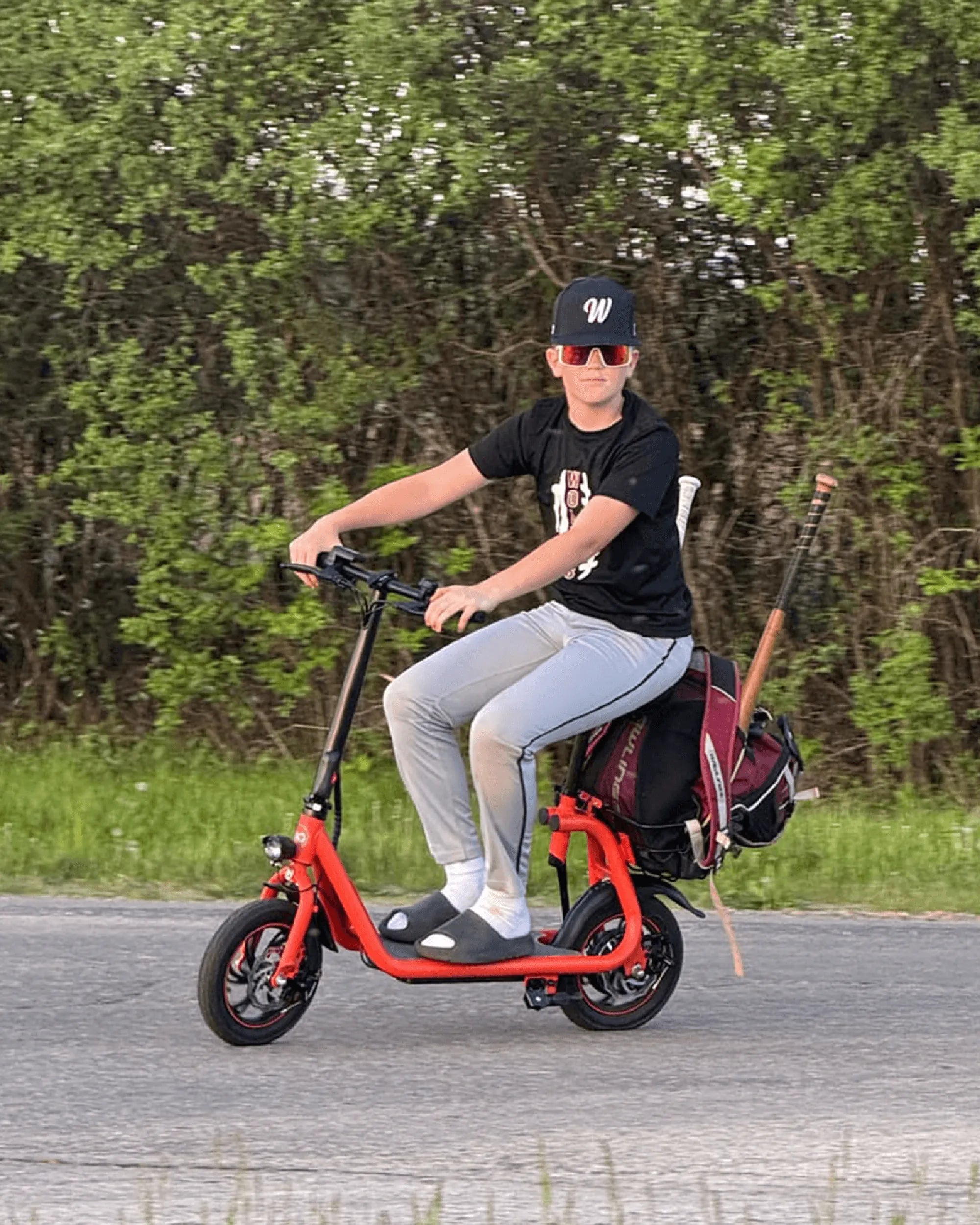
Urban mobility is undergoing a revolution, and at its center is the adult electric scooter. For commuters weary of traffic jams, expensive parking, and crowded public transit, electric scooters with lithium battery for adults present a compelling, efficient alternative. This article will explore how this technology works, why lithium-ion is non-negotiable for performance, and what specifications truly matter for reliable daily use. We’ll also provide actionable maintenance tips and examine how leading brands engineer their products for the demanding adult rider, ensuring you can make an informed choice for your ultimate urban commuting solution.
The Rise of the Electric Scooter for Adult Commuters
The modern urban landscape demands agile, cost-effective transportation. Electric scooters have evolved from recreational toys into serious mobility tools for adults, directly addressing core urban pain points. They slash commute times by utilizing bike lanes and pathways, bypassing gridlocked traffic entirely.
Operating costs are a fraction of car ownership, with electricity costing pennies per charge compared to fuel, insurance, and parking fees. Environmentally, they offer a near-zero emission alternative for short to medium-distance trips, contributing to cleaner city air.
The critical enabler of this shift is the lithium-ion battery. This technology provides the energy density required for practical ranges, the lightweight design for portability, and the durability needed for daily use. Without it, the modern commuter scooter simply wouldn't be viable.
Adopting an electric scooter isn't just about buying a product; it's about embracing a more efficient lifestyle. It represents a move away from dependency on single-occupancy vehicles and rigid transit schedules towards personal, on-demand mobility.
Why Lithium-Ion Batteries are a Game-Changer for Adult Riders
Lithium-ion (Li-ion) chemistry is the cornerstone of modern electric scooters, offering distinct advantages that older battery technologies cannot match. For the adult commuter, these benefits translate directly into reliability, convenience, and long-term value.
First is energy density. Li-ion batteries pack significantly more power into a smaller, lighter package. This means scooters can achieve ranges of 15 to 40 miles on a single charge without becoming prohibitively heavy, a crucial factor for carrying up stairs or onto public transport.
Second is charge cycle life. A quality lithium-ion battery, like those used in UL-certified packs, can withstand 500 to 1000 full charge cycles before significant capacity degradation. This translates to years of daily commuting, making the initial investment worthwhile.
Third is charging speed and efficiency. Most Li-ion scooter batteries recharge from empty to 80% in 3 to 5 hours, allowing for convenient overnight charging or a top-up at the office. They also have a low self-discharge rate, meaning the scooter retains its charge when not in use for weeks.
Comparing Battery Technologies: Lithium-Ion vs. The Rest
To understand the superiority of lithium-ion, a direct comparison with legacy technologies like sealed lead-acid (SLA) batteries is essential. The differences highlight why lithium is the only serious choice for a modern commuter vehicle.
| Feature | Lithium-Ion (Li-ion, LiFePO4) | Sealed Lead-Acid (SLA) | Nickel-Metal Hydride (NiMH) |
|---|---|---|---|
| Energy Density (Wh/kg) | 100 - 265 | 30 - 50 | 60 - 120 |
| Weight (for comparable capacity) | Light (e.g., 5-7 lbs) | Very Heavy (e.g., 15-20 lbs) | Moderately Heavy |
| Typical Cycle Life | 500 - 1000+ cycles | 200 - 300 cycles | 300 - 500 cycles |
| Charge Time (to 80%) | 3 - 5 hours | 6 - 8+ hours | 2 - 4 hours |
| Memory Effect | None | None | Minimal |
| Key Advantage for Commuters | Long range, light weight, long lifespan | Low upfront cost | Good tolerance to misuse |
As the table shows, lithium-ion dominates in the metrics that matter most for daily adult use: range, portability, and longevity. While SLA batteries may have a lower initial cost, their short lifespan and heavy weight make them a poor investment for a commuting tool.
Key Features to Look for in an Adult Commuter Electric Scooter
Selecting the right electric scooter with lithium battery for adults requires evaluating a suite of features beyond the battery alone. These specifications determine comfort, capability, and safety on real-world streets.
Motor power, measured in watts (W), dictates performance. For urban commuting with moderate hills, a 350W to 500W motor is a practical minimum. More powerful motors (e.g., 500W+) provide better acceleration and hill-climbing ability, essential for varied terrain.
Range and speed are interconnected with battery capacity (measured in Watt-hours, Wh). A realistic assessment is key; manufacturer ranges are often under ideal conditions. For a typical commute, look for a scooter with a stated range of at least 15 miles to account for variables like rider weight, hills, and temperature.
Build quality and portability are critical. A sturdy, often aluminum alloy frame supports adult riders safely. A reliable folding mechanism is non-negotiable for mixed-mode commuting (e.g., scooter + train). Weight capacity should exceed your own weight with a margin for a bag or briefcase.
Safety and Reliability: Non-Negotiables for Daily Use
When your scooter is a primary transport, safety features cannot be an afterthought. They are fundamental components that protect you and extend the vehicle's usable life.
Braking systems should be robust and often dual-configured. A combination of electronic (regenerative) braking and a mechanical disc or drum brake provides reliable stopping power in all conditions, including wet pavement.
Lighting and visibility are paramount. A bright front headlight, a rear brake light, and side reflectors are essential for being seen at dawn, dusk, or night. Some models add integrated turn signals for even greater safety.
Tire choice affects ride quality and safety. Pneumatic (air-filled) tires offer superior shock absorption and traction but require maintenance. Solid or airless tires eliminate flats but can provide a harsher ride. Deck surface should have a grippy, textured finish for secure footing.
This is where engineering philosophy matters. Brands like Gyroor build these non-negotiables into their core design, using UL-certified battery packs for proven safety, achieving IPX5 water resistance for all-weather reliability, and backing their scooters with a comprehensive 1-year warranty for true peace of mind.
The Gyroor Advantage: Engineered for the Demanding Adult Commuter
With over 100,000 riders across North America and Europe, Gyroor has built a reputation by focusing on the specific needs of adult commuters. Their approach goes beyond assembling components to engineering integrated solutions where safety, durability, and performance are prioritized.
The foundation is battery safety. Every Gyroor scooter utilizes UL-certified lithium-ion battery packs. This third-party certification is a critical benchmark, indicating the battery has passed rigorous tests for electrical, mechanical, and environmental safety, significantly reducing risks associated with inferior power cells.
Durability is engineered for daily use. An IPX5 water-resistant rating means the scooter can withstand water jets from any direction, protecting vital electronics from rain and road spray. This feature is essential for commuters who cannot simply avoid bad weather.
Rider support completes the package. A reliable 1-year warranty on the scooter, coupled with accessible US-based customer service, ensures that ownership is supported. This commitment transforms the scooter from a disposable gadget into a dependable transportation asset.
Real-World Performance: What Gyroor's Specs Mean for Your Commute
Technical specifications only matter if they translate to real-world benefits. Examining a model like the Gyroor F1 Pro illustrates how design choices impact a daily commute.
A robust 500W peak motor provides ample torque for accelerating from stoplights and climbing gradients up to 15 degrees. This means you won't be forced to dismount and push on moderate hills, maintaining the flow of your commute.
With a 10Ah lithium-ion battery, the real-world range for an average adult rider is typically 18-22 miles. This comfortably covers most round-trip urban commutes with a safety margin, eliminating daily range anxiety. The fast-charging capability means a full recharge is possible overnight.
The combination of a front suspension fork and 10-inch pneumatic tires actively absorbs vibrations from cracked pavement and minor road imperfections, reducing fatigue and increasing control. This focus on ride quality makes longer commutes not just possible, but comfortable.
Maximizing Your Scooter's Battery Life and Performance
A lithium-ion battery is a long-term investment. Proper care can maximize its lifespan, ensuring your scooter delivers consistent range for years. Follow these evidence-based practices to protect your battery's health.
Avoid extreme discharge and charge cycles. While modern battery management systems (BMS) offer protection, try not to regularly drain the battery to 0%. Similarly, unplugging once fully charged is better than leaving it on the charger indefinitely. Aim to keep the battery between 20% and 80% for daily use.
Store your scooter correctly. If not using it for an extended period (e.g., over winter), store it in a cool, dry place with the battery charged to approximately 50-60%. Never store a fully depleted or fully charged battery for long durations, as both states accelerate degradation.
Mind temperature extremes. Avoid charging the battery immediately after a ride in very hot weather; let it cool to room temperature first. Similarly, extremely cold temperatures temporarily reduce range; store the scooter indoors when possible during winter to preserve battery performance.
Perform regular maintenance. Keep tire pressure at the recommended level (for pneumatic tires), as under-inflation forces the motor to work harder, draining the battery faster. Periodically check all electrical connections and keep the scooter clean, especially the charging port.
Cost Analysis: Electric Scooter vs. Traditional Commuting
Adopting an electric scooter with lithium battery for adults is not just a lifestyle choice but a financial one. A clear cost comparison reveals significant savings over traditional car commuting and competitive advantages against public transit.
The upfront cost of a quality commuter scooter ($500 - $1500) is offset rapidly. Compare this to the average annual cost of car ownership in the US, which exceeds $10,000 when factoring in loan payments, insurance, fuel, maintenance, and parking. The scooter pays for itself in mere months.
Operational costs are minimal. Electricity to charge a scooter battery costs roughly $0.10 to $0.30 for a full charge, translating to about $1 per month for a daily commuter. Annual maintenance might include a new tire or brake pads, totaling under $100. There are no parking fees, tolls, or fuel stops.
Compared to public transit, a scooter offers unmatched flexibility and time savings. A monthly transit pass in a major city can cost $70-$150. For a similar annual outlay, you own an asset that provides door-to-door service on your schedule, without wait times or route limitations.
Navigating Regulations and Riding Etiquette
Responsible ownership of an adult electric scooter means understanding and adhering to local laws and practicing considerate riding etiquette. This ensures safety for yourself and others while promoting positive perceptions of micro-mobility.
Regulations vary widely by city and state. Common rules include: a minimum rider age (often 16+), speed limits (frequently capped at 15-20 mph on bike paths), prohibitions on sidewalk riding in business districts, and requirements for lights and reflectors when riding at night. Always check your local municipal code.
Essential riding etiquette is crucial. Always yield to pedestrians, using a bell or verbal warning when passing. Ride predictably in a straight line, signal your intentions, and avoid sudden swerves. Use bike lanes where available; if you must use the road, ride in the direction of traffic and follow all traffic signals.
Safety gear is a personal responsibility that should not be overlooked. A helmet is strongly recommended for all riders and is legally required for minors in most jurisdictions. Consider additional protective gear like gloves, knee pads, and reflective clothing for low-light conditions.
Embracing a Smarter, Greener Commute
The evidence is clear: a well-chosen electric scooter with a high-quality lithium-ion battery represents a transformative tool for the modern urban adult. It solves the tangible problems of time, cost, and congestion while offering an enjoyable, efficient, and environmentally conscious way to move through the city. The key to unlocking this potential lies in selecting a vehicle engineered for the task—prioritizing certified safety, all-weather durability, and reliable performance. By making an informed choice, you're not just buying a scooter; you're investing in a more agile, economical, and sustainable daily life. Ready to transform your commute? Explore the full range of UL-certified, performance-driven models designed for adults at gyroorboard.com.
Frequently Asked Questions (FAQ)
Q: How far can I really go on a single charge with an electric scooter for adults?
A: Real-world range depends on rider weight, terrain, temperature, and riding style. A scooter with a 10Ah (360Wh) battery typically achieves 18-22 miles for a 165 lb rider on flat ground. Always subtract 10-20% from the manufacturer's "maximum" range for a practical daily estimate. Models with larger batteries (e.g., 15Ah+) can exceed 30 miles.
Q: Is it safe to ride an electric scooter in the rain?
A: Safety depends on the scooter's build. Look for a water resistance rating of IPX4 or higher. Gyroor's IPX5 rating, for example, means it can withstand sustained water spray, making it safe for riding in light to moderate rain. However, always exercise extreme caution: reduce speed, avoid deep puddles, and remember that braking distances increase on wet surfaces.
Q: How do I maintain the lithium-ion battery for maximum lifespan?
A: Follow the 20-80 rule for daily charging when possible, avoid storing the battery fully depleted or fully charged for long periods, and keep it away from temperature extremes. Use only the manufacturer-provided charger. A well-maintained UL-certified battery, like those in Gyroor scooters, should retain most of its capacity for 500+ charge cycles.
<Q: What is the true cost of ownership compared to a car or public transit?
A: The upfront cost ($500-$1500) is recouped quickly. Annual operating costs are under $50 for electricity and perhaps $100 for maintenance. Compared to a car's $10,000+ annual cost or a $1,000+ yearly transit pass, the scooter offers massive savings after the first year, making it the most cost-effective solution for short urban commutes.
Q: Are electric scooters with lithium batteries allowed on airplanes or public transportation?
A: Airlines strictly prohibit lithium-ion batteries with a capacity over 100Wh in checked baggage, and often have strict rules for carry-on. Most scooter batteries exceed this limit. For public transit (buses, trains), policies vary; many allow folded scooters during off-peak hours. Always check with the specific carrier's policy before your journey.
Do Electric Scooters Require a Driver's License? Your Complete Guide to Legal Riding
Fat Tyre Electric Scooters: The Ultimate Guide to Power and Performance