



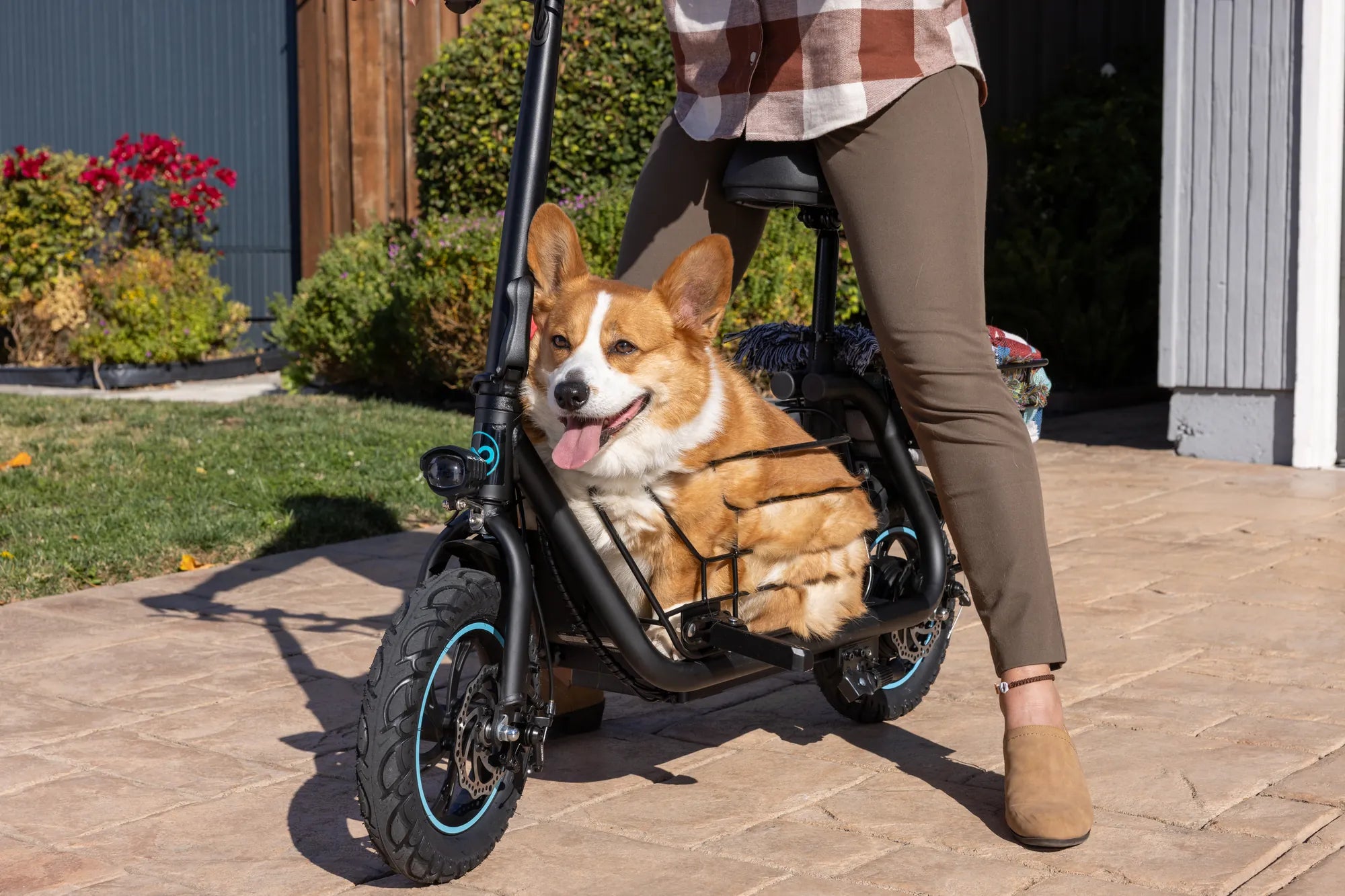
Introduction to Fat Tyre Electric Scooters
Fat tyre electric scooters are defined by their oversized, wide tires, typically ranging from 8.5 to 10 inches in diameter and 3 to 4 inches in width. This design fundamentally shifts the riding experience from standard models, prioritizing capability over minimalism. This guide will provide a detailed analysis of their power, performance, and practical applications, helping you determine if this robust scooter type aligns with your mobility needs.
The core value proposition of a fat tyre electric scooter is enhanced stability, superior traction, and increased comfort, enabling riders to confidently tackle diverse terrains. From cracked city sidewalks and wet cobblestones to gravel paths and packed sand, these scooters expand your riding possibilities beyond smooth pavement. We will examine the engineering behind these benefits and the trade-offs involved, such as increased weight and rolling resistance.
Understanding the specifications and real-world performance of these machines is crucial for making an informed purchase. This guide will dissect key components like motor configurations, battery systems with a focus on safety certifications, and frame durability. By the end, you'll know exactly what to look for in a high-quality fat tyre electric scooter and how to maximize its lifespan and performance.
Why Choose a Fat Tyre Scooter? Key Benefits Unpacked
Choosing a fat tyre electric scooter is a decision to prioritize versatility and rider confidence. The benefits stem directly from the physics of a larger contact patch and high-volume air-filled tires, which create a fundamentally different ride quality compared to standard commuter scooters. These advantages address common pain points for urban commuters and recreational explorers alike.
For riders navigating unpredictable city infrastructure or seeking adventure off the beaten path, the fat tyre design offers tangible improvements in safety and capability. The following sections break down the three primary benefits that justify the investment in this scooter category, explaining not just the 'what' but the 'why' behind each advantage.
Unmatched Stability and Confidence
The wide tires create a significantly larger contact patch with the ground, effectively lowering the scooter's center of gravity and improving its geometric trail. This translates to exceptional balance, especially at lower speeds and when navigating tight turns. For beginners, this inherent stability reduces the learning curve and builds confidence quickly.
This stability is most valuable on uneven surfaces. When a standard scooter's narrow tire might catch in a crack or tram track, a fat tyre simply rolls over it. The platform feels planted and secure, reducing the micro-adjustments constantly required on less stable scooters. This makes fat tyre models excellent for riders of all skill levels who value a secure, predictable ride.
Superior Traction and All-Terrain Capability
Traction is a function of contact area and tread pattern. Fat tyres excel in both. The wide profile provides more rubber gripping the surface, while the aggressive, deep tread common on these tires can channel mud, water, and loose material away. This grants legitimate all-terrain capability, a term often overused but genuinely applicable here.
You can confidently ride over wet leaves, light gravel, hard-packed dirt trails, grass fields, and even sandy beaches where a standard scooter would immediately bog down or slip. This versatility transforms the scooter from a fair-weather pavement vehicle into a true four-season, multi-surface personal transporter. It's the difference between avoiding puddles and riding straight through them with control.
Enhanced Comfort and Shock Absorption
The high-volume air inside a fat tyre acts as a highly effective natural suspension system. When the tire hits a bump, pothole, or expansion joint, the air compresses to absorb the impact before it transfers through the frame to the rider. This results in a remarkably smoother ride compared to the harsh, jarring feedback of small, solid or semi-pneumatic tires.
This comfort reduction in vibration and impact fatigue is a major benefit for longer commutes or recreational rides. Your hands, wrists, knees, and back experience significantly less stress, allowing you to ride farther and more frequently without discomfort. For aging infrastructure or poorly maintained paths, this feature is not a luxury but a necessity for practical daily use.
Critical Features to Evaluate in a Fat Tyre E-Scooter
Selecting the right fat tyre electric scooter requires looking beyond the tires themselves to the complete system that delivers power, range, and durability. A scooter is only as good as its weakest component. This section provides a data-driven framework for comparison, focusing on the specifications that translate directly to real-world performance and long-term reliability.
Investing in a scooter with a balanced feature set from a reputable brand ensures safety, satisfaction, and value over time. We emphasize features where leading brands like Gyroor differentiate themselves, such as certified battery safety and robust water resistance, which are critical for real-world, all-condition riding.
Motor Power and Hill Climbing Ability
Motor power, measured in watts (W), dictates acceleration, top speed, and most importantly, hill-climbing capability. For fat tyre scooters, which have higher rolling resistance and are often heavier, adequate power is non-negotiable. A 350W motor is a practical minimum for flat urban areas, while 500W or higher is recommended for cities with hills or for light off-road use.
Dual-motor configurations (e.g., 500W x2) provide exceptional torque for steep inclines (often 25-30 degrees) and aggressive acceleration. The trade-off is reduced range per charge. When evaluating, consider the scooter's gradeability rating—the maximum incline it can climb—which is a more practical metric than wattage alone. A powerful motor ensures the scooter's all-terrain promise can be kept, even on challenging slopes.
Battery Range and UL-Certified Safety
Range is determined by battery capacity (Watt-hours, Wh), rider weight, terrain, speed, and temperature. Manufacturers often cite an "ideal" range; a practical rule is to expect 60-70% of that figure in real-world mixed use. For a fat tyre scooter used for exploration, a battery with at least 360Wh capacity is advisable for a reliable 15-20 mile real-world range.
Battery safety is paramount. Insist on models with UL 2271 or UL 2849 certified battery packs. This independent certification, a standard feature for Gyroor scooters, verifies rigorous testing for electrical, mechanical, and environmental safety, drastically reducing fire risk. These batteries are also engineered for longevity, often supporting 500+ full charge cycles while maintaining over 80% of original capacity, protecting your investment.
Build Quality, Water Resistance, and Warranty
The frame must withstand the additional stresses of off-road riding. Look for aircraft-grade aluminum or reinforced steel construction. Sealed bearings and high-quality welds are indicators of durable build quality. The scooter's IP rating for water and dust resistance is critical for an all-terrain vehicle.
An IPX5 rating, common on Gyroor models, means the scooter can withstand water jets from any direction, making it safe to ride in heavy rain and through puddles. This is essential for true all-weather capability. Finally, a comprehensive warranty—ideally 1 year on the vehicle and 6 months on the battery—signals the manufacturer's confidence in their product and provides you with essential protection against defects.
Fat Tyre Scooter vs. Standard Scooter: A Direct Comparison
To make an informed choice, a direct, attribute-by-attribute comparison between fat tyre and standard electric scooters is essential. The decision often comes down to a trade-off between comfort and capability versus portability and price. The following table and analysis clarify these trade-offs to align with your primary use case.
| Attribute | Fat Tyre Electric Scooter | Standard Commuter Scooter |
|---|---|---|
| Ride Comfort | High. Excellent shock absorption from air-filled tires. | Moderate to Low. Harsher ride; reliant on deck flex or small suspension. |
| Terrain Versatility | All-Terrain. Confident on pavement, gravel, grass, dirt. | Pavement-Only. Best on smooth, paved surfaces. |
| Stability & Traction | Excellent. Very stable at low speed, superior wet/dry grip. | Good. Stable on perfect pavement; traction limited by tire width. |
| Portability & Weight | Lower. Heavier (often 45-65 lbs), bulkier to carry/store. | Higher. Lighter (often 25-40 lbs), more compact when folded. |
| Typical Price Point | Higher. More robust components and larger tires. | Lower. Simplified design and smaller components. |
| Maintenance | Focus on tire pressure checks; potential for punctures (repairable). | Less tire maintenance; solid tires are puncture-proof but harsh. |
This comparison highlights that fat tyre scooters are specialized tools for comfort and exploration, while standard scooters are optimized for lightweight, last-mile logistics on known, smooth routes. Your daily environment and riding priorities should guide your choice.
Maximizing Your Ride: Maintenance and Safety Tips
Ownership of a high-performance vehicle like a fat tyre electric scooter comes with the responsibility of proper maintenance and safe operation. Proactive care maximizes performance, extends lifespan, and, most importantly, keeps you safe. These practices are simple but have an outsized impact on your long-term riding experience.
Adhering to a basic maintenance schedule and adopting terrain-appropriate riding techniques will ensure you get the most value and enjoyment from your investment. This section covers the essential, non-negotiable practices for every fat tyre scooter owner.
Tire Care and Pressure Checks
The tires are your scooter's primary safety and performance system. Check tire pressure weekly using a digital gauge, inflating to the PSI range printed on the tire sidewall (typically 30-50 PSI). Proper pressure ensures optimal range, grip, and puncture resistance. Under-inflation increases rolling resistance and wear, while over-inflation reduces traction and comfort.
Regularly inspect tires for embedded debris, cuts, or excessive wear. The deep tread on fat tyres can hide small nails or glass. Carry a compact repair kit for pneumatic tires. Rotating the tires front-to-back every few hundred miles can promote even wear, especially on single-motor models where the drive tire experiences more stress.
Safe Riding Practices for Different Terrains
Adjust your speed and technique to the surface. On pavement, maintain normal speeds but be vigilant for oil slicks and metal plates. On loose surfaces like gravel or dirt, reduce speed significantly, use gentle, progressive braking (favoring the electronic brake first), and avoid sharp turns that can cause the tire to slide out.
Always wear a helmet. For off-road riding, consider additional protective gear like gloves and knee pads. Use lights and reflective elements day and night. Assume drivers do not see you. Practice emergency braking in a safe, open area to understand your scooter's stopping distance on different surfaces. Your safety is governed by the limits of traction and visibility.
Leveraging Your Warranty and Support
Proper care preserves your warranty coverage. Store the scooter in a dry, temperate environment and avoid exposing the battery to extreme heat or cold for prolonged periods. Do not use non-certified chargers. If an issue arises, contact the manufacturer's support first. A reputable brand like Gyroor offers a clear 1-year warranty and accessible customer support.
Keep your proof of purchase and warranty documentation. Before attempting any complex repairs yourself, consult the manufacturer, as DIY work on electrical or structural components may void the warranty. Proper maintenance records can also be helpful in the warranty claim process.
Frequently Asked Questions (FAQ)
Q: Are fat tyre electric scooters good for daily commuting?
A> Yes, they are excellent for daily commuting, particularly in cities with poor road conditions. Their superior comfort and stability reduce rider fatigue, and their all-weather capability (with proper IP rating) means you can ride rain or shine. The main drawback is their weight if you need to carry them up stairs or onto public transport frequently.
Q: How much slower are they due to rolling resistance, and what's a realistic top speed?
A> The rolling resistance from wider tires can reduce top speed by 1-3 mph compared to a similarly powered standard scooter. However, most quality fat tyre models with 500W+ motors still achieve top speeds of 19-25 mph, which is more than sufficient for urban and trail use. The trade-off is worth it for the gains in comfort and control.
Q: Can they handle rain and puddles safely?
A> Models with a high IP water resistance rating (IPX5 or higher, like many Gyroor scooters) are designed to handle rain and puddles safely. The electrical components are sealed against water ingress. However, riding in wet conditions always requires extra caution—reduce speed, increase following distance, and avoid sharp turns or hard braking to prevent skidding.
Q: Is the heavier weight a major drawback?
A> It depends on your use case. The weight (45-65 lbs) provides a stable, planted feel while riding. The drawback is in portability: carrying it up flights of stairs or loading it into a car is more challenging. If your commute involves multi-modal transport with significant carrying, the weight is a key consideration. If you ride from door to door, it's less of an issue.
Q: What makes UL-certified battery packs so important?
A> UL certification (UL 2271/2849) is an independent verification that the battery pack has passed stringent safety tests for electrical, mechanical, and environmental hazards. It dramatically reduces the risk of battery fires—a critical concern with lithium-ion batteries. It also indicates higher quality cells and battery management systems, leading to longer overall battery life and more consistent performance. Never compromise on this safety feature.
Conclusion: Is a Fat Tyre Electric Scooter Right for You?
A fat tyre electric scooter is the right choice if your priorities are ride comfort, all-terrain confidence, and stable, predictable handling. It is the ideal solution for the urban commuter tired of being jolted by potholes, the suburban explorer wanting to connect park paths and sidewalks, or the rider seeking a single vehicle for both city streets and weekend trail adventures. The power and performance offered by these robust machines unlock a new level of mobility freedom.
If your primary need is ultra-portability for a multi-modal commute involving trains and buses where you must carry the scooter frequently, or if you exclusively ride on pristine bike paths, a standard lightweight scooter may be more practical. The decision hinges on the terrain you face daily and the experience you value most.
When you decide a fat tyre scooter fits your life, choose a brand that backs its all-terrain claims with foundational safety and durability. Look for UL-certified batteries, a meaningful water resistance rating (IPX5 or better), and a solid warranty. Brands like Gyroor build these essential features into their designs, offering riders a reliable combination of performance, safety, and support trusted by a global community.
Ready to experience the ultimate in stability and all-terrain performance? Explore engineering that puts safety and durability first. Browse the full Gyroor collection at gyroorboard.com to find the fat tyre electric scooter built for your adventures.
Electric Scooters With Lithium Battery for Adults: The Ultimate Urban Commuting Solution
Top 5 Electric Scooters in India: The Best Picks for 2024