



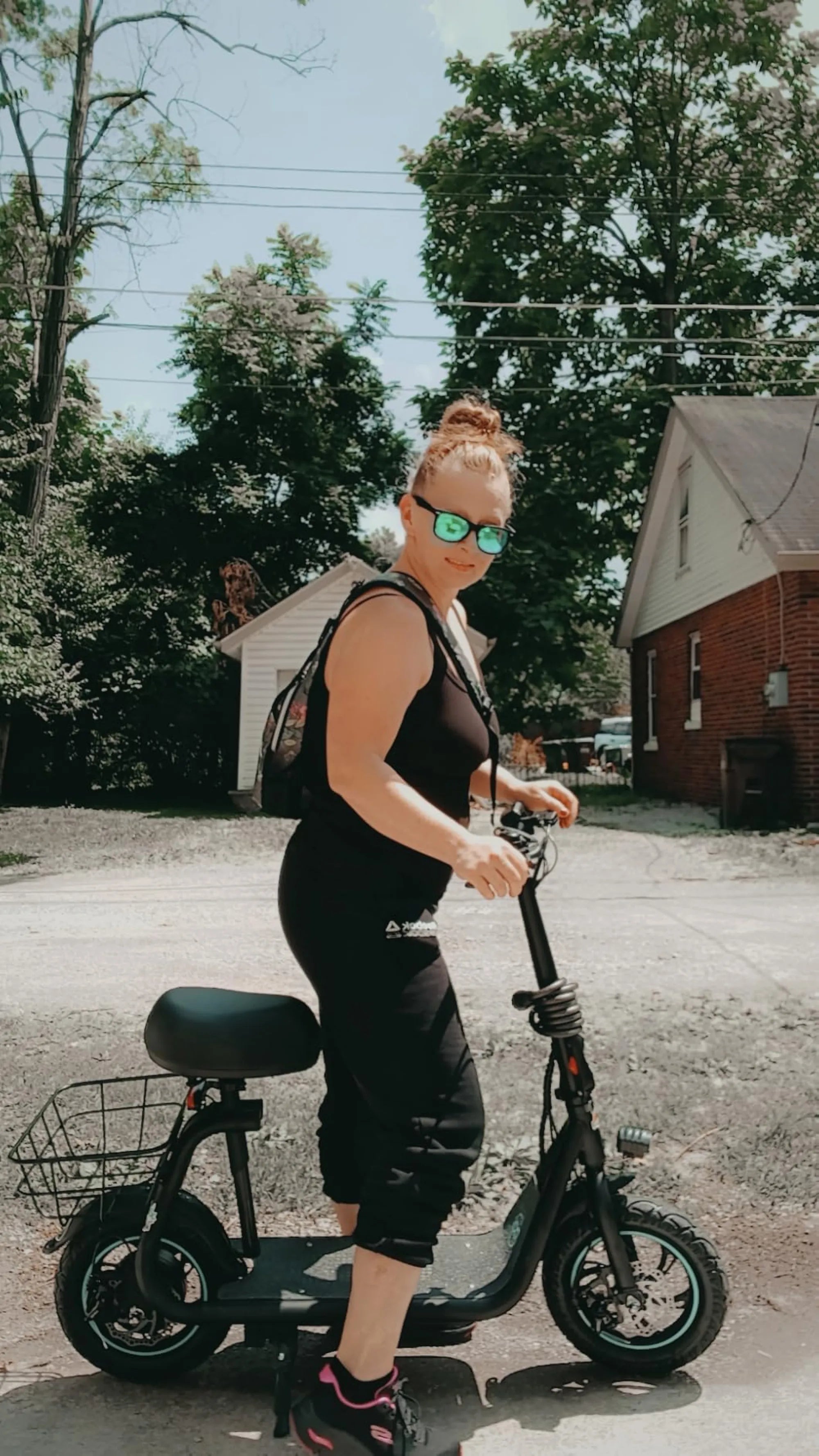
Introduction to E-Bike Range: The Core Question
For anyone considering an electric bike, the first and most critical question is almost always: how many miles can an ebike go? This figure, known as the range, dictates how far you can travel on a single battery charge and ultimately determines if an e-bike fits your commuting, errand-running, or recreational needs.
The advertised maximum range on a spec sheet is often a best-case scenario achieved under laboratory conditions. Your real-world mileage will be a spectrum, not a single number, influenced by a combination of factors you control and conditions you encounter. Understanding this 'range equation' is the key to setting accurate expectations and choosing the right e-bike for your lifestyle.
This guide will demystify e-bike range. We will dissect the primary variables that impact mileage, provide realistic range brackets for common use cases, and offer actionable strategies to help you squeeze the maximum distance from every charge.
The Key Factors That Determine Your E-Bike's Range
The distance your e-bike can travel is governed by a simple principle: energy in versus energy out. The battery stores a finite amount of energy (Watt-hours), and how quickly that energy is depleted depends on the demands placed on the motor. Five core factors directly influence this consumption rate.
Battery Capacity: The Fuel Tank (Voltage & Amp-Hours)
Think of your e-bike's battery as its fuel tank. Capacity is measured in Watt-hours (Wh), which is calculated by multiplying voltage (V) by amp-hours (Ah). A higher Wh rating means a larger 'tank' and more potential miles.
For example, a common 48V 10.4Ah battery has a capacity of roughly 500Wh. A higher-performance 48V 14Ah battery offers about 672Wh. This is the most fundamental determinant of range; a larger capacity battery will always provide more potential mileage, all else being equal.
Rider Input: Pedal Assist vs. Throttle-Only Mode
How you engage the motor is the single greatest variable under your control. Using only the throttle (like a scooter) draws maximum, continuous power from the battery, resulting in the shortest possible range.
In contrast, pedal-assist (PAS) modes blend your pedaling effort with motor power. Using a low PAS level (Eco or 1) for cruising on flat ground dramatically extends range. The higher the assist level (up to Turbo or 5), the more power the motor provides and the faster the battery drains.
Terrain and Riding Conditions: Hills, Wind, and Surface
Physics plays a major role. Climbing hills requires significant motor torque and power, which can cut your range by 30-50% compared to flat terrain. Similarly, riding into a strong headwind forces the motor to work harder.
Even the riding surface matters. Smooth pavement offers the least rolling resistance. Gravel, grass, or sand increase resistance, forcing the motor to expend more energy to maintain speed, thereby reducing your total miles per charge.
Rider and Cargo Weight: The Load on the System
The total weight the e-bike must move—rider, gear, and any cargo—directly impacts energy consumption. A heavier load requires more power to accelerate and climb. Adding 50 lbs of cargo or a second rider (on a cargo bike) will noticeably reduce the advertised range.
Manufacturers often calculate range estimates based on a standard rider weight (e.g., 165 lbs). If you or your typical load exceed this, you should adjust your range expectations downward.
Tire Pressure and Maintenance: Rolling Resistance
Simple mechanical efficiency has a direct effect. Under-inflated tires create excessive rolling resistance, making the motor work harder. Keeping tires inflated to the recommended PSI on the sidewall is a free and easy way to preserve range.
A clean, well-lubricated chain and a properly aligned drivetrain also ensure that more of the motor's power (and your pedaling effort) is transferred to the wheel, rather than lost to friction.
Real-World Range Expectations: From Minimum to Maximum
Given the variables, what can you actually expect? The following table provides realistic range estimates for a typical 500Wh battery under different common scenarios. These are practical brackets to help you plan.
| Rider Scenario | Conditions & Usage | Estimated Range (500Wh Battery) |
|---|---|---|
| Maximum/Economy Mode | Low PAS (Eco), flat terrain, lightweight rider, optimal conditions | 40 - 60+ miles |
| The Urban Commuter | Mixed PAS 1-3, stop-and-go city streets, some small hills | 30 - 45 miles |
| The Weekend Explorer | Frequent PAS 3-4, mixed terrain with sustained hills | 20 - 35 miles |
| The Power User / Cargo Hauler | High PAS 4-5 / frequent throttle, heavy load, steep hills | 15 - 25 miles |
It's crucial to remember that these are estimates for a 500Wh system. E-bikes with larger 672Wh or 750Wh batteries can extend these ranges proportionally, while smaller 360Wh batteries will deliver less.
The Commuter's Scenario (PAS 1-2, Flat Urban)
For the daily commuter using moderate assist on relatively flat city roads, a 500Wh battery is highly capable. By using lower assist levels for cruising and only bumping it up for hills or acceleration from stops, achieving a consistent 35-45 mile range is very realistic.
This makes e-bikes with 500Wh+ batteries excellent for round-trip commutes of 15-20 miles, with a comfortable buffer for errands or detours without needing a midday charge.
The Weekend Explorer's Scenario (Mixed PAS, Hills)
Recreational rides often involve more varied terrain. On a route with rolling hills, you'll likely use higher assist levels on the climbs. This increased power draw brings the expected range for a 500Wh battery down to the 25-40 mile bracket.
For longer adventure rides, planning your route to manage battery consumption or opting for an e-bike with a dual-battery option becomes important.
The Power User's Scenario (High PAS/Throttle, Heavy Load)
If you consistently use the highest power settings, carry heavy groceries or a child, or tackle very steep grades, the battery will deplete rapidly. In these demanding use cases, the same 500Wh battery may only last 15-25 miles.
This underscores the importance of matching battery capacity to your most strenuous typical use, not your easiest ride. For power users, a 672Wh or larger battery is often the right choice.
How to Maximize Your E-Bike's Range: Pro Tips
Extending your e-bike's range is a skill. By adopting efficient habits, you can consistently achieve more miles per charge and reduce range anxiety.
Master Your Pedal Assist Settings
Treat the throttle as a boost for tough situations, not a default. Develop a habit of starting your pedal stroke first, then engaging a low PAS level. Learn which assist level is the minimum needed for your comfort on a given incline.
Use higher assist levels (Turbo) strategically for short, steep hills or quick acceleration into traffic, then drop back down to Eco or Standard for cruising on flats and descents.
Optimize Riding Technique and Route Planning
Adopt a smooth, steady riding style. Jackrabbit starts from stoplights consume a huge amount of energy. Instead, accelerate gradually. Try to maintain momentum, as it takes less energy to keep a bike moving than to restart it.
When possible, plan your route to avoid the steepest, longest climbs. Even a slightly longer route with a gentler grade can save significant battery power. Use bike paths and smooth roads to minimize rolling resistance.
Prioritize Bike and Battery Care
Make weekly tire pressure checks part of your routine. Lubricate the chain every 100-200 miles. A well-maintained bike is an efficient bike.
For the battery, avoid letting it fully deplete to 0%. Try to recharge when it hits 20-30%. Store the battery (and e-bike) in a cool, dry place, and avoid leaving it at 100% charge for extended periods (weeks) if not in use. These practices help maintain long-term battery health and capacity.
Gyroor's Commitment to Reliable Range and Peace of Mind
At Gyroor, we engineer our e-bikes to deliver consistent, real-world range that riders can trust. Our focus on core components and rider support ensures the mileage you expect is the mileage you get.
Built for Consistency: UL-Certified Batteries & IPX5 Design
The heart of reliable range is a reliable battery. Every Gyroor e-bike is powered by a UL 2271-certified lithium-ion battery pack. This rigorous safety standard also ensures high-quality cells that deliver consistent voltage and capacity over hundreds of charge cycles, so your range doesn't degrade prematurely.
Furthermore, our IPX5 water-resistant rating protects the motor, controller, and electrical connections from rain and splashes. Environmental protection is key to preventing issues that could cause power fluctuations or inefficiencies, ensuring every component works optimally to preserve your range ride after ride.
Supported for the Long Ride: The 1-Year Comprehensive Warranty
Confidence in your e-bike's performance is paramount. Gyroor backs the core systems that determine range—the battery, motor, and frame—with a robust 1-year warranty. This commitment means you're covered if a component doesn't perform to specification.
Our US-based customer support team is there to help troubleshoot and ensure your e-bike maintains its advertised potential. For over 100,000 riders across North America and Europe, this combination of quality engineering and dedicated support is what makes every mile predictable and enjoyable.
How Many Miles Can an Ebike Go: E-Bike Range FAQ
Q: Can I increase my e-bike's range with a second battery?
A: Yes, if your e-bike model supports a dual-battery system or has an external battery port, adding a second, compatible battery will effectively double your total Watt-hour capacity and potential range. Some models are designed specifically for this.
Q: How does cold weather affect my e-bike battery range?
A: Cold temperatures (below 50°F / 10°C) significantly reduce lithium-ion battery performance. You can expect a 20-30% reduction in range in freezing conditions. Store your battery indoors when not riding and, if possible, keep it insulated during your ride to mitigate this effect.
Q: What's the difference between 'maximum' and 'real-world' range?
A: 'Maximum' range is a lab-test result under ideal conditions: low assist, flat ground, lightweight rider, no wind. 'Real-world' range accounts for the variables discussed—hills, weight, higher assist levels, and stops/starts. Always plan using a realistic estimate, not the maximum.
Q: How long does it take to fully charge an e-bike battery?
A: Charge time depends on battery capacity and charger amperage. A standard 500Wh battery with a 2A charger takes about 6-7 hours for a full charge (0-100%). A faster 4A charger can cut that to 3-4 hours. Most batteries charge to 80% relatively quickly, with the last 20% taking longer.
Q: Does regenerative braking add meaningful range?
A> On most e-bikes, no. Regenerative braking, which converts braking energy back into battery charge, is more common on electric scooters. On e-bikes, the system complexity and added weight often offset the minimal energy recaptured (typically 5-10% at most, only on long descents). It's not a feature to rely on for significant range extension.
Conclusion: Finding Your Perfect Range Match
Ultimately, the question of how many miles can an ebike go is personal. The answer lies in honestly assessing your primary use case, typical load, and local terrain. The key is to choose an e-bike with a battery capacity that comfortably exceeds your longest regular trip, providing a buffer for wind, hills, or spontaneous detours.
By understanding the factors within your control and adopting efficient riding habits, you can maximize the potential of any e-bike. Investing in a brand like Gyroor, with its foundation of UL-certified batteries, weather-resistant design, and comprehensive warranty, provides the dependable performance needed to turn estimated range into guaranteed confidence for every journey.
Ready to find an e-bike with the perfect range for your adventures? Browse the full Gyroor collection of reliable, high-performance e-bikes and electric scooters at gyroorboard.com.
27.5 Ebike Tires: The Ultimate Guide to Size, Performance & Selection
How Much Is a 450 Dirt Bike: The 2024 Price & Ownership Guide