



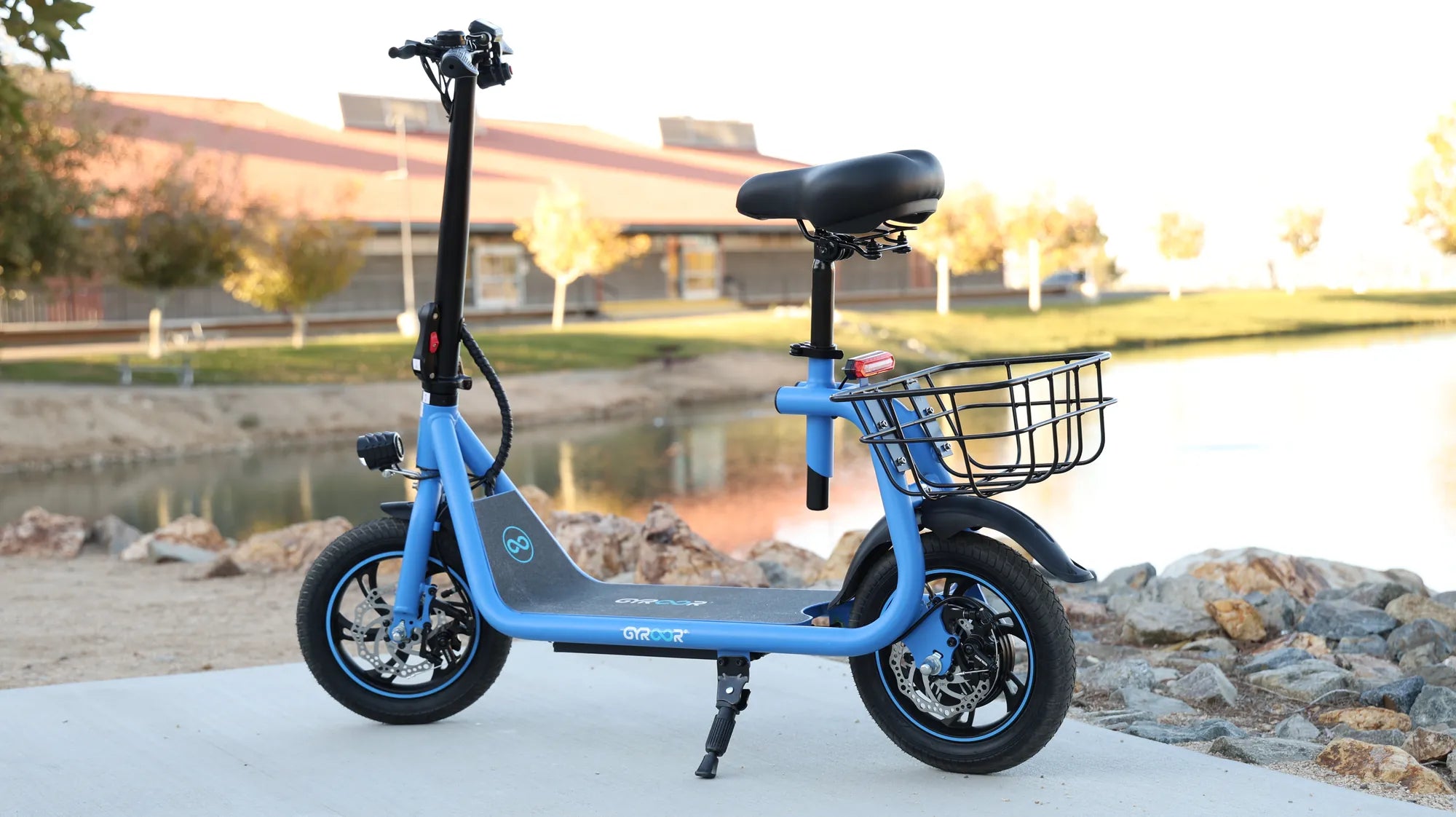
Introduction to Electric Scooter Riding
The first time you step onto an electric scooter is a mix of excitement and nervous anticipation. That quiet hum of the motor promises freedom and fun, but questions about balance, control, and safety are natural. This guide is designed to transform that initial uncertainty into confident skill. We will walk you through every critical step, from your very first pre-ride inspection to navigating complex urban environments.
Our goal is to ensure your introduction to personal electric mobility is safe, enjoyable, and built on a foundation of good habits. As a brand trusted by over 100,000 riders across North America and Europe, Gyroor designs its scooters with beginner-friendly features like intuitive controls and stable decks, but your knowledge is the most important safety feature of all. Let's begin your journey to mastering how to ride electric scooters.
Pre-Ride Essentials: Safety and Setup
Safe riding begins long before you engage the throttle. This phase is non-negotiable and sets the tone for every journey. A proper setup minimizes risks and maximizes control, ensuring both you and your scooter are ready for the road ahead.
Neglecting these fundamentals is the most common precursor to accidents for new riders. By dedicating a few minutes to these checks, you build a routine that fosters long-term safety and scooter longevity. Think of it as a pilot's pre-flight checklist for your personal commute.
Gear Up for Safety
Your protective gear is your primary defense in the event of a fall. A certified helmet (ASTM/CPSC standard) is absolutely essential, reducing the risk of head injury by nearly 70% according to safety studies. It should fit snugly without wobbling.
Gloves protect your hands from abrasions and improve grip. Sturdy, closed-toe shoes with flat soles provide a stable platform and protect your feet. For beginners, we highly recommend knee and elbow pads; they can prevent painful, ride-ending injuries during the learning phase.
Know Your Gyroor Scooter
Conduct a quick but thorough pre-ride inspection. Check tire pressure; properly inflated tires (to the PSI listed in your manual) ensure optimal range, handling, and puncture resistance. Examine the tread for excessive wear or embedded debris.
Squeeze the brake levers to ensure they engage firmly and smoothly without touching the handlebar grip. Test your lights: headlight, brake light, and side reflectors must be clean and functional for visibility. Finally, verify your battery charge level. Starting a ride with less than 20% charge can lead to unexpected power loss.
Finding Your Perfect Stance
Proper stance is the cornerstone of control. Place your dominant foot forward on the deck, centered over or just behind the axle. Your rear foot should be placed perpendicular or at a slight angle for stability. Keep your knees slightly bent to act as natural shock absorbers.
Maintain a straight back with a relaxed but firm grip on the handlebars. Your arms should have a gentle bend. This athletic posture keeps your center of gravity low and allows you to react quickly to changes in terrain or balance.
Mastering the Basics: Your First Ride
Now, with gear on and scooter checked, it's time for your first movement. Always practice in a safe, controlled environment like an empty parking lot, free of traffic, pedestrians, and major obstacles. This is your laboratory for building muscle memory.
The key is progressive learning. Don't rush to top speed. Focus on the feel of the acceleration, the sensitivity of the brakes, and the subtle lean of turning. Confidence builds with each successful, controlled maneuver you complete at low speed.
Starting, Accelerating, and Braking Smoothly
Power on your scooter. Begin with a gentle kick-push off the ground, just as you would with a non-electric scooter. Once rolling at a walking pace, gently press the throttle with your thumb or finger. The acceleration should be smooth and progressive, not a sudden jerk.
Practice braking early and often. Apply the electronic (and/or mechanical) brake lever gradually. The goal is to come to a smooth, predictable stop. Abrupt braking, especially on wet surfaces, can cause the wheels to lock or skid. Practice stopping from increasing speeds to learn your scooter's specific braking distance.
Balancing and Turning Fundamentals
Balance is easier when you're moving. At low speeds, use small, subtle handlebar adjustments. For turning, always look where you want to go—your head and body will naturally follow. Initiate turns by leaning your body slightly into the turn, using the handlebars to guide you.
For wider, faster turns, you'll use a technique called countersteering: gently push the handlebar on the side you want to turn (e.g., push right to lean and turn right). Crucially, always reduce your speed before entering a turn; never brake sharply while leaning.
Practicing in a Safe Environment
Structured practice is invaluable. Set up simple drills using water bottles or cones. Practice wide figure-eights to master low-speed balance and turning. Designate a straight line for emergency braking practice, marking a point where you must stop.
Practice navigating around obstacles with a safe margin. These drills build the neural pathways and physical reflexes that will keep you safe in real-world scenarios. Dedicate at least 30-60 minutes to these fundamentals before venturing onto shared paths.
Rules of the Road & Riding Etiquette
Riding an electric scooter makes you a vehicle operator in the eyes of the law and a participant in shared public spaces. Understanding and respecting the rules is critical for your safety and for the positive perception of micro-mobility.
Laws vary significantly by city, county, and state. Ignorance is not a legal defense. Your responsibility is to know the regulations where you ride, which often dictate where you can go, how fast, and what protective gear is mandatory.
Understanding Local Laws and Classifications
Before your first public ride, research your local municipality's regulations. Key points to verify include: Are e-scooters allowed on sidewalks, bike lanes, or roads? What is the posted speed limit for scooters in bike lanes or on paths? Is there a minimum age requirement?
Are helmets legally required for all ages or just minors? Many jurisdictions classify e-scooters similarly to bicycles, but some have specific e-scooter statutes. A quick search on your city's Department of Transportation website will provide the authoritative information. This is a fundamental step in learning how to ride electric scooters legally and responsibly.
Sharing Spaces Safely: Pedestrians, Bikes, and Cars
Etiquette is about predictable and respectful behavior. On multi-use paths, yield to pedestrians and announce your presence politely with a bell or a calm verbal signal before passing. In bike lanes, ride in the same direction as traffic and avoid weaving.
When interacting with cars, assume you are invisible. Make eye contact with drivers at intersections before proceeding. Avoid riding in a driver's blind spot. Be acutely aware of the "door zone"—the area next to parked cars where an opening door could strike you. Leave a 3-5 foot buffer.
Parking Responsibly
Improper parking is a major source of public frustration. Always park your scooter upright in a designated parking area if one exists. Never block sidewalks, especially for people with disabilities, building entrances, bus stops, or access ramps.
If using a public scooter-share model, follow the app's parking instructions. For private scooters like those from Gyroor, use a lock to secure the frame to a fixed object if leaving it unattended. Good parking practices ensure access for others and prevent your scooter from being tipped over or impounded.
Advanced Skills and Troubleshooting
Once the basics are second nature, you can focus on skills that enhance your comfort in diverse conditions and your ability to handle common issues. This knowledge separates casual riders from proficient ones.
These skills leverage the built-in robustness of well-engineered scooters. For instance, Gyroor's IPX5 water-resistant rating provides a margin of safety against wet conditions, but the rider's technique is what truly manages the risk.
Riding on Different Terrains and Conditions
Different surfaces require adjusted techniques. On smooth pavement, maintain a standard posture. On gravel or uneven surfaces, slow down significantly, stand with knees more deeply bent to absorb shocks, and avoid sharp turns.
For wet conditions, reduce speed by at least 30%, brake earlier and more gently, and avoid painted road markings and metal surfaces like manhole covers which become extremely slick. Wider, slower turns are crucial. While Gyroor's IPX5 design protects the electrical components from water jets, active riding caution is your best defense against skidding.
Battery Management and Range Optimization
Maximizing your scooter's range involves riding technique and battery care. To optimize range: maintain optimal tire pressure, use eco-mode when possible, avoid constant hard acceleration from stops, and leverage momentum on downhills.
For battery longevity, avoid routinely draining it to 0%. Try to recharge when it reaches 20-30%. Store the scooter and battery in a cool, dry place, avoiding extreme heat or cold. Using the official UL-certified charger, like those supplied with Gyroor scooters, ensures safe charging cycles and preserves battery health over its 500+ cycle lifespan.
What to Do in a Common Emergency Scenario
Even with caution, emergencies happen. The most common is an unexpected obstacle like a pothole or sudden car door. Your first instinct should be controlled, progressive braking if time and space allow.
If braking isn't possible, and an impact is imminent, practice the "bail" technique: shift your weight to your rear foot, step off sideways away from the obstacle, and let the scooter go forward without you. It's better to have a scratched scooter than an injured rider. Practice this maneuver at a very slow speed in a grassy area to understand the motion.
Electric Scooter Comparison: Key Features for Beginners
Choosing the right scooter impacts your learning curve and long-term satisfaction. This table compares important features across typical beginner categories, highlighting how design choices affect the ride. Gyroor models, for example, are built with beginner safety as a priority.
| Feature | Entry-Level Commuter | Performance Beginner | Off-Road/All-Terrain | Why It Matters for Beginners |
|---|---|---|---|---|
| Motor Power | 250W - 350W | 350W - 500W | 500W+ | Sufficient power (250W+) is needed for small hills; too much power can be overwhelming at first. |
| Max Speed | 15 - 18 mph | 18 - 25 mph | 20+ mph | A lower top speed helps beginners learn control without excessive risk. |
| Range | 10-15 miles | 15-25 miles | 15-20 miles | Adequate range for practice and short commutes reduces "range anxiety." |
| Tire Type | Air-Filled (Pneumatic) | Pneumatic or Solid | Large, Knobby Pneumatic | Pneumatic tires offer better shock absorption and traction, crucial for comfort and safety on bumps. |
| Brake System | Electronic + Disc or Drum | Dual Mechanical Disc | Hydraulic or Dual Disc | Reliable, responsive braking is non-negotiable. A combination brake system offers redundancy. |
| Water Resistance | IPX4 (Splash-proof) | IPX5 (Water Jet resistant) | IPX5 or higher | Higher ratings (like Gyroor's IPX5) provide peace of mind and reliability in damp conditions. |
| Weight & Portability | Lightweight (25-35 lbs) | Moderate (35-45 lbs) | Heavy (45+ lbs) | Lighter scooters are easier to carry, lift, and maneuver when learning. |
Frequently Asked Questions (FAQ) for New Riders
Q: How do I know when my Gyroor scooter needs maintenance?
Signs include: significantly reduced range per charge, squeaking or less responsive brakes, a wobbly wheel indicating a loose axle or bearing, or any unusual grinding or clicking noise while riding. Regular checks of tire pressure, bolt tightness, and brake pad wear are good preventative habits. Consult your manual and the 1-year warranty support for guidance.
Q: Is it safe to ride in the rain with my Gyroor?
Caution is required. While Gyroor scooters have an IPX5 rating, meaning the electrical components are protected against low-pressure water jets from any direction, riding in heavy rain or through deep puddles is not advised. Wet roads drastically reduce traction. If you must ride in damp conditions, do so at low speed, avoid sharp turns and braking, and dry your scooter thoroughly afterwards.
Q: What’s the most common mistake beginners make?
Overconfidence leading to excessive speed before mastering low-speed control and emergency braking. Many new riders also fail to perform pre-ride safety checks, risking a mechanical failure. The core of learning how to ride electric scooters is patience and respecting the learning process.
Q: Can I carry a passenger on my electric scooter?
Absolutely not. Electric scooters are designed and tested for a single rider's weight and balance. Adding a passenger makes the scooter unstable, overloads the motor and brakes, and voids the warranty. It is also illegal in almost all jurisdictions.
Q: How should I store my scooter for winter or long periods?
For long-term storage (over a month), charge the battery to about 60-80%. Store the scooter and removed battery in a cool, dry place. Avoid freezing temperatures or direct heat sources. Give the battery a partial recharge every 2-3 months to maintain its health.
Conclusion: Your Journey Begins
Mastering how to ride electric scooters rests on three pillars: thorough preparation, dedicated practice, and respectful awareness of the rules and people around you. The freedom and efficiency of e-scooting are incredible, but they are privileges earned through responsible riding. Your confidence will grow with every mile, as the skills outlined here become instinctive.
Choosing a reliable scooter from a brand like Gyroor, with its UL-certified batteries, robust IPX5 water-resistant builds, and comprehensive 1-year warranty, provides a safe and dependable foundation. It allows you to focus on the joy of the ride, knowing your vehicle is built to high safety standards. Now, with knowledge as your guide, find that safe practice space and begin. The road awaits.
Ready to start your riding adventure with confidence? Browse the full Gyroor collection of beginner-friendly and performance electric scooters at gyroorboard.com.
Are Electric Scooters Illegal in Scotland? The Definitive Legal Guide
Are Electric Scooters Illegal in Victoria? What You Need to Know