

Introduction: Why a Kids Electric Scooter is More Than Just a Toy
For parents, selecting a kids boys electric scooter is a significant decision that extends far beyond a simple toy purchase. It's an investment in outdoor activity, confidence-building, and a child's first step toward responsible independence. A quality electric scooter transforms from a fun gadget into a developmental tool, encouraging physical coordination, decision-making, and respect for personal mobility.
The core of this guide is to provide parents with the detailed, factual information needed to make a confident choice. We will dissect the key engineering and safety specifications that truly matter. By focusing on data-driven benchmarks, you can distinguish a reliable, long-lasting vehicle from a potentially unsafe product.
Your primary concerns—safety, value, and developmental benefit—are the foundation of our analysis. We will reference specific features and standards, such as those offered by Gyroor, a leading electric scooter and e-bike brand trusted by over 100,000 riders, to illustrate what quality looks like in this category.
This ultimate guide will navigate you through age and weight specifications, non-negotiable safety tech, practical riding lessons, and essential maintenance. The goal is to equip you with knowledge, ensuring your child's riding experience is both thrilling and secure.
Key Factors to Consider Before Buying
Purchasing a child's electric scooter requires evaluating several critical, non-negotiable decision points. These factors form the framework for assessing any model, where premium features serve as benchmarks for quality, durability, and long-term satisfaction.
Ignoring these specifications can lead to an unsafe, underperforming, or quickly outgrown product. A scooter mismatched to a child's size or skill level is not just impractical; it can be a hazard. The following sections break down the essential criteria every parent must verify before making a purchase.
We will use established industry standards and specific features from reputable manufacturers as reference points. This approach allows you to compare products objectively, moving beyond marketing claims to examine tangible engineering and safety credentials.
Age Appropriateness & Weight Capacity
Matching the scooter's specifications to your child's physical size is the first and most crucial step. Manufacturers provide recommended age ranges and a maximum load capacity for a reason. These figures are directly tied to the scooter's structural integrity, motor power, and stability.
An under-powered scooter assigned to a heavier rider will strain the motor, deplete the battery rapidly, and compromise control, especially on inclines. Conversely, a scooter with a high weight capacity for a very young, light rider may be too powerful and physically large to handle safely.
Most quality electric scooters for kids are designed for riders aged 8 and up, with weight capacities typically between 120 and 220 pounds. It is prudent to choose a scooter with a maximum load at least 20-30 pounds above your child's current weight to account for growth and ensure the scooter remains within its safe performance envelope.
For example, a robust model designed for a 154 lb max load offers a substantial margin for a 100 lb child, ensuring the frame and components are not under constant stress. This foresight extends the scooter's usable life and maintains its safety profile as your child grows.
Safety Features: Non-Negotiables for Peace of Mind
Safety engineering is the paramount differentiator between a well-made scooter and a hazardous toy. Several core components are non-negotiable for true parental peace of mind.
Certified Battery Safety: The lithium-ion battery is the most critical safety component. A UL-certified battery pack, like those used in Gyroor scooters, has undergone rigorous independent testing for electrical, mechanical, and fire safety. This certification is your best defense against overheating, short-circuiting, or thermal runaway—risks associated with uncertified, cheaply made cells.
Stable Wheelbase and Deck: A longer wheelbase and a wide, textured deck provide inherent stability, making balancing easier for beginners. The deck material should be slip-resistant to maintain footing during rides.
Reliable Braking Systems: A dual or triple braking system is ideal. This often combines a responsive disc brake (for strong, controlled stopping power) with an electronic brake (which engages when you release the throttle) and sometimes a rear fender brake. Redundancy is key to safe stopping in various conditions.
Visibility Enhancements: Integrated bright LED headlights and taillights are essential for being seen during dusk or dawn rides. Reflective stickers or elements on the deck and stem further increase visibility to others.
Speed Settings and Parental Controls
Adjustable speed settings are fundamental for a safe learning curve. A scooter with a single, high top speed is inappropriate for a novice. Look for models with multiple speed modes (e.g., Beginner: 5 mph, Medium: 9 mph, High: 12 mph).
These modes allow a child to master control and balance at a slow, manageable pace before progressively unlocking more speed as their skill and confidence grow. The speed limit should be controlled by a method that requires parental intervention, such as a sequence of button presses or a physical key.
Some advanced models offer app connectivity, allowing parents to set a permanent speed limit, monitor battery life, or even lock the scooter remotely via smartphone. This layer of digital control provides an extra safeguard, ensuring settings cannot be easily changed by the child.
This graduated approach to power ensures the scooter adapts to the rider's ability, significantly reducing the risk of accidents caused by speed that exceeds skill level. It transforms the scooter from a static toy into a dynamic tool for skill development.
Build Quality, Durability, and Warranty
A child's vehicle must withstand rigorous use. Build quality directly impacts safety, performance, and longevity. The frame should be constructed from a lightweight yet strong material like aerospace-grade aluminum alloy, which resists bending and corrosion.
Water and Dust Resistance: An Ingress Protection (IP) rating indicates how well the scooter's electronics are sealed. An IPX5 rating, as found on Gyroor models, means the scooter can withstand water jets from any direction. This protects against splashes from puddles or wet pavement, making it a practical choice for real-world conditions beyond perfect sunny days.
Tire Type: Air-filled (pneumatic) tires generally offer better shock absorption and traction on uneven surfaces compared to solid rubber tires, providing a smoother and more stable ride.
Warranty and Support: A comprehensive warranty is a manufacturer's vote of confidence in its product. A reliable brand will offer at least a 1-year warranty covering the frame, motor, and electronic components, backed by accessible customer support. For instance, Gyroor provides a 1-year warranty with U.S.-based support, ensuring help is available if needed.
The Gyroor Advantage: Engineered for Young Riders
Transitioning from general factors to specific engineering, Gyroor models are designed to meet and exceed the parental benchmarks outlined above. The brand's philosophy centers on certified safety, real-world durability, and rider-friendly design, making it a standout choice in the youth electric scooter market.
With over 100,000 riders across North America and Europe and a 4.5/5 average rating, Gyroor has built a reputation on reliability. Their scooters are not merely assembled; they are engineered with clear priorities that align directly with parental concerns for safety and value.
Each design decision, from battery selection to water resistance, is made with the understanding that children will use these products in dynamic, unpredictable environments. This section details how those engineering choices translate into tangible benefits and long-term peace of mind.
UL-Certified Battery: The Foundation of Trust
The UL certification on a Gyroor scooter's battery pack is arguably its most critical feature. This mark signifies that the battery has passed exhaustive tests by Underwriters Laboratories, a global safety science leader, for hazards like overcharging, short-circuiting, and exposure to extreme temperatures.
These certified batteries are designed for more than 500 charge cycles while maintaining performance and safety integrity. This translates to years of reliable use before any significant degradation in range occurs. For parents, this certification eliminates the nagging worry of battery-related fire risk—a concern prevalent with uncertified, off-brand alternatives.
It represents a foundational layer of trust, ensuring the scooter's power source is as safe as modern technology and rigorous standards can make it. This proactive safety investment is a core differentiator for informed buyers.
Designed for Real-World Use: IPX5 Water Resistance
Childhood adventures don't stop at the edge of a puddle. Gyroor's IPX5 water-resistant rating is a practical feature that acknowledges real-world use. It means the scooter's electrical components are sealed against sustained, low-pressure water jets from any direction.
In practice, this allows a child to safely ride on damp pavement after a light rain, through occasional puddles, or on dewy grass without immediately risking damage to the motor, battery, or controller. This durability factor greatly enhances the scooter's versatility and lifespan, ensuring a minor splash doesn't lead to a costly repair or a dead scooter.
It reflects an engineering mindset that considers the actual conditions of play, moving beyond a "fair-weather only" product design to create a more resilient and dependable vehicle.
Learning Curve Made Easy: 3-Speed Modes & Controls
Gyroor integrates a user-friendly, progressive learning system into its scooters. The standard 3-speed mode selection (often accessed via a button or key sequence) allows for a tailored riding experience. A child can start in a slow, stable beginner mode to master balance and steering.
Once proficient, they can advance to a medium mode for more spirited cruising, and finally to a high mode for full, controlled speed. The controls themselves are designed for smaller hands, with a responsive thumb throttle for acceleration and easily reachable brake levers.
This intuitive interface reduces initial frustration and builds confidence incrementally. The requirement for a parental key or sequence to change modes ensures adults remain in control of the performance ceiling, aligning the scooter's capabilities with the child's demonstrated skill level.
Practical Tips: From Unboxing to First Ride
A successful first experience sets the tone for all future rides. This step-by-step guide helps parents ensure a safe, positive, and confident start, positioning the scooter as a source of fun rather than frustration or fear.
Proper preparation involves more than just charging the battery. It encompasses gear, environment, and foundational skill instruction. Following these actionable steps builds trust in the product and establishes good habits from the very beginning.
Pre-Ride Checklist and Safety Gear
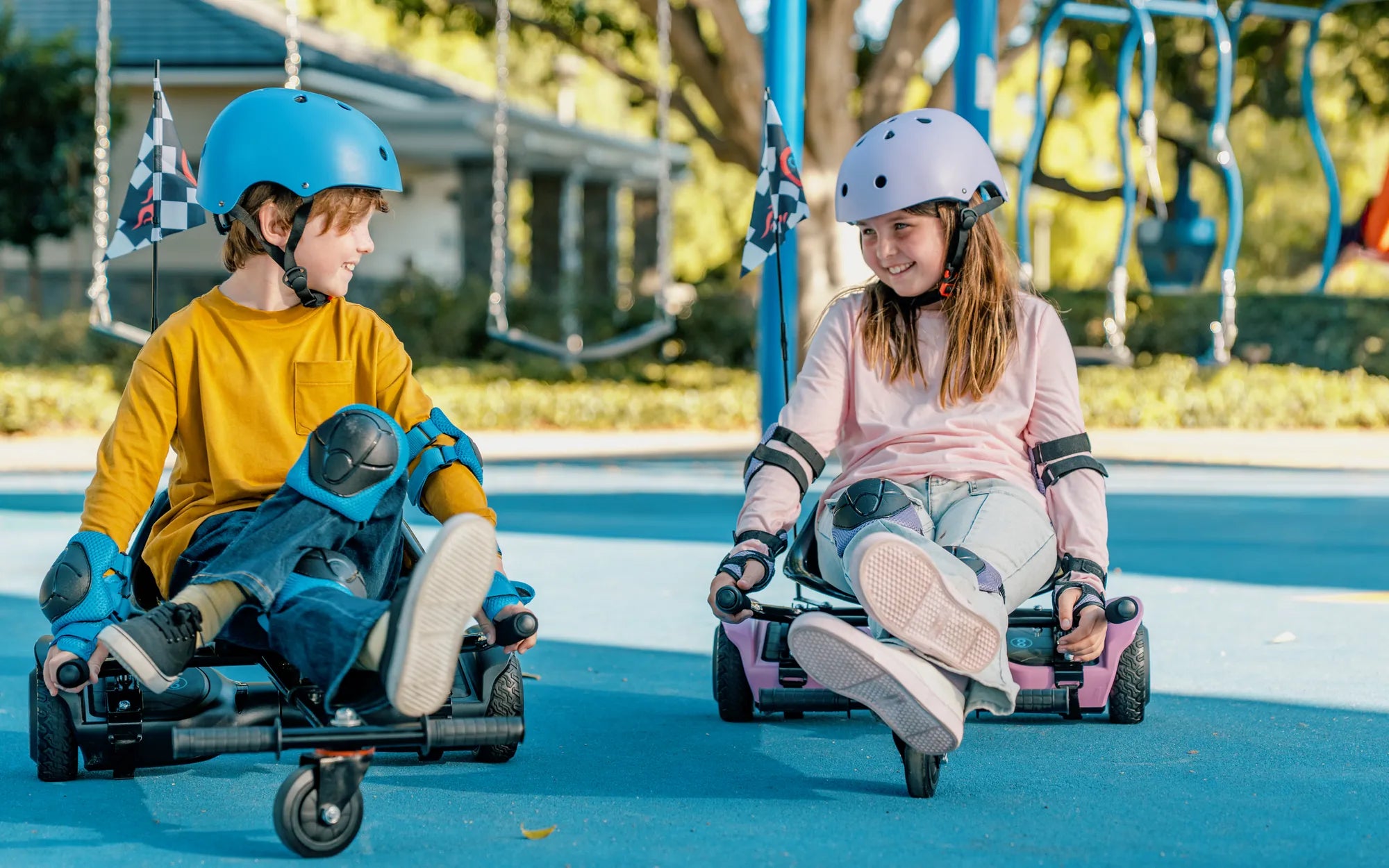
Safety Gear is Mandatory, Not Optional: Before the scooter is even turned on, ensure your child is wearing a properly fitted CPSC-certified bicycle helmet, knee pads, and elbow pads. Sturdy, closed-toe shoes (like sneakers) are essential—no sandals or flip-flops.
Scooter Pre-Flight Check: Conduct this checklist before every ride:
1. Battery: Verify it is adequately charged.
2. Brakes: Test both the disc/e-brake and foot brake. Ensure they engage smoothly and bring the scooter to a stop without grabbing.
3. Tires: Check air pressure if pneumatic; look for cracks or excessive wear if solid.
4. Fasteners: Ensure the handlebar stem, folding mechanism (if applicable), and all bolts are tight and secure.
5. Lights: Confirm the headlight and taillight are functioning.
Choosing the Right Practice Environment
The ideal learning zone is a flat, smooth, and completely car-free surface. An empty school parking lot on a weekend, a paved tennis or basketball court, or a smooth-sectioned driveway are perfect starting points.
The surface should be free of significant cracks, gravel, sand, or debris that could cause a wheel to catch or slip. Avoid hills, slopes, or areas near roads, driveways, or swimming pools entirely during the initial learning phase. The goal is to eliminate environmental variables so the child can focus solely on controlling the scooter.
Teaching Core Skills: Balancing, Braking, and Awareness
Start with the scooter powered off. Have your child practice simply kicking off and coasting to get a feel for balancing on two wheels, using the foot brake to stop. This builds fundamental balance without the complication of throttle control.
Once comfortable, power on the scooter in the slowest speed mode. Instruct them to:
1. Always start with one foot on the deck and push off with the other before gently pressing the throttle.
2. Practice gentle, progressive squeezing of the brake lever to understand stopping distance—never jerking it.
3. Keep their head up, scanning the path ahead for obstacles, and always be prepared to stop.
4. Respect pedestrian right-of-way and understand they must yield to walkers.
Supervise closely until they demonstrate consistent control, including making wide, stable turns and stopping accurately on command.
Performance Comparison: Key Specifications at a Glance
This comparison table highlights how critical specifications align with different rider needs and stages. It uses generalized data based on common market segments to illustrate the progression from beginner to more advanced models.
| Feature / Specification | Beginner Model (Ages 8-10) | Intermediate Model (Ages 10-13) | Advanced Youth Model (Ages 13+) |
|---|---|---|---|
| Typical Motor Power | 150W - 200W | 250W - 300W | 350W - 500W |
| Max Speed (Adjustable) | 7 - 10 mph | 10 - 15 mph | 15 - 19 mph |
| Approx. Range per Charge | 6 - 9 miles | 9 - 12 miles | 12 - 18 miles |
| Max Load Capacity | 120 - 154 lbs | 154 - 220 lbs | 220 - 265 lbs |
| Key Safety Features | 3-speed, e-brake, LED lights, key start | Disc + e-brake, wider deck, IPX4/5 rating, app control* | Dual suspension*, dual brakes, enhanced lighting, robust frame |
| Primary Use Case | Flat neighborhood streets, paved paths, close supervision | Suburban commuting, park trails, moderate independence | Longer commutes, varied terrain, greater independence with rules |
*Features like app control and dual suspension are often found in higher-tier models within these categories, such as those offered by Gyroor's advanced lines.
Frequently Asked Questions (FAQ) for Parents
Q1: What is the appropriate age for a child's electric scooter?
A: Most manufacturers, including Gyroor, recommend electric scooters for children aged 8 and older. This recommendation is linked to the necessary motor skills, balance, cognitive judgment, and weight required to operate the scooter safely. Always defer to the specific age and weight guidelines provided for the model you are considering.
Q2: How long does the battery last on a single charge, and what's the charging time?
A: For a typical intermediate model like a Gyroor scooter with a 250W motor, you can expect a real-world range of 10-12 miles per charge, depending on rider weight, terrain, and speed mode. Charging a depleted battery to full typically takes 4 to 5 hours. Using the manufacturer's provided charger and following battery care tips is crucial for longevity.
Q3: Is the scooter difficult to assemble out of the box?
A: Most quality scooters, including Gyroor models, require minimal assembly. It often involves only attaching the handlebar to the stem using a few provided bolts and an Allen key, and sometimes inflating the tires. The process usually takes 10-15 minutes and requires no special tools. Comprehensive instructions are always included.
Q4: Can it handle hills or rough pavement?
A: Capability depends on motor power and wheel size. A 250W motor can handle mild inclines, but steep hills will significantly reduce speed and battery life. For rough pavement, larger air-filled tires provide much better shock absorption than small, solid tires. While a robust scooter can handle minor cracks and bumps, it is not an off-road vehicle. Caution should always be exercised on uneven terrain.
Q5: What regular maintenance is required?
A: Regular maintenance is simple but essential:
• Tires: Check and maintain proper air pressure weekly for pneumatic tires.
• Brakes: Monthly, inspect brake pads for wear and test braking performance; adjust cable tension if needed.
• Fasteners: Periodically check and tighten bolts on the handlebar, stem, and folding mechanisms.
• Cleaning: Wipe down with a damp cloth; avoid high-pressure water jets directly on seals.
• Battery Care: Avoid completely draining the battery; store in a cool, dry place; use only the provided charger.
Conclusion: Investing in Adventure and Responsibility
Choosing the right kids boys electric scooter is a meaningful decision that blends practicality with the promise of adventure. By prioritizing certified safety features like UL-approved batteries, durable construction with IPX5 water resistance, and intuitive parental controls, you invest in more than a toy—you invest in a tool for growth.
A well-engineered scooter from a trusted brand like Gyroor supports a child's journey toward independence, teaching valuable lessons in responsibility, coordination, and situational awareness. The peace of mind that comes from knowing the product meets high safety and quality standards is invaluable, allowing the focus to remain on fun and exploration.
This guide has provided the framework to make an informed choice, emphasizing that the true value lies in the years of reliable, safe enjoyment a quality scooter can deliver. The initial investment in a properly specified, well-built model pays dividends in longevity, safety, and your child's smiling confidence.
Ready to explore models that meet these rigorous standards? Browse the full collection of UL-certified, rider-tested electric scooters and e-bikes at gyroorboard.com.
Self Balancing Scooter Outdoor: The Ultimate Guide to Fun and Freedom
Why Isn't My Hoverboard Working? A Complete Troubleshooting Guide