



Introduction: Why a Kids Electric Scooter is More Than Just a Toy
Choosing a kids electric scooter is a decision that blends childhood excitement with parental responsibility. It's not merely a toy; it's a child's first personal electric vehicle, offering a unique blend of outdoor fun, skill development, and a taste of independence. The right scooter can become a cornerstone of neighborhood adventures, encouraging physical activity away from screens.
This guide is designed to navigate you through every critical aspect of the purchase and ownership journey. We will dissect the benefits, outline a detailed selection checklist, and drill down into non-negotiable safety standards. Our focus is on providing factual, data-driven advice to ensure your child's riding experience is both incredibly fun and fundamentally safe.
As a leading brand trusted by over 100,000 riders, Gyroor engineers its scooters with this exact balance in mind. Every model is built around core principles of safety, durability, and age-appropriate performance, featuring UL-certified batteries and water-resistant designs. Let's explore how to make an informed choice that will deliver years of joyful, secure riding.
Key Benefits of Electric Scooters for Children
A kids electric scooter offers a multifaceted array of advantages that extend far beyond simple entertainment. It actively contributes to a child's physical and cognitive development while fostering healthy habits. Understanding these benefits helps frame the scooter as a valuable investment in your child's growth and happiness.
Promotes Outdoor Activity and Physical Health: In an increasingly digital age, electric scooters provide a compelling reason to play outside. Riding engages core muscles, improves overall balance, and enhances gross motor coordination. It's an active hobby that combats sedentary lifestyles in a way children genuinely enjoy.
Develops Coordination and Spatial Awareness: Operating a kids electric scooter requires simultaneous steering, braking, and speed modulation. This constant processing helps sharpen reflexes, improve hand-eye coordination, and teaches children to navigate their environment safely, judging distances and anticipating obstacles.
Encourages Responsibility and Independence: Caring for a personal vehicle teaches valuable lessons. Children learn to perform pre-ride safety checks, follow charging protocols, and store their scooter properly. This stewardship, coupled with the freedom to explore within set boundaries, builds confidence and a sense of accountable independence.
Provides Eco-Friendly Local Mobility: For trips to a friend's house, the park, or a local sports practice, a kids electric scooter is a zero-emission alternative to a short car ride. It introduces children to sustainable transportation concepts early on, all while expanding their accessible world in a fun and practical way.
Choosing the Right Scooter: A Parent's Checklist
Selecting the perfect kids electric scooter requires matching the product's specifications to your child's age, size, and skill level. A scooter that is too powerful or too large can be dangerous, while an underpowered one may quickly become boring. Use this checklist to guide your evaluation.
Age Appropriateness and Weight Capacity: Manufacturer age recommendations are the starting point, but the rider's weight is more critical for performance and safety. Never exceed the scooter's maximum weight limit, as it strains the motor, reduces battery life, and can compromise braking and structural integrity. Most models for 6-8 year olds support 120-140 lbs, while tween models may handle up to 160 lbs or more.
Motor Power and Speed Settings: Motor wattage (e.g., 150W, 200W) determines torque and hill-climbing ability. More importantly, look for scooters with multiple speed modes (often 2 or 3). A beginner mode capped at 6-7 mph allows new riders to gain confidence, while higher modes (up to 10-12 mph for older kids) offer room to grow. Adjustable speed control is a crucial safety feature.
Battery Life and Real-World Range: Battery capacity, measured in Watt-hours (Wh) or Amp-hours (Ah), dictates range. A scooter advertised for a 10-mile range under ideal conditions might achieve 6-7 miles with a child's variable riding style. Consider your child's typical ride distance and choose a scooter with a range that comfortably exceeds it to avoid being stranded.
Build Quality, Durability, and Warranty: Inspect the frame material (aircraft-grade aluminum is excellent), deck width for stability, and wheel quality. Solid or air-filled (pneumatic) tires offer different ride experiences. A comprehensive warranty, like Gyroor's reliable 1-year coverage, is a strong indicator of the manufacturer's confidence in their product's longevity and safety.
Non-Negotiable Safety Features: What to Look For
Safety is paramount and must be engineered into the scooter from the ground up. Beyond wearing protective gear, the scooter itself must incorporate specific features to mitigate risks. These are the critical components that separate a well-built vehicle from a mere gadget.
UL-Certified Battery Pack: The battery is the most critical safety component. UL certification (like those used in all Gyroor models) means the battery pack has undergone rigorous independent testing for electrical, mechanical, and fire safety. It ensures protection against overcharging, short-circuiting, and thermal runaway, providing essential peace of mind for parents.
Redundant Braking Systems: A single braking method is insufficient. The safest kids electric scooters combine an electronic (e-brake) and a mechanical brake (disc or foot). The e-brake engages when the throttle is released, providing gradual slowing, while the mechanical brake offers immediate, controlled stopping power for emergencies.
Stable Design and Wide Deck: Stability prevents tip-overs. A wider wheelbase and a deck broad enough for both feet to stand comfortably side-by-side significantly improve control, especially during turns or when encountering small bumps. This design gives young riders a confident, secure platform.
Integrated Lighting and Water Resistance: Bright LED front and rear lights are essential for visibility in low-light conditions, making the rider seen by others. An IPX5 water-resistance rating (a Gyroor standard) means the scooter can withstand water jets from any direction, protecting the electrical components from rain and puddles, a common occurrence during play.
Prioritizing Safety: Gear, Rules, and Supervision
Even the safest kids electric scooter is only one part of the safety equation. Establishing and enforcing riding protocols is the parent's essential role. Consistent rules and proper equipment create a culture of safe riding habits that last a lifetime.
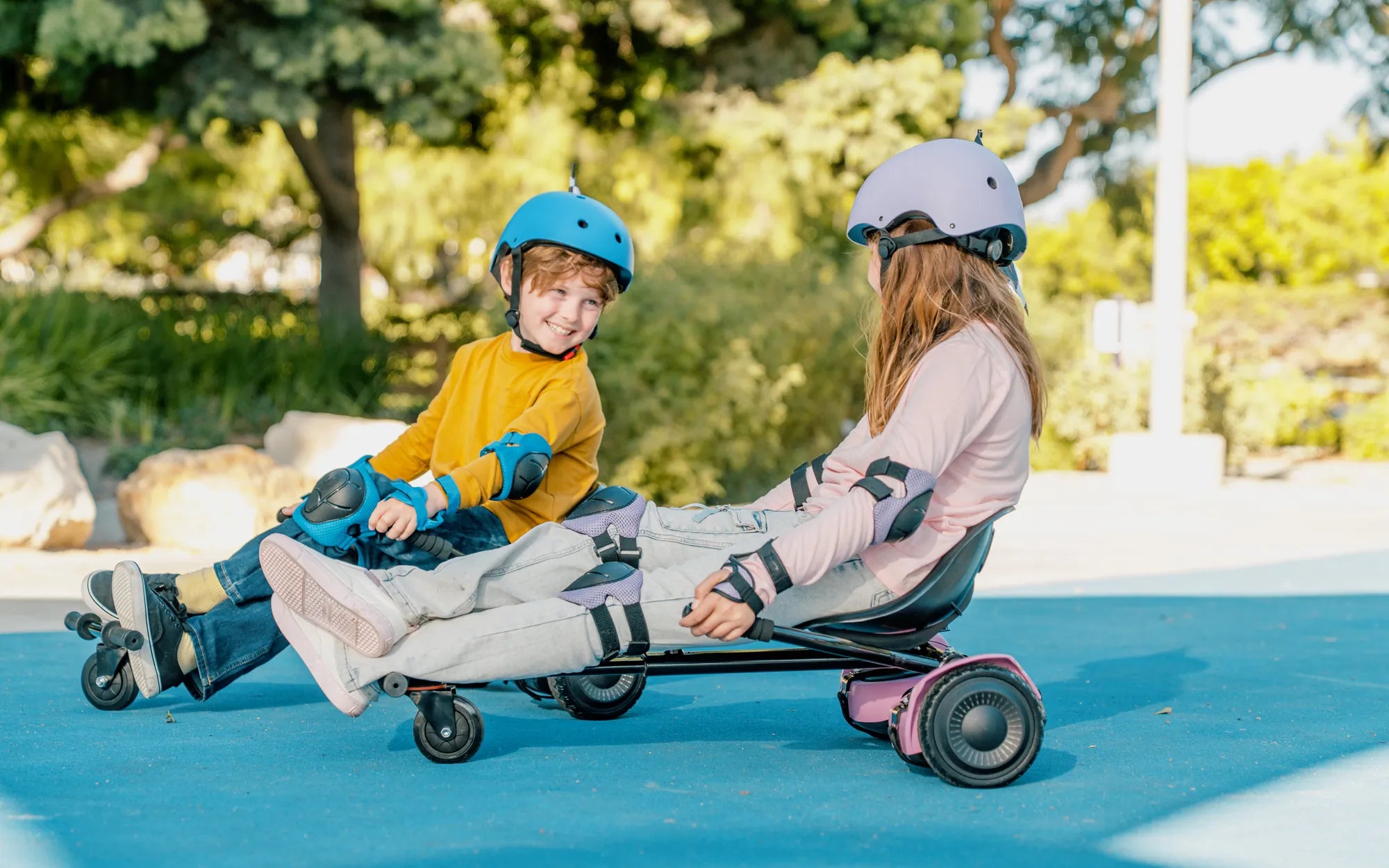
Mandatory Protective Gear: A properly fitted, CPSC-certified helmet is non-negotiable for every single ride. Additionally, knee pads and elbow pads should be standard equipment, especially for beginners. Wrist guards are also highly recommended to protect against common falls. Make gearing up an unskippable part of the routine.
Establishing Clear Riding Rules: Set firm boundaries before the first ride. Define where riding is permitted (e.g., sidewalks in your neighborhood, empty parking lots, park paths) and where it is strictly forbidden (streets, roads with traffic, steep hills, crowded areas). Establish a maximum speed mode they are allowed to use and rules about riding with friends.
Teaching Traffic and Situational Awareness: Even on sidewalks, children must learn to be hyper-aware. Teach them to watch for driveway pull-outs, to stop at all intersections and look both ways, to be cautious around pedestrians and pets, and to avoid headphones that block ambient noise. Assume that cars may not see them.
The Role of Adult Supervision: For younger children (typically under 10), direct adult supervision is crucial. For older, more experienced riders, supervision may mean knowing their planned route and check-in times. Regularly ride with your child to observe their habits and reinforce safe practices. Your involvement is the most effective safety feature.
Pre-Ride Safety Check and Maintenance Basics
Instilling a simple maintenance routine teaches responsibility and ensures the scooter remains in safe working order. A quick two-minute check before each ride can prevent most mechanical issues. Involve your child in this process to deepen their understanding and ownership.
The Pre-Ride Checklist (T.B.B.L.): Teach your child the acronym T.B.B.L.: Tires, Brakes, Body, Lights. Tires: Check for adequate air pressure (if pneumatic) and no major cracks or wear. Brakes: Squeeze the hand brake to ensure it engages firmly and doesn't feel loose; test the electronic brake by rolling slowly and releasing the throttle. Body: Check for any new loose parts, cracks in the frame, or damage to the folding mechanism. Lights: Verify front and rear LEDs are functioning.
Battery Care and Charging Protocol: Use only the manufacturer-provided charger. Charge the battery on a non-flammable surface, away from direct sunlight and heat sources. Avoid leaving the scooter plugged in for extended periods after it's fully charged. For long-term storage (over a month), charge the battery to about 50-60% and store in a cool, dry place.
Routine Cleaning and Inspection: Regularly wipe down the scooter with a damp cloth to remove dirt and debris, especially from the brake discs and around the wheel axles. Avoid high-pressure water sprays. Every few weeks, perform a more thorough inspection, tightening any fasteners (screws, bolts) that may have vibrated loose during normal riding.
Top Gyroor Models for Young Riders: A Comparison
Gyroor's lineup is designed with progressive skill levels in mind, each model leveraging the brand's core safety technologies. The following table compares key specifications to help you match a scooter to your child's needs.
| Model | Recommended Age | Max Speed | Max Range | Weight Capacity | Key Safety & Feature Highlights |
|---|---|---|---|---|---|
| Gyroor S1 Mini | 6-9 years | 9 mph | 6.2 miles | 120 lbs | 2 speed modes, UL-certified battery, rear foot brake, kick-to-start, lightweight aluminum frame. Perfect first scooter. |
| Gyroor S1 Max | 8-12 years | 12 mph | 10 miles | 160 lbs | 3 speed modes, dual braking (e-brake + disc), UL-certified battery, IPX5 water-resistant, integrated LED lights. Ideal for growing riders. |
| Gyroor S1 Pro | 10+ years | 15.5 mph | 12.5 miles | 220 lbs | Powerful 300W motor, dual suspension, pneumatic tires, app connectivity for speed control & diagnostics, comprehensive lighting. For experienced tweens/teens. |
All Gyroor models share the foundational safety pillars: UL-certified battery packs tested for 500+ charge cycles, IPX5 water-resistant construction, and a reliable 1-year warranty. The progression from the S1 Mini to the S1 Pro allows a child to advance to more capable models as their skills and size increase, all within a trusted ecosystem.
Frequently Asked Questions (FAQ)
Q: What is the best age for a child's first electric scooter?
A: Most children are ready for a beginner model around age 6 or 7, when they have sufficient balance, coordination, and cognitive ability to follow safety rules. Always prioritize the manufacturer's age and weight recommendations over a child's desire for a more advanced model.
Q: How can I limit my child's speed on their scooter?
A> Choose a scooter with multiple, password-protectable speed modes. Start your child in the lowest mode (typically 6-7 mph). Gyroor models feature this, and some like the S1 Pro offer app-based parental controls to lock the maximum speed and monitor riding history remotely.
Q: Can a kids electric scooter handle hills?
A> Scooter hill-climbing ability depends on motor power (wattage) and rider weight. A 150W-200W scooter can manage gentle slopes. For moderate hills, look for models with 250W+ motors. Always practice hill riding in a safe, controlled area first, and teach your child to reduce speed when ascending or descending.
Q: What does the 1-year warranty typically cover?
A> A comprehensive warranty like Gyroor's covers defects in materials and workmanship for the frame, motor, battery, and electronic controller. It is a guarantee against manufacturing faults. Damage from accidents, misuse, or lack of maintenance is typically not covered. Always register your product to activate the warranty.
Q: How long does the battery last, and what is proper charging etiquette?
A> A quality battery lasts 2-3 years with regular use. To maximize lifespan: avoid draining it to 0%, don't leave it fully charged for weeks, and store it partially charged (50-60%) if not using the scooter for a month. Use only the provided charger, and never charge unattended or overnight in sleeping areas.
Conclusion: Fostering Fun with Peace of Mind
The journey to finding the perfect kids electric scooter is defined by balancing exhilaration with precaution. By selecting a scooter built to rigorous safety standards, enforcing consistent rules and gear use, and maintaining an active supervisory role, you transform a simple vehicle into a powerful tool for development and joy.
A kids electric scooter from a brand like Gyroor, engineered with UL-certified batteries, redundant braking, and robust construction, provides the reliable foundation. Your commitment to education and oversight builds the safety framework around it. Together, they create an environment where fun and security are not competing interests but interconnected priorities.
The result is more than just rides around the block. It's the confidence in your child's growing independence, the shared excitement of new adventures, and the invaluable memories created in the fresh air. Empower your child's exploration with the tools and knowledge for a safe, fantastic ride.
Ready to explore models designed for safety and fun? Browse the full Gyroor collection, featuring UL-certified kids electric scooters for every age and stage, at gyroorboard.com.
Kids Scooter 3+: The Ultimate Guide to Choosing the Perfect Ride for Your Little One
Kids Size Electric Scooter: The Ultimate Guide for Parents