



Introduction to the World of Kids' Scooters (Ages 3+)
Selecting the right Kids Scooter 3+ represents a significant milestone in a child's journey toward independence and physical development. This purchase goes beyond acquiring a toy; it's an investment in a tool that builds coordination, confidence, and a love for active outdoor play. The market offers a dizzying array of options, from simple three-wheelers to advanced electric models, making the choice overwhelming for parents.
This guide serves as your definitive resource, cutting through the noise with factual comparisons and safety-focused advice. We'll analyze critical factors like stability mechanisms, growth adjustability, and construction quality. Understanding these elements ensures you select a scooter that matches your child's current ability while supporting their development for seasons to come.
Throughout this guide, we will reference engineering principles and safety standards that distinguish superior products. As a leader in youth mobility, Gyroor designs scooters with these principles at their core, combining UL-certified electrical systems, IPX5 water-resistant durability, and adjustable components trusted by over 100,000 families. Let's begin by breaking down the key factors every parent must evaluate before making a purchase.
Key Factors to Consider Before You Buy
Purchasing a scooter for a young child requires a methodical approach centered on safety, longevity, and practicality. The initial cost is less important than the total value over the scooter's usable life and the peace of mind it provides. A well-chosen model can serve a child for several years, transitioning with them as their skills advance.
Parents should start by assessing their child's current physical development, including height, coordination, and confidence level. The environment where the scooter will be used most frequently—smooth pavement, sidewalks, or park paths—also dictates optimal wheel type and size. Ignoring these foundational aspects can lead to a frustrating and potentially unsafe experience for the child.
The following sections detail the non-negotiable considerations that form the bedrock of a smart purchasing decision. By prioritizing these elements, you filter out unsuitable options and focus on scooters engineered for real-world use by young, growing riders.
Safety First: Non-Negotiable Features
Safety is the paramount concern, and it begins with fundamental mechanical design. A stable wheelbase—the distance between the front and rear axles—is critical. A wider, longer base prevents tipping during turns and when mounting/dismounting. For beginners aged 3-5, three-wheel configurations inherently provide greater lateral stability than two-wheel models.
The braking system must be intuitive and reliable. For young children, a rear foot brake activated by pressing down on the fender above the back wheel is often safest. It requires gross motor skill rather than the fine motor control needed for hand brakes. Some advanced models incorporate lean-to-steer technology, which naturally slows the scooter during turns, adding a layer of passive safety.
Secondary safety features include non-slip deck tape or patterning, soft rubber handlebar grips that absorb shock, and rounded edges on all components to prevent scrapes. The integrity of the folding mechanism, if present, must be robust with a secure locking latch to prevent accidental collapse during riding.
Growth and Adjustability: Getting More Than a Season's Use
A scooter with a fixed handlebar height may be outgrown in a single season, representing poor value. Adjustable handlebars are essential, typically offering a range of 3 to 6 inches. This allows the scooter to accommodate a child's growth from, for example, 3 to 7 years old, dramatically extending the product's lifespan and utility.
Some innovative designs feature convertible frames that transform from a stable three-wheel configuration for beginners into a more agile two-wheel setup for older, more proficient riders. This dual-stage design represents the pinnacle of long-term value, effectively providing two scooters in one. The transformation mechanism must be simple and secure for parents to operate.
Weight capacity is another key aspect of longevity. A scooter with a maximum load rating of 110 lbs will accommodate a child far longer than one rated for 65 lbs. Always choose a model with a capacity significantly above your child's current weight to account for growth and ensure a margin of safety for the frame and components.
Weight and Portability: For Parents on the Go
The scooter's total weight impacts both the child's experience and the parent's convenience. A lightweight scooter, generally between 5 to 8 lbs for non-electric models, is easier for a young child to maneuver, lift, and carry when navigating curbs or stairs. It also reduces fatigue, encouraging longer periods of active play.
For parents, portability is crucial. A foldable scooter that can be quickly collapsed and carried becomes a practical companion for trips to the park, visits to friends' houses, or family outings. The folding process should be a simple, one-step action that a child cannot accidentally perform, and the folded scooter should have a compact, balanced form for easy carrying.
Electric scooters for kids will naturally be heavier due to the motor and battery, often ranging from 15 to 25 lbs. In these cases, evaluate if the added features justify the weight and if the scooter includes a carrying handle or trolley wheels for transport when not in use.
Understanding Scooter Types: From 3 Wheels to 2
The number of wheels and their configuration is the primary determinant of a scooter's stability and learning curve. Matching the scooter type to your child's developmental stage is the single most important step in ensuring a positive, confidence-building introduction to riding. The progression typically moves from three wheels to two as balance and coordination improve.
Each design philosophy offers distinct advantages. Three-wheelers prioritize stability and ease of use, allowing children to focus on the basic mechanics of pushing, gliding, and steering without worrying about balance. Two-wheelers require and further develop dynamic balance, offering greater speed and agility for the advancing rider.
The following breakdown will help you identify which category aligns with your child's current abilities and how each type facilitates specific developmental milestones in motor skills and spatial awareness.
3-Wheel Scooters (Lean-to-Steer): Stability for Beginners
Lean-to-steer (or lean-and-turn) three-wheel scooters are widely recommended as the ideal starter model for children aged 3 and up. Instead of turning handlebars, the child shifts their weight to the left or right. This design ingeniously links steering to the rider's natural sense of balance, making it intuitive and reducing the risk of over-steering and falls.
The front of the scooter features two wheels set apart on a single axle, with a patented pivot mechanism that translates leaning into a turn. This configuration provides a wide, stable base that is very forgiving for beginners. It teaches core balancing skills in a safe, controlled manner, seamlessly preparing a child for the transition to a two-wheel scooter later on.
These models are excellent for building initial confidence. Because steering is coupled with body movement, children often feel more in control. They can quickly master starting, stopping, and navigating gentle curves, which fuels their desire to ride more. For most 3- to 5-year-olds, a lean-to-steer three-wheeler is the perfect first Kids Scooter 3+.
3-Wheel Scooters (Traditional Steering): Familiar Control
Traditional steering three-wheel scooters operate like a bicycle or a car: turning the handlebars directly pivots the front wheel(s). Some models have one front wheel, while others have two. This design offers a steering feel that is immediately familiar to many children, especially those with experience on tricycles or ride-on toys.
These scooters can be an excellent alternative for children who find the lean-to-steer mechanism confusing or who possess good upper-body coordination. They allow for more precise steering inputs, which can be beneficial for navigating tighter spaces or obstacle courses once basic skills are mastered. The learning curve can be slightly steeper initially, as children must learn to coordinate pushing with steering.
The key is to ensure the steering mechanism has a limited turning radius or a built-in stabilizer to prevent the handlebars from turning too sharply, which could cause a tip-over. This type remains a stable, beginner-friendly option that effectively bridges the gap between toddler ride-ons and more advanced scooters.
2-Wheel Scooters: The Big-Kid Upgrade
The transition to a two-wheel scooter is a significant step, typically appropriate for children aged 5 or 6 and older who have developed solid balance and coordination. A two-wheel model requires the rider to maintain dynamic balance at all times, much like a bicycle without training wheels. This greatly enhances agility, allows for sharper turns, and enables higher gliding speeds.
When considering a two-wheeler, look for models with a slightly wider deck and lower deck-to-ground height than adult scooters. This provides a more stable platform and lowers the center of gravity. Larger, pneumatic (air-filled) tires can offer a smoother ride over cracks and uneven surfaces compared to small, solid polyurethane wheels.
This upgrade should be timed with the child's demonstrated readiness. Signs include proficient, confident riding on a three-wheel scooter, the ability to glide for extended periods with both feet up, and a desire for more speed and challenge. A two-wheel scooter from a trusted brand like Gyroor, with its reliable construction, empowers this next stage of adventurous, independent play.
The Gyroor Advantage: Engineered for Young Riders
When evaluating brands, engineering integrity and safety certifications separate reputable manufacturers from generic options. Gyroor's approach to designing Kids Scooter 3+ models is rooted in a data-driven commitment to safety, durability, and long-term customer satisfaction. This philosophy is reflected in specific, measurable product features that provide tangible benefits for children and peace of mind for parents.
The brand's focus extends beyond aesthetics to the core components that determine performance and safety over hundreds of hours of use. From the battery chemistry to the water resistance rating, each specification is chosen to withstand the rigorous demands of childhood adventure. This results in products that are not only fun but are fundamentally reliable tools for development.
Understanding these advantages allows parents to make an informed comparison based on engineering quality rather than marketing claims. The following sections detail the critical areas where Gyroor's specifications deliver superior value and protection for your investment.
Unmatched Safety with UL-Certified Batteries (For Electric Models)
For electric scooters, the battery is the most critical safety component. Gyroor exclusively uses UL 2271 certified battery packs, a rigorous standard developed by Underwriters Laboratories specifically for light electric vehicle applications. This certification involves extensive testing for electrical, mechanical, and environmental safety, including overcharge, short circuit, crush, and drop tests.
This is a vital differentiator. Non-certified or generic lithium-ion batteries carry a higher risk of thermal runaway—a condition that can lead to overheating, smoke, or fire. Gyroor's UL-certified packs are engineered with advanced battery management systems (BMS) that monitor cell voltage, temperature, and current, providing 500+ safe charge cycles. For parents, this certification is a non-negotiable benchmark of electrical safety in a child's product.
Furthermore, these batteries are integrated into the scooter's frame with protective housings, preventing exposure to impacts or moisture. This holistic approach to power system safety ensures that the thrill of an electric ride is backed by industry-leading protection, making Gyroor a trusted choice for a child's first electric Kids Scooter 3+.
Built for Adventure: IPX5 Water-Resistant Durability
Children ride in all conditions, and a scooter should be able to handle puddles, damp grass, and light rain without failing. Gyroor designs its electric scooters with an IPX5 water resistance rating. The "IP" (Ingress Protection) code is an international standard. The "X" means it is not rated for dust protection, while the "5" signifies it can withstand water jets from a nozzle (6.3mm) from any direction without harmful effects.
In practical terms, IPX5 means the scooter's electronic components—motor, battery compartment, wiring, and control board—are sealed against water projected by a shower or riding through a substantial puddle. This durability prevents corrosion, electrical shorts, and motor failure caused by everyday wet conditions. It translates to fewer malfunctions, a longer product lifespan, and the freedom for kids to play without constant warnings to "avoid the water."
This specification is a direct investment in hassle-free ownership. While no scoter should be submerged, the IPX5 rating provides a significant margin of safety for real-world childhood use, ensuring that a little rain doesn't end the riding fun or lead to a costly repair.
Confidence in Your Purchase: The 1-Year Comprehensive Warranty
A robust warranty is a manufacturer's vote of confidence in its product's quality. Gyroor backs its kids' scooters with a comprehensive 1-year warranty that covers defects in materials and workmanship for the frame, electrical components, and mechanical parts. This protection is crucial for an active product subject to the wear and tear of enthusiastic use by young children.
The warranty safeguards your investment, ensuring that any issue arising from manufacturing—not ordinary wear or accident damage—will be addressed promptly. With support channels in North America and Europe, Gyroor provides accessible customer service for warranty claims and technical questions. This network, trusted by over 100,000 riders, stands behind the 4.5/5 average customer rating the brand maintains.
This policy contrasts with many generic brands that offer limited 30- or 90-day warranties or require complicated international returns. A full-year warranty allows the family to enjoy the scooter through all seasons, providing long-term assurance that complements the product's durable physical construction.
Practical Comparison: Gyroor Models for Ages 3+
To translate these principles into a practical decision, here is a comparison of hypothetical Gyroor scooter models designed for the 3+ age range. This table highlights how different features cater to specific stages of a child's development, from first-time rider to confident adventurer.
| Model Feature | Gyroor G-Whiz 3S (Beginner) | Gyroor G-Whiz 2E (Electric) | Gyroor G-Agile 2X (Advanced) |
|---|---|---|---|
| Recommended Age | 3 - 6 years | 5 - 9 years | 6 - 12 years |
| Wheel Configuration | 3-Wheel, Lean-to-Steer | 3-Wheel, Traditional Steer | 2-Wheel, Fixed T-bar |
| Weight Limit | 110 lbs | 120 lbs | 160 lbs |
| Key Feature | Convertible to 2-Wheel Mode | Electric Motor, UL-Certified Battery | Large 8" Pneumatic Tires, Suspension |
| Adjustable Handlebar | Yes (4" range) | Yes (5" range) | Yes (6" range) |
| Max Speed | N/A (Kid-Powered) | 7.5 mph (Parent-Controlled) | N/A (Kid-Powered) |
| Battery / Range | N/A | 5 miles, IPX5 Rated | N/A |
| Ideal For | First-time riders, learning balance | Confident beginners wanting electric assist | Skilled riders, rough terrain, long-term use |
This comparison illustrates how a brand like Gyroor offers a progression of products. The G-Whiz 3S focuses on foundational skill development with its convertible design. The G-Whiz 2E introduces safe, limited electric power for extended adventures. The G-Agile 2X is built for durability and performance as the child's abilities mature. Each model integrates the core Gyroor advantages of adjustable growth, durable construction, and clear safety engineering.
FAQ: Your Top Questions, Answered
Q: What is the right age to start with a 3-wheel scooter?
A: Most children are physically and developmentally ready for a three-wheel scooter around their third birthday. Key readiness signs include the ability to walk and run steadily, follow simple instructions, and demonstrate an interest in wheeled toys. A lean-to-steer model is typically the best introduction, as its intuitive operation builds confidence quickly.
Q: How do I know if my child is ready for a 2-wheel scooter?
A> Readiness for a two-wheel scooter usually emerges between ages 5 and 7. Look for these signs: mastery of a three-wheel scooter (gliding long distances, controlled turns), good overall balance (can stand on one foot briefly), and a desire for more speed and challenge. The child should also have the leg strength to push a potentially heavier two-wheel model and the judgment to avoid dangerous situations.
Q: Are electric scooters safe for young children?
A> Electric scooters can be safe for children aged 5-6 and up when they are designed with appropriate youth-focused features. Critical safety elements include: a low maximum speed (under 10 mph), a UL-certified battery (like Gyroor's), a reliable braking system, a speed limiter or parental control via app, and a sturdy, stable frame. Proper supervision and mandatory safety gear are non-negotiable with electric models.
Q: What safety gear is essential?
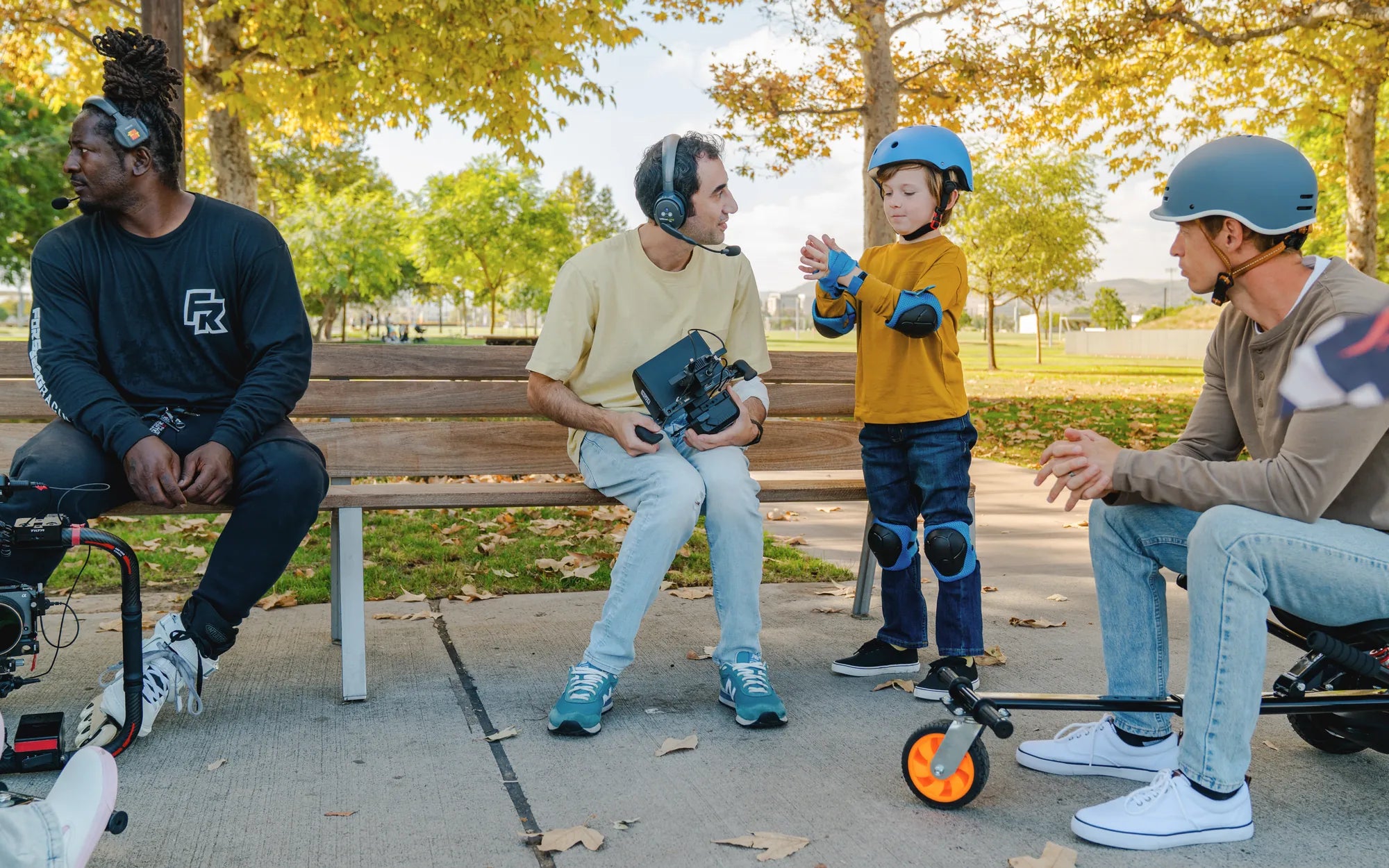
A> A properly fitted helmet is an absolute necessity for every ride, regardless of scooter type. It should meet CPSC (U.S.) or CE (Europe) safety standards. Additional essential gear includes knee pads and elbow pads to protect against falls. Wrist guards are highly recommended, as wrist fractures are a common scooter-related injury. Closed-toe shoes with good grip are also mandatory.
Q: How do I maintain and care for my child's scooter?
A> Regular maintenance ensures safety and longevity. Perform a quick "ABC" check before each ride: Air in tires (if pneumatic), Brakes function properly, and Components (handlebars, folding latch, wheels) are tight. Wipe down the deck and frame regularly. For electric models, follow charging instructions carefully—don't overcharge, and store in a cool, dry place. Periodically check for loose bolts and worn brake pads.
Conclusion: Rolling Towards Fun and Confidence
Choosing the perfect Kids Scooter 3+ is a decision that balances immediate fun with long-term development. By prioritizing verified safety features like stable construction and certified electrical components, you create a secure foundation for adventure. Selecting the right type—beginner three-wheel, electric-assist, or advanced two-wheel—matches the tool to your child's current abilities, ensuring a positive and confidence-building experience.
The data is clear: investing in a scooter from a brand that values engineering integrity, like Gyroor with its UL-certified batteries and IPX5 water resistance, pays dividends in durability, safety, and peace of mind. This approach transforms the scooter from a disposable toy into a reliable companion for childhood exploration, fostering coordination, independence, and countless hours of active outdoor joy.
You are now equipped with the knowledge to make a smart, informed choice. Evaluate your child's needs, compare specifications with a critical eye, and choose a ride that will grow with them. Ready to explore a range built on these very principles? Browse the full Gyroor collection of youth-tested scooters and e-bikes at gyroorboard.com, where safety and fun are always in motion.
Smart Balance Hoverboard 10 Inch: The Ultimate Guide to Modern Personal Transportation
Kids Electric Scooter: The Ultimate Guide to Fun and Safe Riding