



Introduction: The Timeless Appeal of the Kids Foot Push Scooter
A kids foot push scooter represents a fundamental rite of passage in childhood. It's a simple, elegant machine that transforms sidewalks and parks into arenas of adventure, independence, and physical development. Unlike motorized alternatives, the push scooter requires a child's own power, fostering a direct connection between effort and motion. This guide is dedicated to the classic foot-powered scooter, the perfect tool for building confidence and coordination in young riders aged 3 to 8.
We will explore why this timeless toy remains a top choice for parents and pediatricians alike. From selecting the right model to enforcing crucial safety rules, this guide provides a complete framework. As a brand trusted by over 100,000 riders for its electric scooters and e-bikes, Gyroor applies the same rigorous standards of safety, durability, and thoughtful design to the foundational world of kids foot push scooters.
Why a Foot-Powered Scooter is a Perfect First Ride
The kids foot push scooter serves as a critical developmental tool. It acts as a precursor to bicycles, skateboards, and even future electric scooters by teaching core physical skills in a controlled, low-speed environment. The primary benefit is the development of dynamic balance and bilateral coordination. A child must learn to balance on one foot while pushing with the other, a complex motor skill that engages multiple muscle groups and neural pathways.
This activity significantly enhances gross motor skills, core strength, and spatial awareness. Compared to an immediate jump to an electric scooter, a push scooter allows a child to master balance and steering at their own pace, without the variable of sudden acceleration. It builds a foundational understanding of momentum, lean-to-turn mechanics, and braking that is essential for all two-wheeled activities.
Furthermore, it encourages outdoor play and physical activity, combating sedentary habits. The sense of achievement a child gets from mastering their first scooter ride is immense, directly boosting self-esteem and independence. It's a purchase that pays dividends in physical health, cognitive development, and pure joy.
Key Features to Look For in a Safe Kids Scooter
Not all scooters are created equal. Safety and longevity are directly tied to build quality and intelligent design. When evaluating a kids foot push scooter, parents should move beyond color preferences and focus on these critical, data-driven specifications.
Frame & Deck: Stability and Durability
The frame is the scooter's backbone. Look for aircraft-grade aluminum alloys, which offer an excellent strength-to-weight ratio—they are sturdy yet light enough for a child to carry. Steel frames are heavier but extremely durable, often found on stunt scooters for older kids. The deck should be wide and long enough for a child to place both feet comfortably side-by-side for stability.
A textured, anti-slip deck surface is non-negotiable for secure footing. Check the stated weight capacity; a high-quality scooter will support well beyond the average child's weight, indicating robust construction. Gyroor's designs incorporate reinforced welding points and wide decks to maximize stability and durability from the first push.
Wheels & Bearings: Smooth Ride and Control
Wheel size and material dictate ride quality. Larger wheels (e.g., 120mm-200mm) roll over cracks and pebbles more easily, providing a smoother ride for beginners and general use. Smaller wheels are for agility and tricks. High-rebound Polyurethane (PU) wheels are the standard for their grip, quiet ride, and wear resistance.
Bearings are rated by the ABEC scale (e.g., ABEC-5, ABEC-7). Higher ABEC ratings indicate tighter tolerances and less friction, resulting in a faster, longer glide per push. Sealed bearings are crucial as they prevent dirt and moisture from degrading performance. A quality kids foot push scooter will use at least ABEC-5 sealed bearings for a reliable, maintenance-free experience.
Braking System: Reliable Stopping Power
A reliable brake is the most important safety feature. For young children (ages 3-5), a rear foot fender brake is ideal. The child simply steps down on the extended rear fender, which presses against the rear wheel. This design is intuitive and requires minimal hand coordination.
For older or more experienced children (ages 6+), a hand-operated brake lever controlling a rear disc or drum brake offers more modulated and powerful stopping power. This prepares them for the braking systems on bicycles. Whichever system is present, it must engage smoothly and bring the scooter to a controlled stop without jarring the rider.
Adjustable Handlebar: For Growing Kids
Children grow rapidly. A scooter with a fixed handlebar height becomes obsolete in a single season. An easily adjustable T-bar is essential for ergonomics, control, and value. The ideal handlebar should allow for tool-free height adjustment, typically via a quick-release clamp or a simple locking mechanism.
The correct height is when the child can stand on the deck and grip the handles with a slight bend in their elbows, promoting an upright, controlled posture. A scooter with a wide adjustment range (often from 24 inches to 36 inches) can accommodate a child for 3-4 years, making it a smart long-term investment.
Safety Certifications and Build Quality
Look for evidence of rigorous testing. While formal certifications like CPSC (U.S. Consumer Product Safety Commission) are more common for bicycles, high-quality scooters will be built to similar standards. This includes the use of non-toxic, phthalate-free materials for grips and components, and rounded, burr-free edges on all metal parts.
The overall construction should feel solid, with no wobbly parts or sharp protrusions. Gyroor's approach mirrors its philosophy for electric scooters: applying high manufacturing standards, attention to detail, and a commitment to materials that ensure parent peace of mind and child safety.
Choosing the Right Scooter by Age and Skill Level
Matching the scooter to the child's developmental stage is key to safety and enjoyment. Use this table as a practical guide.
| Age & Stage | Recommended Type | Key Features | Primary Benefit |
|---|---|---|---|
| 2-4 Years (Beginner) | 3-Wheel Scooter (2 front, 1 rear) | Wide, low deck; Lean-to-steer mechanism; Extra-wide wheelbase; Max height ~30". | Ultra-stable learning platform teaches steering mechanics without tipping. |
| 4-6 Years (Intermediate) | 2-Wheel Scooter, Junior Size | Adjustable handlebar (24"-32"); 120mm-150mm PU wheels; Rear foot brake; Lightweight frame. | Develops true dynamic balance and coordination for future two-wheeled sports. |
| 6-8+ Years (Advanced) | 2-Wheel Stunt/Pro Style | Stronger steel/alloy frame; 100mm-110mm hard wheels; Hand brake; Reinforced head tube & deck. | Built for agility, speed, and basic tricks; supports more aggressive riding. |
For a cautious 3-year-old, a 3-wheel scooter is almost always the best start. The lean-to-steer design provides stability while intuitively teaching cornering. Most children are ready for a classic two-wheel kids foot push scooter between ages 4 and 5, once they have developed sufficient core strength and coordination.
Essential Safety Gear and Riding Rules
The scooter itself is only one part of the safety equation. Proper gear and clear rules are non-negotiable.
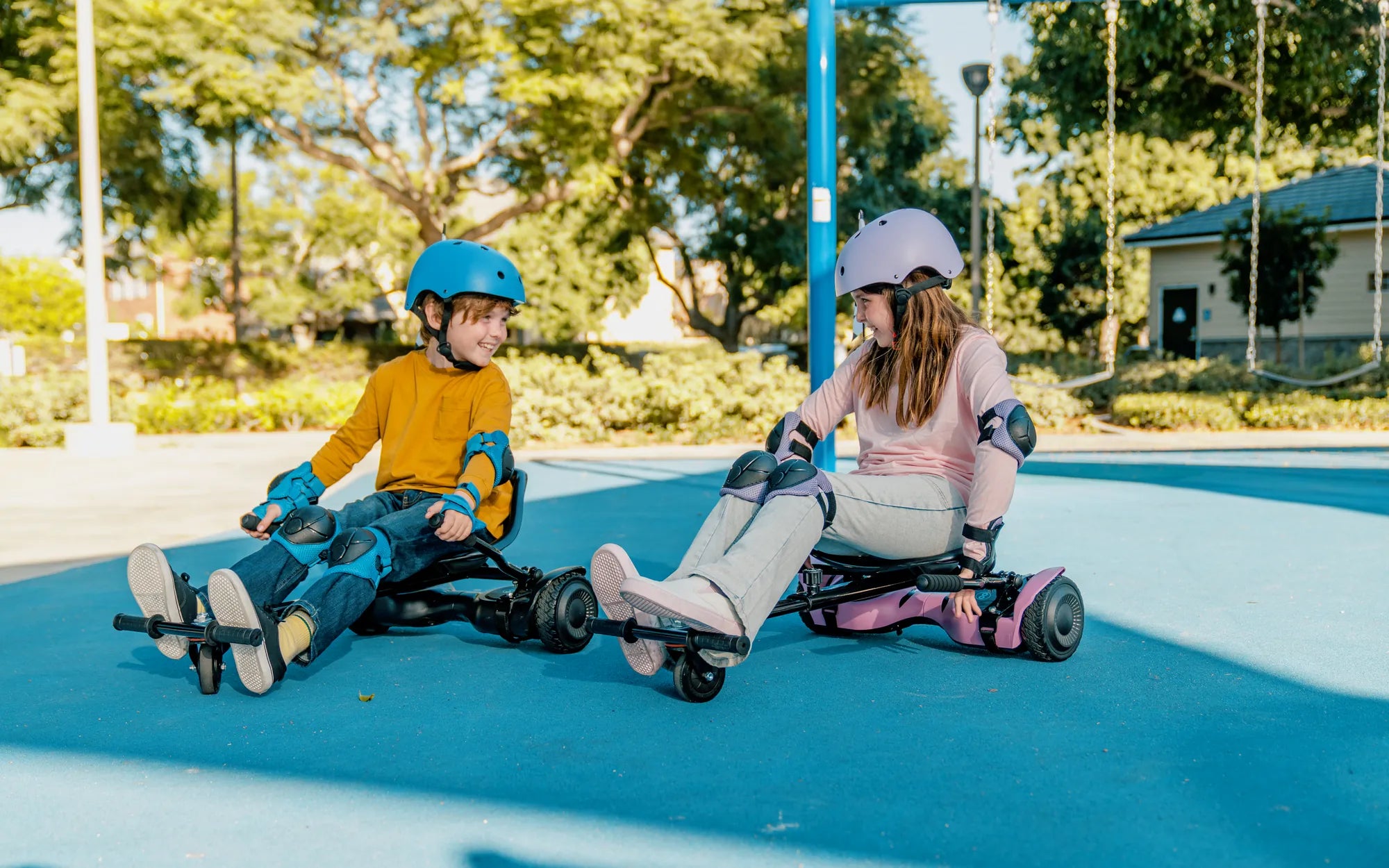
Safety Gear Mandate: Every ride requires an ASTM F1492-certified bicycle helmet, properly fitted. Knee pads and elbow pads are equally crucial, as falls are a natural part of learning. Wrist guards can also prevent common injuries. This kit should be worn without exception.
Fundamental Riding Rules: Establish these rules before the first ride. 1) Surface Selection: Ride only on smooth, paved surfaces like sidewalks, bike paths, or empty parking lots. Avoid roads, driveways with car traffic, and areas near pools or steep hills. 2) Daylight & Visibility: Riding is for daylight hours only. For dusk, add reflective stickers to the scooter and clothing. 3) Supervision: Young children must be actively supervised by an adult. 4) Pre-Ride Check: Make it a habit to check that the handlebar, wheels, and brakes are secure before riding.
Maintenance Tips to Keep the Scooter Rolling Smoothly
Simple, regular maintenance ensures safety and extends the scooter's life. Perform a quick visual and functional check every few weeks, especially if ridden frequently.
1. Bolt and Clamp Tightening: Vibration from riding can loosen the folding mechanism, handlebar clamp, and stem bolt. Use the provided tools to check and tighten these key connection points regularly.
2. Wheel and Bearing Inspection: Spin the wheels. They should spin freely and quietly for several seconds. If they wobble, the axle nut may be loose. If they grind or stop quickly, the bearings may be dirty or damaged. Sealed bearings typically cannot be serviced but should last years under normal use.
3. Brake Pad Wear Check: For foot fender brakes, ensure the rubber pad has sufficient thickness and makes solid contact with the wheel tire. For hand brakes, inspect the brake pad material and ensure the cable is taut and the lever engages firmly.
4. Basic Cleaning: Wipe down the scooter with a damp cloth to remove dirt and grit, especially from the wheel axles and brake surfaces. Avoid high-pressure water jets, as they can force water into bearings.
Frequently Asked Questions (FAQs)
Q1: At what age can my child start on a foot scooter?
Most children are physically ready for a 3-wheel, lean-to-steer scooter around age 2.5 to 3. Transition to a two-wheel kids foot push scooter typically occurs between ages 4 and 5, depending on the child's individual balance and confidence.
Q2: Are 3-wheel scooters better than 2-wheel for beginners?
Yes, for true beginners (toddlers and very young children), a 3-wheel scooter is significantly better. The dual front wheels provide inherent lateral stability, preventing tip-overs while the child learns the pushing motion and lean-to-steer coordination. It's the recommended training tool.
Q3: How do I know if the handlebar height is correct?
The correct height is at or slightly below the child's waist when they are standing on the ground. When they are standing on the scooter deck, they should be able to grip the handles with arms slightly bent at the elbows (about a 10-15 degree bend), allowing for comfortable control and steering leverage.
Q4: What surface is best for learning to ride a scooter?
A smooth, flat, and hard surface is ideal. An empty tennis or basketball court, a smooth driveway, or a well-paved sidewalk without cracks or debris provides the best traction and predictable rolling resistance, allowing the child to focus on balance without unexpected bumps.
Q5: Can Gyroor's expertise in electric scooters translate to their push scooters?
Absolutely. Expertise in electric mobility is built upon a deep understanding of frame integrity, wheel dynamics, braking efficiency, and rider ergonomics—all of which are fundamental to a push scooter. Gyroor's commitment to UL-certified battery safety and IPX5 water-resistant designs reflects a company-wide culture of rigorous testing and quality control that benefits every product, including traditional kids foot push scooters.
Conclusion: Building Confidence, One Push at a Time
A kids foot push scooter is far more than a simple toy. It is an investment in your child's physical development, confidence, and love for active play. By choosing a scooter with the right features for their age, insisting on full safety gear, and establishing clear riding rules, you create the perfect environment for fun and growth. The skills learned here—balance, coordination, and spatial judgment—form the cornerstone for a lifetime of safe enjoyment on wheels, from bicycles to, when they are much older, responsibly operated electric scooters.
When you select a well-constructed scooter from a brand that prioritizes durability and safety, you ensure this childhood staple provides seasons of reliable adventure. For parents seeking this level of quality and thoughtful design, exploring options from established mobility brands is a smart choice. Discover a range of youth-focused riding products built with the same serious engineering by visiting Gyroor's full collection.
Should a 7 Year Old Have a Hoverboard? Safety, Risks, and Parental Guidance
Best Electric Scooter for Kids Under $200: Top Picks and Buying Guide