


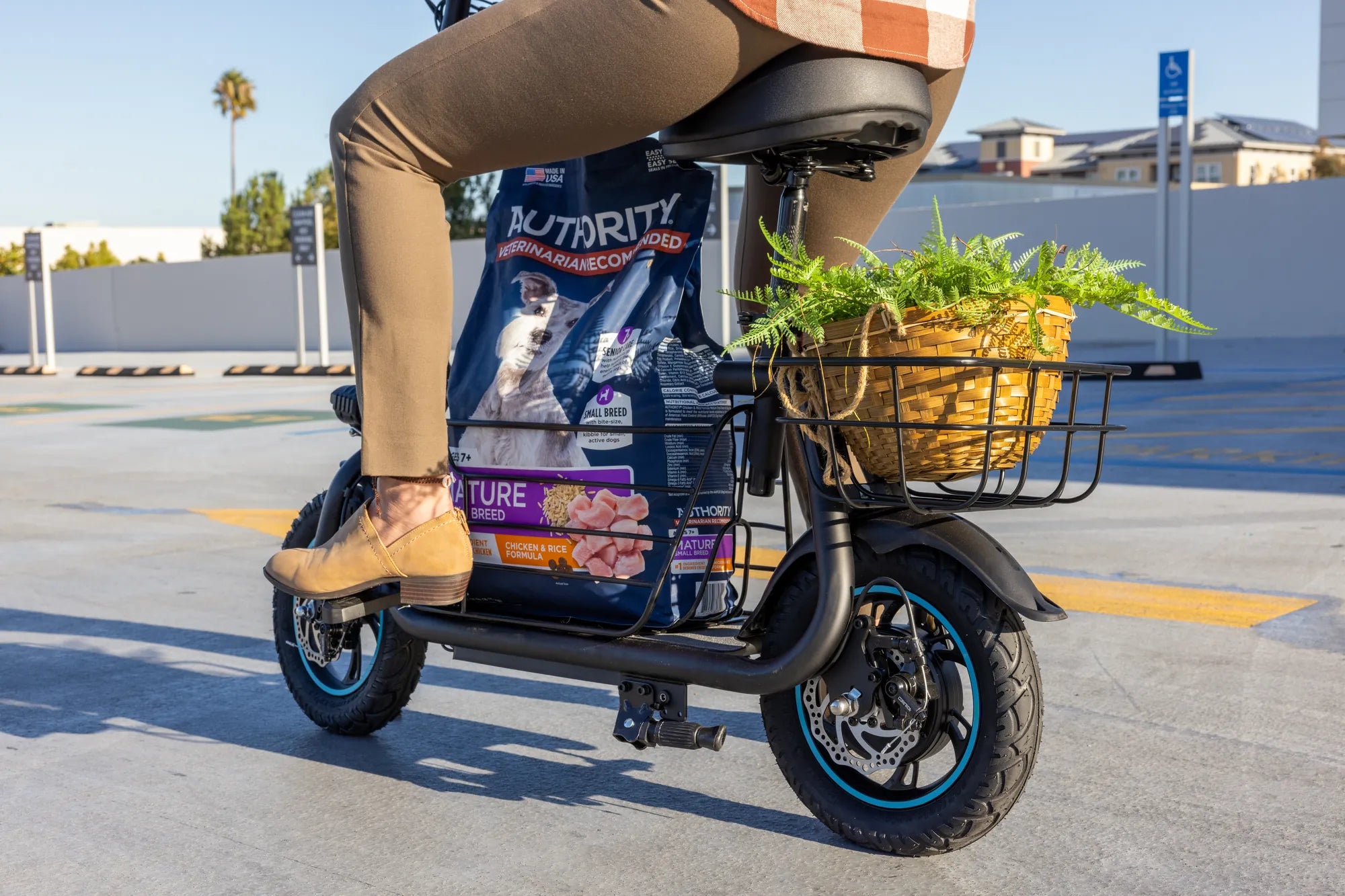
Navigating the world of legal e-bike speed is essential for every rider. This guide will explain the established classification systems, the technical reasons behind speed limits, and the critical local laws you must know. You'll learn how to ride confidently within legal boundaries, ensuring safety for yourself and others while maximizing your electric biking experience.
Understanding the Legal E-Bike Speed Landscape
Legal e bike speed regulations exist primarily for public safety and clear vehicle classification. These rules create a predictable environment for all road and path users. They distinguish e-bikes from mopeds and motorcycles, which have stricter licensing and insurance requirements.
The core principle is that an e-bike's maximum assisted speed determines its legal class. This classification dictates where you can ride and what rules you must follow. Understanding this framework is the first step to responsible ownership.
Speed limits are not arbitrary restrictions. They are based on engineering standards, kinetic energy calculations, and shared-use path dynamics. A higher speed significantly increases stopping distance and potential impact force.
Adhering to legal e bike speed limits protects you from fines, liability, and voided warranties. It also fosters positive community relations with pedestrians and traditional cyclists. This guide will detail how to stay compliant and safe.
The Three-Class System: A Framework for Legal Speed
Most U.S. states and many other regions have adopted a three-class system for electric bicycles. This framework, pioneered by PeopleForBikes, standardizes regulations based on motor operation and top speed. It provides a clear blueprint for manufacturers, retailers, and riders.
The system's widespread adoption helps ensure consistency across jurisdictions. However, local laws can add specific restrictions. Always verify regulations in your specific city, county, or state before riding.
Each class is defined by its maximum assisted speed and whether it uses a throttle. The motor's power output (typically measured in watts) is often regulated separately. This classification is crucial for determining where your e-bike is permitted.
Knowing your e-bike's class is as important as knowing its features. This information is found in your owner's manual and on the manufacturer's website. For Gyroor models, class specifications are clearly listed for each product, aiding in your legal compliance.
Class 1 E-Bikes: The Pedal-Assist Standard
Class 1 e-bikes provide assistance only when the rider is pedaling. The motor automatically ceases to provide assistance when the bicycle reaches 20 mph (32 km/h). This is often called a "pedelec" system.
These e-bikes are permitted anywhere traditional bicycles are allowed. This includes bike lanes, multi-use paths, and most public roads. Their intuitive operation makes them popular for commuting and recreation.
The 20 mph limit balances increased mobility with pedestrian safety on shared paths. The requirement for pedaling ensures the rider remains actively engaged in the cycling process. It's a seamless extension of traditional biking.
Many Gyroor e-bike models fall into this category, offering a natural riding feel. They are engineered with reliable speed limiters that ensure consistent cutoff at the legal threshold. This design prioritizes both performance and compliance.
Class 2 E-Bikes: Throttle-Enabled Convenience
Class 2 e-bikes are equipped with a throttle that can propel the bike without pedaling. Like Class 1, the motor assistance cuts off at a speed of 20 mph (32 km/h). This class offers greater accessibility for riders who may need assistance starting from a stop.
The legal status of throttle use on multi-use paths varies locally. Some areas treat them identically to Class 1, while others may restrict throttle use on certain trails. Riders must check their municipal codes.
The throttle provides a useful boost for hill starts or when a quick acceleration is needed. However, responsible use is paramount, especially in crowded areas. The same 20 mph speed governor ensures safety isn't compromised.
Gyroor designs its Class 2 compliant models with robust throttle systems and precise speed limiters. The integration of UL-certified battery packs ensures stable power delivery up to the legal limit. This prevents any unsafe power surges.
Class 3 E-Bikes: The Speed Pedelec
Class 3 e-bikes are pedal-assist only, with no throttle for primary propulsion. The motor provides assistance up to 28 mph (45 km/h). These are sometimes referred to as "speed pedelecs."
Due to their higher speed, they are often subject to additional regulations. Common restrictions include a prohibition on bicycle paths and multi-use trails. They are typically confined to roads and designated bicycle lanes.
Many jurisdictions mandate helmet use, a minimum rider age (often 16 or 18), and require the e-bike to be equipped with a speedometer. These rules acknowledge the increased risks associated with higher speeds.
For riders using Class 3 e-bikes for longer commutes on roads, the 28 mph limit significantly reduces travel time. Gyroor’s engineering for this class focuses on high-stability frames and advanced braking systems. This ensures control is maintained at higher velocities.
Key Factors Influencing Your Local E-Bike Speed Laws
The three-class system provides a foundation, but local laws are the final authority. Municipalities and states can impose stricter rules. Assuming blanket legality is a common and costly mistake for new riders.
Regulations can differ on helmet requirements, minimum age, insurance, registration, and where each class is permitted to operate. Some cities ban all e-bikes from certain park paths. Others may have lower speed limits for all vehicles on specific trails.
These variations exist to address local safety concerns, traffic density, and infrastructure design. A rule that makes sense in a dense urban park may not apply on a rural road. The rider's responsibility is to know the rules of their specific riding environment.
Investing time in research before you ride is non-negotiable. This proactive approach prevents legal trouble and promotes safer riding habits. It also helps you choose the right e-bike class for your primary use case.
Jurisdictional Variations: State, Province, and City Rules
In the United States, e-bike regulation is primarily a state-level issue. While over 40 states have adopted the three-class system, the specifics vary. For example, some states define Class 3 top speed as 28 mph, while others use 25 mph.
Local cities and counties frequently add another layer of regulation. A city may ban Class 2 and 3 e-bikes from all off-street paved paths. A county park might require a special permit for any electric-assisted bicycle.
In Europe, regulations under EU law typically limit pedal-assist e-bikes to 25 km/h (15.5 mph) to be classified as bicycles. Faster models are classified as mopeds or motorcycles, requiring licensing, insurance, and helmet use. The UK has similar "pedelec" rules.
Always consult your local Department of Transportation, city council website, or a local bicycle advocacy group for the most accurate and current information. Do not rely solely on the manufacturer's general guidelines.
Terrain and Path Type: Where You Ride Matters
Legal e bike speed is often contextual. A 20 mph limit on a quiet residential street is different from 20 mph on a crowded, mixed-use waterfront path. Responsible riding involves adjusting your speed to conditions, even if below the legal maximum.
Shared-use paths demand the greatest caution. Your legal right to be there does not override the safety of pedestrians, children, and pets. A safe speed on such a path may be 10-15 mph, regardless of your e-bike's capability.
On dedicated bike lanes adjacent to roadways, you can typically ride closer to the legal limit. However, you must still be mindful of intersections, car doors, and other cyclists. Your speed should allow for safe stopping and maneuvering.
On private property, public speed laws generally do not apply. However, other rules like trespassing or the property owner's policies are in effect. Understanding the hierarchy of laws—federal, state, local, and private—is key.
Technical Compliance: How E-Bikes are Designed for Safety
Reputable manufacturers design e-bikes with integrated systems to ensure compliance with speed laws. These are not simple suggestions but hard-coded electronic limits. Tampering with them compromises the entire vehicle's safety and legal standing.
The engineering behind a compliant e-bike involves a harmonious balance between the motor, controller, battery, and sensor systems. Each component is calibrated to perform optimally within the legal speed envelope. Altering one part can stress others dangerously.
Brands like Gyroor prioritize this compliance from the initial design phase. This commitment protects the rider, the brand's reputation, and the broader acceptance of e-bikes as safe, legitimate transportation. It’s a cornerstone of responsible manufacturing.
Using a compliant e-bike from a trusted brand means you are riding a vehicle tested for stability, braking, and electrical safety at its intended speeds. This peace of mind is invaluable for enjoying your ride fully.
Speed Limiters and Motor Cut-Off: The Governor
The speed limiter, or governor, is a function of the e-bike's controller. This small computer monitors wheel speed via a sensor. When the predetermined speed (e.g., 20 or 28 mph) is reached, it cuts power to the motor.
This cut-off is instantaneous and seamless in well-designed systems. The rider can still pedal faster than the limit, but will do so without motor assistance. This feels like a sudden increase in pedaling resistance.
The limiter is programmed at the factory and is not intended to be user-accessible. Attempts to modify or "hack" this setting often involve installing unofficial software or hardware kits. These modifications bypass critical safety protocols.
Gyroor's controllers are precisely calibrated for each model's class. The use of quality components ensures the cut-off is reliable and consistent over the life of the e-bike. This reliability is part of the 1-year warranty coverage for defects.
The Role of UL-Certified Batteries and Reliable Systems
Battery safety is intrinsically linked to speed compliance. A high-quality, UL-certified battery pack like those used in Gyroor e-bikes delivers stable, consistent voltage. This stability is crucial for the controller to accurately govern motor output and speed.
Cheap, uncertified batteries can experience voltage sag or surges. This erratic behavior can confuse a controller, potentially leading to inconsistent speed limiting or even component failure. It represents a significant fire and safety risk.
The IPX5 water-resistant rating on Gyroor models protects the electrical systems from moisture. Water ingress can cause short circuits, which might also interfere with the controller's operation. Keeping electronics dry is a basic but vital aspect of maintaining compliance.
Therefore, choosing an e-bike with a UL-certified battery isn't just about fire safety. It's about ensuring every electronic system, including the speed governor, functions as designed for thousands of charge cycles. This is a core investment in long-term, legal operation.
Consequences and Best Practices for the Responsible Rider
Ignorance of the law is not a valid defense. Violating legal e bike speed laws can result in fines, impoundment of your vehicle, and even misdemeanor charges in severe cases. The consequences extend beyond legal penalties.
In the event of an accident, riding a modified or non-compliant e-bike can lead to full liability. Insurance companies may deny claims, and you could be held personally responsible for all damages and injuries. The financial risk is enormous.
Beyond legality, there's a social contract. Reckless riding on non-compliant e-bikes fuels negative public perception. This can lead to stricter regulations for all riders, limiting access to paths and trails. Responsible behavior protects the community.
Adopting best practices ensures your riding is sustainable, enjoyable, and free from unnecessary risk. It allows you to be an ambassador for the e-biking community, demonstrating its value as safe, efficient micro-mobility.
Risks of Modifying or "Derestricting" Your E-Bike
Derestricting an e-bike to exceed its legal speed limit is an act of modification that voids the manufacturer's warranty entirely. Gyroor's 1-year warranty, like most, explicitly excludes coverage for products that have been altered or misused.
Technically, these modifications push the motor, battery, and drivetrain beyond their designed specifications. This leads to excessive heat, accelerated wear, and a high probability of premature failure. The brake system may also be inadequate for the higher speeds.
Legally, a derestricted Class 1 or 2 e-bike may be reclassified as a moped or motorcycle. This can trigger requirements for licensing, registration, insurance, and helmet use that you are not fulfilling. You may be operating an unregistered motor vehicle.
The safety risk is paramount. Frames, forks, and wheels are engineered and tested for the stresses of their intended speed class. At higher speeds, the risk of catastrophic mechanical failure increases dramatically, endangering you and others.
A Rider's Checklist for Legal Compliance
Follow this checklist to ensure every ride is legal and safe. First, identify your e-bike's class (1, 2, or 3) via the manual or manufacturer's site. Second, research the specific laws for your city, county, and state regarding where each class can operate.
Third, always wear a helmet that meets safety standards. This is legally required for Class 3 in many areas and is a critical best practice for all riders. Fourth, use a speedometer if your e-bike doesn't have one built-in, especially for Class 3.
Fifth, never tamper with the speed governor or install modification kits. Sixth, ride respectfully: yield to pedestrians, announce your presence politely, and keep a safe speed for the environment. Seventh, perform regular maintenance on brakes and tires.
Eighth, carry proof of purchase and any documentation showing your e-bike's class and specifications. This can be helpful if questioned by authorities. Following these steps makes you a informed and responsible member of the riding community.
E-Bike Class Comparison and Legal Summary
The table below provides a clear, at-a-glance comparison of the three e-bike classes and their typical legal parameters. Remember that local laws can modify these general rules.
| Feature | Class 1 E-Bike | Class 2 E-Bike | Class 3 E-Bike |
|---|---|---|---|
| Motor Assistance Type | Pedal-Assist Only | Throttle & Pedal-Assist | Pedal-Assist Only |
| Max Assisted Speed | 20 mph (32 km/h) | 20 mph (32 km/h) | 28 mph (45 km/h) |
| Throttle | No | Yes | No |
| Typical Path Access | All bike paths & lanes | Varies locally (often same as Class 1) | Often restricted from bike/pedestrian paths |
| Common Age Restrictions | Usually none | Usually none | Often 16+ |
| Helmet Law (Typical) | Standard bike laws apply | Standard bike laws apply | Often mandatory |
| Speedometer Required | No | No | Often yes |
Frequently Asked Questions on E-Bike Speed Laws
Can I make my Class 2 e-bike go 28 mph like a Class 3?
No. Tampering with the speed limiter to exceed the manufacturer's setting is illegal. It reclassifies your vehicle, voids your warranty (including Gyroor's 1-year coverage), and creates serious safety risks from overstressed components.
Do speed limits apply if I'm only riding on my own private property?
Generally, no. Public road and path laws do not apply on private land you own or have permission to use. However, you are still responsible for your safety and the safety of any guests. Local nuisance or noise ordinances may still be relevant.
Is a helmet legally required for riding a Class 1 e-bike?
This depends entirely on local law. Many places apply standard bicycle helmet laws, which may require them for minors only. However, wearing a helmet is a critical safety best practice for all riders, regardless of class or legal requirement.
How can I verify the class and top speed of my Gyroor e-bike?
Check your owner's manual, the product specifications page on the Gyroor website, or the label on the e-bike's frame. You can also contact Gyroor's US-based customer support team with your model number for confirmation.
What happens if I'm pulled over for speeding on an e-bike?
You could be subject to a traffic citation, similar to a bicycle or vehicle speeding ticket. The fine varies by jurisdiction. If your e-bike is found to be illegally modified, the penalties can be more severe, including impoundment.
Are there different rules for electric scooters vs. e-bikes?
Yes, electric scooters (e-scooters) are often regulated under separate ordinances with different speed limits (commonly 15-20 mph), and they may be prohibited from bike paths or roads entirely. Always check the specific rules for the type of electric vehicle you are riding.
Riding with Confidence: Speed, Safety, and the Law
Understanding and respecting legal e bike speed is the foundation of a rewarding riding experience. It ensures your journeys are free from legal worries and focused on the joy and utility of electric mobility. Compliance is an active choice for safety and community respect.
Choosing a well-engineered e-bike from a brand that prioritizes compliance, like Gyroor, is your first and most important step. Features like UL-certified batteries, IPX5 water resistance, and reliable speed governors are not just specs—they are promises of safety and durability built into your ride.
The legal framework exists not to limit fun, but to create a safe, predictable environment where e-bikes can thrive alongside other forms of transportation. By riding within these parameters, you contribute to the positive growth of micro-mobility and help secure its future.
Embrace the freedom that comes with knowledge. Equip yourself with a compliant e-bike, understand your local laws, and ride with awareness and courtesy. The open path awaits—ride smart, ride safe, and enjoy the journey.
Ready to explore a range of compliant, high-performance e-bikes designed with safety and legality as core principles? Browse the full Gyroor collection, featuring over 20 models with clear class specifications, at gyroorboard.com. Join over 100,000 riders who trust Gyroor for their electric adventures.
Fastest 2 Stroke Scooter: Legends, Limits & Modern Electric Alternatives
Winter Commuter Bike: The Ultimate Guide to Year-Round Cycling