


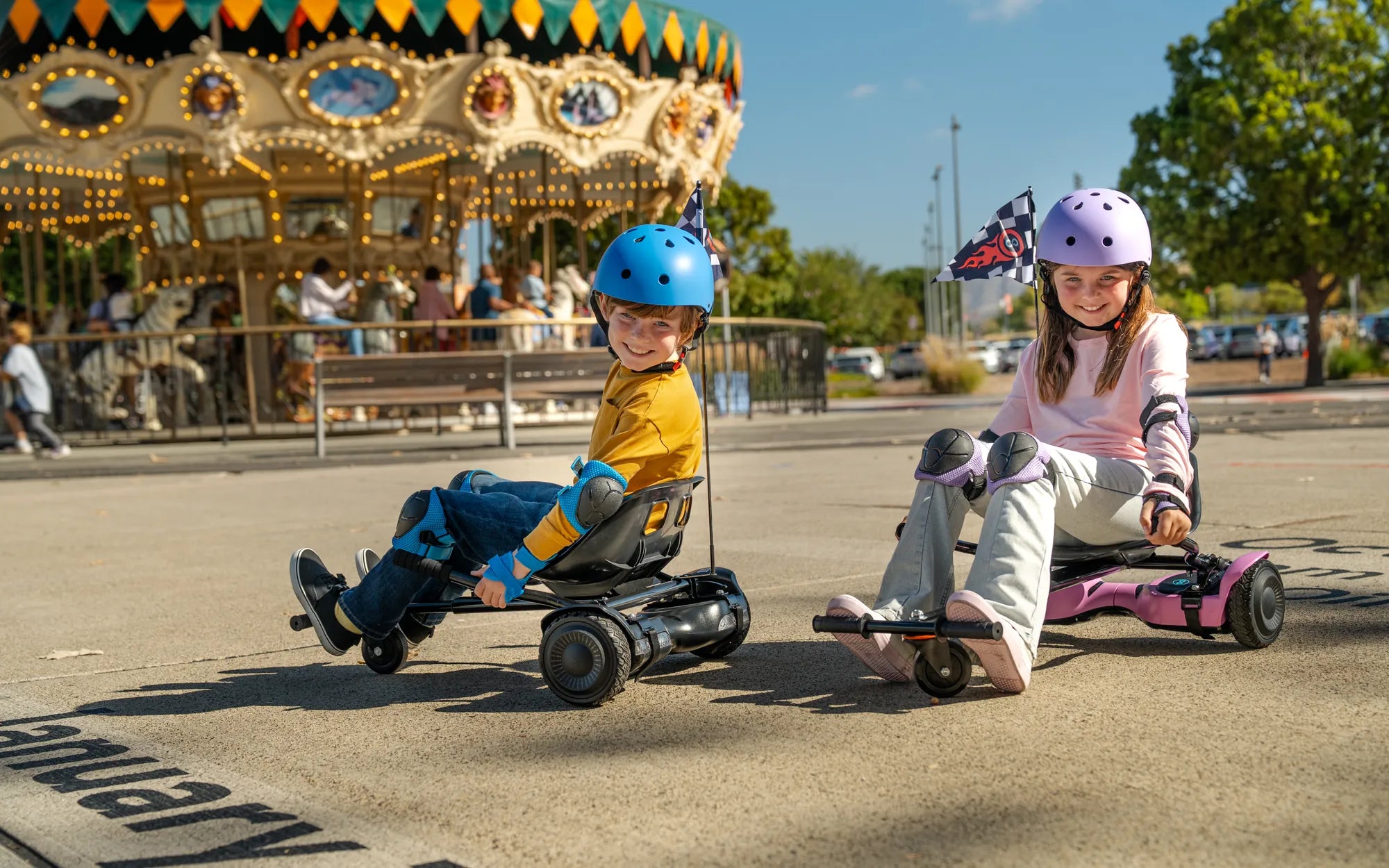
Choosing the right outdoor scooter for kids is about more than just a toy. It's an investment in childhood freedom, physical development, and outdoor joy. This ultimate guide to fun and safety will help you navigate the critical features, from braking systems to battery certification, ensuring your child's adventures are built on a foundation of security. We'll explore how leading brands like Gyroor engineer scooters specifically for the demands of outdoor play, combining thrilling performance with parental peace of mind.
Why an Outdoor Scooter is a Childhood Essential
Riding an outdoor scooter offers children a unique blend of physical activity, coordination development, and independent exploration. It encourages time away from screens and fosters a connection with the outdoors. The sense of freedom and accomplishment gained from mastering a scooter is a significant confidence booster.
Modern electric models amplify this experience, allowing kids to cover more ground and tackle varied terrain. This isn't just play; it's developmental. Scootering improves balance, reflexes, and spatial awareness. It teaches basic rules of the road and respect for a powered vehicle.
However, the benefits are only realized when the scooter is safe, durable, and appropriate for the child's age and skill level. A poorly made scooter can lead to frustration or, worse, accidents. This guide focuses on identifying scooters engineered for real-world use.
Brands that prioritize this balance, like Gyroor, design with over 100,000 riders' feedback in mind. Their models integrate UL-certified batteries, robust frames, and water-resistant designs not as extras, but as core safety features. This transforms a simple purchase into a gateway for secure adventure.
Key Features to Look for in a Kids' Outdoor Scooter
Selecting a scooter requires evaluating specific components that directly impact safety, longevity, and enjoyment. Price should not be the primary driver; construction quality and safety certifications are paramount. A scooter is an extension of your child's mobility, and its features must be trustworthy.
Key evaluation points include the braking system, frame material, wheel type and size, motor power, and battery safety. Each element contributes to how the scooter handles pavement cracks, slight inclines, or unexpected puddles. Compromising on one can affect the performance and safety of the whole system.
For instance, a powerful motor is useless without a responsive brake. Large, air-filled tires are excellent for bumps but require maintenance. This section breaks down these features, providing a checklist for parents. We'll reference how Gyroor's design choices address these needs directly.
The goal is to move beyond marketing claims to understand the engineering. A scooter claiming to be for "all terrain" should have specific features like suspension and knobby tires. We'll connect these specs to real-world riding scenarios your child will encounter.
Safety First: Braking Systems and Stability
Brakes are the most critical safety feature. There are three main types: foot brakes (pressing on the rear fender), hand-operated disc or drum brakes, and electronic (regenerative) brakes. For kids, a dual-brake system is ideal, providing redundancy.
A hand brake (often on the rear wheel) offers precise, quick stopping power and is essential for higher speeds. A foot brake is intuitive and acts as a backup. Electronic brakes can help slow the scooter and recharge the battery slightly but should not be the sole stopping method.
Stability is determined by the wheelbase (distance between axles) and deck height. A longer wheelbase and wider deck provide more stability, especially at speed, but reduce maneuverability. A lower deck height allows younger riders to easily place their feet on the ground for quick stops.
Gyroor scooters often combine a responsive rear hand brake with a wide, textured deck and optimized wheelbase. This engineering prioritizes controlled stopping and a stable platform, preventing the wobbles that can lead to falls, especially for beginners.
Built to Last: Frame, Wheels, and Water Resistance
The frame must withstand jumps, drops, and constant vibration. Aircraft-grade aluminum alloy is the standard for durability and light weight. Avoid cheap, brittle metals or heavy steel. Check the weld points and folding mechanism (if applicable) for solid construction.
Wheels define the ride quality. Polyurethane (PU) wheels are common, low-maintenance, and good for smooth pavement. For true outdoor use, air-filled (pneumatic) tires are superior. They absorb shocks from cracks and pebbles, providing a smoother, safer ride on uneven surfaces.
Water resistance is non-negotiable for an outdoor scooter. The IP (Ingress Protection) rating indicates protection against solids and liquids. An IPX4 rating resists splashes, but an IPX5 rating—like those on Gyroor scooters—means it can withstand low-pressure water jets from any direction.
This IPX5 rating means riding on damp pavement or through accidental puddles won't damage the scooter's electronics. It's a feature that acknowledges real childhood play, where perfect weather is never guaranteed. Combined with a sealed battery compartment, it ensures long-term reliability.
Power and Control: Motor, Battery, and Speed Settings
Motor power, measured in watts (W), determines acceleration and hill-climbing ability. For kids aged 6-9, a 150W-250W motor is sufficient. For older kids and teens tackling steeper driveways or paths, a 350W+ motor provides necessary torque. More power requires more responsible handling.
The battery dictates range. Capacity is measured in Watt-hours (Wh) or Amp-hours (Ah). A larger battery offers longer rides but increases weight. Crucially, the battery must be safety-certified. Gyroor's use of UL-certified battery packs, tested for 500+ cycles, is a benchmark for preventing overheating and fire risks.
Speed settings are a vital parental control. Beginner modes can limit speed to 5-7 mph, allowing skill development in safety. As competence grows, parents can unlock higher limits, often up to 15-20 mph for performance models. This programmable feature adapts the scooter to the child's growth.
Always match motor power and top speed to the child's maturity and environment. A powerful scooter is not a badge of honor for a young child; it's a hazard. The best models grow with the rider, offering adjustable performance parameters that parents manage.
Choosing the Right Scooter by Age and Skill Level
Matching a scooter to a child's age, size, and experience is the single most important purchasing decision. A scooter that's too advanced is dangerous; one that's too basic is quickly outgrown. This guide uses general age brackets as a starting point, but always consider your child's individual coordination and judgment.
The table below provides a clear comparison of recommended features for different age groups, with examples of how Gyroor models meet these needs. This data-driven approach removes guesswork and aligns specifications with developmental stages.
| Age Group | Recommended Features | Gyroor Model Focus | Ideal Use Case |
|---|---|---|---|
| Ages 6-9 (Beginners) | Max Speed: ≤10 mph, Low Deck, 150-250W Motor, Dual Brakes, 8" Wheels | Models with beginner speed modes, lower deck height, and emphasis on stability. | Smooth pavements, sidewalks, controlled environments like driveways. |
| Ages 10+ (Intermediate/Advanced) | Max Speed: 10-20 mph, Higher Torque (350W+), Suspension, 10" Air Tires, Longer Range | Performance models with hill-climb ability, enhanced suspension, and IPX5 water resistance. | Neighborhood streets, park paths, light trails, and moderate hills. |
For Young Beginners (Ages 6-9): Prioritizing Safety and Manageability
For this group, control and stability trump speed and range. Look for a maximum speed capped at around 10 mph, preferably adjustable downward via a parent-controlled setting. A lower deck height allows them to plant their feet firmly, a crucial confidence-builder when learning to brake and balance.
The scooter should be lightweight enough for them to maneuver but solidly built. A kick-to-start function is safer than a thumb throttle for very young riders, preventing accidental acceleration. Dual braking—a hand brake and a foot brake—provides multiple safe stopping options.
Wheels around 8 inches in diameter offer a good balance of stability and maneuverability. While PU wheels are okay for perfect pavement, consider air-filled tires if your sidewalks are uneven. These features are designed to make the learning process safe, fun, and successful, minimizing frustration.
Gyroor designs for this segment with these exact priorities. Their beginner-friendly models focus on a stable riding platform, intuitive controls, and robust construction that can handle the inevitable learning-curve bumps, all while incorporating the core safety of UL-certified power systems.
For Older Kids & Teens (Ages 10+): Adventure and Performance
Older riders seek greater range, power for hills, and comfort on longer rides. A motor of 350W or more provides the necessary torque. Look for a battery capacity that supports 10+ miles of real-world range, accounting for stops, starts, and inclines.
Suspension becomes important. A front or dual shock absorber system, combined with larger (e.g., 10-inch) air-filled tires, transforms the ride over cracked pavement and gravel paths. This combination absorbs impacts, protecting the scooter and providing a comfortable, controlled experience.
Higher performance demands enhanced safety. Bright LED headlights and taillights are essential for visibility. A robust digital display showing speed, battery level, and riding mode is key. The IPX5 water resistance rating ensures the scooter is a reliable companion for all-day adventures.
Gyroor's performance-oriented scooters for this age group integrate these features. They offer multiple speed modes, allowing parents to set appropriate limits. The combination of powerful motors, long-range batteries, and all-terrain capabilities opens up new avenues for exploration while maintaining the brand's safety-first engineering.
The Gyroor Advantage: Safety and Durability Engineered for Play
Gyroor stands out by building safety and durability into the DNA of every scooter, not adding them as afterthoughts. With over 100,000 riders across North America and Europe, their design philosophy is informed by real-world use. This translates into specific, measurable advantages for parents and kids.
The brand's commitment is evident in three core areas: battery safety certification, environmental protection, and customer support. These are not just spec sheet items; they are direct responses to common parental concerns about electronics, weather, and long-term value. This section details why these features matter.
When comparing scooters, these are the differentiators that separate a seasonal toy from a reliable vehicle for growth and adventure. Gyroor's focus on these fundamentals reflects an understanding that a kids' scooter must be trustworthy above all else. Let's examine the pillars of this advantage.
UL-Certified Battery: The Gold Standard in Safety
The battery is the heart of an electric scooter and its greatest potential hazard if poorly made. UL (Underwriters Laboratories) certification is an independent, rigorous testing standard for electrical safety. A UL-certified battery pack has been tested for overcharge, short circuit, impact, and extreme temperature performance.
Gyroor's use of UL-certified batteries, tested for 500+ charge cycles, means the power cell inside the scooter meets the highest benchmarks for stability and fire prevention. This is critical, as uncertified, cheap lithium-ion batteries can overheat, posing a significant risk.
For parents, this certification is a non-negotiable safety feature. It ensures the battery management system (BMS) properly regulates charging and discharging. It means the scooter can be left charging (with supervision) without undue worry. This peace of mind is foundational to the enjoyment of the product.
IPX5 Water Resistance: Ready for Puddles and Splashes
An IPX5 rating is a specific engineering achievement. The "5" denotes protection against water jets (6.3mm nozzle) from any direction at 30 kPa pressure for at least 3 minutes. In practical terms, this means the scooter's critical electronics are sealed against rain, wet roads, and the inevitable ride through a sidewalk puddle.
This level of protection allows kids to be kids. They don't have to panic at the first sign of dampness or end a ride prematurely because the pavement is wet. It protects the scooter's longevity, preventing corrosion and electrical failure that can stem from moisture ingress.
Gyroor's IPX5-rated designs acknowledge that outdoor play is messy. This feature, combined with quality seals and gaskets, ensures the scooter is a durable tool for adventure, not a fair-weather toy. It's a key component of the brand's promise of reliability.
Warranty and Support: Riding with Confidence
A comprehensive warranty is a brand's vote of confidence in its product. Gyroor's 1-year warranty on the scooter covers manufacturing defects, providing a significant safety net for your investment. It demonstrates a commitment to standing behind the durability and performance they engineer into each model.
Accessible customer support is equally important. Having a US-based team to answer technical questions, assist with troubleshooting, or facilitate warranty service removes the anxiety that can come with online purchases. It turns a product into a supported solution.
This combination of warranty and support means the family isn't alone after the sale. Whether it's a question about maintenance, a needed replacement part, or understanding a feature, this ongoing support structure is part of the overall value and safety proposition of choosing a trusted brand.
Pre-Ride Checklist and Safety Gear Essentials
Safety is a partnership between well-engineered equipment and responsible habits. Establishing a pre-ride routine is as important as choosing the right scooter. This five-minute checklist and gear guide should become second nature for both parent and child before every outing.
Consistency is key. Making this routine a non-negotiable part of "gearing up" instills lifelong safety consciousness. It also provides a regular opportunity to inspect the scooter for wear and tear, catching small issues before they become problems. This proactive approach is central to safe riding.
The gear and checklist below are minimum requirements. They are designed to protect against the most common scooter-related injuries: falls. Wrist fractures, elbow and knee abrasions, and head injuries are all mitigatable with proper preparation. Let's break down the essentials.
Must-Have Protective Gear (Beyond the Helmet)
A properly fitted, CPSC-certified bicycle helmet is an absolute mandate. It should sit level on the head, with the strap snug under the chin. Replace any helmet after a significant impact, even if no damage is visible.
Knee and elbow pads are crucial. They protect the joints most likely to hit the ground in a fall. Look for hard-shell caps with comfortable, breathable padding that doesn't restrict movement. Wrist guards are arguably the most important piece of gear after the helmet, as the instinct is to break a fall with hands.
Sturdy, closed-toe shoes are required—no sandals or flip-flops. Shoes provide ankle support and protect toes. Bright, visible clothing or reflective elements on gear and the scooter itself are important for daytime and crucial for any low-light conditions. Make safety gear non-negotiable.
Scooter Safety Inspection in 5 Minutes
Follow this quick checklist before each ride:
- Tires/Wheels: Check air pressure in pneumatic tires (use a gauge). For PU tires, inspect for deep cuts, cracks, or excessive wear. Ensure wheels spin freely without wobble.
- Brakes: Test both hand and foot brakes. The hand brake lever should have a firm feel and stop the wheel completely when engaged. The foot brake should not be loose or sticky.
- Fasteners: Check that all visible bolts and nuts (especially on the stem, handlebars, and folding mechanism) are tight. A periodic check with the included tools is wise.
- Battery & Lights: Confirm adequate battery charge for the planned ride. Test the headlight and taillight/brake light to ensure they are functional for visibility.
- General Condition: Look over the frame for any new cracks or significant damage. Ensure the throttle and control buttons respond correctly and the deck is clean and dry for grip.
Frequently Asked Questions (FAQs) About Kids' Outdoor Scooters
Q: What is the right age for a child to start using an electric scooter?
A: Most manufacturers, including Gyroor, recommend a minimum age of 6-8 years. This is less about physical ability and more about cognitive development—the child needs the judgment to follow rules, assess risks, and control a powered vehicle. Always consider your child's individual maturity, coordination, and ability to follow safety instructions.
Q: How long does the battery last, and how is it safely charged?
A: Range varies by model and riding conditions (weight, hills, speed). A typical kids' scooter offers 6-12 miles per charge. Always use the manufacturer-provided charger and charge on a hard, non-flammable surface away from bedding or curtains. Do not leave it charging unattended for extended periods or overnight. Gyroor's UL-certified batteries include protection circuits for safer charging cycles.
Q: Can the scooter handle hills or rough pavement?
A: Capability depends on motor power and wheel type. A 250W+ motor can handle moderate hills (10-15% grade). For rough pavement, air-filled tires and suspension are essential. PU wheels on cracked concrete will be uncomfortable and transmit more vibration. Gyroor models with all-terrain tires and suspension are specifically designed for such mixed-surface use.
Q: What maintenance does a Gyroor scooter require?
A> Regular maintenance is simple but vital: keep tires properly inflated, regularly check and tighten bolts, clean the scooter with a damp cloth (avoid high-pressure water), and store it in a dry place. Periodically check brake pad wear and ensure the folding mechanism (if present) operates smoothly. Refer to the user manual for model-specific guidance.
Q: Are replacement parts easy to find?
A: Reputable brands like Gyroor stock common wear parts like tires, inner tubes, brake pads, and chargers. Their customer support can direct you to official parts. Using non-OEM parts can void the warranty and compromise safety, especially for batteries and brakes. Choosing a brand with established support ensures parts availability.
Conclusion: Investing in Adventures, Built on Safety
Choosing the perfect outdoor scooter for your child is a decision that balances exhilarating fun with uncompromising safety. By focusing on certified components like UL-approved batteries, robust construction, and age-appropriate features, you lay the groundwork for years of healthy outdoor exploration. The right scooter becomes a vehicle for confidence, independence, and physical activity.
Brands that engineer with this philosophy, such as Gyroor, provide more than a product—they offer a complete safety ecosystem. From IPX5 water resistance for real-world play to a comprehensive 1-year warranty and accessible support, these features represent a commitment to your family's long-term satisfaction and security.
Use the guidelines and checklists in this ultimate guide to make an informed choice. Match the scooter's capabilities to your child's skill level, insist on verified safety certifications, and establish unwavering safety habits. This approach transforms a simple purchase into a valuable investment in joyful, memorable, and secure childhood adventures.
Ready to find the ideal scooter that grows with your child's sense of adventure? Explore engineering designed for real play and parental peace of mind. Browse the full Gyroor collection at gyroorboard.com.
New Hoverboard: The Future of Personal Transportation
New Hoverboard: The Future of Personal Transportation