



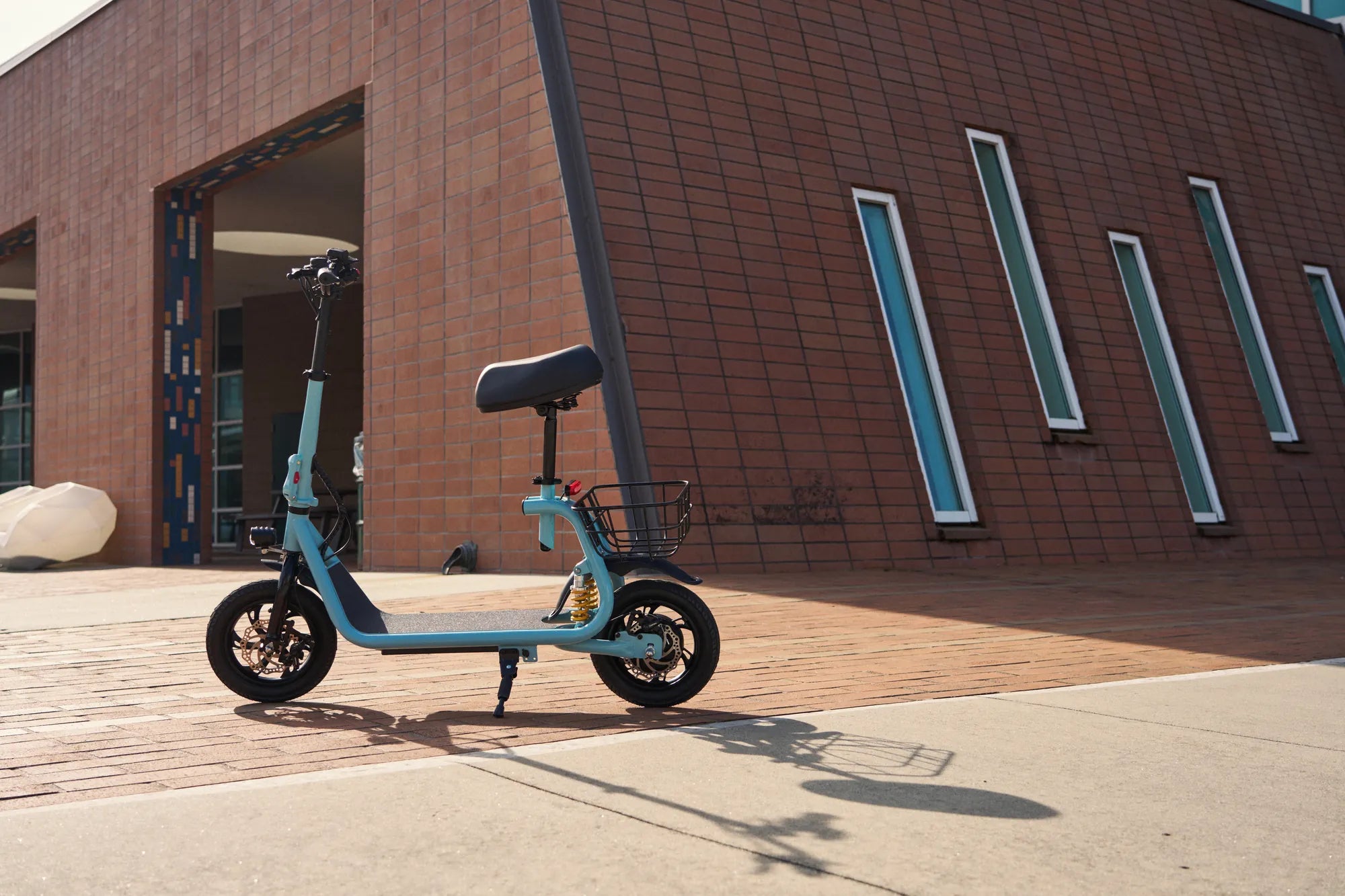
Finding the Perfect Ride for Your Young Adventurer
Choosing an electric scooter for your child involves more than picking a fun-looking model. It's a decision that balances excitement with essential safety, developmental benefits with practical durability. This guide provides a detailed, safety-first framework for parents navigating a crowded market.
You'll learn to identify non-negotiable safety features, interpret technical specifications, and match a scooter's capabilities to your child's age and riding environment. We'll analyze key components from braking systems to battery certifications, transforming you into an informed buyer.
As a leading electric scooter and e-bike brand trusted by over 100,000 riders across North America and Europe, Gyroor's design philosophy—centered on UL-certified batteries, IPX5 water resistance, and reliable warranties—serves as a benchmark for what families should expect. This guide leverages that expertise to help you make a confident choice.
Why Choose an Electric Scooter for Your Child? Benefits & Developmental Perks
Electric scooters offer significant advantages beyond simple recreation. They encourage outdoor physical activity in an age dominated by screens, promoting cardiovascular health and motor skill development. The act of riding requires constant micro-adjustments for balance, enhancing core strength and coordination.
These vehicles foster a sense of independence and responsibility. Children learn to manage a powered device, follow safety protocols, and care for their equipment through charging and basic maintenance. This builds confidence and teaches valuable lessons about ownership.
For families, electric scooters can transform local errands or park visits into shared adventures. They provide a fun, efficient mode of transport for neighborhood exploration, often keeping pace with a parent walking or cycling. This shared activity strengthens family bonds through outdoor engagement.
Parents frequently express concerns about safety, speed, and durability. A high-quality scooter from a reputable manufacturer directly addresses these worries with governed speed modes, robust construction, and certified safety components. The key is selecting a product engineered for real-world use by children.
Safety First: Non-Negotiable Features Every Parent Must Look For
Safety is the paramount consideration, transcending brand, price, or aesthetic appeal. The right features create a protective ecosystem around your child, mitigating risks while preserving the joy of riding. This section breaks down the critical safety architecture you must verify.
Prioritizing these elements ensures the scooter is a tool for controlled fun, not undue hazard. Manufacturers that highlight these certifications and designs demonstrate a commitment to their user's well-being, which is the cornerstone of a trustworthy brand.
UL-Certified Battery: The #1 Priority for Peace of Mind
The battery is the heart of an electric scooter and its most critical safety component. UL (Underwriters Laboratories) certification means the lithium-ion battery pack has undergone rigorous independent testing for electrical, mechanical, and environmental safety.
This certification specifically guards against overheating, short-circuiting, and thermal runaway—a chain reaction that can lead to fires. For a child's product, this independent validation is non-negotiable. It ensures long-term reliability over hundreds of charge cycles.
Always confirm UL certification exists for the battery pack itself, not just other components. Gyroor, for instance, uses UL-certified battery packs tested for 500+ charge cycles in all models, providing a fundamental baseline for family safety that parents should demand from any brand they consider.
Speed Control & Modes: Matching Power to Skill Level
Adjustable speed modes are essential for a safe learning curve. A quality scooter should offer at least two, typically three, modes (e.g., Beginner/Eco: 5-7 mph, Normal: 10 mph, Sport: 12-15 mph). This allows the scooter to grow with your child's skill and confidence.
A speed governor caps the maximum velocity regardless of mode, preventing unauthorized modifications or downhill over-acceleration. This electronic limit is a crucial safeguard. Parents should also look for a responsive acceleration curve that prevents jerky, unexpected starts.
This graduated approach lets beginners master balance and steering at a walking pace before accessing more power. It transforms the scooter from a fixed-speed toy into an adaptive learning tool, significantly reducing the risk of falls due to surprise acceleration.
Braking Systems: Reliable Stopping Power is Key
Effective, predictable braking is as important as controlled acceleration. For kids, a combination braking system is ideal. Most reliable models use an electronic (e-brake) system activated by the throttle release or a lever, combined with a physical brake like a rear disc or foot fender brake.
The electronic brake provides smooth, initial deceleration, while the physical brake offers definitive stopping power. A rear-mounted physical brake is preferable as it prevents the risk of the rider being thrown over the handlebars during a sudden front-brake stop.
Test for brake responsiveness and modulation. The child should be able to engage the brake lever comfortably and the stopping action should be progressive, not abrupt. Regular inspection and adjustment of brake pads or cables are part of basic maintenance that parents can oversee.
Build Quality & Water Resistance: Durability for Real-World Play
A sturdy frame, typically made from aerospace-grade aluminum alloy, is essential to withstand bumps, jumps, and occasional drops. Check the weld points and folding mechanisms (if applicable) for solid construction. Loose components or excessive flex indicates poor durability.
Water resistance, rated via the IP (Ingress Protection) code, is crucial for real-world conditions. An IPX5 rating means the scooter can withstand water jets from any direction, making it safe for riding through puddles or in light rain. This protects the electrical systems from moisture damage.
This combination of robust materials and environmental protection ensures the scooter isn't a fair-weather toy. It can handle the unpredictable nature of outdoor play, from driveway chalk dust to damp grass, without compromising its electrical integrity or structural safety.
Navigating the Market: Key Specifications & Age/Skill Considerations
Understanding specifications allows you to match a scooter's performance envelope to your child's needs and your local terrain. These are not just marketing numbers; they are direct indicators of capability, comfort, and suitability.
Making an informed choice requires cross-referencing these specs with your child's profile. The following table provides a clear starting point for this evaluation, which the subsequent sections will explore in detail.
| Child Profile | Recommended Age Range | Motor Power | Weight Capacity | Key Features Focus |
|---|---|---|---|---|
| Young Beginner | 6-9 years | 150W - 200W | 120 lbs max | Low speed modes, wide deck, maximum stability |
| Confident Rider | 9-12 years | 250W - 300W | 140-160 lbs max | Multiple speed modes, improved range, suspension |
| Teen/Advanced | 12+ years | 300W+ | 180 lbs+ max | Higher speed/range, robust brakes, adult-like features |
Age & Weight Recommendations: The Right Fit for Growth
Manufacturer age and weight limits are based on the scooter's structural integrity, motor torque, and brake performance. Exceeding the weight capacity strains the motor, reduces range, and can compromise braking distance and frame durability.
Deck size and handlebar height are equally important for fit. A deck should be long and wide enough for the child to place both feet comfortably. Adjustable handlebars are a significant advantage, allowing the scooter to adapt over several seasons of growth.
Selecting a scooter with a small buffer above your child's current weight is wise, but avoid buying an overly powerful model they will "grow into." It's safer to upgrade later than to place a beginner on a scooter with excessive power and speed they cannot safely manage.
Motor Power & Range: Balancing Fun with Practicality
Motor power, measured in watts (W), determines hill-climbing ability and acceleration. A 150W motor is sufficient for flat terrain and gentle slopes for younger children. For older kids or areas with hills, 250W-300W provides the necessary torque without straining the system.
Range, stated in miles, is based on optimal conditions: a light rider on flat, smooth pavement at a moderate speed. Real-world range is typically 60-70% of the advertised maximum. Factors like rider weight, hills, frequent stops/starts, and temperature all reduce range.
Consider your child's typical ride pattern. A 6-8 mile real-world range is ample for neighborhood loops and park visits. Larger battery capacities extend range but also increase charge time and scooter weight. Balance is key for a child-friendly package.
Tire Type: Air-Filled vs. Solid – Comfort vs. Maintenance
Pneumatic (air-filled) tires offer superior shock absorption, providing a smoother ride over cracks, bumps, and uneven pavement. This improves comfort and control. However, they require periodic pressure checks and are susceptible to punctures, necessitating repair kits or replacements.
Solid (airless or honeycomb) tires eliminate the risk of flats entirely and require zero maintenance. The trade-off is a firmer, less forgiving ride on rough surfaces. Some premium solid tires incorporate elastomer inserts to improve comfort somewhat.
The choice depends on your local terrain and maintenance preference. For smooth bike paths and sidewalks, solid tires are a practical, worry-free choice. For areas with rougher pavement or off-path adventures, pneumatic tires significantly enhance ride quality and traction.
The Gyroor Difference: Engineering Trust for Your Family
When evaluating the top electric scooters for kids company, Gyroor distinguishes itself through a holistic engineering philosophy where every component is selected and tested against a standard of family safety and long-term reliability. This translates into tangible benefits that address core parental concerns.
The brand's commitment is evident in its foundational specifications: UL-certified batteries, IPX5 water-resistant designs, and robust motor assemblies are standard across its kids' lineup. This consistency means parents don't have to hunt for a "safe" model; it's integrated into the core design.
With over 100,000 riders and a 4.5/5 average rating, Gyroor's reputation is built on real-world performance and customer satisfaction. This track record provides social proof that their products deliver on their promises of durability, safety, and fun.
Built to a Higher Standard: UL, IPX5, and Premium Components
Gyroor's use of UL-certified battery packs is a deliberate safety choice, not a marketing afterthought. Each pack undergoes stringent testing, ensuring stability over its entire lifecycle. This is the most critical investment in risk prevention a manufacturer can make.
The IPX5 rating is applied to the entire scooter's construction, not just the battery compartment. This systemic protection guards connectors, controllers, and displays from water ingress, dramatically increasing the scooter's resilience against everyday play conditions.
From the reinforced aluminum alloy frame to the non-slip deck tape and ergonomic brake levers, component quality is prioritized. This results in a product that feels substantial and secure, communicating durability to both parent and child and reducing the likelihood of failure-related incidents.
The 1-Year Warranty & U.S. Support: Long-Term Assurance
A comprehensive 1-year warranty on the motor, battery, and controller demonstrates confidence in product longevity. It protects your investment against manufacturing defects, ensuring you're not left with a costly repair shortly after purchase.
Accessible, U.S.-based customer support is invaluable. It provides a direct line for troubleshooting, parts inquiries, and warranty service, eliminating the frustration of overseas communication delays common with generic brands. This support network is part of the product's value.
This warranty and support structure transforms the scooter from a disposable item into a supported product. It aligns Gyroor's interests with the family's, ensuring a positive ownership experience long after the initial purchase is complete.
Parent's Checklist: Your Step-by-Step Buying Guide
Use this actionable list during your research and purchasing process to ensure no critical detail is overlooked.
- Verify Safety Certs: Confirm the battery is UL-certified and the scooter has a clear IP water resistance rating (IPX4 minimum, IPX5 ideal).
- Assess Speed Controls: Ensure multiple, parent-controllable speed modes exist with a governed maximum speed appropriate for your child's age.
- Match Capacity: Check that your child's weight is comfortably under the scooter's maximum load capacity. Consider adjustable handlebars for growth.
- Evaluate Brakes: Prefer a dual-brake system (electronic + physical). Test brake lever reach and feel for your child's hand size.
- Choose Tire Type: Decide between pneumatic (comfort, maintenance) or solid (durability, zero upkeep) based on your terrain.
- Confirm Support: Review the warranty length (1-year is standard for quality brands) and the availability of customer service in your region.
- Read Reviews: Look for consistent feedback on durability, real-world range, and ease of use from other parents.
Frequently Asked Questions (FAQ) for Parents
Q: What is a good starting age for an electric scooter?
A: Most children develop the necessary coordination, judgment, and strength between ages 6 and 8. Starting age depends more on individual maturity and ability to follow safety rules than a strict birthday. Always begin with close, direct supervision on the slowest speed mode in a controlled environment.
Q: How do I teach my child to ride safely?
A> Start with full safety gear: a properly fitted CPSC-certified helmet, plus knee and elbow pads. Practice in an empty parking lot or smooth driveway. Drill the basics: starting/stopping smoothly, making wide turns, scanning for obstacles, and dismounting safely. Instill the habit of a pre-ride check (tires, brakes, loose parts).
Q: Are electric scooters for kids easy to maintain?
A> Yes, with minimal routine care. Key tasks include: keeping tires properly inflated (if pneumatic), checking and adjusting brake tension periodically, wiping down the scooter to prevent dirt buildup, and storing it in a dry place. Most importantly, follow the manufacturer's battery charging guidelines—avoid leaving it plugged in indefinitely.
Q: Can the scooter handle hills in our neighborhood?
A> Hill-climbing ability depends on motor power and rider weight. A 150W motor may struggle on moderate inclines. A 250W-300W motor, like those in many Gyroor models, provides adequate torque for most neighborhood hills. For very steep areas, test the specific model's hill grade rating (often listed as a percentage).
Q: How important is the weight of the scooter itself?
A> Scooter weight matters for portability and maneuverability. A lighter scooter (under 20 lbs) is easier for a child to carry up steps or lift after a fall. However, slightly heavier models often feature larger batteries for more range and more robust frames. Aim for the lightest weight that still meets your required safety, power, and range specs.
Conclusion: Empowering Adventures with Confidence
Selecting the right electric scooter is an exercise in informed parenting. By prioritizing certified safety features like UL-approved batteries, demanding adjustable speed controls, and matching specifications to your child's profile, you transform a potential hazard into a source of healthy, developmental fun.
The market offers many choices, but brands that transparently build to higher standards—with verifiable certifications, durable construction, and strong customer support—provide the genuine peace of mind every parent seeks. This approach ensures the scooter is a reliable companion for adventure, not a source of worry.
Your child's journey towards greater independence and outdoor joy begins with a safe, well-chosen vehicle. Equip them with the right tools, instill safe riding habits, and watch as their confidence grows with every ride. The ultimate goal is creating lasting memories of fun, exploration, and family time, all built on a foundation of security.
Ready to explore scooters engineered with these family-first principles? Browse the full Gyroor collection at gyroorboard.com to find the perfect, safety-certified ride for your young adventurer.
Are Electric Scooters Legal in the US? A Complete Guide to Regulations
Will Electric Scooters Be Legal in UK? The Future of Urban Mobility