



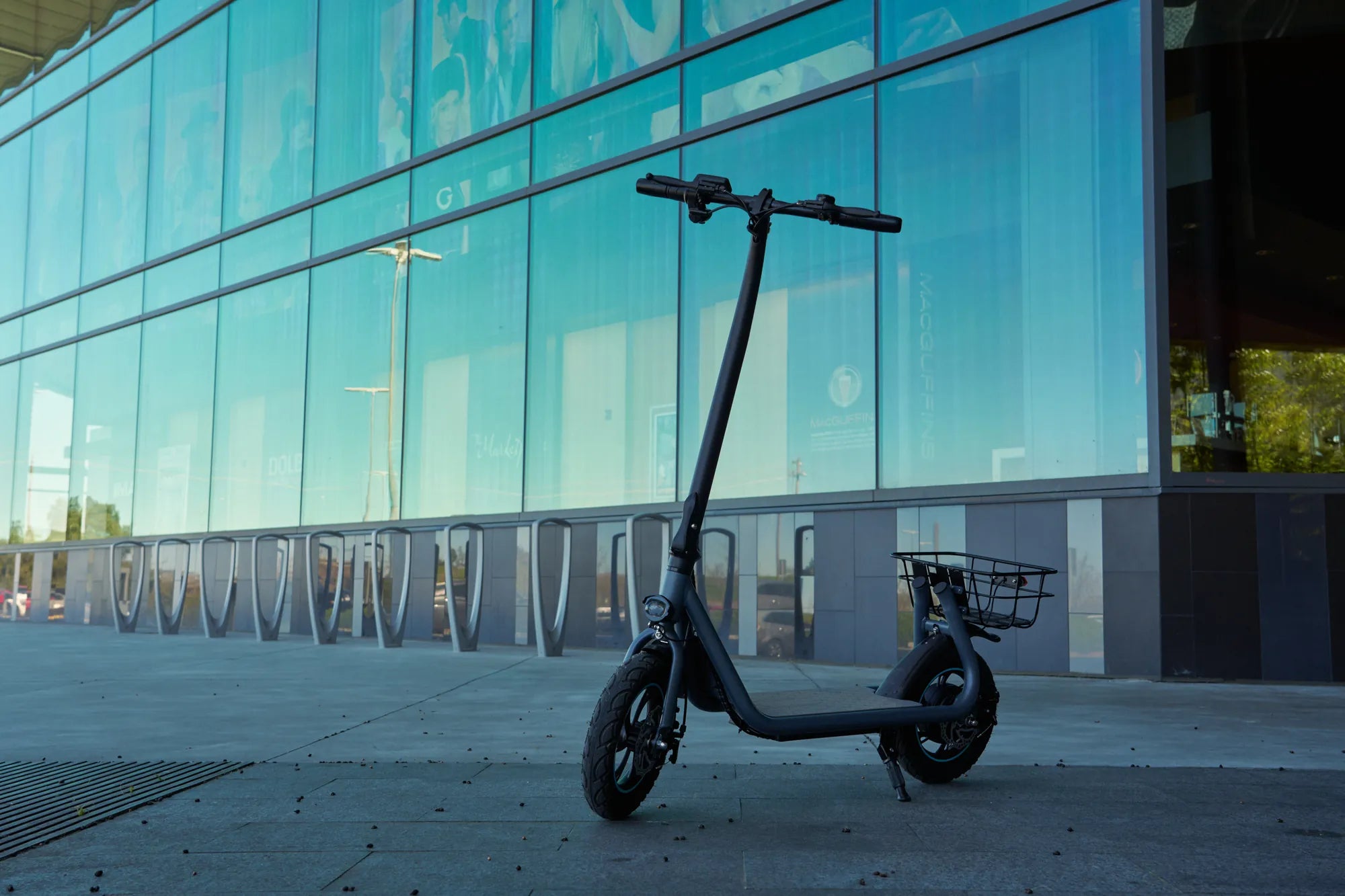
The question of whether electric scooters will be legal in the UK is one of the most pressing issues in urban transport today. For riders and potential buyers, the current legal grey area creates confusion and risk. This deep dive cuts through the noise to provide a clear, factual roadmap. We will examine the exact laws as they stand, the critical data emerging from national trials, the fierce debate between advocates and critics, and the specific safety standards that will define any future legal framework. The future of urban mobility in the UK hinges on this balance between innovation and regulation.
The Current Legal Landscape for E-Scooters in the UK
As of today, it remains illegal to ride a privately owned electric scooter on public roads, cycle lanes, or pavements anywhere in the UK. This blanket prohibition is rooted in historic legislation. The Highway Act 1835 and the Road Traffic Act 1988 collectively classify e-scooters, along with other personal light electric vehicles (PLEVs), as "Powered Transporters."
Under this classification, they are considered motor vehicles. To be used legally on public roads, they would require type approval, registration, tax, insurance, and a valid driving licence. Since no privately owned e-scooter model currently meets all these requirements, their public use is effectively banned. The police have the power to issue a £300 fixed-penalty notice and six penalty points on a rider's driving licence for using one illegally.
The only legal space for a private e-scooter is on private land with the explicit permission of the landowner. This starkly limits their utility for daily commuting or errands. This legal reality exists in stark contrast to the visible presence of rental e-scooters in many UK cities, which operate under a completely different, government-sanctioned framework.
The core issue is one of regulatory lag. The existing laws were written long before the advent of modern, compact electric mobility. The government's current challenge is to assess whether and how to update this century-old framework to safely integrate a new form of transport that millions are eager to use.
Government-Led Rental Trials: A Glimpse into a Regulated Future
Since July 2020, the UK government has been running a series of national rental e-scooter trials. Originally planned to conclude in 2022, these trials have been repeatedly extended and are now set to run until at least May 2026. They are the primary mechanism through which the Department for Transport (DfT) is gathering evidence on safety, user behaviour, and integration with other road users.
These trials are taking place in over 30 designated areas across England, including major cities like London, Birmingham, and Bristol, as well as smaller towns. Only e-scooters from approved rental operators are permitted, and they are subject to a strict set of rules designed to manage risk and gather consistent data. Understanding these trial rules provides the clearest blueprint for what legalisation of private scooters might entail.
Key regulations governing the rental trials include a maximum design speed of 15.5 mph (25 km/h). All trial scooters are geofenced to automatically reduce speed in pedestrianised zones and to prevent riding on pavements. Riders must have a full or provisional car, motorcycle, or moped licence (Category Q entitlement).
Insurance is provided by the rental operator. The use of helmets, while "strongly recommended," is not legally mandatory. Crucially, all trial e-scooters must have motor insurance, a horn or bell, and front and rear lights. The data collected covers accident rates, rider demographics, trip patterns, and impacts on public transport use. This evidence base will be foundational for any parliamentary decision on changing the law for private devices.
The Push for Legalisation: Arguments For and Against
The debate over legalising private e-scooters is highly polarised, with compelling data and anecdotes on both sides. Proponents argue they are a key piece of the sustainable urban mobility puzzle. A 2022 report by the Centre for London found that e-scooter trips in trial areas often replaced car journeys, particularly for short trips under 3 miles, potentially reducing congestion and emissions.
They are championed as a perfect "first and last mile" solution, bridging the gap between home, public transport hubs, and final destinations. For many, they offer an affordable, convenient, and fun alternative to sitting in traffic or relying on infrequent buses. Legalisation, supporters argue, would allow for proper regulation of safety standards, rider education, and dedicated infrastructure, moving riders from a legal grey area into a controlled system.
Opponents, however, point to significant safety and nuisance concerns. Road safety charities like Brake and the Royal Society for the Prevention of Accidents (RoSPA) highlight alarming injury statistics. DfT data shows that in 2022, there were 1,437 casualties in collisions involving e-scooters, with 12 fatalities and 450 serious injuries. A significant portion of these involved private, illegal scooters, underscoring the risks of the unregulated status quo.
Pedestrian groups report concerns about pavement riding, sidewalk clutter from improperly parked rental scooters, and silent scooters startling people. There are also questions about equity and access; without purchase subsidies, private e-scooters may remain a tool for the relatively affluent. The challenge for policymakers is to weigh the potential modal shift away from cars against the very real public safety and amenity costs.
Safety at the Forefront: What Legalisation Would Require
Any legalisation of private e-scooters will be conditional on the establishment of a rigorous safety framework. Based on the rental trial parameters and European regulations, we can predict the core requirements. A maximum speed limit of 15.5 mph on public roads is almost certain to be mandated, with potential for lower default speeds that can be increased in designated areas.
Technical standards will be paramount. These will likely include a minimum wheel size (to improve stability over potholes), dual braking systems (electronic and mechanical), mandatory front (white) and rear (red) lights, reflectors, and an audible warning device like a bell. The power of the motor will likely be capped, possibly at 500W, to prevent excessively rapid acceleration unsuitable for shared road spaces.
Rider regulations will mirror those for the trials. A minimum age of 16 or 18 is probable, alongside a requirement for a driving licence (at least a provisional) to ensure knowledge of the Highway Code. The debate around mandatory insurance is ongoing; one model could see third-party liability insurance bundled with the sale of the scooter, as with some European countries. Helmet use may be strongly recommended or mandated for younger riders.
Finally, clear rules of the road will be essential. Legalisation would almost certainly explicitly prohibit pavement riding, mandate the use of cycle lanes where available, and require riding on the road elsewhere, while also potentially banning passengers and the use of mobile phones while riding. This comprehensive approach aims to transform e-scooters from unregulated gadgets into accountable vehicles.
Comparing the UK to Global Counterparts
The UK's cautious, trial-based approach stands in contrast to the more varied regulatory landscapes abroad. In the European Union, while traffic laws are member-state specific, there is a common product safety framework. The EU has classified e-scooters with a max speed of 25 km/h (15.5 mph) and a 500W motor as "Personal Light Electric Vehicles," allowing them on cycle paths in many countries like Germany and France.
Paris, once a symbol of scooter-friendly policy, recently implemented a strict licensing regime for rental operators after a public referendum, showing that permissiveness can be reined in. In the United States, regulation is a patchwork of state and city laws. Some states, like California, have fully integrated them with helmet and age laws, while others treat them similarly to bicycles.
The UK model is distinct in its prolonged, national-level trial phase. Most other jurisdictions moved more quickly to either ban or legalise. The UK government's method is arguably more data-driven but has created a prolonged period of legal uncertainty. The table below summarises key differences in approach and regulation.
| Region/Country | Legal Status (Private) | Max Speed Limit | Helmet Law | Where to Ride |
|---|---|---|---|---|
| United Kingdom | Illegal on public land (Trials ongoing) | 15.5 mph (Trials) | Recommended | N/A (Public use illegal) |
| Germany | Legal with insurance plate | 12.4 mph (20 km/h) | Mandatory (under 15) | Cycle paths/roads |
| France | Legal | 15.5 mph (25 km/h) | Mandatory outside cities | Cycle paths/roads (no pavements) |
| California, USA | Legal | 15 mph | Mandatory (under 18) | Roads & bike lanes (not pavements) |
The Gyroor Advantage: Built for Compliance and Confidence
As the UK market awaits clarity, forward-thinking manufacturers are already engineering scooters that meet and exceed the anticipated safety standards. Gyroor, a leading electric scooter and e-bike brand trusted by over 100,000 riders across North America and Europe, exemplifies this proactive approach. Their design philosophy prioritises the core tenets expected in future UK law: safety, reliability, and rider confidence.
At the heart of this is battery safety. All Gyroor models use UL-certified battery packs, tested for over 500 charge cycles. This certification is a global benchmark for electrical safety, drastically reducing the risk of fire—a primary concern for regulators and the public. This commitment goes beyond marketing; it's a foundational engineering standard.
Durability for the UK climate is non-negotiable. Gyroor scooters feature IPX5 water-resistant designs, ensuring they can handle rainy commutes without compromising electrical integrity. When combined with robust suspension systems and wide, air-filled tyres, they offer the stability and puncture resistance needed for varied British road surfaces, directly addressing safety concerns related to wheel size and traction.
Furthermore, Gyroor's standard 1-year comprehensive warranty provides a benchmark for quality and manufacturer accountability. It signals a commitment to product longevity and customer support, factors that will be crucial in a regulated market where consumers need to trust their vehicle. By focusing on certified safety, all-weather resilience, and reliable performance, brands like Gyroor are not just selling scooters; they are building the responsible riding ecosystem that legalisation will require.
Frequently Asked Questions (FAQ)
Q: Can I legally buy a private e-scooter in the UK?
A: Yes, you can purchase one. However, it is currently illegal to ride it on public roads, cycle lanes, or pavements. It may only be used on private land with the landowner's permission.
Q: What are the penalties for riding a private e-scooter illegally?
A> Penalties are severe. You can receive a £300 fixed-penalty notice and six penalty points on your driving licence. The police can also impound the scooter. If involved in an accident, you could face prosecution for driving without insurance or a licence.
Q: When will private e-scooters be legalised in the UK?
A> There is no official date. The decision hinges on the evidence from the extended rental trials, which now run until May 2026. Any change in the law would require primary legislation, meaning it could be several years before a regulated market for private scooters opens.
Q: Are Gyroor scooters ready for future UK laws?
A> Gyroor scooters are built to high safety and specification standards that align with anticipated regulations. Features like UL-certified batteries, IPX5 water resistance, dual braking systems, and integrated lighting mean they are designed with compliance and rider safety as core principles.
Q: What is the difference between a rental trial scooter and a private one?
A> Rental trial scooters are approved by the DfT, have mandatory insurance, are geofenced to control speed and parking, and are legally usable only within trial zones by licensed riders. Private scooters have none of these government-sanctioned controls, which is why their public use remains illegal outside of the specific trial framework.
Navigating the Road Ahead
The path to legalising electric scooters in the UK is a deliberate marathon, not a sprint. The government's trial-centric strategy, while frustrating for eager adopters, is designed to build an ironclad evidence base. The future of urban mobility will not be shaped by a simple yes or no, but by a complex framework balancing innovation with public safety. Legalisation for private e-scooters appears likely in the medium term, but it will be a conditional legalisation, tethered to strict product standards, rider regulations, and clear rules of the road.
For consumers, this means the era of the unregulated, potentially risky gadget is ending. The future belongs to properly engineered, certified, and insured personal mobility vehicles. Brands that have invested in safety, durability, and customer support from the outset will be best positioned to thrive in this new environment. As a rider, staying informed, advocating for sensible infrastructure like more cycle lanes, and choosing a reputable brand are the most practical steps you can take today.
The question of whether electric scooters will be legal in the UK is evolving into a question of *how* they will be legalised. The answer will define their role in creating cleaner, less congested, and more connected cities. By prioritising safety and integration, the UK has the opportunity to set a global standard for the responsible adoption of micro-mobility.
To explore a range of electric scooters engineered with the safety, reliability, and performance features that meet today's high standards and anticipate tomorrow's regulations, browse the full Gyroor collection at gyroorboard.com.
Top Electric Scooters for Kids Company: Ultimate Parent's Guide
Electric Scooters Legal in Ireland: What You Need to Know - The Complete 2024 Guide