



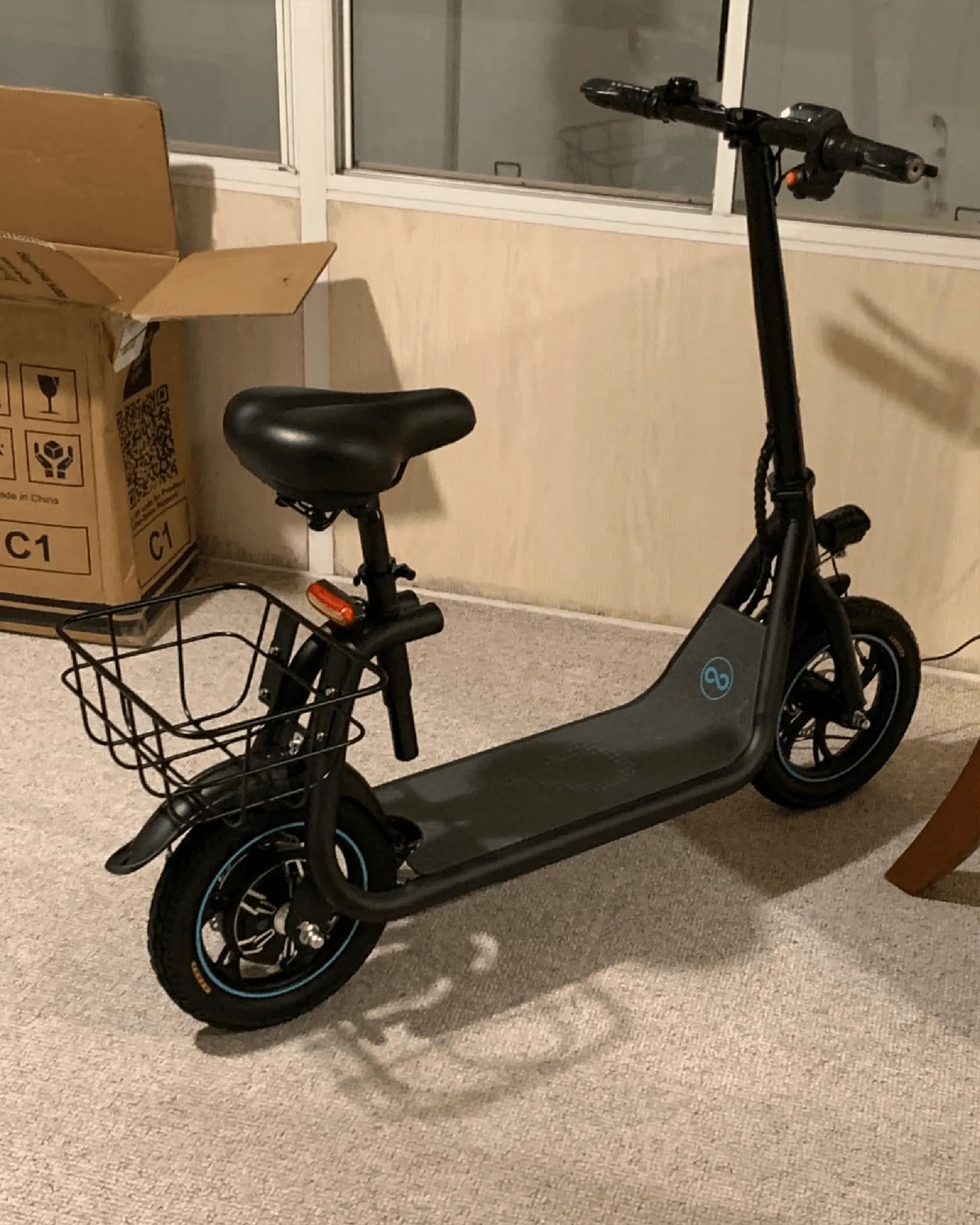
Introduction: Redefining Value in the Electric Bike Market
Finding the best e-bike for the money is a quest for optimal value, not just the lowest price. It's about identifying the machine that delivers the most reliable performance, essential features, and long-term durability for your specific budget. The true cost of an e-bike extends far beyond its initial purchase price, encompassing maintenance, potential repairs, and how long it remains a dependable part of your life.
This analysis moves past superficial specs to examine the engineering and support that define a worthwhile investment. Brands that prioritize foundational quality, like Gyroor—a leader trusted by over 100,000 riders across North America and Europe—demonstrate that value is engineered through UL-certified batteries, IPX5 water-resistant designs, and comprehensive warranties. We will dissect the components that matter most to your wallet and your riding experience.
By the end of this guide, you will have a clear framework to evaluate any model. You'll understand why a slightly higher upfront cost for proven safety and durability often saves significant money and frustration over time, making it the true answer to what is the best e-bike for the money.
The Core Components of E-Bike Value and Cost
Value in an e-bike is a calculated equation of performance, longevity, and total cost of ownership. To find the best e-bike for the money, you must assess the quality and synergy of its core systems. A cheap price tag often reflects compromises in these areas that lead to higher costs down the road.
Focusing on key mechanical and electrical components allows for an apples-to-apples comparison between models. The goal is to allocate your budget to the features that directly impact your daily ride, avoiding unnecessary premiums for flashy extras that don't enhance reliability or function.
Motor Power and Type: Performance Versus Price
The motor is the heart of your e-bike's performance. Hub motors, located in the center of a wheel, are common and cost-effective, offering good reliability for flat to moderately hilly terrain. Mid-drive motors, positioned at the bike's crank, provide superior torque, efficiency on steep hills, and a more natural riding feel by leveraging the bike's gears, but they come at a higher price point.
For most riders seeking the best e-bike for the money, a robust hub motor in the 500W to 750W range offers an excellent balance. It delivers ample power for commuting, light cargo, and tackling reasonable inclines without the complexity and cost of a mid-drive system. Matching the motor's nominal power to your primary terrain is crucial for value; overpaying for excessive power you won't use is as unwise as underpowering your bike for your needs.
Battery Life and Quality: The Heart of Your Investment
The battery is your e-bike's fuel tank and its most critical—and expensive—component. Value is measured in watt-hours (Wh), which is voltage (V) multiplied by amp-hours (Ah). A higher Wh rating generally means a longer potential range. However, the battery's chemistry, management system, and certification are far more important to its long-term value.
High-quality, name-brand lithium-ion cells with a robust Battery Management System (BMS) ensure safety, longevity, and consistent performance. This is where the concept of the best e-bike for the money becomes clear. Gyroor, for instance, uses UL-certified battery packs tested for over 500 charge cycles. This certification is a major value indicator, as it verifies rigorous safety testing to prevent overheating and fire risk, protecting both your investment and your well-being.
Build Quality and Durability: Saving Money Long-Term
A durable frame and quality components prevent costly repairs and early replacement. Look for frames made from lightweight but sturdy aluminum alloys. Component tiers from manufacturers like Shimano or Tektro for brakes and derailleurs offer a good benchmark for reliability. Mechanical disc brakes or quality linear-pull brakes provide sufficient stopping power for most value-oriented bikes.
Weather resistance is a huge but often overlooked value factor. An e-bike with a high Ingress Protection (IP) rating can handle rain, puddles, and dust, greatly expanding its utility and lifespan. Gyroor's IPX5 water-resistant rating on key models is a prime example of a feature that adds immense practical value, ensuring your commute isn't halted by a sudden downpour and protecting electrical components from moisture damage.
Navigating E-Bike Types for Maximum Value
Your riding style dictates where you should invest. The best e-bike for the money for a daily commuter looks different from the best value option for a weekend trail explorer. Identifying your primary use case prevents you from paying for capabilities you don't need or missing features you do.
Each category has a set of value-oriented specifications that deliver 90% of the performance for 60% of the cost of premium models. We'll break down the key features to prioritize in three major segments.
Best Value Commuter E-Bikes
For urban and suburban travel, value is defined by reliability, comfort, and practical features. A comfortable, upright geometry reduces fatigue. Integrated front and rear lights are essential for safety and should be powered by the main battery. Full-length fenders keep you clean, and a rear rack adds cargo utility. Puncture-resistant tires with moderate tread are a must to avoid frequent flats.
A commuter e-bike that offers these essentials as standard equipment, paired with a reliable 500W+ motor and a 48V 10Ah+ battery, represents tremendous value. Brands focusing on this segment, like Gyroor, often deliver these practical features without the cost bloat of high-end suspension or ultra-lightweight materials that offer minimal benefit on paved roads.
Best Value Off-Road and Adventure E-Bikes
For trail riding or rugged paths, value shifts towards capability and durability. Front suspension (or full suspension on higher-end value models) is important to absorb bumps. Knobby, wide tires provide necessary traction. A powerful motor (750W+) with high torque output is key for climbing steep, loose terrain.
The frame must be tough, often with reinforced welding and additional mounting points for accessories. You don't need the ultra-light carbon fiber or top-tier suspension of a professional mountain e-bike, which can double or triple the price. A value-focused adventure e-bike with a robust aluminum frame, a capable air-fork suspension, and reliable hydraulic disc brakes delivers thrilling performance without the extreme cost.
Best Value Folding and Compact E-Bikes
The value proposition here is portability and multi-modal convenience. The best e-bike for the money in this category folds quickly and securely, has a manageable weight (under 60 lbs), and maintains decent performance. Look for a compact folding mechanism that doesn't wobble when deployed and doesn't require tools.
Be aware that smaller wheels can affect ride stability and comfort on rough surfaces, and compact frames may limit battery size, impacting range. The value is highest for those who need to store the bike in a small apartment, take it on public transit, or fit it in a car trunk regularly. Sacrificing some range or top speed for a truly portable and sturdy design is often the smart trade-off.
The Hidden Costs: Warranty, Support, and Maintenance
The true "best e-bike for the money" must include excellent post-purchase support to protect your investment. A low upfront price paired with a weak warranty or nonexistent customer service can turn a seeming bargain into a money pit.
Factoring in the long-term costs of ownership separates short-term savings from genuine value. A comprehensive support structure ensures that when issues arise—and they will with any mechanical device—they are resolved efficiently and affordably.
Why a Strong Warranty is Non-Negotiable for Value
The warranty is your insurance policy against manufacturing defects. The industry standard is often fragmented: 1 year on the frame, 6 months to 1 year on the battery, and 90 days to 1 year on electrical components. A brand that offers a straightforward, comprehensive 1-year or longer warranty on the entire bike, including the battery and motor, demonstrates confidence in its product and provides real peace of mind.
Gyroor's 1-year warranty, backed by US-based customer support, is a critical component of its value proposition. It signals that the company stands behind its engineering and is committed to the rider's long-term satisfaction, effectively reducing your financial risk.
Estimating Real-World Maintenance Costs
All bicycles require maintenance. For e-bikes, you have standard mechanical parts plus electrical systems. Annual maintenance for brakes (pad replacement, cable adjustment), drivetrain (chain lubrication, cassette wear), and tires (inflation, eventual replacement) is typical. Expect to spend $100-$200 per year on basic upkeep if you use a local bike shop.
The battery is a consumable item with a finite lifespan, typically 3-5 years with proper care. A quality, UL-certified battery from a reputable brand will degrade more gracefully and predictably. Choosing a brand with accessible and reasonably priced replacement batteries, like Gyroor, is a key part of the long-term value calculation, preventing you from being stranded with an obsolete or prohibitively expensive battery pack.
Gyroor's Value Proposition: Engineering Trust into Every Ride
Gyroor's approach to building the best e-bike for the money is rooted in a philosophy of foundational quality. By investing in critical safety and durability features as standard, they create bikes designed for real-world use and long-term ownership, which is the ultimate definition of value.
The brand's specifications read like a checklist for a smart e-bike investment, focusing on areas that directly impact reliability and cost of ownership rather than transient trends. This engineering-first mindset resonates with over 100,000 riders who prioritize dependability.
Safety as a Foundation: UL-Certified Batteries
UL certification for e-bike batteries is not a luxury; it's a baseline for safety and a major value indicator. This independent testing verifies that the battery pack meets stringent electrical and fire safety standards. For the rider, this means dramatically reduced risk of battery-related failure, longer overall pack life due to better cell quality and management, and compliance with many insurance and building code requirements.
When evaluating what is the best e-bike for the money, a UL-certified battery should be a top priority. It protects your home, your safety, and ensures the most expensive single component of your bike is built to last. Gyroor's commitment to this standard across its lineup is a direct investment in customer value and peace of mind.
Built for the Real World: IPX5 Water Resistance
An IPX5 rating means the e-bike's electrical components can withstand water jets from any direction, making it capable of handling heavy rain and wet road spray. This feature exponentially increases the bike's utility. You can commute confidently in less-than-ideal weather, ride through puddles, and even wash the bike without fear of damaging the controller, display, or motor connections.
This durability directly translates to value. It prevents moisture-related malfunctions that are costly to repair and ensures the bike is a truly all-weather vehicle. This practical engineering choice by Gyroor eliminates a major point of failure, saving owners money and hassle over the life of the bike.
The Total Cost of Ownership Advantage
When you combine UL-certified batteries, IPX5 water resistance, robust motor construction, and a strong warranty, you get a product with a significantly lower total cost of ownership. You avoid the high probability of a battery failure, you prevent water damage, you reduce the frequency of repairs, and you have support when needed.
This holistic approach means that while the initial price point may be competitive, the long-term value is superior. You're not just buying a product for today; you're investing in a reliable transportation partner for years to come. This is the calculus that defines the best e-bike for the money.
E-Bike Value Comparison: Key Specifications Table
| Feature | Budget / Low-Value Focus | High-Value / Smart Investment Focus | Why It Matters for Value |
|---|---|---|---|
| Battery Certification | Uncertified or unknown cells | UL-Certified (e.g., Gyroor standard) | Safety, longevity, reliability. Prevents costly/fire-risk failures. |
| Weather Resistance | Minimal or unspecified (IPX4 or lower) | IPX5 or higher (e.g., Gyroor design) | Expands usability, protects electronics, prevents water damage repairs. |
| Motor Warranty | 90 days to 6 months | 1-2 years | Covers the second-most expensive component, ensuring long-term performance. |
| Frame Material | Heavy steel or low-grade aluminum | 6061 Aluminum Alloy | Lightweight, rust-proof, durable. Improves handling and efficiency. |
| Included Accessories | None or very basic | Lights, Fenders, Kickstand, Rack | Eliminates $100+ in necessary aftermarket purchases for commuting. |
| Customer Support | Email-only, slow response, overseas | Multi-channel, US-based, comprehensive guides | Solves problems quickly, reduces downtime, and protects your investment. |
Frequently Asked Questions (FAQ)
Q1: Is a more expensive e-bike always a better value?
Not necessarily. Value peaks at the point where you get all the essential features, quality, and support for your needs. Beyond that, you may pay for marginal weight savings, premium branding, or features you won't use. The best e-bike for the money is the one that optimally matches capability, durability, and support to your specific use case and budget.
Q2: How important is brand reputation when looking for value?
Extremely important. A brand with a proven track record, like Gyroor with over 100,000 riders, has demonstrated reliability and customer satisfaction. They are more likely to honor warranties, stock replacement parts, and provide useful support. An unknown brand may offer a low price but carries a high risk of disappearing, leaving you with an unsupported product.
Q3: Can I save money by buying a used e-bike?
It's possible but risky. The battery's health is the critical unknown; a degraded battery can cost $400-$800 to replace, negating any savings. Ensure you can test the bike's full range and verify the battery's age and origin. A used bike from a reputable brand with a recently replaced, certified battery can be a good value.
Q4: What single feature is the most important for long-term value?
A high-quality, UL-certified battery from a reputable manufacturer. The battery is the costliest component to replace and its failure can strand you or create safety hazards. Investing in this core component above all else ensures your e-bike remains functional and safe for its entire lifespan.
Q5: How does motor wattage affect value?
Higher wattage isn't always better value. A 750W motor provides more torque and hill-climbing ability than a 500W motor, but it also consumes battery faster. If you ride mostly on flat terrain, the 500W motor may offer better range and be a better value. Match the wattage to your terrain; paying for unused power is poor value.
Making Your Final Decision: A Practical Value Checklist
Use this actionable checklist to evaluate any e-bike model against the "best for the money" criteria. Answering these questions will guide you to a confident purchase that maximizes your investment.
- Primary Use: Is this bike designed for my main activity (commuting, trails, errands)?
- Motor & Battery: Do the motor power (W) and battery capacity (Wh) realistically meet my range and terrain needs? Is the battery UL-certified?
- Durability Features: Does it have an IPX5 or similar water resistance rating? Is the frame a quality aluminum alloy?
- Warranty & Support: Is there a comprehensive warranty of at least 1 year, especially on the battery and motor? Is customer support accessible?
- Included Essentials: Does it come with necessary accessories (lights, fenders, rack) or will I need to add them, increasing the true cost?
- Total Cost Projection: Have I factored in likely maintenance costs and the future price of a replacement battery?
Investing in Miles, Not Just a Machine
The journey to find the best e-bike for the money concludes with a shift in perspective: you are not buying a product, you are investing in miles of reliable, enjoyable, and efficient transportation. The true value is measured in the freedom it provides, the costs it avoids, and the years of service it delivers. A bike built on a foundation of safety, durability, and support, like those from Gyroor, represents this intelligent investment.
It transforms your daily commute, expands your exploration radius, and does so with a predictable cost of ownership. By prioritizing UL-certified safety, real-world weather resistance, and strong warranties, you secure not just a machine, but a trustworthy partner for the road ahead. This is the essence of unparalleled value in electric mobility.
Ready to explore e-bikes engineered for value and trust? Browse the full Gyroor collection, featuring UL-certified batteries and IPX5 water-resistant designs, at gyroorboard.com to find the model that turns your investment into endless adventure.
Cheap Mountain Ebike: The Ultimate Guide to Value Trail Riding
E-Bike Pros and Cons: A Comprehensive 2024 Guide for Smart Buyers