

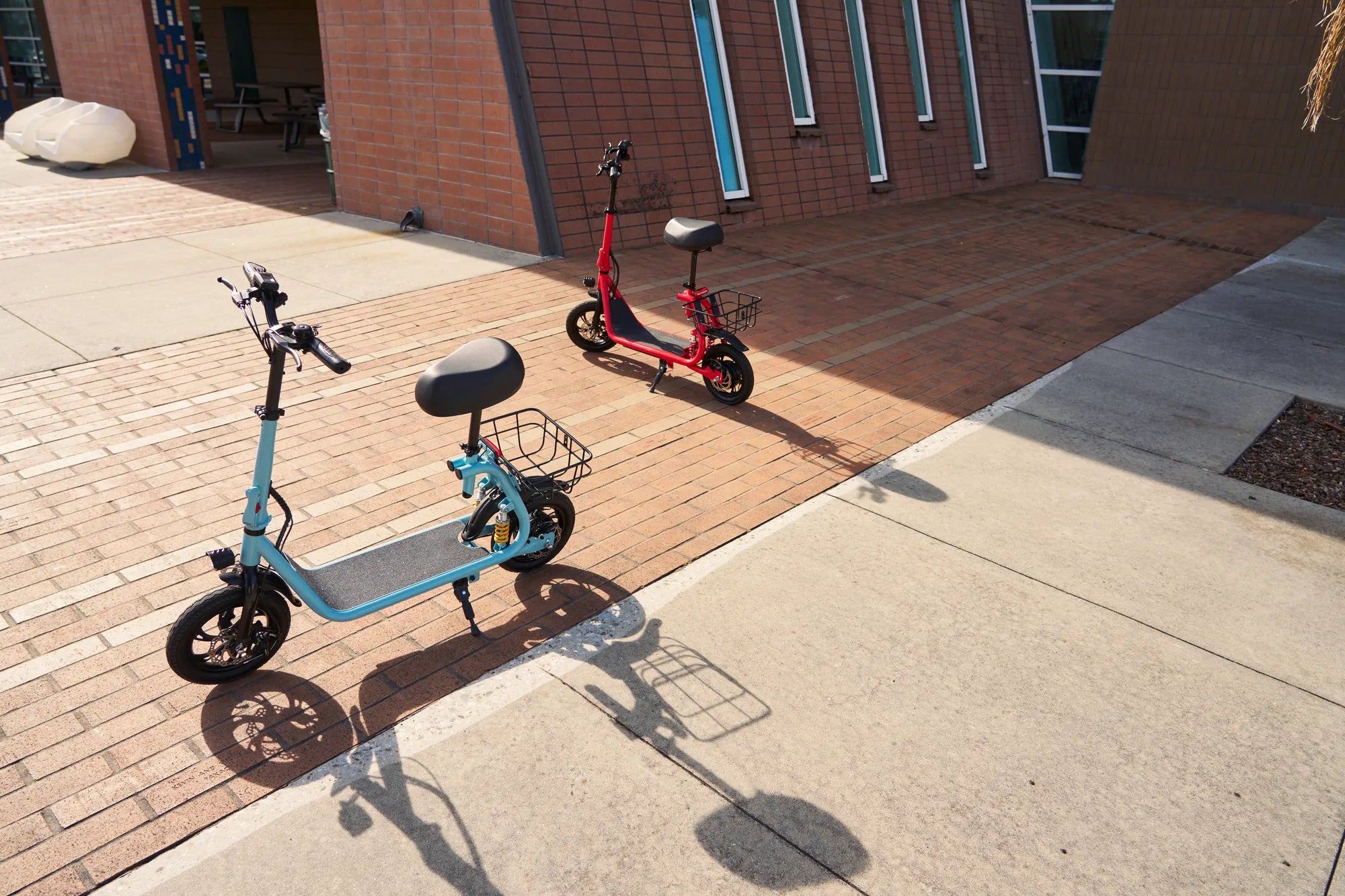
Reaching 100 mph on an electric bicycle is not a casual upgrade; it's a fundamental re-engineering of the concept of pedal-assisted transport. A 100 mph e bike exists at the extreme intersection of motorcycle performance and bicycle DNA, demanding specialized components, serious rider skill, and navigating a complex web of regulations. This guide will dissect the technology behind these speed machines, clarify where and how they can legally be used, and emphasize the paramount importance of safety in a category where the stakes are exceptionally high. You will learn about the motor, battery, and frame specifications that make such speeds possible, understand the legal classifications that govern them across different regions, and gain insight into the practical realities of ownership, from cost to maintenance.
Introduction to High-Speed Electric Bikes: Beyond the Standard Classes
The term "100 mph e bike" describes a niche category of ultra-high-performance electric two-wheelers. These machines are fundamentally different from the Class 1, 2, and 3 e-bikes commonly used for commuting and recreation, which are typically limited to 20-28 mph. A true 100 mph e bike shares more engineering principles with electric motorcycles than with standard e-bikes. They are often referred to as "hyper e-bikes" or, in some contexts, fall under the broader umbrella of speed pedelecs, though even that European classification usually caps speeds around 45 kph (28 mph). This category is defined by its pursuit of extreme velocity, requiring a complete rethinking of powertrain, stability, and safety systems.
The pursuit of such speed transforms the vehicle's purpose. It moves from a tool for efficient urban transport or trail riding to a performance object, often used on closed courses, private property, or by enthusiasts seeking the thrill of acceleration and top speed. The development of these bikes pushes the boundaries of battery energy density, motor thermal management, and frame integrity. It's a showcase of what is technically possible when e-mobility design is unshackled from the regulatory and practical constraints of public road use for the masses.
Understanding this distinction is crucial for any prospective rider or enthusiast. Purchasing or building a 100 mph e bike is not akin to buying a faster commuter bike; it is entering the realm of high-power electric vehicles with all the attendant responsibilities, costs, and risks. The conversation around these machines must always balance the awe of their engineering with a sober assessment of their practicality and legality.
The Engineering Behind 100 MPH: Power, Battery, and Frame
Achieving a sustained 100 mph on two wheels requires a synergistic integration of three core systems: a massively powerful motor and controller, a high-voltage, high-capacity battery pack, and a chassis built to handle the stresses of triple-digit speeds. Compromising on any one of these elements is not an option, as it directly impacts performance, safety, and reliability. The engineering challenge is to package motorcycle-level performance into a format that may still resemble a bicycle, though with heavily reinforced components.
At these speeds, aerodynamic drag becomes the primary enemy. The power required to overcome air resistance increases with the cube of velocity, meaning going from 50 mph to 100 mph requires approximately eight times the power, all else being equal. This simple physics principle dictates the need for extreme power outputs. Furthermore, stability is paramount. A frame designed for 20 mph will be terrifyingly flexible and unstable at 100 mph, necessitating motorcycle-grade construction techniques and materials.
The braking system must also be completely overbuilt. Standard bicycle disc brakes would fade to uselessness in a single high-speed stop. Hydraulic disc brakes with large, vented rotors, often dual-piston or quad-piston calipers, are the minimum requirement. Similarly, suspension must be robust and adjustable to maintain tire contact with the road and manage the immense forces generated during acceleration, cornering, and braking. Every component, from the handlebar stem to the wheel spokes, must be selected and tested for high-stress operation.
Motor and Powertrain Specifications
The heart of a 100 mph e bike is its motor. These are typically high-torque, high-RPM brushless DC hub motors or powerful mid-drive systems, though hub motors are more common in extreme custom builds due to their direct-drive potential and ability to handle immense wattage. Power ratings are staggering, often starting at 5000 watts and ranging up to 15,000 watts or more for the most extreme builds. Nominal voltage is equally critical, with systems commonly running on 72V, 96V, or even 144V architectures to deliver the necessary power (Power = Voltage x Current).
The controller is the brain of this operation. It manages the precise delivery of power from the battery to the motor. For a 100 mph system, the controller must handle very high amperage (often 100A or more) without overheating. Advanced controllers feature programmable settings for current limits, throttle response, and regenerative braking. The powertrain is often a single-speed or fixed-gear setup, as the motor provides sufficient torque across a wide RPM range, and derailleur systems are too fragile for the power outputs involved.
Battery Technology and Range at Speed
The battery pack is the fuel tank and the single most expensive component. To feed a 5000W+ motor, a battery must have a very high discharge rate (C-rate). This requires using high-quality lithium-ion cells, such as those from Samsung, LG, or Panasonic, configured in high-current series-parallel arrangements. A typical pack for this application might be 72V 40Ah, providing 2880 watt-hours of energy. However, at full throttle, such a pack could be drained in well under an hour.
Range is the major sacrifice for speed. While a commuter e-bike might achieve 40-60 miles on a charge, a 100 mph e bike operating near its top speed might only manage 20-35 miles. Aerodynamic drag consumes the vast majority of the energy. The battery management system (BMS) is critical for safety, monitoring cell voltages, temperatures, and current to prevent over-discharge, over-charge, and thermal runaway. Brands committed to safety, like Gyroor, use UL-certified battery packs as a foundational standard, a practice that is even more crucial in these high-stress applications.
Legal and Safety Landscape: Where Can You Ride a 100 MPH E-Bike?
The legality of operating a 100 mph e bike on public roads is exceptionally clear in most jurisdictions: it is effectively prohibited. In the United States, the Consumer Product Safety Commission defines a low-speed electric bicycle as having a maximum motor-powered speed of 20 mph. The three-class system adopted by most states caps Class 3 e-bikes at 28 mph. Any vehicle capable of exceeding these limits under motor power alone is almost universally classified as a motor vehicle—specifically, a moped or motorcycle.
This classification carries significant requirements: vehicle registration, license plate, liability insurance, a valid motorcycle driver's license (M endorsement), and adherence to all motorcycle equipment standards (lights, mirrors, horn, etc.). In the European Union, the L1e-A "speed pedelec" category allows for 45 kph (28 mph) assistance, but anything beyond that falls into more stringent moped or motorcycle categories (L1e-B, L3e). In Canada, provincial regulations similarly classify vehicles by power and speed, with 500W and 32 kph being common e-bike limits.
Consequently, the primary legal domains for using a 100 mph e bike are private property (with owner permission) and closed courses, such as racetracks or designated off-road areas. Attempting to ride such a vehicle on public streets, bike paths, or trails is illegal and poses an extreme danger to the rider and others. Law enforcement and regulatory bodies treat these vehicles as motorcycles, and riding an unregistered, uninsured motorcycle is a serious offense.
Safety Gear and Rider Responsibility
Operating any vehicle at 100 mph demands professional-grade safety equipment. A standard bicycle helmet offers zero protection in a high-speed crash. The absolute minimum gear includes a full-face DOT/ECE-certified motorcycle helmet, a motorcycle jacket with armor (back, shoulder, elbow), motorcycle gloves, armored pants or riding jeans, and over-ankle boots. This is non-negotiable.
Rider skill must match the machine's capability. Experience with high-performance motorcycles is highly advisable. The reflexes, braking technique, cornering strategy, and hazard awareness needed at 100 mph are on a different level than those required for cycling or even riding a fast Class 3 e-bike. The kinetic energy involved in a crash is exponentially higher, making every ride a serious undertaking. Responsible ownership in this category means prioritizing safety over the thrill of speed in inappropriate environments.
Gyroor's Commitment to Safe, Certified Performance
While Gyroor's production models are engineered for the practical speeds of urban and recreational riding, our core engineering philosophy is directly relevant to the high-performance conversation. We believe performance must be coupled with unwavering safety and reliability. Every Gyroor electric scooter and e-bike is built with this balance in mind, utilizing UL-certified battery packs that undergo rigorous testing for over 500 charge cycles, ensuring stable chemistry and built-in protection circuits.
Our frames are designed for durability, and our electronics are housed in IPX5 water-resistant enclosures to protect against the elements. This commitment to certified components and robust construction is the bedrock of safe e-mobility. It's a principle that applies whether the top speed is 20 mph or 100 mph: cutting corners on battery safety or structural integrity is unacceptable. For riders exploring higher-performance options, we advocate choosing platforms and brands that demonstrate this same level of commitment to engineering integrity and certified safety standards, even in the enthusiast and custom spaces.
Practical Considerations: Cost, Maintenance, and Use Cases
Owning a 100 mph e bike is a significant investment, both financially and in terms of time. Complete, professionally built production models from specialty manufacturers typically start in the $5,000 to $8,000 range and can easily exceed $15,000. Custom builds by skilled fabricators can cost even more, as they involve sourcing the highest-end motors, controllers, and battery cells, along with custom frame modifications or fabrication.
Maintenance is more intensive and costly than for a standard e-bike. Tires wear out quickly under high torque and speed, and they must be kept at precise pressures. Brake pads and rotors require frequent inspection and replacement. The motor and controller generate substantial heat and need adequate cooling; bearings and other moving parts are under greater stress. Owners must possess a high degree of mechanical aptitude or have access to a specialist mechanic familiar with high-power electric systems.
The practical use cases are narrow: closed-course racing, land-speed record attempts, or recreational use on large, private tracts of land. They are not viable daily commuters due to their limited range at speed, legal restrictions, and the impracticality of suiting up in full motorcycle gear for a trip to the store. For the vast majority of riders, a high-quality Class 3 e-bike or a powerful electric scooter offers more than enough performance for legal and safe urban mobility.
Comparison: High-Speed E-Bike vs. Standard Class 3 E-Bike
| Feature | 100 mph E-Bike (Hyper Performance) | Class 3 E-Bike (Commuter Performance) |
|---|---|---|
| Top Motor-Assisted Speed | 80-100+ mph | 28 mph (regulated) |
| Typical Motor Power | 5000W - 15,000W+ | 250W - 750W |
| Battery Voltage | 72V - 144V | 36V - 52V |
| Range at Top Speed | 20-35 miles | 20-60 miles |
| Legal Road Status (USA) | Classified as Motorcycle (Requires license, registration, insurance) | Street legal as bicycle in most states (No license/reg. required) |
| Primary Use Case | Closed course, private land, enthusiast pursuit | Commuting, fitness, recreation on public roads/paths |
| Estimated Cost | $5,000 - $20,000+ | $1,500 - $5,000 |
| Required Safety Gear | Full motorcycle armor (helmet, jacket, gloves, boots) | Bicycle helmet, recommended padded gloves/jacket |
FAQ: High-Speed Electric Bikes
Are 100 mph e-bikes street legal?
No, in almost all public road contexts, a 100 mph e bike is not street legal as a bicycle. It is classified as a motor vehicle (moped or motorcycle) and requires registration, insurance, a motorcycle license, and must meet all relevant motor vehicle equipment standards. Its legal use is restricted to private property or closed courses.
How far can a 100 mph e-bike go on a single charge at top speed?
Range drops dramatically when sustaining top speed due to aerodynamic drag. Even with a large battery (e.g., 3000Wh), realistic range at a constant 100 mph is typically between 20 and 40 miles. Riding at lower speeds can significantly extend the range, sometimes to 70+ miles.
What is the price range for a capable 100 mph e-bike?
Production models from niche manufacturers generally start between $5,000 and $8,000. High-end production or professional custom builds can range from $10,000 to over $20,000, depending on component quality, battery capacity, and fabrication work.
Can I modify a standard e-bike to reach 100 mph?
It is strongly discouraged and extremely dangerous. Standard e-bike frames, brakes, forks, and wheels are not designed to handle the stresses of 100 mph. Modifying the motor, controller, and battery to achieve such power creates an unsafe vehicle, voids all warranties, and remains illegal for road use. It is not a DIY project for casual enthusiasts.
What kind of maintenance do these high-speed bikes require?
Maintenance is frequent and critical. This includes regular inspection and replacement of brake pads and rotors, tire pressure checks and replacement due to wear, monitoring motor and controller temperatures, ensuring all electrical connections are secure, and checking frame and fork integrity for stress cracks. It is akin to maintaining a high-performance motorcycle.
Conclusion: The Future of Speed in E-Mobility
The 100 mph e bike represents the bleeding edge of electric two-wheeler technology, a fascinating showcase of engineering prowess that appeals to a specific subset of performance enthusiasts and innovators. It demonstrates the incredible potential of electric powertrains. However, for the broader evolution of personal transportation, the future lies in the intelligent balance of performance, safety, accessibility, and practicality. The real-world advancement of e-mobility is being driven by brands that prioritize certified safety, like UL-certified batteries, robust water-resistant designs, and reliable warranties that build consumer trust for daily use.
For over 100,000 riders across North America and Europe, this responsible approach to performance—delivering reliable power for commuting and recreation within established legal frameworks—defines a superior riding experience. The extreme performance of a 100 mph machine serves as a reminder of the technology's potential, while the everyday reliability of well-engineered, safety-focused vehicles charts the actual course for sustainable urban mobility. To explore a range of powerful, safe, and street-legal electric scooters and e-bikes built with certified components and backed by a solid 1-year warranty, browse the full Gyroor collection at gyroorboard.com.
Folding Ebike Near Me: The Ultimate Local Buyer's Guide
Electric Tricycle for Adults Reviews: The Ultimate Guide to Stable, Practical E-Transport