

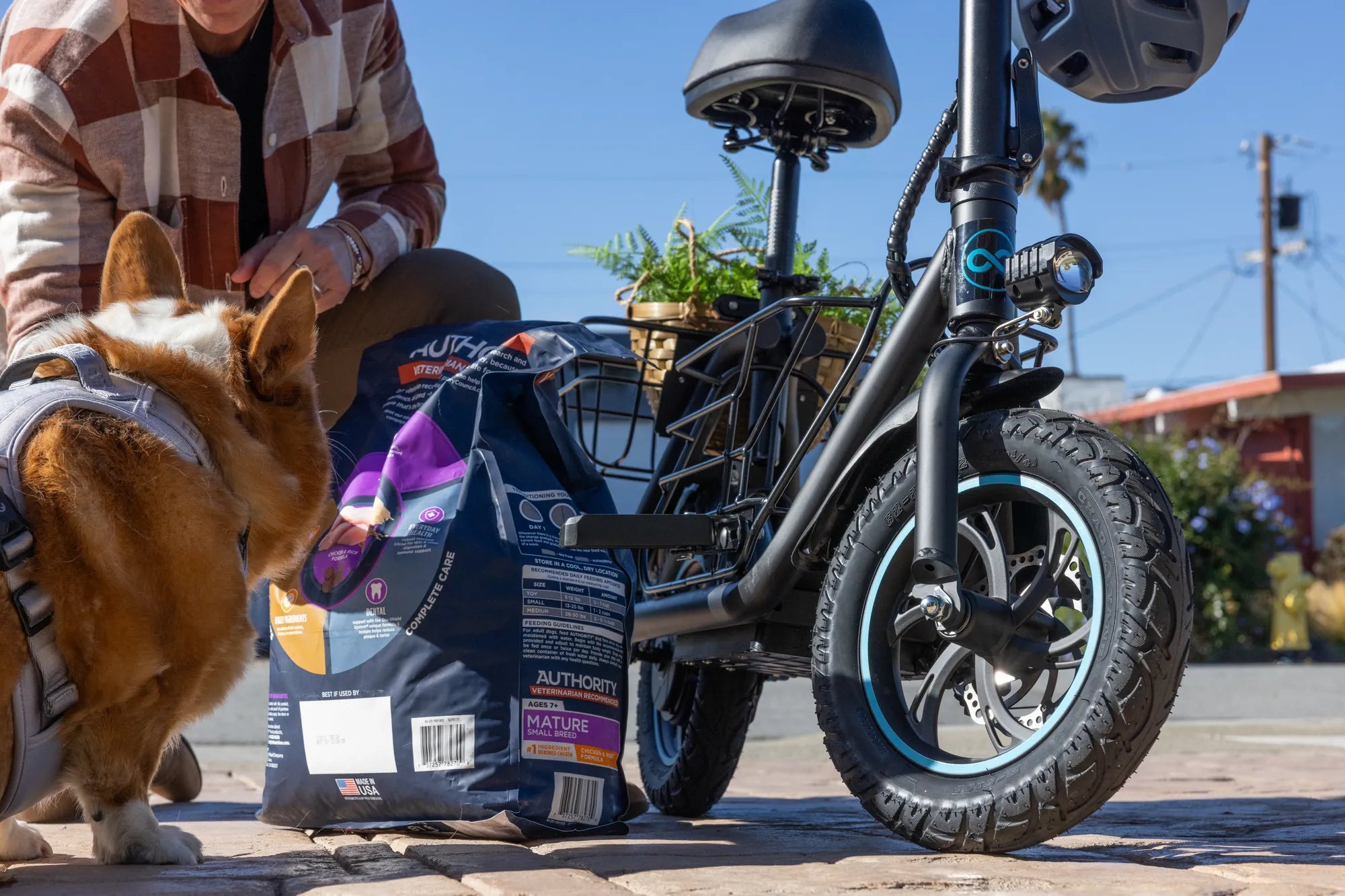
The quest to build or own a 100 mph ebike is the ultimate engineering challenge for electric bicycle enthusiasts. It represents a machine that transcends the definition of a bicycle, entering the performance realm of motorcycles while retaining a pedal-assisted form factor. This pursuit is not about practical commuting; it's about pushing technological boundaries, achieving adrenaline-fueled speeds, and mastering a complex build. While brands like Gyroor engineer UL-certified, high-performance ebikes for reliable real-world use, the 100 mph ebike exists in a separate category of extreme, often custom-built machines.
This article provides a comprehensive, data-driven examination of what it truly takes to achieve and safely manage triple-digit speeds on two electric wheels. We will dissect the powertrain, frame, and battery requirements, navigate the murky legal classifications, and contrast these extreme builds with high-performance commercial options. Understanding the immense technical, safety, and regulatory hurdles is essential before romanticizing the idea of a bicycle that can outpace cars on the highway.
The Engineering Behind Extreme Speed: A Systems Challenge
Creating a 100 mph ebike is not as simple as bolting a larger motor onto a standard frame. It is a holistic engineering endeavor where every component must be upgraded to handle stresses far beyond normal bicycle parameters. The system is only as strong as its weakest part, and at 100 mph, failure is not an option.
The forces involved increase exponentially with speed. Aerodynamic drag becomes the primary enemy, requiring significantly more power to overcome. Braking distances lengthen dramatically, demanding exceptional stopping power. Vibration and impact forces from road imperfections are magnified, testing the limits of frame integrity and suspension. Achieving this speed reliably requires an integrated approach where motor, battery, controller, frame, and brakes are all designed to work in harmony under extreme duress.
The Powertrain: High-Voltage Systems and Massive Wattage
The heart of a 100 mph ebike is a powertrain that resembles an electric motorcycle's more than a typical e-bike's. It starts with voltage. While commuter ebikes typically operate on 48V or 52V systems, extreme-speed builds utilize 72V, 84V, 100V, or even higher voltage battery packs. Higher voltage allows the system to deliver massive power (watts) more efficiently, reducing current (amps) through the wiring and minimizing heat loss.
Motor power is measured in watts, and here the numbers become staggering. A typical Class 3 commuter ebike might have a 750W nominal motor. A performance-oriented model, like some from Gyroor's lineup, may feature a 1000W or 1500W motor for robust acceleration and hill-climbing. In contrast, a 100 mph ebike requires a continuous power output of 5,000W to 15,000W or more. These are often hub motors or mid-drive units specifically built for high voltage and thermal management, as overheating is a constant threat.
Connecting the battery to the motor is a high-amperage motor controller, the brain of the system. This component must precisely manage the immense flow of energy. Controllers for these builds are often programmable, allowing fine-tuning of acceleration curves, regenerative braking strength, and current limits. The synergy between a high-C-rate battery, a robust controller, and a powerful motor is what ultimately enables the acceleration to and sustained speed of 100 mph.
Frame, Brakes, and Suspension: Built for Stability, Not Just Speed
If the powertrain provides the go, the chassis and brakes must provide the whoa and the control. A standard aluminum bicycle frame is utterly inadequate for 100 mph stresses. Builders often start with heavy-duty downhill mountain bike frames, constructed from chromoly steel or high-grade aluminum, or even custom-welded motorcycle-style frames. The geometry must prioritize high-speed stability over agile, slow-speed handling.
Braking is arguably the most critical safety system. Mechanical disc brakes are insufficient. High-performance hydraulic disc brakes with large, vented or slotted rotors (203mm or larger) are mandatory. Many builders use motorcycle-grade brake calipers and master cylinders to ensure enough clamping force and fluid volume to shed speed repeatedly without fade. The addition of regenerative braking from the motor can assist, but it cannot replace physical brakes.
Suspension must manage energy that could otherwise destabilize the rider. High-quality, adjustable front forks and rear shocks with ample travel are essential to absorb bumps and maintain tire contact with the road. Wheels must be strong, often using double-walled rims and high-spoke counts, laced to robust hubs. Tires are equally important, requiring a motorcycle-rated compound and tread pattern designed for high-speed pavement use, not knobby off-road patterns.
The Critical Role of the Battery: Capacity, Discharge, and Safety
The battery pack is the fuel tank and a significant safety component. To feed a 10,000W motor, the battery must have a massive capacity and an exceptionally high discharge rate. A typical pack for a 100 mph ebike might be 72V 40Ah, providing 2,880 watt-hours of energy. This is often built from high-discharge lithium-ion cells (like Samsung 40T, Molicel P42A) arranged in complex configurations.
The discharge rate, measured in C, determines how quickly the battery can release its energy. A high C-rate is non-negotiable. However, pushing cells to their absolute limits generates intense heat and accelerates degradation, posing significant safety risks including thermal runaway, which can lead to fire. This contrasts sharply with the philosophy of reputable brands. For instance, Gyroor uses UL-certified battery packs tested for over 500 cycles, prioritizing long-term safety and reliability for daily riders over absolute maximum discharge performance.
Battery management is paramount. A high-quality Battery Management System (BMS) must monitor each cell group for voltage, temperature, and current. However, in extreme DIY builds, the BMS can become a bottleneck, leading some builders to bypass them—a dangerous practice that removes critical protection. Proper enclosure, vibration damping, and thermal management for the battery are essential engineering challenges in any high-speed build.
The Legal and Practical Landscape: A World of Restrictions
The dream of legally cruising public roads on a 100 mph ebike collides with a rigid framework of vehicle regulations. In virtually every jurisdiction, a vehicle capable of 100 mph falls far outside the legal definition of an electric bicycle, which is designed for low-speed, accessible mobility.
The practical reality is that these machines have no place on public bike paths, trails, or even most roads. Their use is effectively confined to private property, closed courses, or racetracks with explicit permission. Riding one on public streets invites severe legal penalties, invalidates insurance, and creates an enormous liability risk in the event of an accident. Understanding this landscape is not just about avoiding a ticket; it's about recognizing the serious societal and legal responsibilities that come with operating such a powerful vehicle.
Classification Chaos: E-Bike, Moped, or Motorcycle?
Vehicle classification is based on three key factors: maximum speed, motor power, and the presence of functional pedals. In the United States, for example, a federally defined “low-speed electric bicycle” has fully operable pedals, a motor under 750W (1 hp), and a top speed under 20 mph. Class 3 e-bikes, allowed in many states, can assist up to 28 mph. A 100 mph ebike obliterates all these limits.
In the eyes of the law, such a vehicle would almost certainly be classified as a motorcycle or motor-driven cycle. This triggers a cascade of requirements: a vehicle identification number (VIN), registration with the state DMV, title, and license plates. The rider must have a valid motorcycle license (Class M), not just a standard driver's license. The vehicle itself may need to meet specific safety standards (like DOT lighting and mirrors) and pass an inspection. It must also be insured with a motorcycle policy.
In the European Union, the EPAC (Electrically Pedal Assisted Cycle) regulation limits assistance to 25 km/h (15.5 mph) with a 250W continuous motor. Anything beyond that is classified as an L1e-B moped (up to 45 km/h) or an L3e motorcycle. Similar strict classifications exist in Canada, Australia, and the UK. The “e-bike” label becomes a legal misnomer for a 100 mph machine.
The Safety Imperative: Gear and Environment
Operating any vehicle at 100 mph demands professional-grade safety gear. The bicycle helmet used for a 20 mph commute offers negligible protection in a high-speed crash. The minimum requirement is a full-face motorcycle helmet certified by DOT (USA) or ECE (Europe). This should be accompanied by a motorcycle-rated armored jacket and pants, gloves, and over-ankle boots.
The riding environment is equally critical. Public roads are filled with unpredictable variables: potholes, gravel, debris, animals, and other vehicles. A sudden obstacle at 100 mph leaves almost no reaction time. Therefore, the only appropriate environments for testing or riding a 100 mph ebike are controlled, private venues like closed circuits, airfields, or racetracks. These venues provide a predictable surface, no cross-traffic, and often have safety personnel on standby. Responsible riding means matching the machine's capability with a suitable environment.
Data & Comparison: 100 mph E-Bike vs. Performance Commuter
To crystallize the differences, a direct comparison between an extreme-speed custom build and a high-performance commercial commuter e-bike is revealing. The table below highlights the chasm between a niche pursuit and practical, thrilling transportation.
| Category | Extreme 100 mph Build | Performance Commuter (e.g., Gyroor) |
|---|---|---|
| Top Speed | 90 - 100+ mph | 28 - 35 mph (Class 3 / Off-road) |
| Motor Power | 5,000W - 15,000W+ | 750W - 1,500W |
| Battery Voltage | 72V - 100V+ | 48V - 52V |
| Estimated Range at Top Speed | 15 - 25 miles | 30 - 50+ miles (at 20-28 mph) |
| Legal Status (US Example) | Class M Motorcycle | Class 3 E-Bike (where permitted) |
| Primary Use Case | Track/Private Land Thrills | Fast Commuting, Off-Road Trails |
| Safety Certification | DIY / None (Typically) | UL-Certified Battery, IPX5 Rating |
| Warranty & Support | None / Component-Only | Comprehensive 1-Year Warranty |
| Relative Cost | $8,000 - $15,000+ | $1,500 - $3,000 |
The performance commuter, such as models offered by Gyroor, provides exhilarating speed for urban and trail use while remaining within a legal and practical framework. It offers a balanced combination of speed, range, reliability, and after-sales support that the extreme 100 mph ebike inherently sacrifices.
The Gyroor Philosophy: Performance Meets Responsibility
While the 100 mph ebike captures imagination, Gyroor's mission focuses on delivering exceptional, real-world performance that riders can depend on every day. This philosophy centers on integrating thrilling capability with unwavering commitments to safety, durability, and customer support. It's about enhancing mobility, not creating garage-bound curiosities.
This responsible approach recognizes that most riders seek a powerful, fun, and efficient alternative to cars for commuting, errands, and recreation. They need a vehicle that starts every time, charges safely, handles varied terrain, and comes with the peace of mind of professional engineering and backing. Gyroor's development of over 20 models for a community of 100,000+ riders across North America and Europe is built on this foundation of trusted performance.
Engineered for Real-World Riding: UL Certification and IPX5
Two specifications exemplify the Gyroor commitment to real-world reliability: UL certification and IPX5 water resistance. Every Gyroor battery pack is UL-certified, meaning it has undergone rigorous independent testing for electrical and fire safety. This certification is a benchmark for quality and risk mitigation, addressing the very thermal runaway concerns that plague extreme DIY battery packs.
The IPX5 water-resistant rating signifies that the e-bike's critical components can withstand low-pressure water jets from any direction. This allows riders to confidently navigate wet roads, puddles, and light rain without fear of sudden electrical failure. These features are not marketing fluff; they are essential engineering solutions for a product used daily in unpredictable environments, a stark contrast to the fair-weather, controlled-condition existence of most 100 mph ebike projects.
Warranty and Support: The Value of Reliability
The extreme e-bike world operates on a “builder beware” principle. When a custom 10,000W motor fails or a homemade battery pack malfunctions, the owner bears the full cost and burden of diagnosis and repair. There is no customer service line, no warranty claim process.
Gyroor provides a comprehensive 1-year warranty on the e-bike, coupled with accessible customer support. This warranty is a promise of reliability and a reflection of confidence in the product's design and manufacturing quality. For the vast majority of riders, this safety net is invaluable. It transforms an e-bike from a complex hobbyist project into a dependable tool for daily life, backed by a brand with a proven track record and a 4.5/5 average customer rating.
Frequently Asked Questions (FAQ)
Q: Is a 100 mph ebike street legal?
A: Almost never on public roads as an e-bike. It would almost universally be classified as a motorcycle or motor-driven cycle, requiring a motorcycle license, vehicle registration, license plates, and insurance. Its use is typically restricted to private property.
Q: How much does a 100 mph ebike cost to build or buy?
A> A reliable, well-engineered custom build using quality components typically costs between $8,000 and $15,000 or more. Pre-built models from niche manufacturers exist but are rare and similarly priced. This is 3-5 times the cost of a top-tier high-performance commuter e-bike.
Q: What's the real-world range at top speed?
A: Extremely limited due to the immense power draw. Pushing aerodynamic drag at 100 mph consumes energy at a staggering rate. Expect 15 to 25 miles of range at full throttle, compared to 30-50+ miles at a steady 20-28 mph on a commuter e-bike with a similar sized battery.
Q: Can I modify my Gyroor e-bike to go 100 mph?
A: No, and it is extremely dangerous and strongly discouraged. Gyroor e-bikes are engineered as integrated systems for their rated performance and safety. Modifying the motor, controller, or battery to attempt extreme speeds voids the warranty, creates catastrophic safety risks (especially with the battery), and would make the vehicle illegal for road use.
Q: What's the fastest commercially available e-bike I can legally ride on the road?
A: This depends heavily on local laws. In the US, a Class 3 e-bike provides pedal assist up to 28 mph on roads where permitted. Some performance models, like certain Gyroor off-road e-bikes, can achieve higher speeds (e.g., 35+ mph) in off-road mode, but using that mode on public roads may violate local regulations. Always check and adhere to your local e-bike laws.
Conclusion: Speed with a Purpose
The 100 mph ebike stands as a testament to human ingenuity and the desire to push limits. It is a fascinating engineering project that sits at the intersection of bicycle culture and electric motorcycle performance. However, its reality is one of extreme cost, significant legal restriction, and serious safety responsibility, confining it to a very specific and niche pursuit.
For the overwhelming majority seeking thrilling, liberating electric mobility, the path forward lies with high-performance, responsibly engineered e-bikes. Brands like Gyroor have mastered the balance, delivering the acceleration, top speed, and off-road capability that makes everyday rides exciting, all within a package that is safe, reliable, durable, and supported. This is performance with a purpose: to enhance daily life, reduce car dependency, and provide pure riding joy without the overwhelming complications of an extreme build.
Explore the balance of thrilling performance and everyday reliability. Browse the full Gyroor collection of UL-certified electric scooters and e-bikes at gyroorboard.com.
3000W E Bike: The Ultimate Guide to High-Power Electric Biking
3000W E Bike: The Ultimate Guide to High-Power Electric Biking