


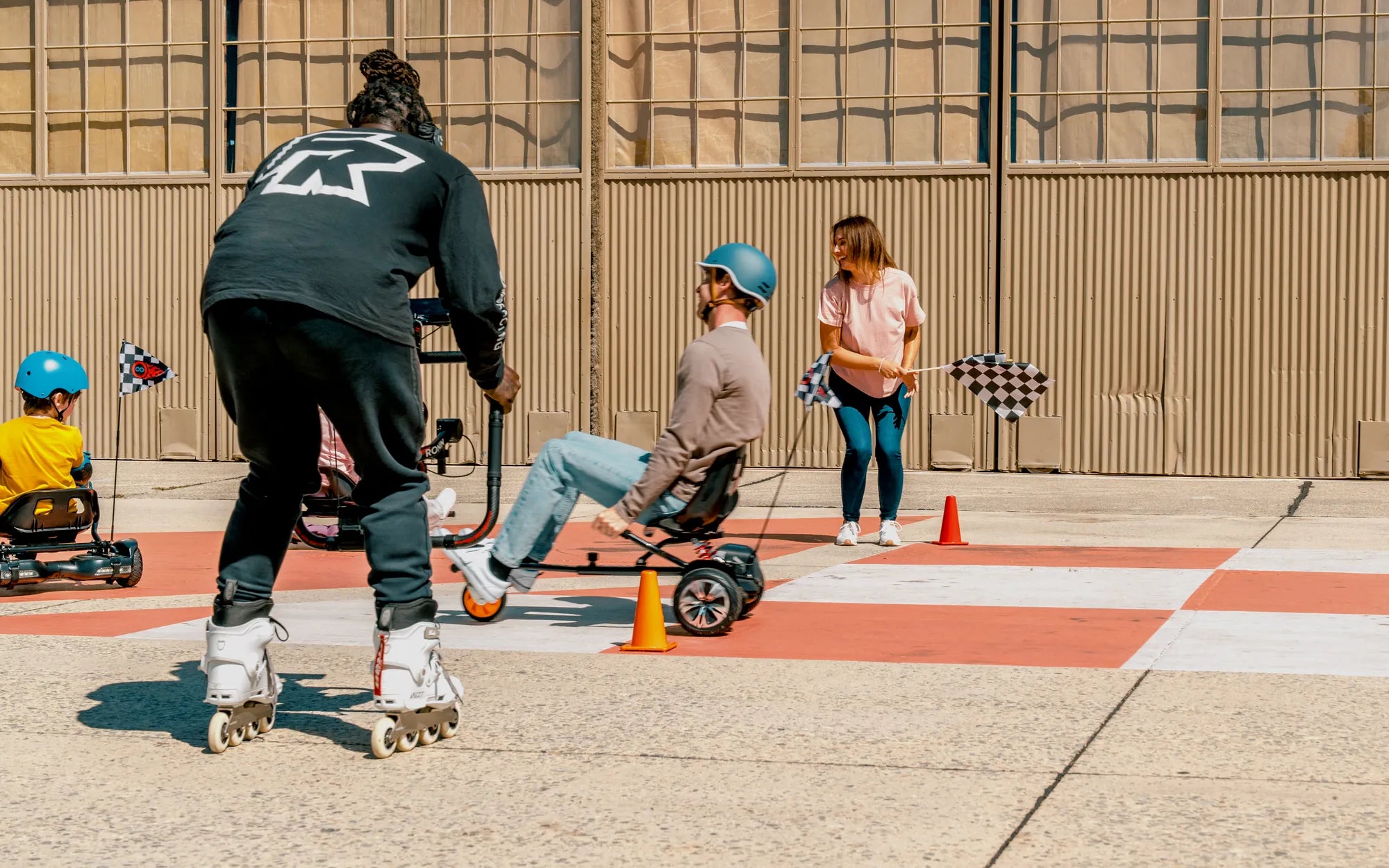
Introduction: Why the 10-Inch Hoverboard Reigns Supreme
The 10inch hoverboard has established itself as the definitive standard for modern personal electric transport. It strikes an optimal balance between stability, portability, and all-terrain capability that smaller or larger wheel sizes struggle to match. For commuters navigating city sidewalks, students crossing campus, or anyone seeking recreational fun, this size offers a versatile and reliable ride.
This guide is designed to cut through the marketing noise. You will learn the technical specifications that matter, how to interpret safety certifications, and what performance metrics translate to real-world use. We will provide a data-driven framework to evaluate models, ensuring your investment is safe, durable, and perfectly suited to your needs.
As a leader in personal electric mobility, Gyroor engineers its 10-inch hoverboards around this principle of balanced performance. Trusted by over 100,000 riders, the brand's focus on UL-certified batteries and robust construction sets a benchmark we'll use throughout this guide. Choosing the perfect ride starts with understanding why the 10-inch platform is so dominant.
Understanding 10-Inch Hoverboards: Core Features & Benefits
The "10-inch" designation refers to the diameter of the wheels, a specification that fundamentally dictates the riding experience. Larger than the once-common 8-inch models, these wheels provide a significant increase in stability and comfort. The larger contact patch with the ground improves balance, making the learning curve gentler for beginners and the ride smoother for experts.
Key benefits include enhanced shock absorption. A 10-inch wheel can roll over small cracks, pebbles, and uneven pavement with far less vibration transferred to the rider compared to a smaller wheel. This translates to less fatigue on longer journeys and greater control. The size also allows for more powerful motor configurations without sacrificing the board's compact form factor.
Furthermore, 10-inch hoverboards typically offer greater ground clearance. This is crucial for navigating curbs, driveway transitions, and slightly rougher surfaces without the risk of the deck or underside scraping. It's this combination of comfort, stability, and capability that makes the 10inch hoverboard the most popular category for daily use.
The Anatomy of a Quality Hoverboard
Beyond wheel size, the quality of internal components separates a premium ride from a subpar one. A high-quality 10inch hoverboard is built around a synergy of key parts. The foundation is a durable, often magnesium alloy or reinforced polymer frame that can withstand the stresses of riding and occasional impacts.
At its heart are the dual hub motors, typically ranging from 300W to 500W each. This dual-motor setup provides the torque for acceleration, hill climbing, and balanced control. The brain of the operation is the gyroscopic sensor array and control board, which constantly makes micro-adjustments to keep the rider upright. Precision here is critical for responsive and intuitive handling.
The power source is a lithium-ion battery pack. Quality is non-negotiable; it must be UL 2272 certified. Brands like Gyroor use only these certified packs, which undergo rigorous testing for short-circuit, overcharge, and thermal stability. Finally, the tires themselves are crucial—whether solid rubber for minimal maintenance or air-filled for a plusher ride, they must be durable and provide ample grip.
Key Factors to Consider Before You Buy
Purchasing a 10inch hoverboard requires evaluating your specific needs against a model's specifications. A board perfect for a lightweight rider on smooth pavement may struggle for a heavier rider on grassy paths. This decision matrix revolves around three core pillars: the rider's physical attributes, the intended riding environment, and the required performance envelope.
Start by honestly assessing your primary use case. Is it for a short daily commute, recreational park riding, or mixed-terrain exploration? Your answer will directly inform the necessary motor power, battery capacity, and tire type. Ignoring this step can lead to purchasing an underpowered board that fails to meet expectations or an over-specified one that is less portable than needed.
Always prioritize verified safety certifications over flashy features or low price points. A hoverboard is a personal transport device, and its electrical and mechanical integrity is paramount. A checklist should include UL 2272 certification, a clear IP water resistance rating, and a substantive manufacturer's warranty that covers core components.
Rider Weight & Terrain Compatibility
The manufacturer's stated maximum weight capacity is a critical starting point. For 10-inch models, this typically ranges from 220 lbs (100 kg) to 265 lbs (120 kg). Exceeding this limit strains the motors, drains the battery rapidly, and can compromise structural integrity. Always choose a board with a capacity at least 20-30 lbs above your weight for optimal performance and longevity.
Terrain dictates tire choice. For purely urban environments—smooth pavement, asphalt, and indoor surfaces—solid rubber tires are excellent. They are puncture-proof and require no maintenance. For riders who encounter grass, dirt paths, gravel, or notably rough pavement, air-filled (pneumatic) tires are superior. They provide vastly better shock absorption and traction on uneven surfaces.
Motor power directly influences terrain capability. A 10inch hoverboard with dual 350W motors will handle moderate inclines on pavement. For consistent hill climbing or off-road use, seek dual 400W or 500W motors. The combination of high-wattage motors and pneumatic tires defines a true all-terrain capable 10inch hoverboard, such as those engineered for versatility in the Gyroor lineup.
Battery Life & Range: Planning Your Journey
Battery specifications determine your riding freedom. Capacity is measured in watt-hours (Wh) or, more commonly, voltage (V) and amp-hours (Ah). A standard configuration for a quality 10inch hoverboard is a 36V, 4.0Ah battery, offering a real-world range of 10-12 miles. Higher-end models may feature 44V, 5.0Ah+ systems for ranges exceeding 15 miles per charge.
It is vital to understand that range is a variable estimate. Factors that reduce range include heavier rider weight, frequent acceleration, riding on inclines or soft terrain (like grass), and colder ambient temperatures. Manufacturers often list a "maximum" range under ideal laboratory conditions; a practical rule is to discount that by 20-30% for real-world planning.
Charging time and battery health are interconnected. A quality UL-certified battery, like those used by Gyroor, typically charges fully in 2-4 hours. To preserve battery lifespan over its 500+ cycle potential, avoid completely draining the battery regularly and do not leave it on the charger for extended periods after it reaches 100%.
| Battery Spec (Example) | Estimated Real-World Range | Typical Charging Time | Best For |
|---|---|---|---|
| 36V, 4.0Ah | 9-12 miles | 3-4 hours | Short commutes, recreational use |
| 44V, 5.0Ah | 13-17 miles | 4-5 hours | Longer commutes, extended exploration |
Safety Certifications You Should Never Compromise On
UL 2272 is the non-negotiable safety standard for hoverboards in North America. This certification, developed by Underwriters Laboratories, tests the entire electrical system—battery, charger, and management circuitry—for fire and electrical shock hazards. It involves rigorous stress tests including overcharging, short-circuiting, and temperature extremes. Never purchase a 10inch hoverboard without this certification.
Ingress Protection (IP) ratings indicate resistance to solids and liquids. For hoverboards, the liquid rating is most important. An IPX4 rating protects against water splashes from any direction. A more robust IPX5 rating, common in brands like Gyroor, means the board can withstand low-pressure water jets, making it safe to ride through puddles and in light rain. This greatly enhances practicality.
Finally, a strong warranty reflects manufacturer confidence. A reputable company will offer at least a 1-year warranty on the board and 6 months on the battery. This covers defects in materials and workmanship. Gyroor's 1-year comprehensive warranty provides peace of mind, knowing that the investment is protected against manufacturing faults.
Performance Deep Dive: Speed, Climbing & Ride Quality
The performance of a 10inch hoverboard is a product of its integrated systems. Top speed is often electronically limited for safety, usually between 7 mph and 10 mph. This speed is ideal for urban environments, providing a brisk pace that is manageable and reduces the severity of potential falls. More powerful motors don't always mean higher top speeds but rather better acceleration and sustained power on hills.
Hill-climbing ability is a true test of motor torque and battery discharge capability. A quality 10-inch model with dual 350W+ motors can typically handle inclines of 10-15 degrees. The larger wheel diameter provides a mechanical advantage over smaller wheels when climbing. Riders should note that climbing steep hills consistently will generate more heat in the motors and drain the battery faster.
Ride quality is subjective but heavily influenced by objective factors. Wheel size and tire type are the largest contributors. The 10-inch diameter provides a smoother ride than 8-inch wheels by default. Pairing that with pneumatic tires creates a plush, comfortable experience that absorbs vibrations effectively. The stiffness of the deck and the responsiveness of the gyroscope also contribute to a feeling of control and stability.
Braking performance is equally critical. Regenerative braking is standard, where the motors act as generators to slow the board and recapture some energy. A good system provides smooth, predictable deceleration without being jerky. The rider's leaning posture controls braking intensity, so a well-calibrated board feels intuitive and safe.
10-Inch Hoverboard vs. Other Sizes: A Practical Comparison
Choosing the right wheel size is foundational. The 10-inch model sits in the sweet spot, but understanding its competitors clarifies its advantages. The most common comparison is with the 8-inch hoverboard, which was the original popular size. The 10.5-inch or 11-inch models, often marketed as "all-terrain," represent the other end of the spectrum.
The 8-inch hoverboard is more compact and lighter, offering slightly better portability. However, its smaller wheels make it less stable, more sensitive to bumps and cracks, and generally less comfortable for anything beyond perfectly smooth surfaces. It often has a lower weight capacity and shorter range due to size constraints on battery placement.
Conversely, 10.5-inch or larger hoverboards are built for rugged use. They feature knobby, air-filled tires, more powerful motors, and higher ground clearance. They excel on dirt, grass, and gravel. The trade-off is increased weight, making them less portable, and often a higher price point. They can be overkill for a rider who primarily uses paved pathways.
| Feature | 8-Inch Hoverboard | 10-Inch Hoverboard | 10.5-Inch+ All-Terrain |
|---|---|---|---|
| Primary Use | Smooth indoor/outdoor flat surfaces | Versatile urban & light off-road | Rugged trails, grass, rough terrain |
| Ride Comfort | Low (firm, bumpy) | High (smooth, stable) | Very High (excellent shock absorption) |
| Portability | Excellent (light, compact) | Very Good (balanced size/weight) | Good (heavier, bulkier) |
| Typical Price Point | Lower | Mid-Range | Higher |
| Best For | Lightweight riders, short trips | Most riders, daily commuting, recreation | Adventure seekers, rough commutes |
The 10inch hoverboard emerges as the ideal compromise. It provides 80-90% of the off-road capability of larger models for most users while maintaining much of the portability and affordability of smaller sizes. For the majority of riders seeking one board for multiple scenarios, the 10-inch category is the most logical and high-value choice.
Top Maintenance Tips for Longevity & Safety
Proper maintenance ensures your 10inch hoverboard remains safe, reliable, and fun for years. Start with the battery: use only the provided manufacturer-approved charger. Charge the board on a non-flammable surface in a well-ventilated area, and avoid letting the battery sit fully depleted for extended periods. For storage longer than a month, leave the battery at around 50-60% charge.
Tire care depends on the type. For air-filled tires, check the pressure monthly with a standard gauge, inflating to the PSI specified in the manual (usually 25-35 PSI). Proper inflation ensures optimal range, ride comfort, and prevents rim damage. For solid tires, simply inspect them regularly for deep cuts, embedded debris, or excessive wear that could compromise grip.
Keep the board clean. After riding in wet or dirty conditions, wipe it down with a damp cloth. Avoid high-pressure hoses or submerging the board, even with an IPX5 rating. Pay attention to the wheel wells and charging port, ensuring they are free of mud and grit. Regularly inspect the frame for any cracks or loose parts, especially around the foot pads and wheel axles.
Conduct a pre-ride safety check. Ensure the board powers on and off correctly, the battery level indicator works, and the self-balancing mechanism engages properly (the board should level itself when powered on). Listen for any unusual grinding or clicking noises from the wheels. These simple habits can prevent accidents and identify small issues before they become major failures.
Frequently Asked Questions (FAQ)
Q: Is a 10-inch hoverboard good for beginners?
A: Absolutely. In fact, it is often the best size for beginners. The larger wheels provide greater stability and a smoother ride than smaller models, making the initial learning process easier and less intimidating. The balanced performance inspires confidence as new riders develop their skills.
Q: Can a 10-inch hoverboard get wet?
A> It depends on its IP rating. A model with an IPX4 rating can handle light splashes. A board with an IPX5 rating, like many from Gyroor, is designed to withstand low-pressure water jets from any direction. This means riding through puddles or in light rain is generally safe. However, no hoverboard should be submerged in water or ridden through deep standing water.
Q: What is the typical weight limit for a 10-inch model?
A> Most quality 10-inch hoverboards support a maximum rider weight between 220 lbs (100 kg) and 265 lbs (120 kg). It is crucial to check the specific manufacturer's specification for the model you are considering. Choosing a board with a capacity well above your weight ensures better performance, range, and durability.
Q: How long does the battery last before needing replacement?
A> A high-quality UL-certified lithium-ion battery is rated for 500+ full charge cycles. With typical use (charging every few days), this translates to 2-3 years of service before you might notice a significant reduction in range. Proper care, such as avoiding extreme temperatures and full discharges, can extend this lifespan further.
Q: Are 10-inch hoverboards allowed on public roads and sidewalks?
A> Laws vary significantly by city, state, and country. Generally, they are treated similarly to electric scooters. Many municipalities allow them on sidewalks and bike paths at low speeds, but some restrict them to private property. Always check your local regulations before riding in public spaces. Wearing safety gear is recommended regardless of the law.
Conclusion: Your Path to the Perfect Ride
Selecting the ideal 10inch hoverboard is a process of matching precise engineering to your personal needs. The journey begins with acknowledging the superiority of this wheel size for balanced performance and then applying a critical eye to specifications. Prioritize UL 2272 certification and a robust IP rating as the non-negotiable foundation of safety and durability.
From there, let your weight, desired terrain, and required range guide you to the appropriate motor power, tire type, and battery capacity. Remember that a reputable brand with a strong warranty, like Gyroor, offers more than just a product—it offers assurance. Their commitment to UL-certified batteries, IPX5 water resistance, and reliable performance exemplifies the standards you should seek.
Your perfect ride is one that disappears beneath you, becoming a seamless extension of your movement. It is reliable for your commute, fun for your leisure, and built to last. With the knowledge from this guide, you are equipped to make an informed choice and invest in a vehicle that delivers freedom, excitement, and practical utility. Embrace the journey responsibly and enjoy the ride.
Ready to explore models that meet these rigorous standards? Browse the full Gyroor collection at gyroorboard.com to find your perfect 10-inch hoverboard today.
Smart Scooter for Kids: The Ultimate Guide to Safe and Fun Riding
Adult Size Electric Scooter Self Balancing Hoverboard for Kids: The Ultimate Guide