

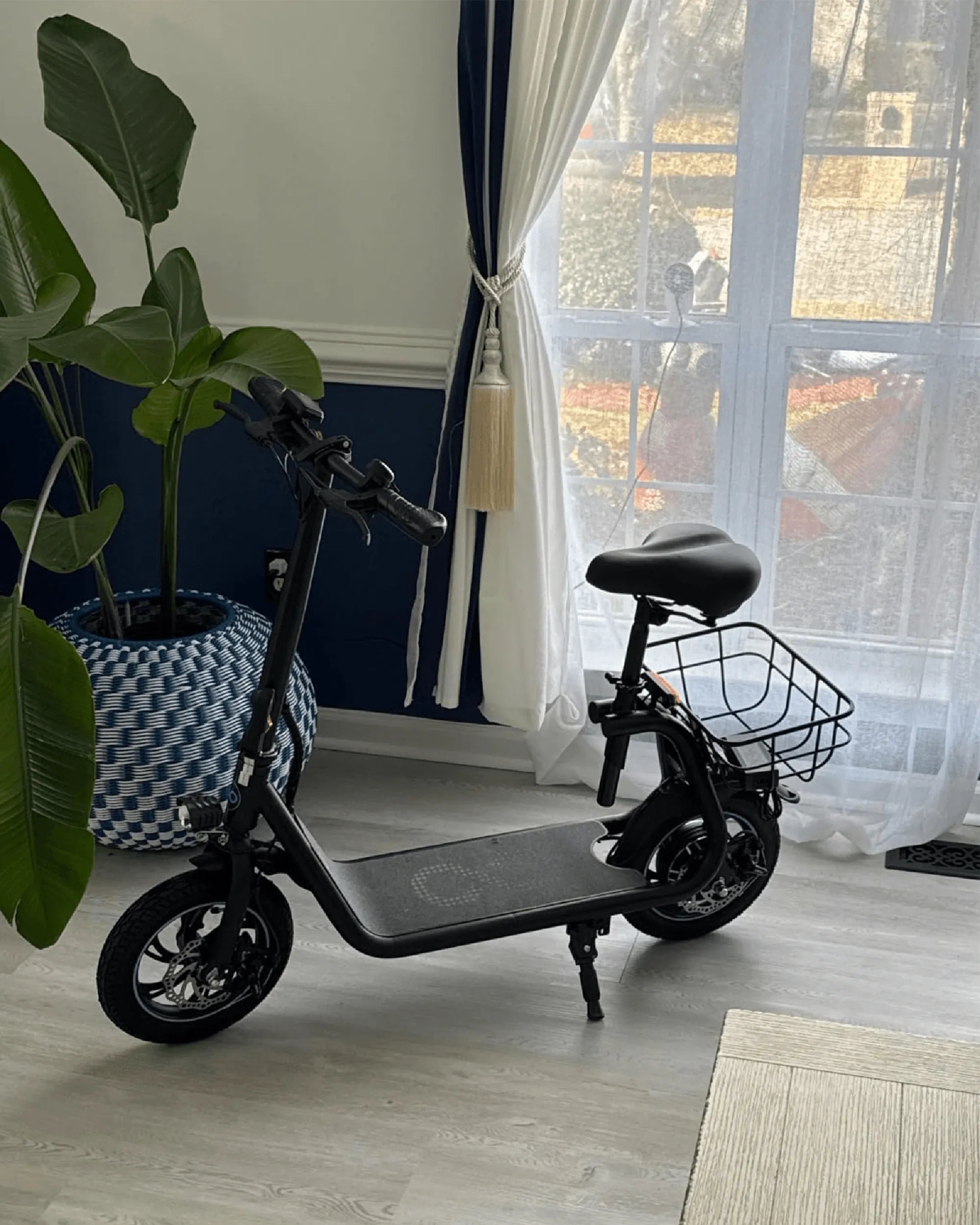
Introduction to 110cc Scooters: The Sweet Spot for Urban Mobility
A 110cc scooter represents the optimal compromise in the motorized two-wheeler world. It sits perfectly between the underpowered 50cc moped and the larger, more expensive maxi-scooters. This engine displacement has become a global standard for practical, daily urban transportation.
The core appeal of a 110cc scooter is its versatility. It offers enough power for confident city commuting while maintaining exceptional fuel efficiency and low ownership costs. For new riders, budget-conscious commuters, or anyone seeking a nimble solution to traffic congestion, the 110cc category is frequently the most intelligent starting point.
This guide will dissect every aspect of owning and operating a 110cc scooter. We will explore its key advantages, compare it directly to other options, and provide a factual buyer's guide. Finally, we will examine the modern electric equivalent and why brands like Gyroor are leading this evolution with UL-certified safety and robust designs.
Key Advantages of Choosing a 110cc Engine
The decision to choose a 110cc scooter is driven by a clear set of data-backed benefits. These machines are engineered for real-world urban economics and practicality, not just raw performance.
Exceptional Fuel Economy: The primary advantage is outstanding efficiency. A typical fuel-injected 110cc scooter can achieve 80-110 miles per gallon (MPG). This translates to a fuel cost that is a fraction of a car's, making it one of the most cost-effective motorized transport methods available.
Manageable Power for Skill Development: With power output usually between 7 to 9 horsepower, a 110cc scooter provides enough acceleration for safe city merging and hill climbing without being intimidating for a new rider. This allows riders to build confidence and skill before potentially moving to a larger machine.
Lower Total Ownership Costs: The advantages extend beyond the pump. Insurance premiums for 110cc models are significantly lower than for larger motorcycles. Registration fees are often reduced, and their simple mechanical design leads to affordable routine maintenance.
Lightweight and Agile Design: Weighing between 200-250 pounds, these scooters are easy to maneuver in tight traffic and simple to park. Their compact size allows them to fit into spaces inaccessible to cars, making them the ultimate tool for dense urban environments.
110cc vs. 50cc (Moped) Scooters: More Power When You Need It
Choosing between a 50cc and a 110cc scooter is a fundamental decision. While a 50cc model may have simpler licensing requirements in some regions, the 110cc offers substantially greater capability.
Performance and Speed: A 50cc scooter is typically limited to 30-35 mph, confining it to low-speed residential streets. A 110cc scooter, however, can comfortably reach 50-60 mph. This allows it to safely keep pace with city traffic on main arterials and roads with 45-55 mph speed limits.
Hill Climbing and Passenger Ability: The larger engine provides much better torque. This means it can climb hills without significant speed loss and can more safely accommodate a passenger or heavier cargo, a task that strains a 50cc engine.
Safety through Stability: The ability to travel at the prevailing traffic speed, rather than below it, is a significant safety benefit. It reduces the risk of being rear-ended and allows the rider to maintain better flow with other vehicles.
110cc vs. 150cc+ Scooters: Balancing Efficiency and Capability
The comparison with larger scooters (150cc, 200cc, 300cc) highlights the 110cc's role as a pure urban specialist focused on maximum efficiency.
Highway Use: While a 150cc+ scooter can handle limited highway travel, a 110cc model is not designed for sustained freeway speeds. Its strength lies in superior urban agility and fuel economy, often besting larger models by 20-30% in MPG.
Cost and Weight: The 110cc platform is almost always less expensive to purchase, insure, and maintain. Its lighter weight makes it noticeably easier to handle at low speeds and when parking, a crucial factor for daily city use.
The Right Tool for the Job: For a commuter who never ventures onto the highway, the extra power and weight of a 150cc+ scooter offer diminishing returns. The 110cc scooter delivers everything needed for urban and suburban errands at the lowest possible operating cost.
| Feature | 50cc Scooter | 110cc Scooter | 150cc+ Scooter |
|---|---|---|---|
| Top Speed | ~30 mph | 50-60 mph | 65-80+ mph |
| Fuel Economy (Avg.) | 90-120 MPG | 80-110 MPG | 60-80 MPG |
| Best For | Low-speed neighborhoods, campus travel | City commuting, suburban roads | Highway-capable commuting, longer trips |
| Typical License Requirement | Car license/Moped permit (varies) | Motorcycle license | Motorcycle license |
| Passenger/Cargo Capacity | Minimal | Good | Excellent |
What to Look for When Buying a 110cc Scooter
Purchasing a 110cc scooter requires careful consideration of features that impact daily usability, safety, and long-term reliability. Focus on these key aspects.
Fuel Injection vs. Carburetor: Always prefer fuel injection (FI). FI systems provide instant starts in all weather conditions, better fuel efficiency, and require less maintenance than a carburetor, which needs periodic cleaning and tuning.
Storage Capacity: Under-seat storage is critical. A full-face helmet should fit inside. Measure the compartment before buying. Additional hook or top box options greatly enhance practicality for groceries or a work bag.
Wheel Size and Suspension: Larger wheels (12-inch or more) offer better stability over road imperfections like potholes compared to smaller 10-inch wheels. Check the front and rear suspension travel; better suspension improves comfort and handling.
Braking Systems: A front disc brake is essential for effective stopping power. Look for models with a Combined Braking System (CBS) or, ideally, Anti-lock Braking System (ABS). ABS prevents wheel lock-up during emergency braking, a major safety upgrade.
Brand Reputation and Dealer Network: Research brand reliability for engine longevity and part availability. A strong local dealer network ensures you have support for maintenance and warranty claims. Established brands have proven track records for durability.
The Gyroor Perspective: Why Electric is the Modern 110cc Equivalent
The core benefits of a 110cc scooter—agility, low cost of operation, and urban practicality—are now being redefined by electric mobility. For the modern urban commuter, a premium electric scooter or e-bike is the direct successor.
Gyroor's lineup of electric scooters and e-bikes serves the same rider seeking an efficient, nimble, and cost-effective daily transport solution. They deliver the 110cc experience with zero emissions, near-silent operation, and even lower "refueling" costs—often just pennies per charge.
Key Gyroor features directly address and improve upon traditional 110cc scooter attributes. The use of UL-certified lithium-ion battery packs is non-negotiable for safety, undergoing rigorous testing for stability over 500+ charge cycles. This provides peace of mind that rivals the proven reliability of a gas engine.
Furthermore, an IPX5 water-resistant rating ensures the scooter can handle rain and wet roads, matching the all-weather capability expected from a traditional model. Coupled with a 1-year comprehensive warranty backed by US-based customer support, Gyroor offers a ownership experience designed for confidence and low hassle, mirroring the dependable nature of the best 110cc gas scooters.
Maintenance and Ownership Costs: Keeping Your Ride Economical
The low running cost of a 110cc scooter is a major draw, but understanding the maintenance schedule is key to preserving that advantage. Here’s a breakdown of typical care and costs, followed by an electric comparison.
Routine Gas Scooter Maintenance: Regular maintenance includes engine oil changes every 600-1,200 miles, gear oil changes, and air filter cleaning/replacement. The drive belt and rollers in the CVT transmission need inspection and replacement approximately every 8,000-12,000 miles. Tire and brake pad wear are consistent with any vehicle.
Long-Term Cost Analysis: Even with this schedule, annual maintenance costs for a well-maintained 110cc scooter are low, often between $200-$400 for DIY or basic shop service. This, combined with ultra-low fuel costs, makes total cost of ownership exceptionally competitive.
The Electric Advantage: This is where electric scooters like Gyroor's create a significant paradigm shift. Maintenance is dramatically simplified: no engine oil, filters, spark plugs, drive belts, or complex emissions systems. Primary upkeep involves checking tire pressure, brake pads, and ensuring electrical connections are clean.
The battery is the core component. With proper care (avoiding full discharges, extreme temperatures), a quality UL-certified pack like Gyroor's will last for years. The cost of electricity per mile is roughly 1/10th the cost of gasoline, making the operational economics unbeatable for daily urban travel.
Safety and Riding Gear: Non-Negotiable Essentials
Riding any scooter, including a 110cc model, requires a serious commitment to safety. The right gear is your primary protection and should be considered part of the vehicle's cost.
Helmet: A Department of Transportation (DOT) certified full-face or modular helmet is mandatory. It provides the best protection for your head, face, and jaw. Never compromise on helmet quality.
Protective Apparel: Even for short trips, wear an armored jacket, gloves, full-length pants (preferably riding jeans or textiles), and over-ankle boots. This gear protects against abrasion in the event of a slide.
Visibility: Use your scooter's lights during the day. Consider adding reflective tape to your helmet or jacket. Assume you are invisible to car drivers and position yourself defensively in traffic lanes.
Rider Training: Even if not legally required, taking a Motorcycle Safety Foundation (MSF) course is invaluable. It teaches essential crash-avoidance skills, low-speed control, and proper braking techniques specific to two-wheelers.
Frequently Asked Questions (FAQ)
Q: Do I need a motorcycle license for a 110cc scooter?
A: In the vast majority of US states and internationally, yes. Since 110cc scooters exceed the 50cc threshold typically used for moped/scooter permits, a standard motorcycle license (Class M) or endorsement is required. Always verify with your local Department of Motor Vehicles.
Q: Can a 110cc scooter handle freeways or highways?
A: It is generally not recommended. While some models may reach 60-65 mph, they operate at their absolute limit, leaving no power reserve for safe acceleration to avoid hazards. They are best suited for city streets, county roads, and highways with speed limits up to 55 mph.
Q: What is the real-world fuel economy of a 110cc scooter?
A: You can consistently expect between 80 and 110 miles per gallon under normal riding conditions. Fuel-injected models tend to be at the higher end of this range. A small 1.5-gallon tank can still provide over 120 miles of range.
Q: How does an electric scooter's range compare to a gas scooter's tank range?
A> A gas 110cc scooter may have a longer total range (e.g., 120-150 miles). However, for daily urban commuting, the 25-45 mile range of a modern electric scooter like those from Gyroor is more than sufficient. The key difference is convenience: you "refuel" by plugging in at home overnight for a few cents, rather than visiting a gas station.
Q: Are 110cc scooters reliable for daily year-round use?
A> With proper maintenance, they are exceptionally reliable. Their simple air-cooled engines have few failure points. Using a fuel stabilizer for storage, keeping the battery on a tender in winter, and addressing minor issues promptly will ensure years of dependable service.
The Right Tool for the Urban Journey
The 110cc gas scooter has earned its status as an urban mobility icon through decades of proven performance. It delivers an unbeatable combination of fuel efficiency, manageable power, low cost, and agile handling that perfectly solves the daily commute problem for millions.
However, the evolution of personal transportation is accelerating. The fundamental virtues of the 110cc scooter are now being enhanced by electric technology. Zero emissions, near-silent operation, and radically simplified maintenance represent the next logical step forward.
For riders seeking this modern, clean, and even more economical experience, trusted brands like Gyroor are leading the way. By prioritizing foundational safety with UL-certified batteries, ensuring durability with IPX5 water-resistant designs, and backing their products with robust warranties and support, they offer a compelling next-generation alternative. The core mission remains unchanged: efficient, liberating urban mobility.
Explore the future of urban commuting. Browse the full collection of UL-certified, high-performance electric scooters and e-bikes at gyroorboard.com.
65 Inch Scooter Tires: The Complete Guide to Size, Performance & Reality
Why Is My Scooter Beeping? A Complete Diagnostic Guide