


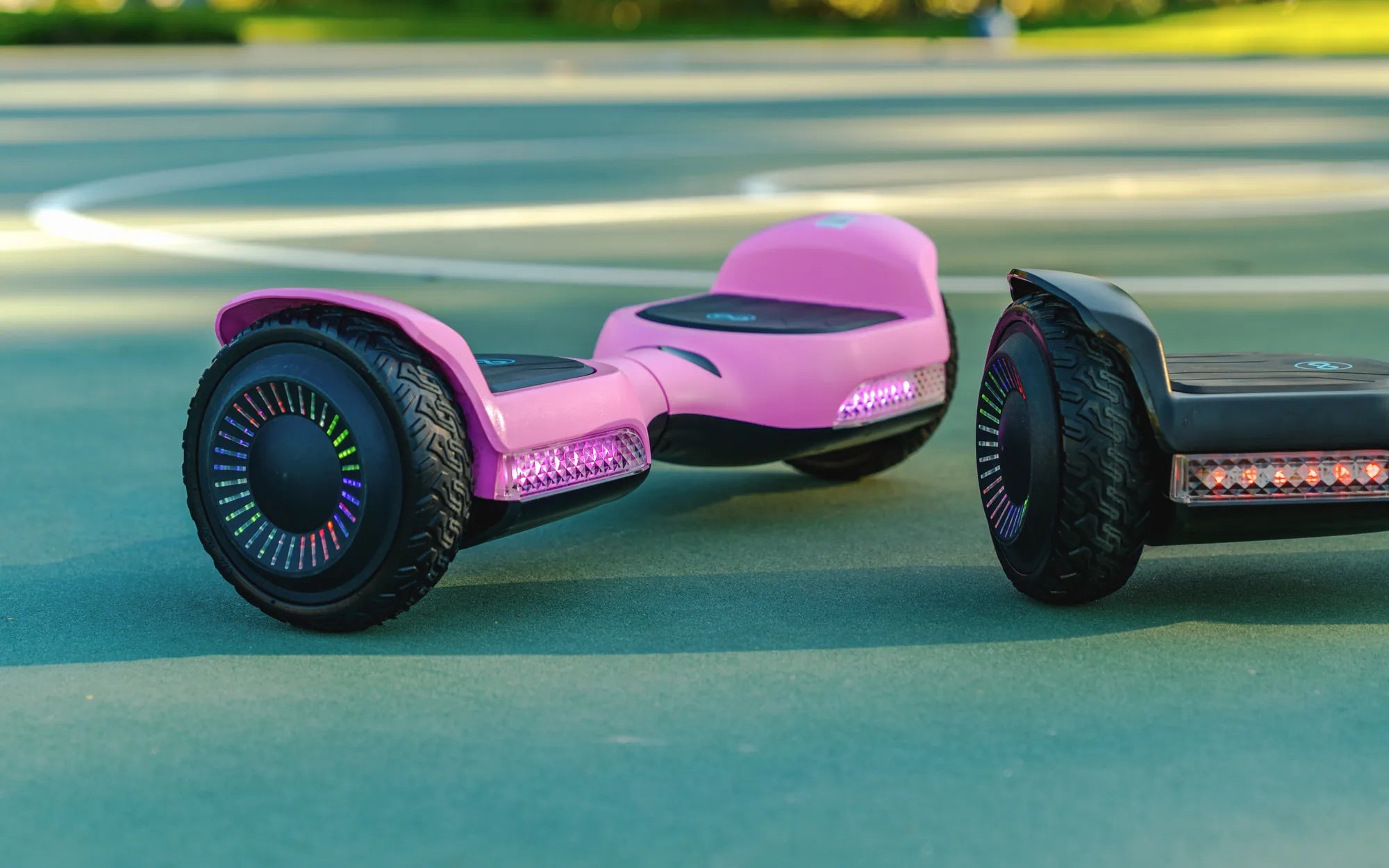
Introduction: Redefining the Ride with Smart, Self-Balancing Technology
The personal transportation landscape is undergoing a quiet revolution, and at its core is the 2 wheel self balancing scooter with Bluetooth. This device represents a significant evolution from early hoverboards, merging sophisticated gyroscopic control with smart connectivity to create a legitimate layer of urban mobility. It’s a compact, intuitive, and surprisingly powerful machine designed for short commutes, recreational exploration, and seamless integration into a connected lifestyle.
Forget the perception of a mere toy. Modern iterations are engineered for adults, featuring robust motors, certified safe batteries, and durable construction. The addition of Bluetooth transforms the experience, enabling app-based control, diagnostics, and personalization that elevates the ride. This article will dissect the technology, compare its advantages, and guide you toward making an informed purchase for a smarter way to move.
You will learn what defines a quality model, how it stacks up against electric kick scooters and e-bikes, and the practical applications that make it a compelling choice. We will also cover crucial safety protocols and maintenance tips to ensure your investment delivers long-term value and reliability. The future of personal transportation is agile, connected, and fun—let's explore it.
What Exactly is a 2-Wheel Self Balancing Scooter with Bluetooth?
A 2-wheel self-balancing scooter, commonly referred to as a hoverboard, is a two-wheeled, battery-powered personal transporter. The rider stands on two footpads located between the wheels, and the device uses internal gyroscopes, accelerometers, and microprocessors to automatically balance itself forward, backward, and side-to-side based on the rider's subtle weight shifts. Leaning forward propels you ahead, while leaning back slows you down or reverses.
The inclusion of Bluetooth connectivity is the critical upgrade that defines the modern iteration. This wireless technology enables communication between the scooter and a smartphone app. This connection unlocks a suite of features that move the device from a simple transporter to a smart mobility platform. It fundamentally changes the user experience and utility of the vehicle.
Through the app, riders can access real-time diagnostics like battery level, speed, and total mileage. More advanced functions include locking and unlocking the scooter digitally, adjusting maximum speed settings for beginners or different terrains, and customizing the behavior of integrated LED lights for safety or style. The most recognizable feature is often integrated speakers, allowing you to stream music directly from your phone as you ride.
Therefore, a 2 wheel self balancing scooter with Bluetooth is not just about getting from point A to B. It's about a personalized, data-informed, and entertaining journey. This smart layer adds significant value, security, and fun, making it a more integrated part of your daily tech ecosystem compared to its non-connected predecessors.
Key Features to Look for in a Quality Self-Balancing Scooter
Not all self-balancing scooters are created equal. Discerning buyers must look beyond flashy marketing to the core specifications that dictate performance, safety, and longevity. A focus on certified components and robust construction separates reputable brands from generic, potentially hazardous options. Here is a data-driven checklist for your evaluation.
Motor Power and Terrain Capability
Motor power, measured in watts (W), is the primary determinant of performance. A scooter with dual 300W motors (600W total) is suitable for flat urban sidewalks and smooth surfaces, offering adequate acceleration for most adults. For tackling moderate hills, rougher pavement, or for heavier riders, dual 350W or 400W motors (700W-800W total) provide the necessary torque.
True all-terrain models feature even more powerful motors, often 500W or more per wheel, paired with larger, air-filled tires with deep treads. These can handle grass, dirt paths, gravel, and sand. The motor power directly correlates with hill-climbing ability; a 700W+ system can typically handle inclines of 15-20 degrees, whereas a basic 300W model may struggle on anything over a 10-degree slope.
Brands like Gyroor engineer their performance models, such as those in their Warrior series, with high-torque motors specifically for varied terrain. This ensures consistent power delivery and prevents the motor from overheating during sustained use, a common failure point in cheaper units. Always match the motor specification to your intended riding environment.
Battery Life, Safety, and Range
The battery is the heart of the scooter and the most critical safety component. Always insist on a model that explicitly uses UL 2271 certified battery packs. This certification involves rigorous testing for electrical, mechanical, and environmental safety, drastically reducing fire risk—a non-negotiable standard for any reputable brand.
Battery capacity, measured in watt-hours (Wh) or often indicated by voltage (V) and amp-hours (Ah), determines range. A common configuration is a 36V, 4.4Ah battery, offering a real-world range of 10-12 miles for a 165 lb rider on flat terrain. Larger 36V, 6.5Ah or 8.8Ah batteries can extend that range to 15-20 miles. Factors like rider weight, terrain, temperature, and riding style (constant high speed) will decrease the maximum range.
Gyroor, as a leader in the space, equips all its models with UL-certified battery packs tested for over 500 charge cycles while maintaining high capacity. This focus on certified safety and longevity protects your investment and provides peace of mind, a key advantage over unbranded or 'banned brands' that may cut corners on this vital component.
Build Quality, Weight Limit, and Water Resistance
The frame should be constructed from high-grade, reinforced aluminum or magnesium alloy, not cheap plastic. A sturdy frame ensures stability at speed and durability against daily bumps. Check the maximum weight limit; quality models support riders from 44 lbs up to 265 lbs or more, accommodating teens and adults safely.
Water resistance is rated using the IP (Ingress Protection) code. For practical all-weather use, a minimum of IPX4 (protection from water splashes from any direction) is recommended. For true peace of mind against puddles and wet roads, look for IPX5 (protection from low-pressure water jets). Gyroor designs its scooters with IPX5 water-resistant ratings, allowing riders to confidently navigate damp conditions without fear of internal damage.
Other build quality indicators include the quality of the footpad grip tape, the responsiveness of the power button, and the feel of the charging port cover. A well-built scooter feels solid and precise, not creaky or loose.
The Bluetooth "Smart" Experience
The Bluetooth functionality should offer utility beyond just a speaker. A comprehensive companion app turns your smartphone into a dashboard and control center. Look for apps that provide accurate speedometers, odometers, and battery voltage monitoring. Parental controls that allow locking the scooter to a beginner speed mode (e.g., 5 mph) are invaluable for safety.
Advanced features include firmware updates that can improve performance or add new features over time, customizable LED light patterns for the built-in rim or underglow lights, and even ride history tracking. The speaker quality varies; some models offer surprisingly clear, loud audio, while others are merely adequate. The true value lies in the holistic control and customization the app enables, making the 2 wheel self balancing scooter with Bluetooth a truly personalized device.
Comparative Advantages: Self-Balancing Scooter vs. Other E-Transport
Choosing the right personal electric vehicle depends on your specific needs, commute, and lifestyle. The 2-wheel self-balancing scooter occupies a unique niche. The following comparison highlights its strengths and ideal use cases against other popular options.
Versus Traditional Electric Kick Scooters
Electric kick scooters are linear, point-A-to-B machines with a handlebar for steering. They generally offer higher top speeds (15-20+ mph) and longer ranges (15-30 miles) due to their larger battery capacity and more aerodynamic riding posture. They are often the preferred choice for dedicated, longer-distance commuters who prioritize efficiency and speed.
However, the 2 wheel self balancing scooter with Bluetooth excels in portability and fun. Its compact, handlebar-free design makes it incredibly easy to store under a desk, in a car trunk, or carry with one hand. The learning curve, while present, leads to a uniquely intuitive and engaging riding experience that many find more enjoyable than simply standing on a platform. The integrated smart features and speakers add a layer of entertainment and connectivity most basic e-scooters lack.
For last-mile trips from a bus stop, navigating crowded campus pathways, or for recreational rides where the journey itself is the goal, the self-balancing scooter offers a compelling blend of compactness and immersive fun that a traditional e-scooter cannot match.
Versus Electric Bikes and Mopeds
Electric bikes and mopeds are in a different class for longer-distance travel, cargo carrying, and road legality. They are suitable for commutes of 10+ miles, can handle higher speeds legally in bike lanes or roads, and their seated position is less fatiguing over distance. They are superior for grocery runs or transporting children.
The self-balancing scooter's advantage is its extreme agility, lower cost of entry, and minimal footprint. It is a pure 'last-mile' solution or a recreational vehicle for parks and trails. You can easily take it indoors, eliminating theft concerns associated with leaving an expensive e-bike locked outside. The cost is typically a fraction of a quality e-bike.
For the urban dweller with a multi-modal commute (train/bus + personal vehicle) or someone seeking a fun, compact vehicle for short trips around their neighborhood, the self-balancing scooter provides a cost-effective and highly portable solution where an e-bike would be overkill and a hassle to store.
| Feature | 2-Wheel Self-Balancing Scooter | Electric Kick Scooter | Electric Bike |
|---|---|---|---|
| Primary Use Case | Last-mile transit, recreation, short errands | Medium-distance commuting, urban travel | Long-distance commuting, cargo, fitness |
| Avg. Top Speed | 7-12 mph | 15-20 mph | 20-28 mph (assist) |
| Avg. Range | 10-15 miles | 15-25 miles | 20-60 miles |
| Portability & Storage | Excellent (compact, no handlebars) | Good (folding handlebars) | Poor (large, heavy) |
| Learning Curve | Moderate (30-60 mins) | Low (almost instant) | Low (like a bicycle) |
| Fun/Engagement Factor | Very High (intuitive, connected) | Moderate | Moderate-High |
| Relative Cost | $$ | $$-$$$ | $$$-$$$$ |
Riding into the Future: Applications and Lifestyle Integration
The true value of the 2 wheel self balancing scooter with Bluetooth is revealed in its seamless integration into diverse modern lifestyles. It solves specific mobility problems while adding an element of enjoyment.
The Urban Commuter's Last-Mile Solution
For the city dweller, the 'last mile' between public transit and the final destination is a common hurdle. A self-balancing scooter collapses this gap effortlessly. It can be carried onto a bus or train, then deployed for a quick, traffic-free ride to the office, stored neatly under a desk. It eliminates the wait for a rideshare or the walk in uncomfortable shoes.
Its compact size makes it ideal for apartment living where storage space is limited. Compared to the cost and hassle of parking a car in a dense urban center, the scooter presents an economical and efficient alternative for daily short trips, coffee runs, or quick lunches. The Bluetooth speaker can even make the commute a podcast or music-listening session, turning transit time into personal time.
Recreational Fun for Off-Road Enthusiasts
Not all rides are about utility. Powerful all-terrain models with large, knobby tires have opened up new recreational avenues. Riders can explore park trails, beach boardwalks, campground paths, and grassy fields with ease. The sensation of gliding over varied terrain is uniquely freeing and enjoyable.
This application highlights the importance of motor power and tire design. A recreational model built for this purpose, like Gyroor's off-road capable scooters, provides the suspension and power needed for a smooth, controlled ride on unpaved surfaces. It's a novel way to experience the outdoors, offering a silent, emission-free alternative to gas-powered recreational vehicles.
An Eco-Conscious Choice for Short Trips
Transportation is a major contributor to urban carbon emissions. Replacing car trips under 3 miles with a personal electric vehicle has a tangible positive impact. The 2 wheel self balancing scooter with Bluetooth is a zero-direct-emission vehicle that runs on efficiently stored electricity.
By choosing it for local errands, visiting friends nearby, or campus travel, riders actively reduce traffic congestion, noise pollution, and their personal carbon footprint. When charged via a standard household outlet, its energy cost is negligible—often just a few cents per charge. It represents a practical, accessible step toward more sustainable personal mobility, aligning with the values of environmentally conscious consumers.
Safety, Maintenance, and Making an Informed Purchase
Responsible ownership is key to a long, safe, and enjoyable experience with your self-balancing scooter. Investing in a quality product from a reputable brand is the first and most important safety decision.
Mastering the Ride: Safety Gear and Learning Tips
Always wear appropriate safety gear: a certified bicycle or multi-impact helmet, wrist guards, and knee and elbow pads are essential, especially during the learning phase. The most common injuries are from falls, and protective gear significantly mitigates risk.
To learn, find a flat, open, smooth area free of traffic and obstacles like a basketball court or empty parking lot. Start by mounting with one foot, using a wall or railing for support until you find the balance point. Practice gentle forward and backward movements before attempting turns. Most adults achieve basic competency within 30-60 minutes of practice. Never attempt to ride on public roads until you have complete, confident control in a safe environment.
Protecting Your Investment: Warranty and Support
A strong warranty is a hallmark of a confident manufacturer. Look for a comprehensive warranty that covers the frame, motor, and battery for at least one year. Gyroor, for example, offers a reliable 1-year warranty, backed by accessible customer support in North America and Europe. This ensures that if a manufacturing defect arises, you have a clear path to resolution.
This support structure is a critical differentiator from generic online marketplace sellers. A reputable brand will have available replacement parts (tires, footpads, chargers) and knowledgeable service channels. Before purchasing, research the brand's reputation for customer service and post-purchase support—it is as important as the product specs.
Essential Maintenance Tips for Longevity
Simple, regular maintenance will extend the life of your scooter. Keep it clean by wiping it down with a damp cloth; avoid high-pressure hoses unless it has a very high IP rating. For models with air-filled tires, check tire pressure monthly and keep it at the manufacturer's recommended PSI to ensure optimal range and ride comfort.
Battery care is paramount. Avoid draining the battery to 0% regularly; try to recharge when it drops to 20-30%. Do not leave the scooter on the charger indefinitely after it's full. Store the scooter and battery in a cool, dry place, away from extreme heat or cold. If storing for more than a month, leave the battery charged to about 50-60%. Following these practices will help preserve the battery's health over its entire lifecycle.
Frequently Asked Questions (FAQ)
Q: Is a 2 wheel self balancing scooter with Bluetooth hard to learn?
A: For most adults and older children, the basics can be mastered in 30 to 60 minutes of practice in a safe, open area. The key is persistence and starting with support. The intuitive lean-to-steer mechanism becomes second nature with a short learning curve.
Q: What is the typical speed and range I can expect?
A> Speeds typically range from 7 mph (beginner modes) up to 12 mph for standard models, with some high-performance models reaching 15 mph. Real-world range varies from 10 to 15 miles on a single charge for average models, influenced by rider weight, terrain, temperature, and speed. Always check the specific model's specifications based on standardized testing.
Q: Is the Bluetooth connectivity secure and stable?
A> Reputable brands use stable, low-energy Bluetooth connections with dedicated apps. The connection is generally secure for its intended purposes (control, data). As with any connected device, practice good digital hygiene: download the official app from legitimate stores and keep your smartphone's software updated.
Q: Can I ride my self-balancing scooter in the rain or through puddles?
A> You should only ride in wet conditions if your scooter has a certified water-resistant rating. A rating of IPX4 protects against splashes, while IPX5 (like Gyroor's standard) protects against low-pressure water jets from any direction, making it safe for wet pavement and puddles. Never submerge the scooter in water, regardless of its IP rating.
Q: How do I know if a brand is trustworthy?
A> Look for clear certifications (UL 2271 for the battery), transparent specifications, a verifiable physical business address, and responsive customer service channels. A strong warranty (1 year or more), a history of positive user reviews across independent platforms, and a professional website are all positive indicators. Brands like Gyroor, with over 100,000 riders and clear safety certifications, exemplify this trustworthiness.
Conclusion: Your Gateway to Connected, Agile Mobility
The 2 wheel self balancing scooter with Bluetooth has firmly established itself as a legitimate and exciting form of personal transportation. It successfully bridges the gap between practical utility and recreational enjoyment, all wrapped in a compact, connected package. By understanding the key features—from UL-certified batteries and powerful motors to meaningful Bluetooth integration—you can select a device that is safe, durable, and tailored to your lifestyle.
This technology offers a unique solution for the urban commuter, the recreational explorer, and the eco-conscious traveler. It represents a smart investment in agile mobility, reducing reliance on cars for short trips and adding a layer of fun to daily routines. The future of personal transport is not just about distance or speed; it's about efficiency, enjoyment, and seamless integration into our connected lives.
When you're ready to choose your ride, prioritize safety, support, and quality engineering. Opt for a brand that stands behind its products with certified components and comprehensive customer care. Discover the difference a well-engineered, connected scooter can make.
Ready to experience the future of personal transportation? Browse the full Gyroor collection of UL-certified, feature-rich self-balancing scooters and e-bikes at gyroorboard.com.
Adult Size Electric Scooter Self Balancing Hoverboard: The Future of Urban Mobility
Adult Size Electric Scooter Self Balancing Hoverboard: The Future of Urban Mobility