


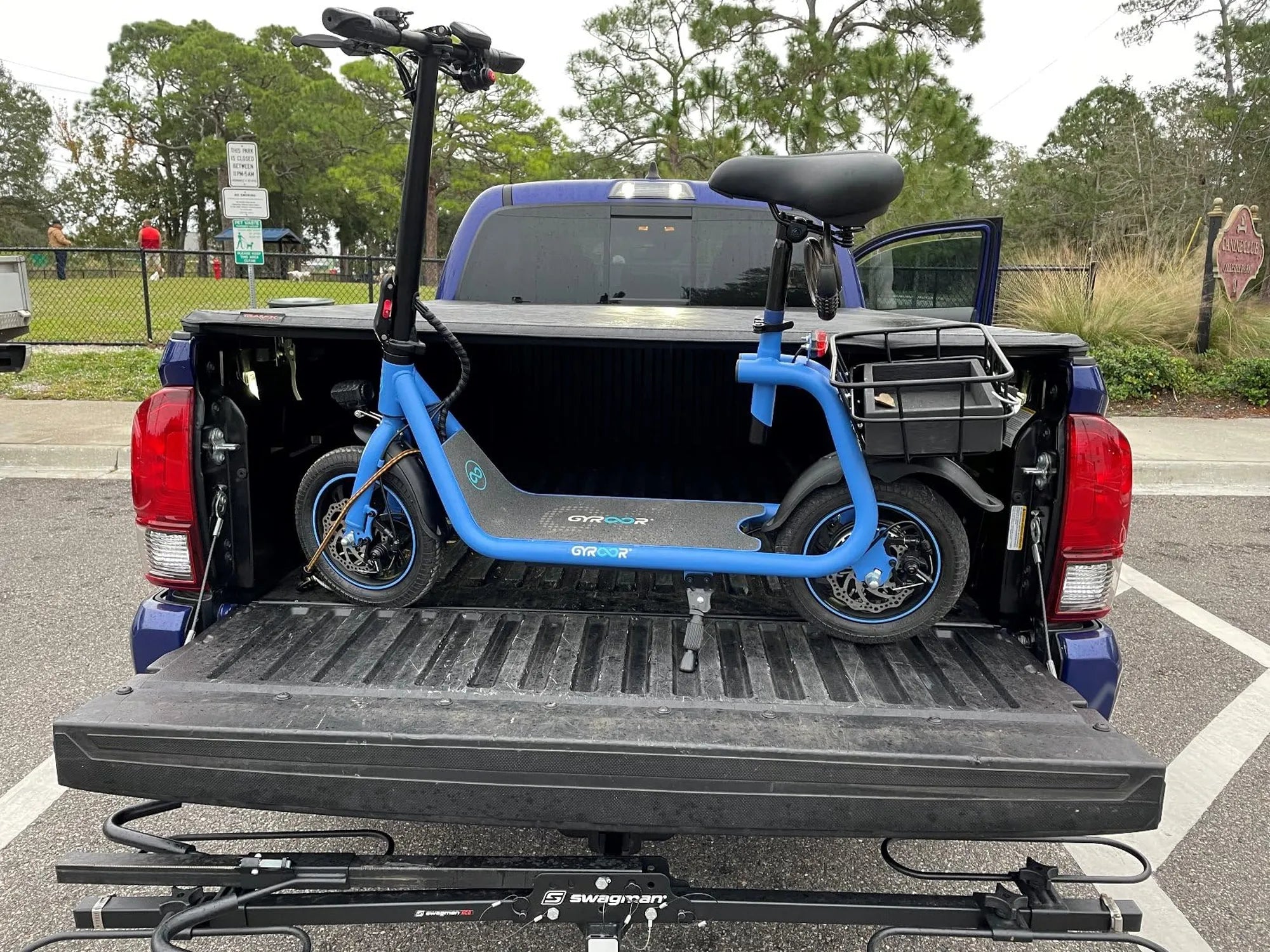
Introduction: Why 3-Wheel Electric Scooters Are Redefining Adult Commuting
The modern urban commute demands solutions that are not just fast, but fundamentally safe and stable. For adults navigating city streets, traditional two-wheel electric scooters can present balance challenges, especially during stops, starts, and on uneven surfaces. This is where 3 wheel electric scooters for adults emerge as a transformative category, offering a superior blend of security and efficiency.
This guide is your definitive resource for understanding why 3-wheel designs are ideal for adult commuting. We will dissect their anatomy, compare their advantages, and provide a detailed checklist for making an informed purchase. Leading brands like Gyroor have pioneered this space, integrating UL-certified battery safety and IPX5 water-resistant designs to create scooters trusted by over 100,000 riders.
The Anatomy of a 3-Wheel Electric Scooter: Stability Meets Technology
At its core, a 3-wheel electric scooter is defined by its triangular wheelbase, which provides inherent mechanical stability. This configuration typically places two wheels at the front (delta trike) or at the rear, creating a wide, balanced footprint. The design fundamentally changes the riding experience, shifting the priority from active balancing to confident control.
The geometry minimizes the risk of lateral tipping, a common concern with two-wheel models when taking corners or encountering road imperfections. This stability is not a byproduct but the central engineering principle, making it accessible for riders of all skill levels. The chassis is built to leverage this stability, often allowing for a more spacious deck and relaxed riding posture.
The Core Components Explained
Understanding the key components reveals why a quality 3-wheel scooter is a reliable machine. The motor, often ranging from 250W to 500W, is strategically placed for optimal weight distribution and traction. Battery technology is paramount; Gyroor models, for instance, use UL-certified lithium-ion packs tested for over 500 charge cycles, ensuring both range and critical safety.
The deck is wider and longer than many 2-wheel counterparts, providing secure footing. Braking systems are robust, combining electronic (regenerative) and mechanical (disc or drum) brakes for reliable stopping power. Lighting systems are comprehensive, with bright headlights, brake lights, and deck LEDs to ensure visibility—a non-negotiable for safe commuting.
Key Advantages: Why Choose a 3-Wheel Design for Your Commute?
Choosing a 3-wheel electric scooter is a decision that prioritizes practical safety and daily usability over the minimalist form of two-wheelers. The benefits are measurable and directly impact the comfort and confidence of the adult rider. When compared to other micro-mobility options, the three-wheel design stands out for its unique value proposition in urban environments.
The advantages extend beyond mere stability. They encompass enhanced comfort, greater practicality for errands, and significant efficiency gains over traditional transport. The following sections break down these benefits with a focus on real-world application for the adult commuter.
Unmatched Stability and Safety
The primary advantage is revolutionary stability. With two wheels on one axle, the scooter can remain upright even at a complete stop, eliminating the need to put a foot down constantly. This dramatically reduces the risk of tipping over during low-speed maneuvers, mounting, or dismounting—common pain points for adult riders.
This design allows for safer navigation over cracks, cobblestones, and mild inclines that might unsettle a two-wheeler. It builds rider confidence, which in turn promotes safer riding habits. For brands focused on safety like Gyroor, this inherent stability is complemented by certified batteries and water-resistant construction, creating a holistic safety package.
Enhanced Comfort and Practicality
Stability directly translates to comfort. A rider is not perpetually micro-adjusting for balance, leading to a more relaxed posture and less fatigue on longer commutes. The stable platform often accommodates a larger, more forgiving deck, and some models even integrate a seat for a scooter-bike hybrid experience.
Practically, this design makes carrying items safer. A grocery bag hung on the handlebars or a backpack on the rider poses less risk to balance. The step-through frame common in many three-wheel designs is also easier to mount, making it suitable for a wider range of mobility levels and attire, from work clothes to casual wear.
Efficiency and Eco-Friendly Commuting
3 wheel electric scooters for adults are pinnacles of efficient personal transport. Their electric powertrain produces zero direct emissions, with a carbon footprint significantly lower than that of a car, even when accounting for electricity generation. They offer substantial cost savings, with an average cost per mile being a fraction of fuel or public transit fares.
They excel in urban efficiency, bypassing traffic congestion and eliminating the search for parking. With typical ranges of 15-25 miles on a single charge, they are perfectly suited for daily commutes and errands. This makes them a cornerstone of sustainable urban mobility, reducing individual reliance on carbon-intensive transportation.
What to Look For: Your Checklist for Choosing the Best 3-Wheel Scooter
Selecting the right model requires moving beyond marketing claims to evaluate tangible specifications and build quality. An informed purchase ensures your scooter is a reliable asset, not a liability. This checklist prioritizes features that guarantee safety, performance, and longevity for daily adult use.
Focus on components where manufacturers cut corners on lower-tier models: the battery, brakes, and structural integrity. A reputable brand will transparently list certifications and use quality materials. The following criteria will help you distinguish a premium commuter vehicle from a basic toy.
Safety and Certification Non-Negotiables
Battery certification is the foremost safety feature. Insist on a UL 2271 or UL 2843 certified battery pack, like those used by Gyroor. This independent testing drastically reduces fire risk. Braking must be redundant: a combination of regenerative and a physical brake (disc or drum) is ideal for all-weather stopping power.
Water resistance is critical for a real-world commuter. An IPX5 rating, indicating protection against water jets from any direction, is a strong standard that allows riding in rain and through puddles. Comprehensive lighting—front, rear, and side—is essential for being seen by other road users during dawn, dusk, or night rides.
Performance Specs for Real-World Use
Evaluate motor power in context. A 350W motor is typically sufficient for flat urban terrain, while 500W or more provides better performance on hills. Real-world range is more important than maximum range; look for a battery capacity (in Watt-hours, Wh) that supports your daily distance with a 30% buffer.
A top speed of 15-20 mph is optimal for most city commuting, balancing efficiency with local regulations. Consider tire type: pneumatic (air-filled) tires offer a much smoother ride over bumps compared to solid tires, absorbing vibrations that would otherwise travel to the deck and the rider.
Build Quality, Warranty, and Support
The frame should be constructed from aerospace-grade aluminum alloy, offering a strong, lightweight structure. Check the weight capacity; a quality adult scooter should support at least 220 lbs. The warranty is a direct reflection of the manufacturer's confidence. A comprehensive 1-year warranty, like Gyroor's, covering parts, labor, and the battery, is a minimum benchmark.
Ensure the brand has accessible customer support and available replacement parts. A scooter is a mechanical device; the ability to service it easily is crucial for long-term ownership. Brands with an established presence in North America and Europe, like Gyroor, typically offer more reliable support networks.
Comparing Your Options: 3-Wheel vs. 2-Wheel & Other Transport
To fully appreciate the value of a 3-wheel electric scooter, a direct comparison with alternatives is useful. The table below outlines key differences across categories relevant to an adult commuter's needs.
| Feature | 3-Wheel E-Scooter | 2-Wheel E-Scooter | E-Bike | Public Transit |
|---|---|---|---|---|
| Primary Stability | Excellent (Static & Dynamic) | Good (Dynamic Only) | Excellent | N/A |
| Ease of Learning | Very Easy | Moderate | Easy (if you can bike) | N/A |
| Portability / Storage | Good (often foldable) | Very Good (often lighter) | Poor (bulky) | Excellent |
| Commute Cost (per mile) | Very Low (~$0.01) | Very Low (~$0.01) | Low (~$0.02) | Moderate ($2-$5 per trip) |
| Weather Protection | Low (Rider exposed) | Low (Rider exposed) | Low (Rider exposed) | High |
| Ideal Use Case | Stable, short-medium urban commutes, errands | Agile, last-mile for confident riders | Longer commutes, cargo, recreation | Long-distance, all-weather travel |
As shown, 3 wheel electric scooters for adults excel in stability and ease of use, filling a unique niche between the agility of a 2-wheeler and the full-size commitment of an e-bike. They offer a compelling, cost-effective alternative for predictable urban routes.
3-Wheel Scooters in Action: Ideal Use Cases and Rider Profiles
The true test of any vehicle is its application in daily life. 3-wheel electric scooters are not a one-size-fits-all solution, but they are the optimal choice for specific, common scenarios. Understanding these use cases helps match the technology to the rider's lifestyle.
From the daily grind to weekend leisure, the stability and efficiency of a three-wheel design unlock new possibilities for urban mobility. They cater to riders who value predictability and safety as much as they value avoiding traffic jams.
The Urban Commuter
This rider faces a multi-modal journey: a scooter ride to the train or bus station, then from the station to the office. The 3-wheel scooter's stability is crucial when navigating crowded sidewalks and station platforms. Its ability to stand upright when folded means it can be stored neatly without leaning against walls or falling over.
The reliable range ensures the "last-mile" gap is closed without anxiety. For commutes under 10 miles door-to-door, it can replace the entire journey, saving money and time. The practical design allows for carrying a briefcase or laptop bag with greater security than on a two-wheel model.
The Recreational Rider or Shopper
For weekend trips to the farmer's market, visits to a local park, or running errands around the neighborhood, the 3-wheel scooter is a fun and utilitarian tool. The stable platform can often handle a small cargo basket or allows a reusable bag to be safely secured.
The relaxed riding posture makes leisurely exploration enjoyable, not taxing. The step-through design is perfect for quick hops on and off when making multiple stops. It transforms short local trips from a chore into a pleasant, emission-free activity.
Riders Seeking Added Confidence
This broad profile includes new adult riders, older adults looking for a stable mobility aid, or anyone with balance concerns. The learning curve on a 3-wheel scooter is almost non-existent; if you can stand, you can ride. This accessibility opens up micro-mobility to a much wider demographic.
It provides the freedom and efficiency of personal electric transport without the intimidation factor. For those returning to riding after an injury or simply prioritizing a fall-free experience, the three-wheel design offers peace of mind that directly enables more frequent use and independence.
Frequently Asked Questions (FAQs) About 3-Wheel Electric Scooters
Q: Are 3-wheel scooters slower or less maneuverable than 2-wheel ones?
A: Not necessarily slower. Many share similar motor and battery specs with 2-wheel models, achieving comparable top speeds (15-20 mph). Maneuverability differs: 3-wheelers have a wider turning radius, making them slightly less nimble in very tight spaces, but they are far more stable during those turns, especially at lower speeds common in commuting.
Q: How does the IPX5 water resistance rating protect my scooter?
A> An IPX5 rating means the scooter's electrical components are protected against low-pressure water jets from any direction. This allows you to ride in the rain, through wet streets, and to clean the scooter with a hose without fear of water damage. It's a essential feature for a true all-weather commuter vehicle.
Q: What maintenance do the tires require?
A> It depends on the type. Solid rubber tires require zero maintenance but provide a harsher ride. Pneumatic (air-filled) tires offer superior comfort and traction but need periodic pressure checks and are susceptible to punctures. Many adult commuter models use airless honeycomb tires as a middle-ground—they never go flat but have some shock absorption.
Q: Is a 1-year warranty standard, and what should it cover?
A> A comprehensive 1-year warranty is a mark of a quality manufacturer. It should cover defects in materials and workmanship for the frame, motor, controller, and importantly, the battery. Reputable brands like Gyroor offer this as standard. Always read the warranty terms to understand what is excluded (e.g., damage from accidents, wear items like tires).
Q: Can they handle moderate hills and rough pavement?
A> Yes, but specifications matter. A scooter with a 500W or higher motor will handle moderate hills (7-10% grade) effectively. The three-wheel design provides better traction on inclines. For rough pavement, models with pneumatic tires and a suspension system (even a basic deck suspension) will significantly improve comfort and control compared to solid tires.
Conclusion: Steady, Smart, and Sustainable Travel Awaits
The 3 wheel electric scooters for adults represent a mature evolution in personal micro-mobility, prioritizing the safety and practical needs of the rider. By combining an inherently stable triangular wheelbase with robust electric powertrain technology, they deliver a commuting experience that is both confident and efficient. The data is clear: for urban adults, the benefits in stability, comfort, and cost-saving are substantial and tangible.
Your choice ultimately hinges on selecting a scooter built to these principles with quality components. Prioritize UL-certified battery safety, IPX5 water resistance, and a strong warranty from a reputable brand. This ensures your investment is protected and your commute is reliably safe. For a range of models that embody these standards, from compact commuters to feature-rich designs, explore the engineering and reliability offered by leading brands.
Ready to transform your daily commute with stability and style? Browse the full Gyroor collection at gyroorboard.com to find a UL-certified, IPX5 water-resistant 3-wheel electric scooter designed for the demands of adult commuting.
Electric Scooters for Commuting: The Future of Urban Transportation
New Electric Scooters: The Future of Urban Mobility