

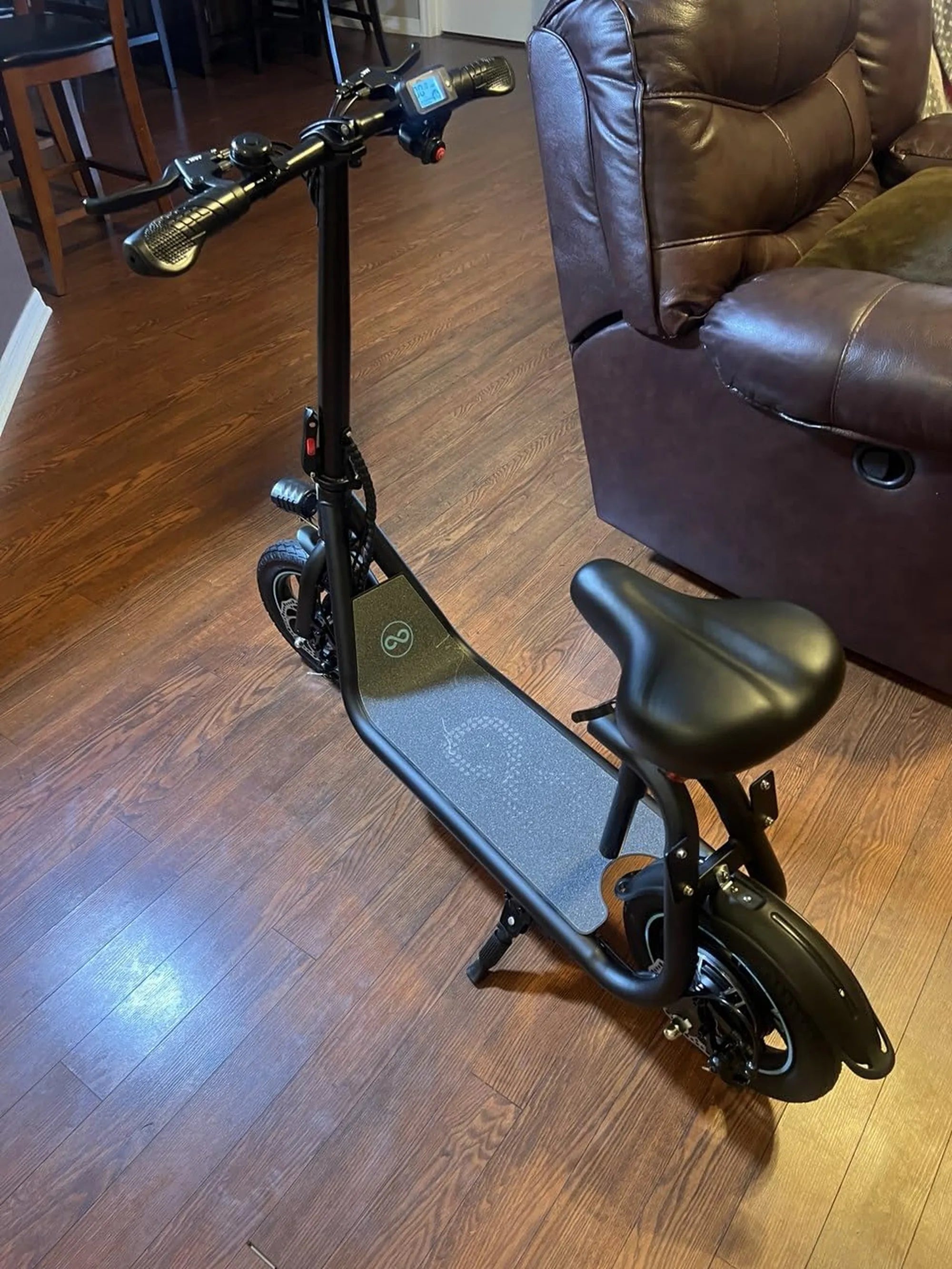
Introduction: The Allure of the 49cc Scooter for Adult Commuters
Forget gridlock and parking fees. A 49cc scooter for adults represents one of the most efficient and economical solutions for urban mobility. This category bridges the gap between a bicycle's physical demand and a car's expense, offering motorized convenience without the complexity.
Adults are increasingly turning to these compact vehicles for daily errands, short commutes, and predictable local travel. The appeal is rooted in undeniable practicality: exceptional fuel economy, minimal licensing hurdles, and a purchase price that doesn't require financing.
This guide will dissect everything an adult rider needs to know. We'll define what a 49cc scooter is, break down its real-world benefits, and address crucial considerations like safety and legality. We'll also explore why many modern commuters are choosing electric alternatives, exemplified by brands like Gyroor.
You'll gain a clear, data-driven understanding of whether a 49cc scooter fits your lifestyle and how to choose the right model for reliable, cost-effective transportation.
Understanding the 49cc Category: What "49cc" Really Means for You
The term "49cc" refers to the engine's displacement—49 cubic centimeters. This small engine size is the key to its legal and functional classification. In most U.S. states and many international jurisdictions, vehicles with an engine size of 50cc or less are treated differently from larger motorcycles.
They typically fall under "moped," "motorized bicycle," or "motor-driven cycle" classifications. This distinction is critical because it directly impacts licensing, registration, and insurance requirements, making ownership significantly more accessible for the average adult.
In practical terms, a 49cc engine delivers enough power for city travel but is intentionally limited. You won't find highway-capable performance here, and that's by design. The focus is on low-speed, high-efficiency urban transport.
This engine size creates a sweet spot where utility meets accessibility. It provides motorized assistance for hills and longer distances that a bicycle might struggle with, while avoiding the stricter regulations attached to larger vehicles.
Key Specifications and Performance Expectations
Setting realistic expectations is vital. A typical 49cc scooter for adults will feature a top speed governed between 30 and 40 miles per hour. Acceleration is modest, designed for safe merging into city traffic from side streets, not for sporty performance.
Fuel efficiency is a standout metric. Most 49cc models achieve between 80 and 120 miles per gallon. This translates to a weekly fuel cost of just a few dollars for the average commuter, a fraction of what a car consumes.
Engine types are usually 2-stroke or 4-stroke. Modern 4-stroke engines are more common, offering better fuel economy, cleaner emissions, and less required maintenance compared to older 2-stroke designs that require oil-gas mixtures.
Weight capacity is generally between 250 and 300 pounds, comfortably accommodating most adult riders and a small load of groceries or a work bag. The dry weight of the scooter itself is often between 150 and 200 pounds, making it manageable for occasional maneuvering.
The Practical Advantages: Why Adults Are Choosing 49cc Scooters
The decision to choose a 49cc scooter is overwhelmingly pragmatic. The primary driver is profound economic savings. When compared to car ownership, the numbers are compelling across every category: purchase price, fuel, insurance, maintenance, and parking.
Beyond pure cost, convenience is a massive factor. Navigating through congested traffic is simpler on a narrow vehicle. Parking becomes a non-issue, as a scooter can fit into spaces inaccessible to cars, often for free.
For adults who may be hesitant about the physical commitment of a bicycle commute or the licensing process for a motorcycle, a 49cc scooter offers a perfect intermediate step. It provides motorized ease without a steep learning curve.
The environmental footprint, while not zero like an electric vehicle, is still markedly lower than a car. Burning a gallon of gas over 100 miles versus 25 miles is a tangible reduction in emissions for the eco-conscious commuter.
Cost-Benefit Analysis: Scooter vs. Car vs. Public Transit
Let's examine a data-driven annual cost comparison for a typical urban dweller with a 10-mile round-trip commute. This table illustrates the stark differences in ongoing expenses.
| Expense Category | 49cc Gas Scooter | Compact Car | Monthly Transit Pass |
|---|---|---|---|
| Annual Fuel/Energy Cost | ~$150 (120 MPG) | ~$1,200 (30 MPG) | N/A (Included) |
| Annual Insurance | ~$200 - $400 | ~$1,200 - $2,000 | N/A |
| Annual Maintenance | ~$200 (oil, tires) | ~$800 - $1,200 | N/A |
| Annual Parking | $0 - $300 | $1,200 - $3,600+ | N/A |
| Upfront Cost / Pass Fee | $1,000 - $2,500 | $20,000+ | $1,200 - $1,800 |
| Estimated Annual Total | $550 - $1,250* | $4,400 - $8,000+ | $1,200 - $1,800 |
*Excludes upfront scooter cost amortized over years. This analysis reveals the 49cc scooter's dominant position in pure economics. It beats public transit on flexibility and often on cost over time, while demolishing car ownership expenses. The savings can amount to thousands annually, funding the scooter's purchase within the first year or two.
Important Considerations Before You Buy
While the advantages are significant, a 49cc scooter is not a universal solution. Its limitations must be carefully weighed against your specific needs. Weather dependence is the most obvious; riding in heavy rain or snow is challenging and unsafe.
Carrying capacity is limited. You cannot transport multiple passengers or large items. Your commute route is also a key factor; roads with speed limits consistently above 40-45 MPH are not ideal and can be dangerous.
Storage is another consideration. You'll need a secure place to park it, preferably under cover to protect it from the elements. While theft prevention devices are available, scooters can be targets.
Finally, consider your mechanical aptitude. While maintenance is simple, it is required. You or a mechanic will need to perform routine oil changes, tire checks, and belt inspections. Understanding these realities ensures you make an informed purchase.
Safety and Gear: Non-Negotiables for the Adult Rider
Operating any vehicle on public roads demands responsibility. On a 49cc scooter, your body is the crumple zone. Investing in proper riding gear is not optional; it's essential personal protective equipment.
Start with a DOT-approved full-face or modular helmet. It protects your head in a fall and shields your face from wind, bugs, and debris. A durable jacket (with armor if possible), gloves, long pants, and over-ankle boots are minimum requirements.
Defensive riding is your primary strategy. Assume you are invisible to car drivers. Position yourself visibly in lanes, use your signals, and constantly scan for hazards like opening car doors, potholes, and inattentive drivers.
Regular pre-ride checks are a simple safety ritual. Verify tire pressure, test brakes and lights, and ensure the throttle moves smoothly. This two-minute routine can prevent a roadside breakdown or an accident.
Licensing, Registration, and Insurance: Navigating the Rules
Disclaimer: Laws vary drastically by state and country. You must verify requirements with your local Department of Motor Vehicles (DMV). The following are common general guidelines in the United States.
In most states, operating a 49cc scooter requires at least a standard automobile driver's license (Class C). A separate motorcycle endorsement (Class M) is often not required for vehicles under 50cc, but some states have exceptions.
Registration and a license plate are almost always mandatory. The process is similar to registering a car but often at a lower fee. You will receive a title for the vehicle.
Insurance is a critical and often legally required safeguard. Liability insurance is the minimum, covering damage or injury you may cause to others. Given the low value of the vehicle, comprehensive/collision coverage may be optional, but liability is non-negotiable for financial protection.
Why Consider an Electric Alternative? The Gyroor Perspective
The evolution of personal urban transport is leaning decisively toward electrification. Electric scooters and e-bikes address many of the inherent friction points of gas-powered 49cc models while delivering similar utility for adult commuters.
Brands like Gyroor have pioneered this space, offering robust, reliable electric vehicles designed for daily adult use. The value proposition is powerful: eliminate gas stations, simplify maintenance, and enjoy silent, emission-free operation.
For adults who value convenience and sustainability, an electric scooter like those from Gyroor's collection represents a logical next step. You retain all the benefits of compact size and low operating cost while gaining the modern advantages of plug-in charging and digital controls.
Gyroor, trusted by over 100,000 riders, builds its reputation on safety and reliability. Its focus on UL-certified battery packs, IPX5 water-resistant designs, and a strong 1-year warranty directly addresses adult concerns about product quality and longevity.
Gyroor E-Scooters vs. Traditional 49cc Gas Scooters: A Side-by-Side Look
This comparison highlights the operational and experiential differences between the two technologies, helping you decide which aligns with your priorities.
| Feature | Traditional 49cc Gas Scooter | Gyroor Electric Scooter / E-Bike |
|---|---|---|
| Power Source | Gasoline Combustion Engine (~49cc) | Electric Motor (e.g., 500W, 1000W+) |
| Top Speed | 30 - 40 MPH | 20 - 35 MPH (varies by model/class) |
| Operating Cost | ~$0.03 - $0.04 per mile (gas) | ~$0.003 - $0.005 per mile (electricity) |
| Refueling / Recharge | Gas station, minutes | Standard wall outlet, 4-8 hours |
| Maintenance | Engine oil, spark plugs, air filter, belt, transmission fluid | Primarily brakes, tires, and battery care |
| Noise Level | Moderate to loud engine noise | Nearly silent operation |
| Emissions | Direct CO2 and pollutants | Zero direct emissions |
| Parking Convenience | Can't bring fumes indoors | Can often be brought indoors* |
| Key Safety Feature | Standard mechanical components | UL-Certified Battery (Fire Safety) |
| Weather Resilience | Varies by model | IPX5 Water-Resistant Design |
| Warranty & Support | Often 30-90 days limited | 1-Year Comprehensive Warranty |
*Where permitted. The table reveals the electric advantage in running cost, maintenance simplicity, and environmental impact. Gyroor's specific focus on certified battery safety and water resistance builds trust for adults seeking a dependable, all-weather vehicle.
Frequently Asked Questions (FAQ)
Q1: Do I need a motorcycle license for a 49cc scooter?
A1: In the vast majority of U.S. states, no. A standard driver's license is sufficient for vehicles under 50cc. However, a few states (e.g., Hawaii, Iowa) have different rules. Always check with your local DMV for the definitive answer.
Q2: Can a 49cc scooter handle hills?
A2: Yes, but with limitations. A 49cc scooter will climb moderate hills, but speed will drop significantly on steeper inclines. The rider's weight also affects performance. For very hilly areas, a more powerful scooter or an electric model with high torque (like some Gyroor e-bikes) may be preferable.
Q3: How far can I go on a single tank of gas?
A3>With a typical 1-1.5 gallon tank and 80-100+ MPG efficiency, most 49cc scooters have a range of 80 to 150 miles. This is more than adequate for multiple days of average commuting and errands.
Q4: Is insurance expensive for a 49cc scooter?
A4>No, it is generally very affordable. Annual liability insurance premiums often range from $200 to $400, depending on your location, age, and driving record. This is a fraction of typical car insurance costs.
Q5: What's the main advantage of an electric scooter like Gyroor's over a 49cc gas model?
A5>The core advantages are lower long-term running costs, drastically reduced maintenance, and zero tailpipe emissions. The convenience of charging at home overnight and the silent, smooth ride are significant quality-of-life benefits. Gyroor's models add peace of mind with UL-certified batteries and robust warranties.
Conclusion: Finding Your Perfect Urban Ride
The 49cc scooter for adults stands as a testament to practical, efficient transportation. It solves real problems for urban and suburban dwellers: cost, congestion, and complexity. For those comfortable with its operating parameters and safety requirements, it can be a life-changing tool for financial and logistical freedom.
Yet, the landscape of personal mobility is rapidly evolving. The electric revolution offers a compelling alternative that retains the scooter's core virtues while introducing new levels of cleanliness, quiet, and simplicity.
Whether you choose the proven, fuel-sipping technology of a traditional 49cc scooter or the modern, plug-and-play ease of an electric model, the most important step is making an informed choice based on your commute, your budget, and your local laws.
For adults ready to explore the electric advantage, the journey starts with reliable engineering. Discover the full range of UL-certified, high-performance electric scooters and e-bikes designed for adult commuters. Browse the full Gyroor collection at gyroorboard.com and find the ride that redefines your daily travel.
Do You Need a License for a 150cc Scooter? The Complete Legal Guide
Do You Need a License for a 150cc Scooter? The Complete Legal Guide