



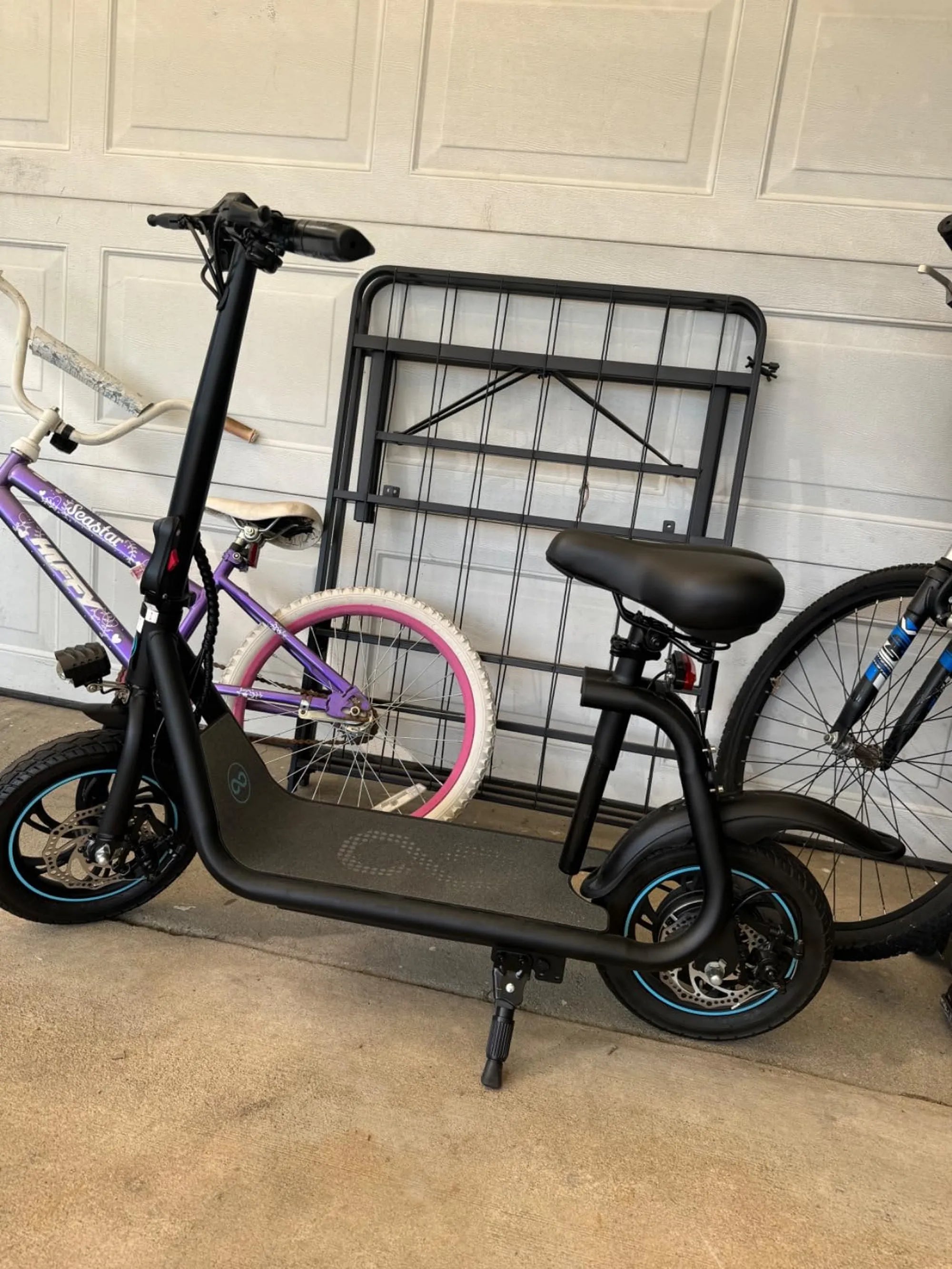
What is a 50cc Equivalent in the Electric World?
Traditional 50cc scooter models are defined by a small 49.9cc gasoline engine. They typically reach top speeds of 30-40 mph. In many jurisdictions, they occupy a unique legal niche, often requiring a special driver's license, registration, and insurance, but not always a full motorcycle endorsement.
The electric equivalent matches this performance profile without the gas engine. It focuses on a motor power range of 500W to 1000W, which delivers similar acceleration and a 20-30 mph top speed. This places electric 50cc scooter models squarely in the personal electric vehicle (PEV) market for urban commuting.
These 50cc scooter models are not about raw power but practical, efficient city transport. They bridge the gap between low-speed e-scooters and more powerful electric mopeds. The shift to electric redefines what a 50cc scooter can be, emphasizing simplicity and accessibility.
Key Features to Look for in a Modern 50cc-Style E-Scooter
Choosing the right model requires looking beyond basic speed claims. Modern 50cc scooter models must balance performance, range, and durability for daily use. Key specifications determine real-world usability and long-term value.
A reliable 50cc scooter model should have a robust frame, effective brakes, and clear lighting. It should also offer practical features like a water-resistant design and a comprehensive warranty. These elements ensure safety and reliability in varied urban conditions.
Motor Power & Real-World Performance
Motor wattage is the electric counterpart to engine displacement. A 500W motor is a common entry point for 50cc scooter models, suitable for flat terrain. A 750W motor provides better acceleration and hill-climbing, closely matching a gas 50cc's feel.
A 1000W motor offers peak performance, easily handling moderate hills and providing brisk acceleration. It's crucial to distinguish between sustained and peak power ratings. A quality 50cc scooter model will use a motor that can sustain its rated power without overheating.
This power directly translates to hill-climbing ability. A true 50cc-class e-scooter should handle a 10-15% grade with a single rider. Brands like Gyroor engineer their motors for reliable torque, ensuring consistent performance that rivals traditional 50cc scooter models.
Battery Range & Charging: Beyond the Marketing Number
Range is often the most misunderstood spec for 50cc scooter models. A claim of "up to 40 miles" is typically a best-case scenario. Real-world range is affected by rider weight, hills, temperature, and riding style.
For a 50cc scooter model used for a daily commute, a real-world range of 15-25 miles is often sufficient. It's vital to choose a model with a high-quality, UL-certified battery pack. These batteries, like those used by Gyroor, undergo rigorous testing for over 500 charge cycles, ensuring long-term safety and capacity retention.
Charging time is another practical consideration. Most 50cc scooter models with this performance class require 4-8 hours for a full charge. Investing in a model with a reliable, certified battery is non-negotiable for safety and cost-effectiveness over the scooter's lifespan.
Build Quality, Safety, and Warranty
The build quality separates a durable commuter from a disposable toy. Look for a frame constructed from reinforced aluminum or steel. The braking system is critical; a combination of a front disc brake and a rear drum or regenerative brake offers confident stopping power for 50cc scooter models.
Safety features should include bright headlights, brake lights, and reflectors. An IP water-resistance rating is essential for all-weather capability. An IPX5 rating, common on Gyroor scooters, means the scooter can withstand water jets, making it safe to ride in rain or through puddles.
A strong warranty reflects the manufacturer's confidence. A reputable brand will offer at least a 1-year comprehensive warranty on the frame, motor, and battery. This support is a key differentiator for high-value 50cc scooter models, protecting your investment.
The Practical Advantages of Electric Over Gas-Powered 50cc
Electric 50cc scooter models offer compelling advantages that go beyond environmental benefits. They represent a shift towards simpler, more cost-effective, and community-friendly urban transportation. The data supports their growing popularity for daily use.
When evaluating 50cc scooter models, the electric option often wins on total cost of ownership and convenience. The elimination of complex mechanical parts leads to a fundamentally different ownership experience. This makes electric 50cc scooter models a smarter long-term choice for most urban riders.
Cost-Per-Mile & Maintenance Simplicity
The operational cost difference is stark. A gas-powered 50cc scooter model requires fuel, oil changes, spark plugs, air filters, and belt replacements. The cost per mile can be significant over time.
An electric 50cc scooter model runs on electricity, costing mere pennies per charge. There is no engine oil, no filters, and no complex transmission. Routine maintenance is typically limited to checking tire pressure, brake pads, and ensuring bolts are tight.
This simplicity translates to huge savings. The total cost of ownership for an electric 50cc scooter model is often lower within the first year or two of ownership. You save on fuel, routine maintenance, and potentially on insurance and registration fees depending on local laws.
Noise, Emissions, and Community Friendliness
Electric 50cc scooter models operate almost silently. This eliminates noise pollution, making them ideal for early morning or late-night commutes in residential areas. It also allows riders to be more aware of their surroundings.
They produce zero direct tailpipe emissions. This contributes to better local air quality, a significant factor in dense urban environments. Many campuses, parks, and pedestrian zones restrict gas-powered vehicles but welcome quiet, clean electric models.
This community-friendly nature expands where you can ride. The quiet operation and lack of fumes make electric 50cc scooter models better neighbors, reducing conflicts in shared urban spaces and multi-use paths where gas models are often prohibited.
Navigating Laws and Licensing for 50cc-Class E-Scooters
The legal landscape for 50cc scooter models is evolving, especially for electric versions. While gas 50cc scooters are often regulated as motor vehicles, electric counterparts frequently fall under newer micromobility statutes. Understanding these rules is crucial for legal and safe riding.
Regulations vary dramatically by state, county, and city. It is the rider's responsibility to know the local laws governing their specific 50cc scooter model. Generally, electric models enjoy more permissive regulations than their gas-powered equivalents, but this is not universal.
State-by-State Variations and Key Rules
Common regulations for electric 50cc scooter models include maximum speed limits for operation in bike lanes (often 15-20 mph), minimum rider ages (typically 16+), and helmet requirements for riders under 18. Some states require a valid driver's license, but rarely a motorcycle endorsement.
Very few states require registration, license plates, or insurance for electric scooters under a certain power threshold, which includes most 50cc-class models. However, riders must check their specific state's Department of Motor Vehicles (DMV) or transportation website for the most current rules.
Key rules often focus on where you can ride. Most laws permit electric 50cc scooter models on bike lanes and paths, and on roads with speed limits at or below 35 mph. Riding on sidewalks is commonly prohibited in business districts for safety.
Where Can You Ride? Paths, Lanes, and Roads
The permitted zones for a 50cc scooter model are a major advantage. Electric models are typically allowed in bicycle infrastructure, including dedicated bike lanes and multi-use paths. This provides safer, more direct routes through cities compared to sharing the road with cars.
On roads, they are usually permitted on streets with lower speed limits. This contrasts with gas 50cc scooter models, which are often required to use the road and are prohibited from bike paths. This access to infrastructure makes electric 50cc scooter models more versatile for urban navigation.
Always yield to pedestrians on paths and obey all traffic signals. Using lights at night is not just a good idea—it's often the law. Understanding and respecting these rules ensures a positive experience for all 50cc scooter model riders and the community.
Is a 50cc-Style E-Scooter Right for Your Commute?
Determining if a 50cc scooter model fits your life requires an honest assessment of your needs. These vehicles excel in specific urban mobility scenarios but have limitations. Matching the scooter's capabilities to your primary use case is the key to satisfaction.
Consider your daily travel distance, route terrain, storage options, and local climate. A 50cc scooter model is a tool, and choosing the right tool for the job will maximize its value. For many, it represents an optimal balance of speed, convenience, and cost.
Ideal Use Cases: The "Last-Mile" and Urban Errand Champion
The perfect scenario for a 50cc scooter model is the "last-mile" solution. This involves riding from a public transit hub (train or bus station) to your final destination, covering a distance of 1-5 miles. It eliminates the need for a car, parking fees, and long walks.
These 50cc scooter models are also ideal for local errands, commuting to work or school under 10 miles, and navigating congested downtown areas. They bypass traffic, fit easily into bike racks or small storage spaces, and are inexpensive to operate for short, frequent trips.
If your daily travel pattern involves multiple short trips within a 5-mile radius, a 50cc scooter model can be transformative. It offers the freedom and speed of a personal vehicle without the associated costs and hassles of car ownership in a dense urban environment.
Limitations to Consider: Weather, Distance, and Cargo
It's important to acknowledge the limitations of 50cc scooter models. They offer minimal protection from the elements. Riding in heavy rain, snow, or extreme cold can be unpleasant and requires appropriate gear and caution, even with a water-resistant design.
Range anxiety is a real consideration for longer commutes. While a 20-mile real-world range covers many trips, it requires daily charging and planning. A 50cc scooter model is not suited for spontaneous long-distance travel without a known charging point.
Cargo capacity is limited to a small under-seat storage area or a backpack. You cannot carry large groceries or a passenger. For these needs, an e-bike or cargo e-bike may be a more suitable alternative. Understanding these constraints ensures you choose the right 50cc scooter model for your lifestyle.
Feature Comparison: 50cc Gas vs. Electric Scooter Models
The following table provides a clear, data-driven comparison between traditional gas-powered and modern electric 50cc scooter models. This highlights the key differences in ownership experience and performance.
| Feature | Traditional Gas 50cc Scooter | Modern Electric 50cc Equivalent |
|---|---|---|
| Power Source | Gasoline (49.9cc engine) | Electric Battery (500W-1000W motor) |
| Top Speed | 30-40 mph | 20-30 mph |
| Operating Cost | Fuel, oil, maintenance ($0.10-$0.15/mile) | Electricity only (~$0.01/mile) |
| Routine Maintenance | Frequent: Oil changes, spark plugs, belts, filters | Minimal: Tire pressure, brake pads, bolt checks |
| Noise Level | Loud (combustion engine) | Very Quiet (electric motor) |
| Emissions | Direct CO2 and pollutants | Zero direct emissions |
| Typical Licensing | Often requires motorcycle license/registration | Often only a standard driver's license, rarely registration |
| Where to Ride | Roads only (often prohibited on paths) | Bike lanes, multi-use paths, low-speed roads |
| Refueling/Recharge | 5 minutes at gas station | 4-8 hours at electrical outlet |
Frequently Asked Questions (FAQ)
Q1: Do I need a license, insurance, or registration for a 50cc-equivalent e-scooter?
Laws vary. In most U.S. states, you need a valid driver's license but not a motorcycle endorsement. Registration and insurance are rarely required for electric scooters under a certain power, but you must check your specific state and local laws, as they are changing rapidly.
Q2: How far can I really go on a single charge with hills and my body weight?
Take the manufacturer's maximum range and reduce it by 30-40% for a realistic estimate. Hills, headwinds, and higher rider weight significantly reduce range. A scooter rated for 40 miles may deliver 25 miles for a 180lb rider on a moderately hilly route. Always plan your commute with a buffer.
Q3: Are electric scooters with this power safe to ride in the rain?
Safety depends on the scooter's IP rating. Look for a model with at least an IPX4 rating for splash resistance. An IPX5 rating, like on Gyroor models, offers better protection against water jets from any direction. Even with a good rating, ride cautiously on wet surfaces as braking distances increase and traction decreases.
Q4: What's the actual maintenance schedule for an e-scooter like?
Maintenance is simple. Weekly: check tire pressure. Monthly: inspect brake pads for wear, ensure all bolts and nuts are tight, and clean the deck and frame. Periodically: check for any loose wiring or connectors. There is no engine oil, filters, or spark plugs to replace, making it far simpler than maintaining 50cc gas scooter models.
Q5: Can it handle a hill on my route, and how do I know if the motor is powerful enough?
Motor wattage is the best indicator. A 500W motor can handle gentle slopes. For consistent hill-climbing, a 750W or 1000W motor is recommended. Check the scooter's specifications for its gradeability rating (e.g., "15% grade"). If your route has steep hills, opt for the highest wattage and torque you can find within the 50cc scooter model class.
Conclusion: Embracing Smart, Efficient Urban Mobility
The evolution of 50cc scooter models from gas-powered to electric represents a major step forward in personal urban transport. Modern electric equivalents offer the practical speed and utility of traditional models while eliminating their biggest drawbacks: cost, noise, pollution, and complex maintenance.
Choosing the right 50cc scooter model means prioritizing certified safety features like UL-listed batteries, robust construction, and clear warranty terms. Brands that invest in these areas, such as Gyroor with its UL-certified battery packs and IPX5 water-resistant designs, provide the reliability needed for daily commuting.
By matching the scooter's capabilities to your specific commute—distance, terrain, and local laws—you can unlock a new level of freedom and efficiency. The modern 50cc scooter model is more than just a vehicle; it's a smart tool for navigating the challenges of city life.
Ready to explore reliable, high-performance electric 50cc scooter models built for the real world? Browse the full Gyroor collection, trusted by over 100,000 riders, at gyroorboard.com to find your perfect urban mobility solution.
Expensive Dirt Bike: The Ultimate Guide to Premium Off-Road Performance
150cc Bike Top Speed: Real-World Performance & Key Factors