

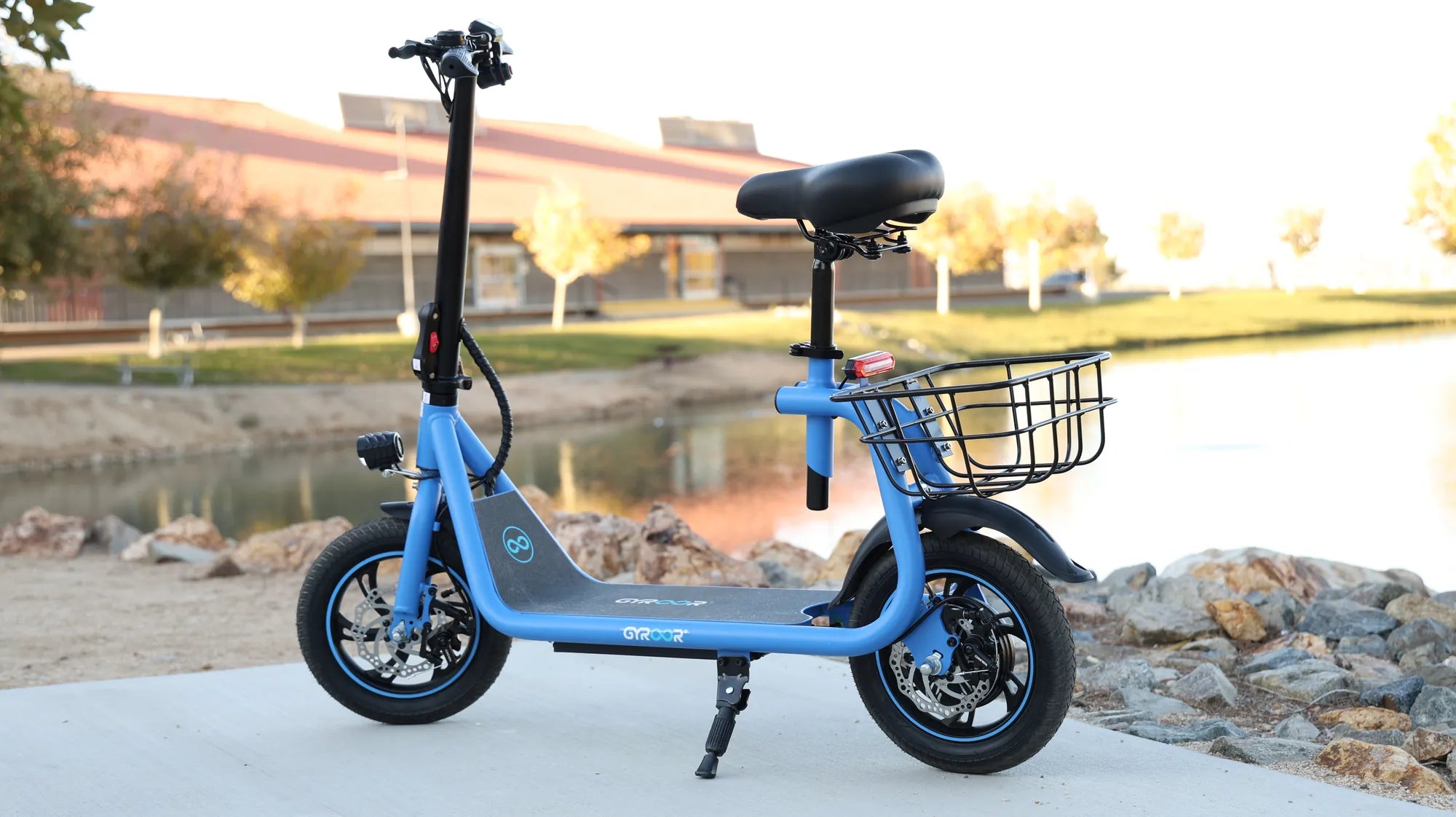
You need a new battery for your electric bike. The original is aging, or you crave more range. A quick online search reveals a sea of options, many cheaper than the manufacturer's part. This leads to the pivotal question: are ebike batteries interchangeable? Can you simply buy any battery with matching voltage and a similar-looking plug? The short, crucial answer is: rarely, and never without significant risk. This guide will provide the complete technical framework to understand battery compatibility, explain why brand-specific designs are the norm, and outline the only safe scenarios for swapping. You will learn to distinguish between marketing hype and engineering reality, ensuring your next battery upgrade is safe, reliable, and performs as intended.
Understanding E-Bike Battery Interchangeability
The concept of battery interchangeability is deceptively simple. In an ideal world, an e-bike battery would be a generic, plug-and-play component, like a common AA battery. However, modern e-bikes are complex electromechanical systems where the battery is the heart, not just a simple power source. It must communicate seamlessly with the bike's brain—the controller—and deliver power precisely to the motor.
Interchangeability hinges on far more than physical size or output voltage. It requires a perfect match across electrical specifications, physical connection interfaces, and digital communication protocols. Most manufacturers, including leading brands, design integrated systems where the battery, motor, and controller are engineered as a matched set. This approach optimizes performance, safety, and longevity but inherently limits cross-compatibility.
Attempting to force an incompatible battery into your e-bike is not merely a gamble on whether it will work. It poses real risks: from damaging expensive components like the controller and motor, to triggering electrical faults, and in worst-case scenarios, creating fire hazards due to mismatched battery management systems. Understanding this landscape is the first step toward making an informed, safe decision.
The Core Factors That Determine Compatibility
Four primary pillars determine whether an e-bike battery can be safely and effectively used with a different bike or system. All four must align for a successful interchange. Ignoring any single factor can lead to failure or danger.
Voltage (V): The Non-Negotiable Match
Voltage is the most fundamental and non-negotiable specification. An e-bike's motor and controller are designed to operate at a specific nominal voltage, such as 36V, 48V, or 52V. Using a battery with a different output voltage is a direct path to component failure. A higher-voltage battery can instantly overload and fry the controller and motor windings. A lower-voltage battery will fail to power the system correctly, leading to poor performance and potential damage from under-voltage scenarios.
It is critical to note that "nominal voltage" is the standard rating, but a fully charged battery's actual voltage is higher (e.g., a 48V battery charges to ~54.6V). The controller is designed to handle this range. Swapping a 36V system (~42V max charge) for a 48V battery (~54.6V) guarantees catastrophic failure. Voltage must be identical.
Amp-Hours (Ah) & Watt-Hours (Wh): The Capacity Equation
While voltage must match exactly, capacity—measured in Amp-hours (Ah) or Watt-hours (Wh)—can vary. A higher-capacity battery (e.g., 15Ah vs. 10Ah) from the same compatible series will provide longer range but must still fit physically and communicate correctly. Watt-hours (Voltage x Amp-hours) is the true measure of total energy capacity and is useful for comparing batteries across different voltages.
However, a higher-capacity battery is not automatically interchangeable. Its physical dimensions may differ, it may require a different charging profile, and its internal Battery Management System (BMS) must be compatible with the bike's controller. Simply having the right plug and voltage is insufficient if the BMS speaks a different "language."
Connector Type & Wiring Pinout
The physical connector is the most visible compatibility checkpoint. Common types include XT60, Anderson Powerpole, and various proprietary multi-pin plugs. A connector may look identical but have a fundamentally different internal wiring arrangement, known as the pinout. The pins carry not only main power (positive and negative) but often data lines for communication with the BMS, a charging port loop, or a dedicated key switch line.
Mismatching a pinout can lead to short circuits, communication failures, or the battery not being recognized by the bike. Even with an adapter, the underlying electrical signals must be correct. This is a major point of failure for those attempting cross-brand swaps based solely on a visual match.
Battery Management System (BMS) Communication
The BMS is the battery's onboard computer. It protects the battery pack by monitoring cell voltage, temperature, and current, preventing over-charge, over-discharge, and short circuits. Crucially, in most modern e-bikes, the BMS communicates with the bike's controller and display via a data protocol (like UART, CAN bus, or proprietary digital signals).
This handshake authenticates the battery, reports its state of charge, health, and may enable specific features. If the controller does not receive the expected signal from the BMS, it may refuse to operate, display an error code, or limit performance. Proprietary BMS protocols are one of the primary reasons batteries from one major brand are rarely compatible with another, even if voltage and connectors align.
Brand-Specific Ecosystems vs. Universal Batteries
The e-bike market is divided into two philosophies: closed, integrated ecosystems and the open, aftermarket world. Understanding this divide is key to managing expectations about interchangeability.
The Gyroor Integrated Approach: Safety & Performance by Design
Brands like Gyroor exemplify the integrated ecosystem model. They engineer their UL-certified battery packs, IPX5 water-resistant housings, and proprietary BMS to work exclusively with specific motor and controller pairings in their e-bikes and electric scooters. This is not to create vendor lock-in, but to ensure optimized performance, safety, and reliability covered under their 1-year warranty.
For instance, a Gyroor battery's BMS is programmed to communicate perfectly with the corresponding Gyroor controller, managing power delivery for optimal torque, range, and battery life. The physical design ensures secure mounting and connection. This holistic design, trusted by over 100,000 riders, means the safest and most reliable replacement or upgrade for a Gyroor bike is an official Gyroor battery designed for that specific model or series.
The Aftermarket & Universal Battery Landscape
The aftermarket offers "universal" or "replacement" batteries that claim compatibility with a range of models. These vary wildly in quality. While some reputable third-party manufacturers produce high-quality packs with robust BMS units, many cut corners on cell quality (using non-UL-certified cells), BMS protection, and casing integrity.
The major risk with aftermarket batteries is the uncertainty. Even if advertised for your bike model, subtle differences in BMS communication or pinout can cause issues. Furthermore, using a third-party battery almost always voids the original manufacturer's warranty on the entire e-bike system. The potential cost savings come with elevated risk of premature failure, reduced performance, and safety concerns.
Practical Scenarios: When Can You Swap an E-Bike Battery?
Let's apply the technical knowledge to real-world situations. Here are the most common scenarios and their viability.
Upgrading Within the Same Brand & Model Line
This is the most straightforward and low-risk scenario. Many manufacturers, including Gyroor, offer higher-capacity battery options for specific model lines. For example, you might upgrade from a 10Ah to a 15Ah battery for the same e-bike model. Because the voltage, connectors, BMS protocol, and physical mounting are designed to be compatible, this is a true plug-and-play upgrade that maintains warranty and full system functionality.
Replacing a Dead Battery on the Same Bike
The safest course of action is to purchase an identical OEM (Original Equipment Manufacturer) replacement. Match the model number exactly. This guarantees compatibility across all four core factors. For a Gyroor e-bike, this means purchasing an official Gyroor battery, ensuring you continue to benefit from the integrated design, safety features, and warranty support. It is the recommended path for over 95% of riders.
Mixing Batteries from Different Brands or Models
This scenario carries high risk and is generally not recommended. Even if you find a battery from Brand X with the same voltage and a physically identical connector as your Brand Y bike, the likelihood of the BMS protocols aligning is extremely low. You may encounter error codes, no power output, or limited performance. At worst, incorrect pinout or BMS behavior could damage the battery or the bike's controller. This path requires extensive technical knowledge, multimeter testing, and a willingness to assume all risk.
Data & Comparison: Making an Informed Decision
To visualize the risk and likelihood of success in different swap scenarios, refer to the following decision matrix. This table consolidates the key factors into actionable guidance.
Interchangeability Decision Matrix
| Swap Scenario | Safety Risk | Warranty Impact | Likelihood of Success | Recommended Action |
|---|---|---|---|---|
| OEM Replacement (Same Model #) | Very Low | None | 100% | Ideal. Purchase identical battery. |
| Official Upgrade (Same Brand/Line) | Low | None | 95%+ | Excellent. Use brand-sanctioned upgrade. |
| Aftermarket "Compatible" Battery | Moderate to High | Likely Voided | Variable (50-80%) | Caution. Research vendor quality extensively. |
| Cross-Brand Swap (Voltage/Connector Match) | High | Voided | Very Low (<20%) | Not Recommended. High chance of failure/damage. |
| Using Higher/Lower Voltage Battery | Extreme | Voided | 0% (Will cause damage) | Never Attempt. |
The Role of Standards and Future Outlook
The current lack of universal standards for e-bike battery connectors and BMS communication is a primary driver of incompatibility. Unlike USB-C in consumer electronics, no single standard governs how an e-bike battery should physically and digitally interface with a bike. This allows brands to optimize performance and safety for their specific systems but fragments the market for consumers.
Industry groups and some regulators are beginning to discuss standardization, particularly around safety protocols and connector types, to reduce electronic waste and improve repairability. However, widespread adoption is likely years away. For the foreseeable future, the market will continue to be dominated by brand-specific ecosystems where true, safe interchangeability is an intentional feature within a brand's lineup, not an accidental possibility across brands.
Maintenance and Longevity: Maximizing Your Battery's Life
Regardless of the battery you use, proper care extends its life and maintains safety. Avoid regularly draining the battery to 0%; try to recharge when it reaches 20-30%. Store the battery in a cool, dry place, ideally at a 40-60% charge level for long-term storage. Use only the manufacturer-provided or approved charger, as it delivers the correct voltage and charging profile (CC/CV) for your specific battery pack.
Inspect the battery casing and connector periodically for damage, cracks, or loose pins. For batteries like those from Gyroor with IPX5 ratings, still avoid direct high-pressure water jets on the connector ports. Proper maintenance can help you achieve the 500+ charge cycles that quality UL-certified batteries are designed for, delaying the need for a costly replacement.
FAQ: Your E-Bike Battery Questions Answered
Q: Can I use a higher voltage battery to get more speed?
A: No. This is extremely dangerous. A higher voltage battery will exceed the design limits of your controller and motor, causing immediate and likely irreversible damage. It is a guaranteed way to destroy key components and create a serious fire hazard.
Q: Will a battery with more Ah (like 15Ah vs. 10Ah) just plug and play for more range?
A> Only if it is an official upgrade option from your bike's manufacturer or a verified compatible aftermarket pack designed for your model. The higher capacity alone does not guarantee compatibility. The physical size, connector, and BMS must still match. Within the same brand and model line, it often will.
Q: My battery connector looks the same; is it safe to try it?
A> Visual similarity is not enough. You must verify the pinout (wiring configuration) and the BMS communication protocol. Without technical documentation or a multimeter test, plugging in a visually-similar battery from a different source is a significant risk. When asking "are ebike batteries interchangeable," the connector is just one of four critical checks.
Q: Does using a non-Gyroor battery void my Gyroor warranty?
A> Yes. Using any non-OEM component, especially a critical one like the battery, will void the warranty on your Gyroor e-bike's electrical system. The warranty is designed to cover the integrated performance of their components. Introducing a third-party part removes their ability to guarantee safety and performance.
Q: Are there adapters to make different batteries work?
A> Simple physical connector adapters exist, but they only solve the plug shape. They do not reconcile differences in voltage, pinout, or BMS communication. An adapter cannot make a mismatched BMS "talk" to your controller. They are only useful in rare, technically-vetted scenarios and are not a general solution for interchangeability.
Conclusion: Prioritizing Safety, Performance, and Warranty
The question "are ebike batteries interchangeable" reveals a complex interplay of engineering and marketplace realities. True, worry-free interchangeability is largely confined to using identical OEM replacements or brand-sanctioned upgrades within a specific model family. The integrated design philosophy of leading brands like Gyroor—focusing on UL-certified cells, proprietary BMS communication, and robust IP-rated housing—exists to deliver a safe, reliable, and high-performance riding experience protected by warranty.
Venturing outside this ecosystem introduces measurable risk to your investment and safety. While the aftermarket offers alternatives, they demand rigorous vetting and a willingness to forfeit manufacturer support. For the vast majority of riders seeking peace of mind, longevity, and guaranteed performance, the clear path is to partner with the original manufacturer. Explore the engineered battery solutions and full range of compatible e-bikes designed for reliability. Browse the full Gyroor collection at gyroorboard.com to find the perfect, integrated system for your riding needs.
220 Dirt Bike: The Ultimate Guide to the Versatile Trail Machine
Trike vs Tricycle: The Ultimate Guide to Choosing Your Three Wheels