



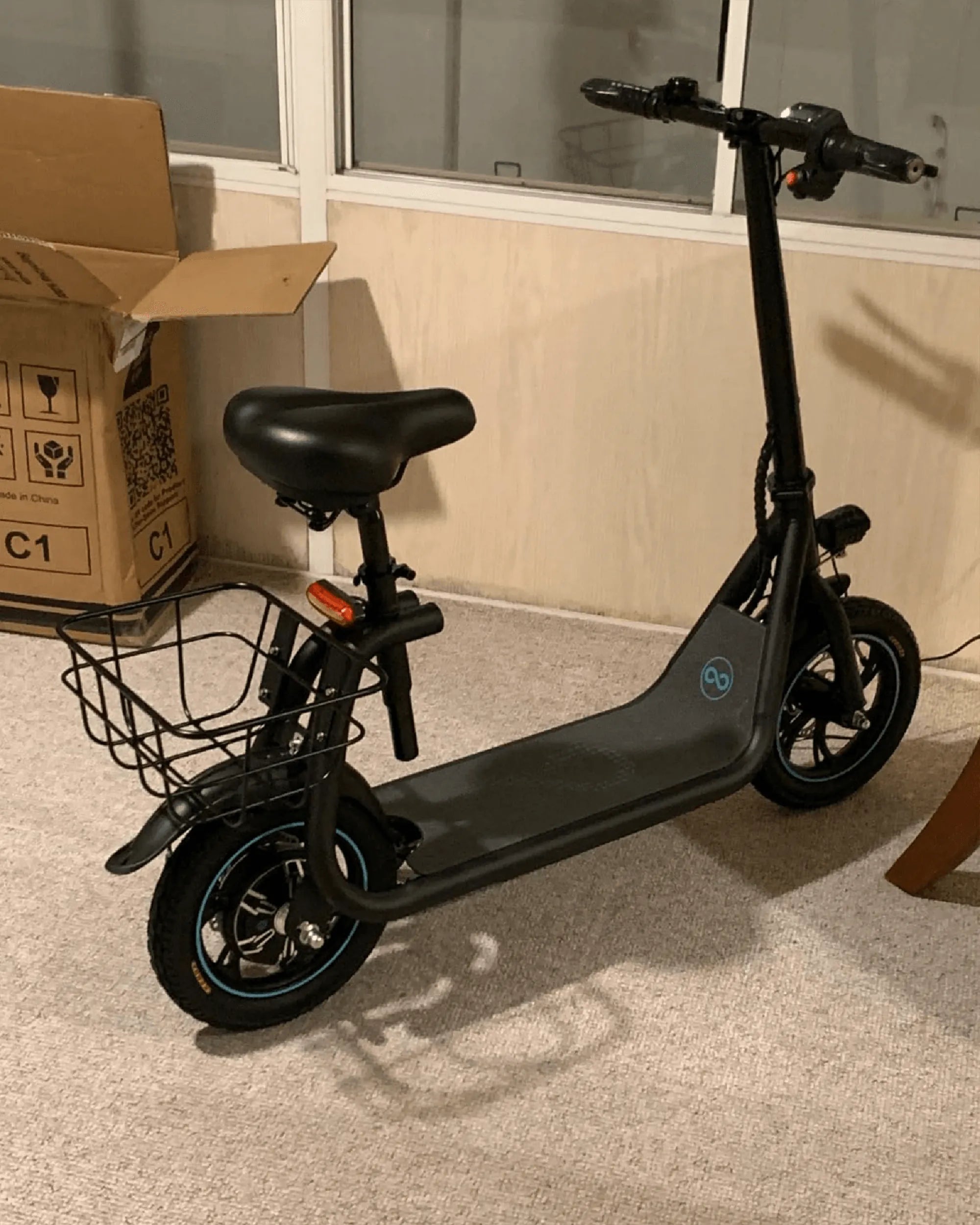
Demystifying the Weight of Modern Electric Scooters
When considering an electric scooter, one of the first and most practical questions riders ask is about weight. The concern is valid: a scooter that's too heavy becomes a burden to carry, while one that's too light might sacrifice essential power, range, or durability. So, are electric scooters heavy? The answer isn't a simple yes or no; it's a spectrum that reflects a deliberate engineering balance between portability, performance, and safety.
Understanding scooter weight is crucial because it directly impacts your daily experience. It determines how easily you can navigate stairs, board public transit, store it under a desk, or lift it into a car trunk. Leading brands, like Gyroor—trusted by over 100,000 riders across North America and Europe—design their models with this critical balance in mind, ensuring that weight contributes to capability rather than becoming a hindrance.
This exploration will move beyond the number on a scale. We'll dissect what makes an e-scooter heavy, examine the trade-offs between weight and features, and provide a clear framework to help you choose a scooter whose heft matches your lifestyle. By the end, you'll know exactly what to look for in your ideal ride.
Breaking Down the Numbers: What is "Heavy" for an E-Scooter?
To categorize scooter weight, we must first establish industry-standard ranges. These categories are defined by intended use, component quality, and overall construction.
- Ultra-Light / Commuter Class (Under 30 lbs / 13.6 kg): These are minimalist, last-mile solutions. Designed for maximum portability, they often feature smaller batteries (typically 250Wh or less), modest motors (around 250W), and basic, non-suspension frames. They are ideal for short urban trips where carrying up stairs or onto a train is a daily necessity.
- Mid-Weight / Performance Commuter Class (30-45 lbs / 13.6-20.4 kg): This is the most popular and versatile category. Scooters in this range, like many in the Gyroor lineup, balance daily portability with enhanced features. They offer larger batteries for 15-25 mile ranges, more powerful motors (350W-500W), and often include essential amenities like suspension, brighter lights, and mechanical or hydraulic brakes.
- Heavy-Duty / Performance & Off-Road Class (45-70+ lbs / 20.4+ kg): These are built for power, speed, and rugged terrain. They house massive battery packs (600Wh+), dual motors exceeding 1000W combined, robust suspension systems, and wide, pneumatic tires. Their weight is a direct result of components meant for high performance and durability, making them less suitable for frequent carrying but excellent for adventurous rides.
The perception of "heavy" is subjective and context-dependent. A 35 lb scooter might feel light to a rider who stores it in a garage but heavy to someone who must carry it up three flights of stairs daily.
The Core Components That Add Pounds
An electric scooter's weight is the sum of its parts. Understanding these components explains why weights vary so much.
The Battery Pack: This is often the single heaviest component. A larger battery with higher capacity (measured in Watt-hours, Wh) provides a longer range but adds significant mass. For example, a 250Wh battery might weigh around 4-5 lbs, while a 750Wh pack can weigh 12-15 lbs or more. Importantly, safety housing, like the UL-certified battery packs used in all Gyroor models, adds necessary structure and protection, contributing to a slightly higher but far safer weight compared to uncertified alternatives.
The Motor: Motor wattage correlates with weight. A 250W hub motor is relatively light, while a dual 1000W motor setup for extreme torque and hill-climbing adds substantial pounds. The type of motor (geared vs. gearless) and its integration into the wheel or frame also influence overall mass.
The Frame: Material choice is critical. Aircraft-grade aluminum alloys offer an excellent strength-to-weight ratio and are the standard for quality commuter and performance scooters. Heavier steel frames are sometimes used in budget or very rugged models for added durability at the cost of portability. Gyroor utilizes reinforced aluminum alloy frames to ensure durability without excessive bulk.
Tires and Suspension: Large, air-filled (pneumatic) tires provide a smoother ride but are heavier than small, solid rubber tires. A full suspension system—incorporating springs and hydraulic or rubber dampers—adds several pounds but is indispensable for comfort and control on rough surfaces, a key consideration in mid-weight and heavy-duty models.
The Portability Paradox: Weight vs. Practical Features
Portability isn't just about low weight; it's about how a scooter's design manages its mass for the user. A well-designed 40 lb scooter can feel more portable than a poorly designed 35 lb one.
The folding mechanism is the cornerstone of portability. A quick, reliable, and secure folding latch that collapses the stem and locks it to the fender transforms the scooter into a compact, liftable package. The design of this mechanism—its ease of use and the resulting folded dimensions—greatly affects the user experience. A scooter that folds into a tidy, balanced rectangle is easier to manage than one that folds into an awkward shape.
Carry handles and weight distribution are equally important. Some models feature dedicated carry handles or design the deck to be gripped comfortably. Crucially, a scooter where the weight is centered and balanced feels lighter to carry than one where the battery weight is all in the deck, creating an unwieldy, dangling stem. Many Gyroor models are engineered with balanced weight distribution and ergonomic contact points to aid in carrying.
Ultimately, the trade-off is clear: ultra-light scooters maximize portability by minimizing features. As you move up in weight, you gain practical features that enhance the ride: longer range, better suspension, more powerful brakes, and higher top speeds. The key is finding the point where the added weight delivers tangible value for your specific needs.
The Commuter's Checklist: Balancing Weight with Daily Needs
To choose the right scooter weight, urban riders should honestly assess their routine. Ask yourself these questions:
- Carry Frequency & Obstacles: Do you have to carry it up stairs at home, work, or a subway station? Is there an elevator, or is it stairs-only? Even a few steps daily make a lighter scooter (under 35 lbs) a priority.
- Public Transit Integration: Will you need to lift it onto a bus or train during rush hour? Compact folded dimensions and a weight you can comfortably manage with one hand in a crowd are essential.
- Required Range: Calculate your round-trip distance with a 20-30% buffer. Needing 15+ miles of real-world range often necessitates a battery that pushes the scooter into the 35-45 lb class. A 5-mile trip can be handled by a lighter model.
- Terrain & Comfort: Are your city's streets smooth or potholed? For rough pavement, suspension becomes valuable, adding 3-7 lbs but drastically improving comfort and safety, making a mid-weight scooter the wiser choice.
By answering these, you move from an arbitrary weight preference to a specifications-based requirement that guides your purchase toward a scooter that feels like a tool, not a burden.
Gyroor's Engineering Philosophy: Safety and Durability Without Unnecessary Bulk
Gyroor approaches scooter design with a core principle: essential safety and durability features should not be sacrificed for minimal weight, but neither should they lead to clumsy, overbuilt products. This philosophy manifests in specific engineering choices.
The use of UL-certified battery packs is non-negotiable. These batteries undergo rigorous testing for over 500 charge cycles, thermal stability, and short-circuit protection. The certification process ensures a robust internal and external structure, which adds marginal weight compared to non-certified packs but is critical for long-term reliability and rider safety—a worthwhile trade-off.
IPX5 water resistance is another feature that impacts design. Achieving this rating, which protects against water jets from any direction, requires careful sealing of ports, connectors, and deck seams. These gaskets and seals add grams, not pounds, but they are essential for real-world commuting where puddles and rain are inevitable, protecting the scooter's electronic core and justifying its weight.
Furthermore, Gyroor's 1-year comprehensive warranty is a testament to the durability built into each model. This confidence comes from using quality materials—like reinforced aluminum frames and name-brand mechanical components—and precise manufacturing. While a cheaper, lighter scooter might use thinner materials, Gyroor's focus on a reliable, long-lasting ride ensures the weight present is functional and contributes to the scooter's lifespan and rider trust.
Comparing Scooter Classes: A Data-Driven Table
| Scooter Class | Typical Weight Range | Key Components & Trade-Offs | Ideal User Profile |
|---|---|---|---|
| Ultra-Light / Commuter | Under 30 lbs (13.6 kg) | Small battery (≤250Wh), single 250W motor, solid tires, minimal or no suspension, simple folding. | The urbanite with a short, flat commute who must carry the scooter frequently onto transit or up stairs. |
| Mid-Weight / Performance | 30 - 45 lbs (13.6 - 20.4 kg) | Medium battery (300-500Wh), 350W-500W motor, often has suspension (spring or hydraulic), pneumatic tires, enhanced brakes (disc), better lights. | The daily commuter needing 10—25-mile range, facing varied terrain, who values comfort and power but may have limited carrying. |
| Heavy-Duty / Off-Road | 45 - 70+ lbs (20.4+ kg) | Large battery (600Wh+), dual motor setups (1000W+), full suspension, large pneumatic off-road tires, ultra-robust frame, advanced display/controls. | The adventure rider or long-distance commuter prioritizing power, speed, and all-terrain capability over portability. |
Beyond the Scale: Key Factors That Affect "Perceived" Weight
The number on the scale tells only part of the story. Several factors influence how heavy a scooter *feels* during real-world use and handling.
Weight Distribution: A scooter with its battery and motor weight low in the deck feels stable and planted while riding and can be easier to tilt and maneuver at slow speeds. Conversely, a scooter with heavy components in the stem will feel top-heavy, making it more cumbersome to control when not in motion and more awkward to carry.
Riding Stability: A heavier scooter, especially one with a longer wheelbase and lower center of gravity, often feels more stable and secure at higher speeds and in windy conditions. This perceived solidity can be a significant advantage, making the extra weight feel purposeful rather than penalizing.
Motor Torque and Start-Up: A powerful motor that provides immediate torque from a stop can make a heavy scooter feel surprisingly nimble. The rider isn't fighting to get it moving. The initial push-off effort is a key moment where weight is felt, and a strong motor effectively masks it.
Folding Process Ergonomics: A folding mechanism that requires awkward bending, pinching, or excessive force will make any scooter feel heavier and more frustrating to manage. A smooth, one-step locking mechanism dramatically improves the overall user experience, making the subsequent lift feel like part of a seamless process.
FAQ: Your Electric Scooter Weight Questions Answered
Q: What is the lightest Gyroor scooter suitable for commuting?
A: Gyroor's commuter-focused models typically range from the mid-30s to low 40s in pounds, optimizing for a blend of portability and feature-rich performance. For those prioritizing minimal weight, models with single motors and streamlined designs offer the easiest carry while still providing reliable range and UL-certified safety for daily urban travel.
Q: How much heavier is an off-road capable model compared to a commuter model?
A: The difference can be substantial. A performance commuter scooter might weigh 38-42 lbs. A true dual-motor off-road model with a large battery and full suspension can easily weigh 55-65 lbs or more—a difference of 15-25 lbs. This added weight is directly tied to the larger battery, second motor, and heavy-duty suspension components required for rugged terrain.
Q: Does the IPX5 water-resistant rating add significant weight?
A> No, it adds minimal weight. Achieving an IPX5 rating involves precision engineering—seals, gaskets, and protected port designs—that adds only ounces. The benefit of being able to safely ride in wet conditions or through puddles far outweighs the negligible impact on total scooter mass.
Q: Does a heavier scooter always mean a smoother ride?
A> Not automatically, but it often correlates. A smoother ride primarily comes from quality suspension (springs/dampers) and pneumatic tires, which do add weight. Furthermore, a heavier scooter's mass can help dampen high-frequency vibrations from the road. However, a very heavy scooter with poor suspension will still ride harshly. It's the combination of weight (for stability) and proper suspension design that creates comfort.
Q: Can I reduce my scooter's weight by removing parts?
A> This is strongly discouraged. Removing components like fenders, lights, or brake assemblies compromises safety, functionality, and weather protection. The battery and motor are integral and cannot be removed. The weight is a result of integrated design; tampering with it can damage the scooter, void the warranty (like Gyroor's 1-year coverage), and create hazardous riding conditions.
Finding Your Perfect Weight Class
The question "Are electric scooters heavy?" reveals that weight is not a flaw but a fundamental design variable. It's a direct reflection of capability, durability, and safety features. The ideal scooter isn't necessarily the lightest one; it's the one whose weight is fully justified by the performance and reliability it delivers for your specific needs.
For the apartment-dwelling, train-hopping commuter, an ultra-light or lean mid-weight model is a practical partner. For the daily rider covering longer distances on varied pavement, a feature-rich mid-weight scooter offers the perfect compromise. For the thrill-seeker exploring beyond the pavement, the heft of a heavy-duty model is the price of admission to unmatched power and adventure.
Brands like Gyroor demonstrate that through thoughtful engineering—using quality materials like aluminum alloys, integrating UL-certified batteries, and designing ergonomic folding systems—it is possible to create scooters that feel manageable and purposeful at every point on the weight spectrum. Your journey begins by defining your non-negotiables for portability and performance.
Ready to see how this balance translates into real-world models? Explore the engineered solutions in the full Gyroor collection, where detailed specifications on weight, range, and features help you make the perfect, informed choice for your ride. Browse the full Gyroor collection at gyroorboard.com.
Electric Scooters for Kids Aged 13+: A Safe and Fun Way to Ride
Canadian Electric Scooters: The Future of Urban Mobility